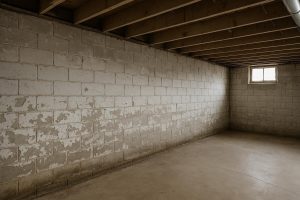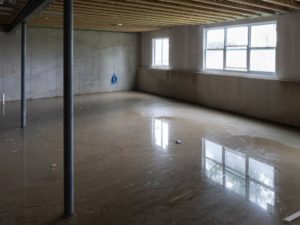
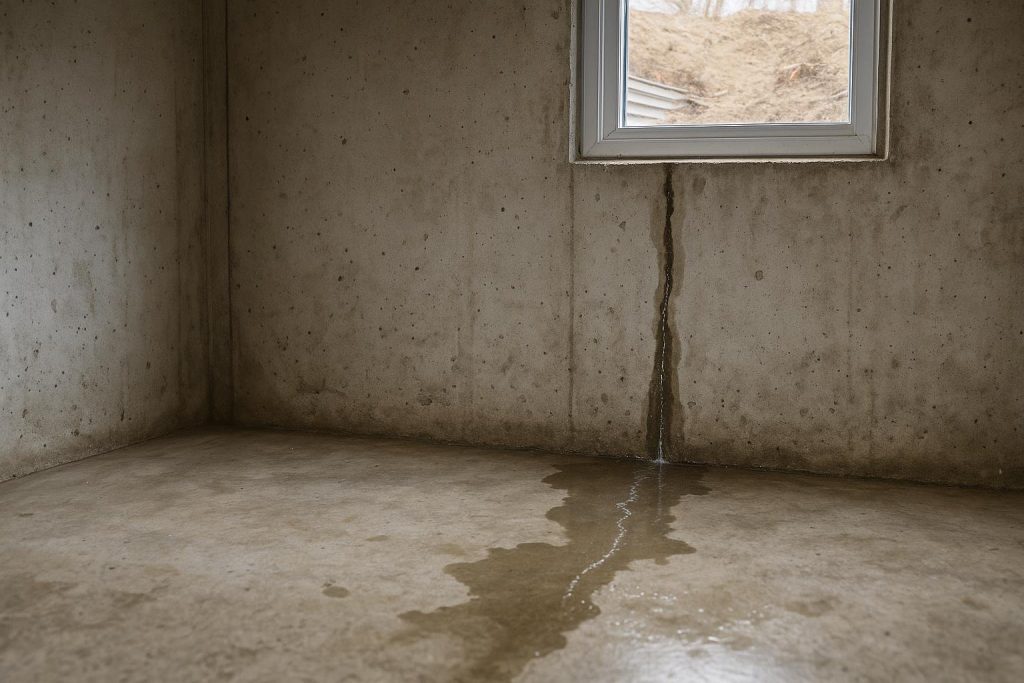
Basement flooding Oro-Medonte homeowners experience is driven by a combination of sandy glacial soils, a seasonally high water table and rapid spring snowmelt that the local terrain funnels directly toward foundation walls. Unlike the dense clay belt across much of the GTA, Oro-Medonte’s soil drains quickly in summer but becomes saturated during the April thaw and after heavy August downpours, pushing hydrostatic pressure against poured-concrete and block foundations alike. Understanding the local water behaviour is the first step toward choosing a fix that actually lasts.
Key Takeaways
- Sandy and loamy soils in Oro-Medonte drain fast in dry weather but saturate quickly during snowmelt and heavy rain, creating sudden hydrostatic pressure spikes.
- Spring thaw and late-summer storms are the two peak failure windows for foundations in this township.
- Interior weeping tile with a sump pump is the most common fix for seasonal water intrusion; exterior waterproofing is warranted when the membrane or footing drain has failed.
- A single injected foundation crack typically costs $600 to $900; a full interior weeping-tile system runs less than a full exterior excavation, which averages $6,000 to $9,000 for a typical home.
- Seasonal and year-round properties in Oro-Medonte face different risk profiles: unoccupied cottages are most vulnerable during the spring thaw when no one is present to catch a failure early.
Definitions and Scope
Basement flooding in Oro-Medonte covers any situation where water enters a below-grade space, whether through a cracked foundation wall, a failed footing drain, a floor-wall joint, or a sump pump that cannot keep pace with inflow. The township spans the Oro Moraine, a ridge of glacially deposited sand and gravel that sits above Lake Simcoe’s western shoreline. That geology means water moves through the soil relatively freely, but it also means the water table rises sharply after snowmelt and can stay elevated for weeks.
Hydrostatic pressure is the technical term for the force that saturated soil exerts against a foundation wall. When that pressure exceeds what an aging membrane, deteriorated parging, or silted-up weeping tile can resist, water finds the path of least resistance, usually a shrinkage crack, a cold joint, or the floor-wall cove joint. The fixes described in this guide address each of those entry points.
This guide covers both permanent year-round homes and seasonal cottages in Oro-Medonte. The repair methods are the same, but the urgency and monitoring requirements differ significantly for properties that sit unoccupied through the winter.
Why Basement Flooding Matters in Oro-Medonte
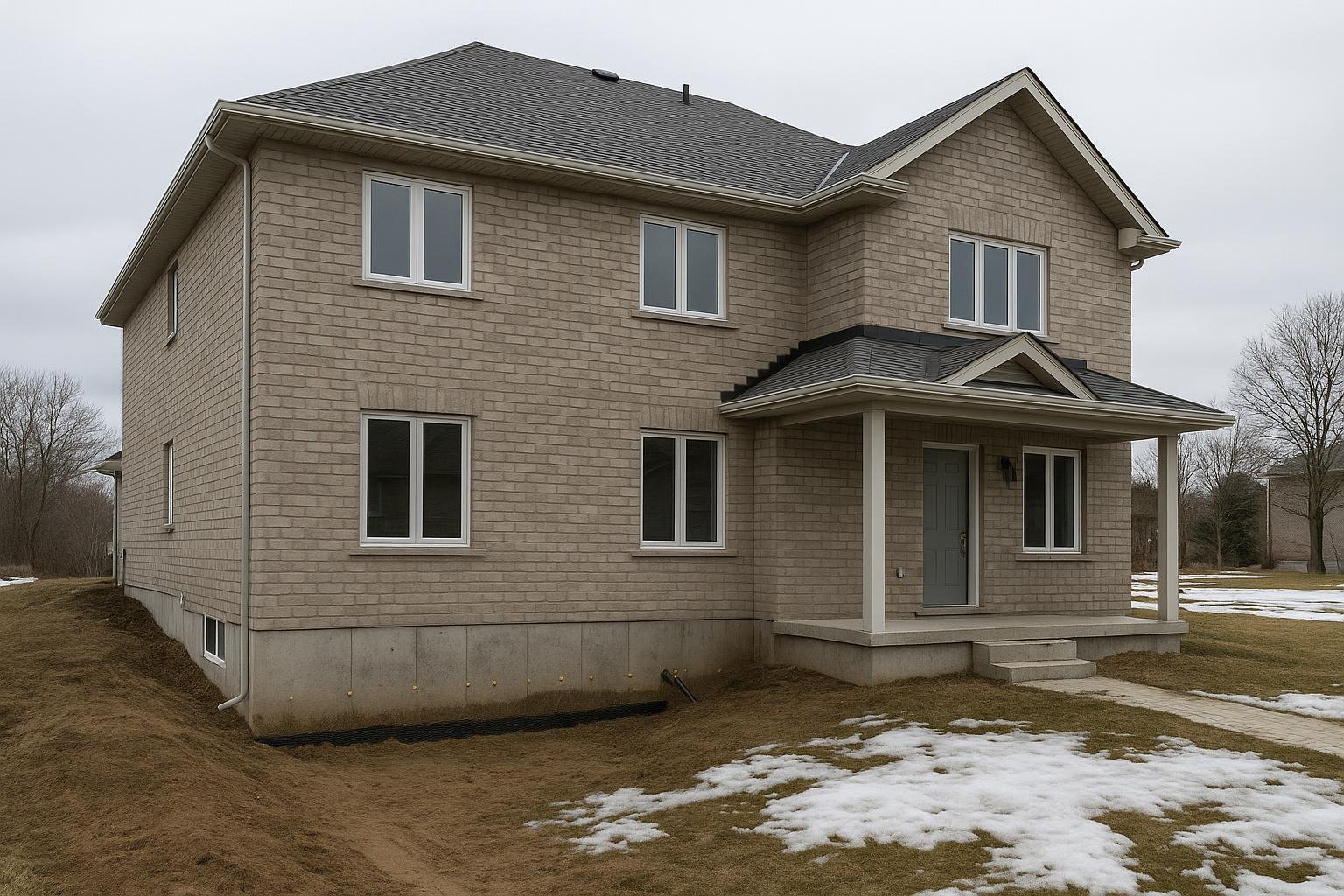
Basement flooding Oro-Medonte residents report most often follows two seasonal patterns. The southern portion of the township borders Barrie and shares some of the Lake Simcoe watershed drainage patterns. The northern and eastern portions rise onto the Oro Moraine, where elevation changes cause rapid runoff toward lower-lying properties. Homes built on the moraine’s slopes often see surface water sheeting toward their foundations during heavy rain, even when the soil itself is not fully saturated.
The spring thaw is the single most damaging event for foundations here. Snowpack on the moraine can be substantial, and when temperatures rise quickly in March and April, meltwater moves faster than the frozen ground can absorb it. That water pools against foundation walls and enters through any gap. The Canada Mortgage and Housing Corporation (CMHC) notes that freeze-thaw cycling is one of the primary causes of foundation crack propagation in Canadian climates, and Oro-Medonte’s elevation means it experiences more freeze-thaw cycles per year than communities at lower elevations nearby.
For seasonal cottage owners, the risk is compounded by absence. A sump pump that fails during a March thaw can allow several centimetres of water to accumulate before anyone notices. For year-round residents, a wet basement accelerates mould growth, degrades structural wood framing, and reduces resale value. Acting before a minor seep becomes a flood is almost always less expensive than remediation after the fact.
Our broader guide to waterproofing across Simcoe County covers the regional context in more detail, including how Oro-Medonte’s soil profile compares to neighbouring municipalities.
Your Options for Fixing a Flooded Basement in Oro-Medonte
The right repair for basement flooding Oro-Medonte properties experience depends on where water is entering, how often it appears, and the condition of the existing drainage system. The five methods below cover the full range of scenarios.
Polyurethane Crack Injection
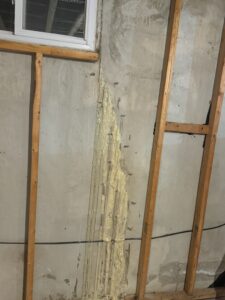
Polyurethane crack injection seals an active or dormant crack from the interior using a low-pressure port-and-paste method. Ports are bonded to the crack face at regular intervals, and expanding polyurethane foam is injected under low pressure until it fills the crack from footing to grade. The cured material remains flexible, which matters in Oro-Medonte because seasonal temperature swings cause poured-concrete foundations to expand and contract. A rigid filler would re-crack; polyurethane moves with the wall.
This method is best for isolated vertical or diagonal shrinkage cracks that are not structurally compromised. It is not appropriate for horizontal cracks indicating lateral soil pressure, for cracks wider than about 12 mm, or for walls where the crack is one of many signs of broader waterproofing failure. Epoxy injection is reserved for structural cracks where the wall needs to be re-bonded rather than simply sealed.
Interior Weeping Tile System with Sump Pump
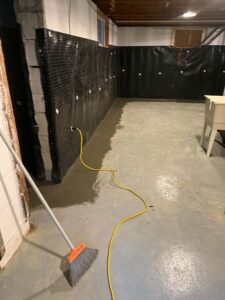
An interior weeping tile system addresses hydrostatic pressure by intercepting water at the footing before it can enter the living space. The perimeter concrete floor is jackhammered, a drainage channel is excavated to the footing level, perforated weeping tile is laid in clear stone, and everything drains to a sump basin where a pump discharges water away from the building. A vapour barrier is then run up the wall and the concrete is re-poured.
This is the most common solution for basement flooding Oro-Medonte homes face when the exterior membrane has not failed catastrophically but seasonal water table rise overwhelms the existing drainage. It does not stop water from entering the wall, but it captures and removes it before damage occurs. A battery backup sump pump is strongly recommended for seasonal properties, since a power outage during a spring thaw is a realistic scenario.
Exterior Waterproofing with New Weeping Tile
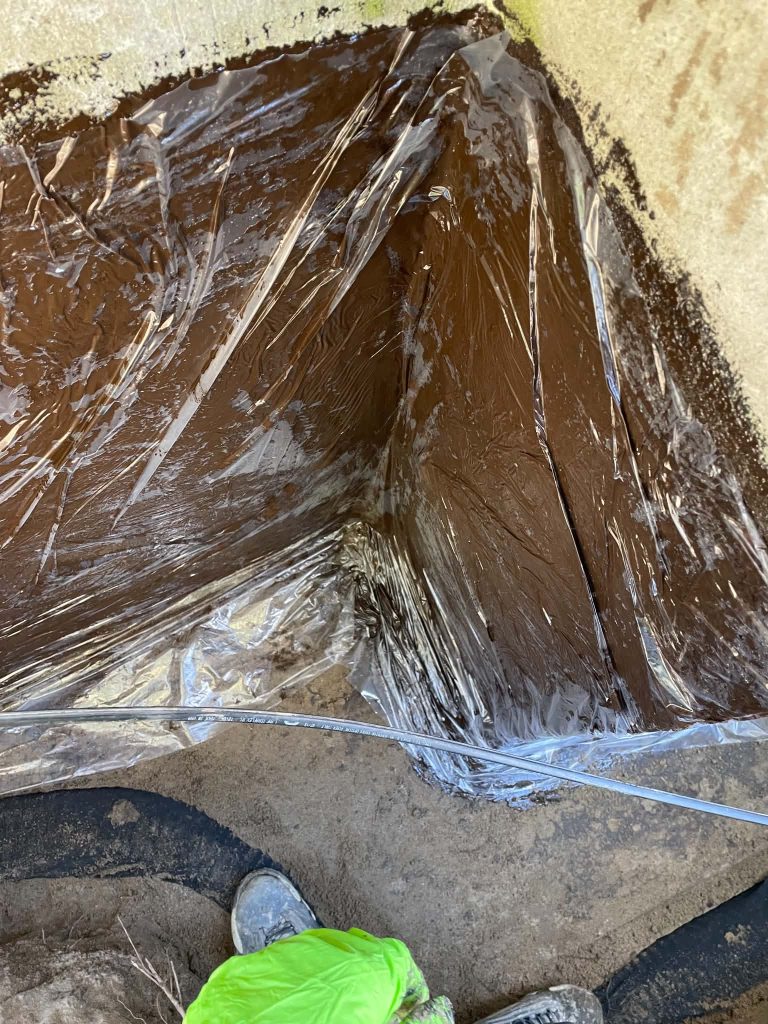
Exterior waterproofing is the most comprehensive solution. Excavation proceeds to the footing, the original membrane is removed, hydraulic cement is applied to fill voids and honeycombing in the concrete, a rubberised waterproofing membrane is applied to the wall, a dimpled drainage board protects the membrane during backfill, new weeping tile is bedded in clear stone at the footing, and the trench is backfilled with grade corrected away from the building.
This approach is warranted when the original exterior membrane has deteriorated, when the original weeping tile is fully silted up, or when a homeowner wants the most durable long-term protection. It is more disruptive and more expensive than interior methods, but it addresses the source of the problem rather than managing the symptom. Access constraints, such as a deck, garage, or neighbouring property close to the wall, can limit feasibility.
Sump Pump Installation or Replacement
A sump pump on its own is appropriate when the existing weeping tile is functional but the pump has failed or is undersized for the volume of water the property generates. In Oro-Medonte, where spring inflow can be rapid, a pump with adequate horsepower and a reliable battery backup is essential. A pump that runs continuously during a thaw event and then loses power leaves the basement unprotected at exactly the wrong moment.
Exterior Grade Correction and Downspout Extension
Surface water management is often overlooked but can meaningfully reduce the volume of water reaching the foundation. Grading should slope away from the building at a minimum of 5% for the first 1.8 metres, as required under the Ontario Building Code. Downspouts that discharge within 300 mm of the foundation wall are a common contributor to localised basement flooding Oro-Medonte properties experience, particularly on moraine slopes where surface runoff is already concentrated.
Options Compared
| Method | Best For | Typical Lifespan | Relative Cost | Disruption |
|---|---|---|---|---|
| Polyurethane crack injection | Single active shrinkage crack | Long-term if crack is stable | Lowest | Minimal, interior only |
| Interior weeping tile and sump | Seasonal high water table, multiple entry points | 20 to 30 years with maintenance | Moderate | Interior floor disruption |
| Exterior waterproofing | Failed membrane, silted weeping tile, new construction standard | 25 years or more | Highest | Full excavation, landscaping affected |
| Sump pump replacement | Functional weeping tile, failed or undersized pump | 7 to 12 years per pump | Low | Minimal |
| Grade correction and downspout extension | Surface water contributing to entry | Ongoing maintenance required | Very low | Landscaping only |
For most Oro-Medonte homes experiencing seasonal water intrusion through the floor-wall joint or multiple wall cracks, an interior weeping tile system with a battery-backup sump pump delivers the best balance of cost, durability and disruption. Exterior waterproofing is the right choice when the source of the problem is a deteriorated membrane or completely failed original weeping tile, and when site access allows excavation. Crack injection is the correct starting point when there is a single identifiable crack and no broader drainage failure.
How to Choose the Right Fix
Choose polyurethane crack injection if you have one or two identifiable vertical cracks, the rest of the wall is dry, and a moisture assessment confirms the crack is the sole entry point. This is also the right first step before any other work, since open cracks should be sealed regardless of what else is done.
Choose an interior weeping tile system if water is entering along the floor-wall cove joint, through the floor itself, or at multiple points along the perimeter. This is the most practical solution for basement flooding Oro-Medonte properties face during the spring thaw, because it manages the water table rise rather than trying to stop it at the wall.
Choose exterior waterproofing if the home is older and has never had the exterior membrane replaced, if the original weeping tile is known to be silted up or absent, or if you want the most comprehensive protection available. Homes on the lower slopes of the Oro Moraine, where surface runoff concentrates, benefit most from exterior drainage board and new footing drain.
Choose sump pump replacement or upgrade if the existing interior drainage system is intact but the pump is more than ten years old, runs continuously during thaw events, or lacks a battery backup. For seasonal properties, add a cellular alarm that alerts you to high water levels when the cottage is unoccupied.
Our guide to freeze-thaw foundation cracks in cottage country explains how seasonal temperature cycling creates the specific crack patterns common in Oro-Medonte and surrounding areas.
Costs and Timelines
All price ranges below are approximate and based on typical completed jobs. The final figure for any property depends on a site inspection, linear footage, soil conditions, access and the scope of work required.
| Cost Driver | Why It Affects Price | Approximate Range |
|---|---|---|
| Linear footage of weeping tile | More perimeter means more excavation or jackhammering and more material | Priced per linear foot |
| Depth of excavation | Deeper footings require more labour and equipment time | Significant factor in exterior jobs |
| Access constraints | Decks, fences, neighbouring structures limit equipment access and add hand-digging time | Can add materially to exterior cost |
| Number of cracks to inject | Each crack is a discrete repair; $600 to $900 per crack is typical | $600 to $900 per crack |
| Sump pump specification | Battery backup, horsepower rating and alarm systems vary in cost | Varies by specification |
| Full exterior waterproofing | Excavation to footing, membrane, drainage board, new weeping tile, backfill | Approximately $6,000 to $9,000 for a typical home |
Interior weeping tile systems typically cost less than a full exterior excavation. A single crack injection at $600 to $900 is the lowest-cost intervention. Full exterior waterproofing of a typical Oro-Medonte home runs approximately $6,000 to $9,000 depending on linear footage, depth and access. Timelines range from a few hours for crack injection to two to four days for a full exterior job. Interior weeping tile work is usually completed in one to two days. All figures depend on a site inspection.
For a broader breakdown of what drives repair costs across Ontario, see our guide to basement leaking repair costs for Ontario homeowners.
Risks and Common Mistakes
The most expensive mistake Oro-Medonte homeowners make is applying hydraulic cement or waterproofing paint to a wet wall and assuming the problem is solved. These products cannot resist sustained hydrostatic pressure and typically fail within one to two seasons.
| Symptom | Likely Cause | Correct Fix |
|---|---|---|
| Water along floor-wall joint after thaw | Hydrostatic pressure exceeding weeping tile capacity | Interior weeping tile system with sump pump |
| Wet vertical crack after rain | Shrinkage crack allowing direct water entry | Polyurethane crack injection |
| White powdery deposits on wall | Efflorescence from mineral-laden water passing through concrete | Identify and seal entry point; address drainage |
| Sump pump running continuously | High water table overwhelming drainage capacity | Assess weeping tile condition; upgrade pump or add interior system |
| Horizontal crack in block wall | Lateral soil pressure, potentially structural | Structural assessment before any waterproofing |
Applying interior waterproofing paint over an active leak is the most common DIY mistake. The product cannot bond properly to a wet surface and the hydrostatic pressure behind the wall will push it off within months. Hydraulic cement is useful for stopping an active flow temporarily but is not a permanent waterproofing solution on its own.
Ignoring a horizontal crack is a more serious error. Horizontal cracks in a block or poured-concrete wall indicate lateral soil pressure and can signal structural movement. These require an engineering assessment before any waterproofing work proceeds. Attempting to inject or paint over a structurally compromised wall can mask a problem that will worsen.
For seasonal properties, failing to install a battery backup sump pump is a common and costly oversight. A power outage during a spring thaw, when the pump is working hardest, is the scenario most likely to result in basement flooding Oro-Medonte cottage owners dread most. CMHC recommends battery backup systems for all sump pump installations in seasonal-use properties.
How the Process Works
- Free on-site inspection and moisture assessment. A technician visits the property, identifies all active and dormant entry points, assesses the condition of the existing weeping tile and membrane, and measures the perimeter to be addressed.
- Written scope with linear-foot pricing. A detailed written quote is provided, specifying the method, materials and timeline. No work begins without written agreement.
- Preparation and access. For interior work, the perimeter floor is cleared. For exterior work, excavation equipment is positioned and landscaping is protected where possible.
- Core repair work. Crack injection ports are installed and filled; or the floor is jackhammered and weeping tile laid to the sump basin; or the exterior is excavated to the footing, the wall is parged, membrane applied, drainage board installed and new weeping tile bedded in clear stone.
- Sump installation and vapour barrier. Where an interior system is installed, the sump basin and pump are set, the vapour barrier is run up the wall, and the concrete is re-poured.
- Backfill and grade correction. For exterior jobs, the trench is backfilled in lifts and the grade is corrected to slope away from the building.
- Final inspection and documentation. The completed work is reviewed with the homeowner, warranty documentation is provided, and any battery backup or alarm systems are tested.
Seasonal cottage owners should schedule their inspection in late summer or early fall, before freeze-up, so any repairs can be completed while the ground is accessible and before the spring thaw creates the next risk window.
Frequently Asked Questions About Basement Flooding in Oro-Medonte
Why does my Oro-Medonte basement flood every spring but stay dry the rest of the year?
The Oro Moraine’s sandy and loamy soils absorb snowmelt quickly, but when the volume of meltwater exceeds the soil’s capacity, the water table rises sharply and presses against foundation walls. If your weeping tile is silted up or your sump pump cannot keep pace, water enters along the floor-wall joint or through cracks. The fix is usually an interior weeping tile system with an adequately sized sump pump and battery backup.
Is my problem a crack or a drainage failure?
If water appears at a single identifiable crack on the wall, the issue is likely that crack. If water appears along the floor-wall joint, seeps up through the floor, or enters at multiple points around the perimeter, the problem is hydrostatic pressure and drainage failure. A site inspection is the only reliable way to distinguish between the two, because both can occur simultaneously.
Can I inject a crack myself?
DIY polyurethane injection kits exist, but they use higher pressure than the low-pressure port-and-paste method used professionally, which can cause the foam to bypass the crack rather than fill it. An improperly injected crack may appear sealed at the surface while remaining open deeper in the wall. Professional injection includes a warranty and a moisture assessment to confirm the crack is the actual entry point.
How long does an interior weeping tile system last in Oro-Medonte?
A properly installed interior weeping tile system typically performs well for 20 to 30 years. The weeping tile itself does not silt up as quickly as exterior tile because it is protected from soil contact, but the sump pump requires maintenance and replacement every 7 to 12 years depending on how hard it works. Annual pump testing and a battery backup system extend the effective life of the installation.
Do I need exterior waterproofing or will interior work be enough?
Interior weeping tile manages water after it reaches the footing; exterior waterproofing stops it at the wall. For most Oro-Medonte homes with seasonal water table rise and no catastrophic membrane failure, interior work is sufficient and more practical. Exterior waterproofing is warranted when the original membrane has deteriorated, when the exterior weeping tile is fully silted up, or when the homeowner wants the most comprehensive protection available.
What should I do if I arrive at my cottage to find a flooded basement?
Do not enter the space if there is any risk of electrical contact with standing water. Turn off the power to the basement at the panel if it is safe to do so, then remove water with a wet-dry vacuum or pump. Document the damage with photographs before cleanup. Once the space is dry, identify the entry point and arrange a professional inspection before the next thaw season. Our guide on arriving at a flooded cottage basement covers the immediate steps in detail.
Does home insurance cover basement flooding in Oro-Medonte?
Standard home insurance policies in Ontario typically exclude gradual water damage from seepage or a failed sump pump unless overland water or sewer backup coverage has been added. A sudden and accidental event, such as a burst pipe, is usually covered. Waterproofing repairs are almost never covered because they are considered maintenance. Confirm your specific coverage with your insurer before assuming a claim is possible.
How much does it cost to waterproof a basement in Oro-Medonte?
A single crack injection typically costs $600 to $900. An interior weeping tile system costs less than a full exterior excavation, which runs approximately $6,000 to $9,000 for a typical home depending on linear footage, depth and access. These are approximate ranges based on completed jobs; the final figure for any property depends on a site inspection. See our foundation waterproofing cost guide for a full breakdown of what drives the price.
Are seasonal cottages in Oro-Medonte at higher risk than year-round homes?
Yes, for two reasons. First, unoccupied properties cannot catch a sump pump failure or a sudden crack opening early, so minor water entry can become significant basement flooding Oro-Medonte cottage owners may not discover for days or weeks. Second, cottages that are not heated through the winter experience more severe freeze-thaw cycling inside the foundation wall, which accelerates crack propagation. Battery backup sump pumps with cellular alarms are strongly recommended for any seasonal property.
If you are dealing with basement flooding Oro-Medonte or want to protect your home or cottage before the next thaw season, the DryShield Team offers free on-site inspections and written quotes with no obligation. Contact us through DryShield.ca to arrange a visit and get a clear picture of what your property needs.