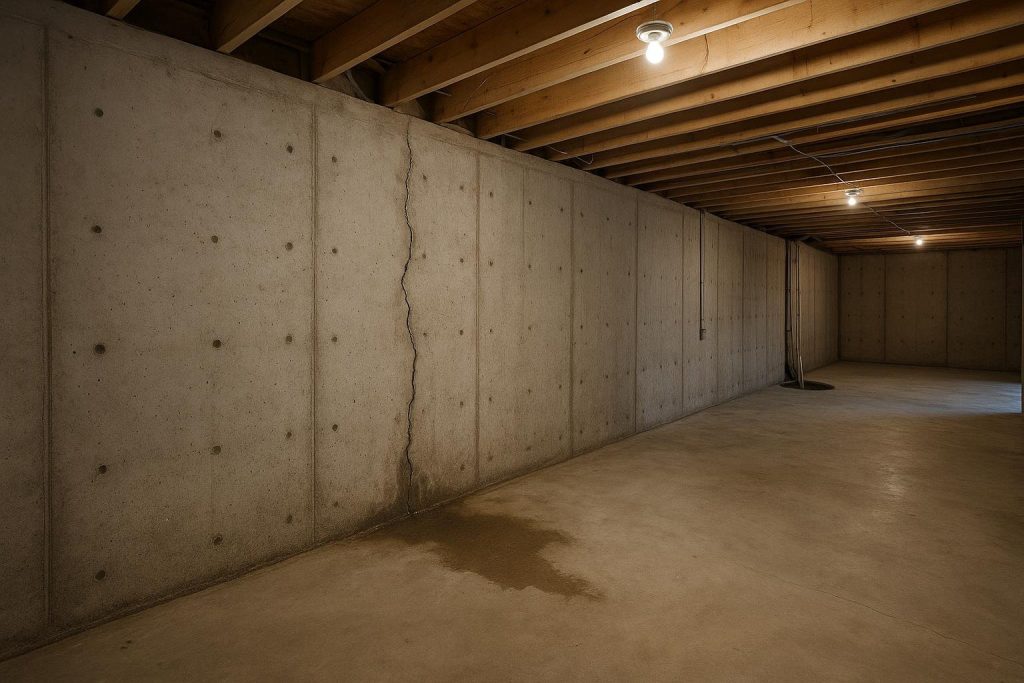
Basement leak repair Richmond Hill homeowners need most often targets one of three root causes: hydrostatic pressure from the region’s heavy clay soil, a failed or silted-up weeping tile system, or a shrinkage crack in the foundation wall. Identifying the correct cause before choosing a repair method is the single most important step, because the wrong fix wastes money and leaves the water pathway open.
Key Takeaways
- Richmond Hill’s clay-heavy soil holds water against foundation walls, making hydrostatic pressure the most common driver of wet basements in this area.
- A single injected foundation crack typically costs $600 to $900; a full interior weeping tile system or exterior waterproofing runs considerably more and depends on linear footage and access.
- Spring thaw and summer downpours are the two peak failure windows for Richmond Hill foundations.
- Older homes in established Richmond Hill neighbourhoods such as Oak Ridges and Crosby often have original weeping tile that is fully silted and no longer draining.
- The correct repair method depends on where water enters, the age of the home, and whether the problem is a crack, a failed drain, or a membrane failure.
Definitions and Scope
Foundation leak repair covers any professional intervention that stops water from entering a basement or crawl space through the foundation walls, floor, or the joint where the wall meets the footing. The methods used in Richmond Hill fall into two broad categories: interior systems that manage water after it reaches the foundation, and exterior systems that stop it from reaching the wall in the first place.
Key terms you will encounter during a Richmond Hill inspection include: weeping tile (a perforated pipe at the footing that collects and redirects groundwater), hydrostatic pressure (the force water exerts against a buried wall when the surrounding soil is saturated), rubberised membrane (a waterproof coating applied to the exterior face of the foundation), sump pump (the mechanical device that ejects collected water away from the building), parging (a mortar coat applied over the foundation face to fill surface voids), and polyurethane crack injection (a low-pressure method of sealing a crack from the interior so it remains flexible through seasonal movement).
This guide covers all of those methods, when each one applies to a Richmond Hill home, what drives the cost, and how to avoid the most common mistakes.
Why This Matters for Richmond Hill Homeowners
Richmond Hill sits on a band of Lakeshore Clay and glacial till that extends across much of York Region. This soil type is dense, slow-draining, and expands when wet. When spring snowmelt or a heavy summer storm saturates the ground, water has nowhere to go quickly, so it pools against foundation walls and exerts sustained hydrostatic pressure. That pressure is the root cause of most wet basements in the area, not rainfall directly.
The two peak failure windows are the spring thaw, typically March through April, and intense summer convective storms, which York Region sees regularly between June and August. Homes built before the 1980s in neighbourhoods such as Crosby, Harding, and Mill Pond are particularly vulnerable because their original clay weeping tile has often collapsed or filled with silt over decades, leaving no drainage path at the footing.
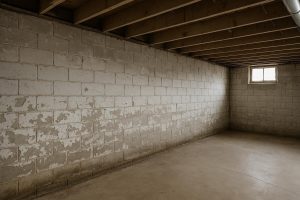
Leaving a leak unaddressed accelerates the problem. Water that enters through a hairline crack widens that crack through freeze-thaw cycling each winter. Efflorescence, the white chalky mineral deposit that appears on damp walls, is an early warning sign that water is moving through the concrete. Mould can establish within 48 hours of a wet event on organic materials stored in the basement. Beyond health concerns, a documented water history affects resale value in Richmond Hill’s competitive housing market.
For a broader look at waterproofing options available to Richmond Hill homeowners, the Richmond Hill basement waterproofing and foundation crack repair service page covers the full scope of what is available in this area.
Your Options for Basement Leak Repair in Richmond Hill
Polyurethane Crack Injection
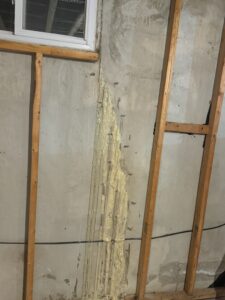
Low-pressure polyurethane injection is the standard repair for a non-structural vertical or diagonal crack in a poured concrete foundation wall. A technician drills a series of ports along the crack, pastes surface packers over each port, then injects expanding polyurethane foam under low pressure. The foam follows the crack through the full thickness of the wall and cures into a flexible, waterproof seal that tolerates the seasonal movement Richmond Hill’s clay soil causes.
This method is best for: a single identifiable crack with no signs of structural displacement, a hairline crack that has been leaking during rain events, and situations where excavation is not practical. It is not appropriate for horizontal cracks (which indicate lateral soil pressure and require structural assessment) or for widespread seepage through the wall face rather than a defined crack.
Epoxy injection is used only where the crack must be structurally re-bonded. Epoxy cures rigid and is not suitable where ongoing movement is expected, which is most Richmond Hill foundations on clay.
Interior Weeping Tile System
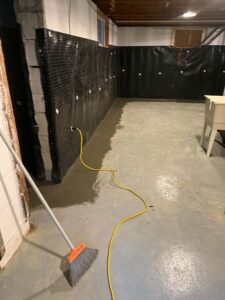
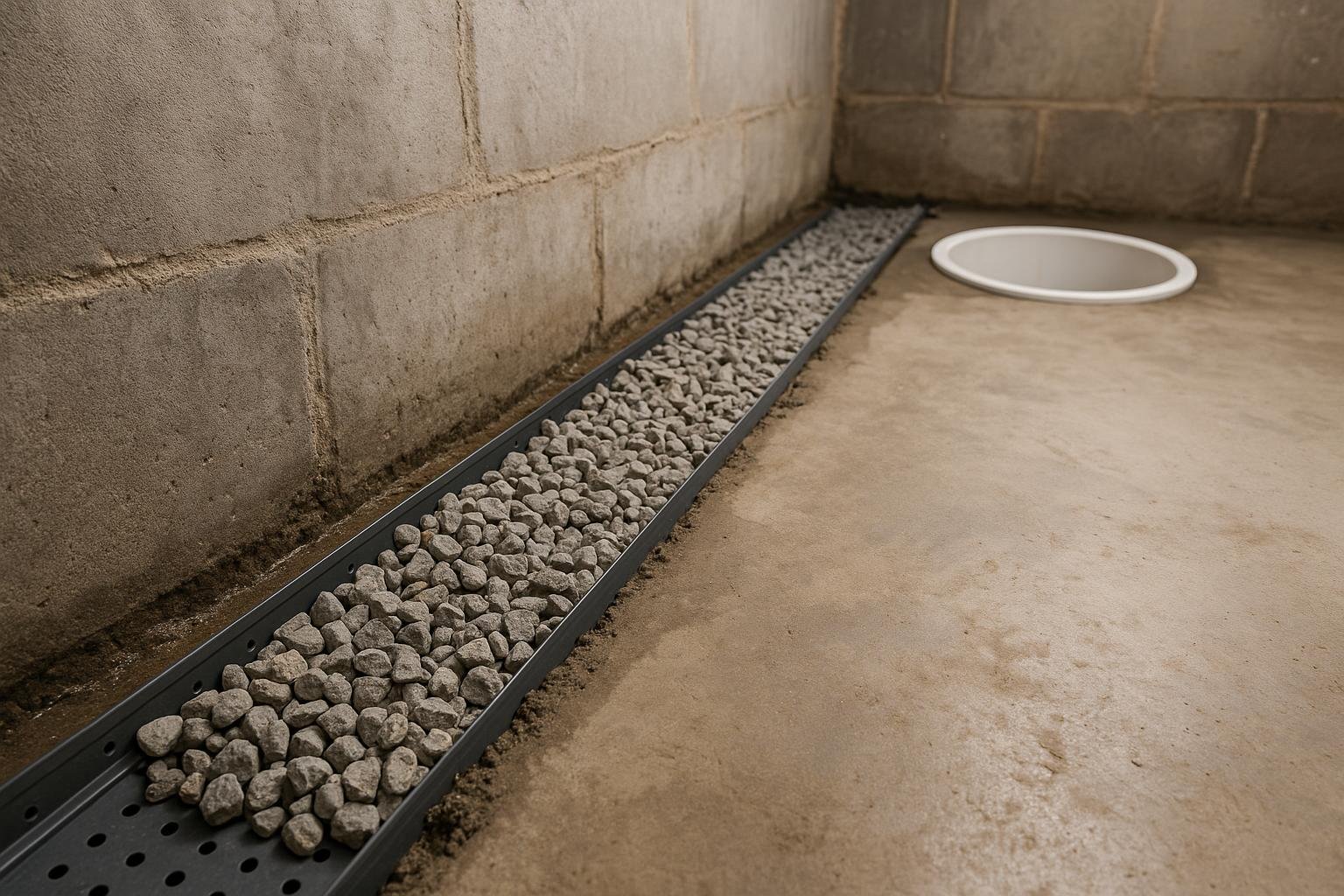
Where water is entering along the wall-footing joint or seeping through the floor, an interior weeping tile system redirects that water before it reaches the living space. The process involves jackhammering a channel around the perimeter of the basement floor, installing a new perforated pipe bedded in clear stone, routing it to a sump basin, and re-pouring the concrete. A vapour barrier is run up the wall to direct any wall seepage into the channel rather than onto the floor.
This method is best for: homes where exterior excavation is not feasible due to finished landscaping, close lot lines, or cost; older homes with failed original weeping tile; and situations where water is entering at multiple points along the perimeter. The interior route manages water rather than excluding it, so it does not address the source of hydrostatic pressure on the exterior wall.
Exterior Waterproofing
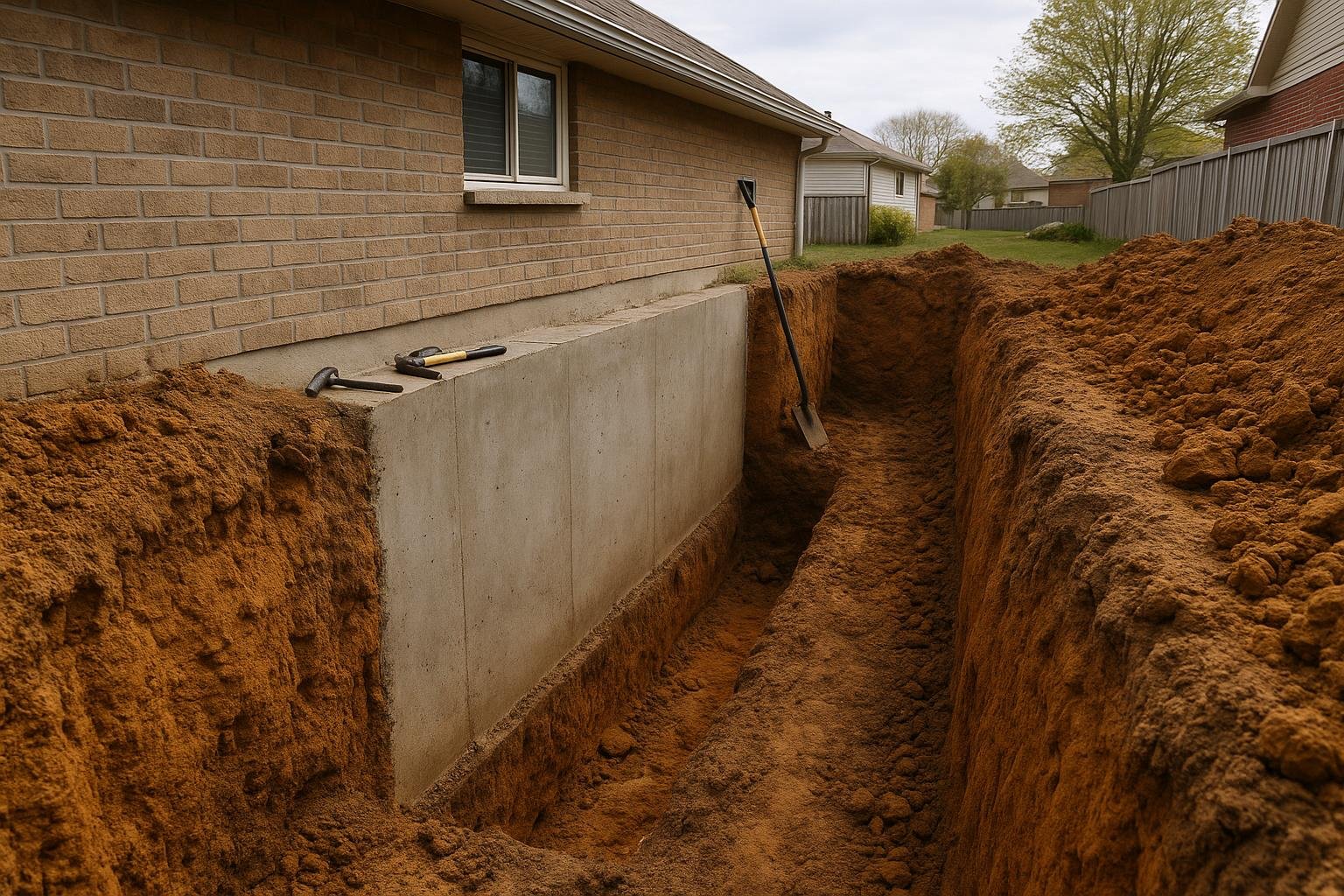
Exterior waterproofing is the most comprehensive solution. The foundation wall is excavated to the footing, voids are filled with hydraulic cement parging, a rubberised membrane is applied to the full height of the wall, a dimpled drainage board is installed over the membrane to protect it and create a drainage plane, new weeping tile is bedded in clear stone at the footing, and the trench is backfilled with the grade corrected to direct surface water away from the building.
This method is best for: homes where the original exterior membrane has failed, situations where the weeping tile needs replacement and access is available, and cases where the homeowner wants the most durable long-term solution. Disruption is significant: landscaping, decks, or driveways adjacent to the affected wall must be temporarily removed. For a detailed breakdown of what this process involves, see the guide on exterior foundation protection.
Sump Pump Installation or Replacement
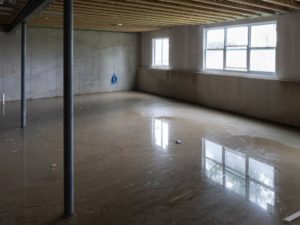
A sump pump is the mechanical component that ejects water collected by an interior or exterior weeping tile system. In Richmond Hill, where spring thaw can sustain high groundwater for weeks, a sump pump with a battery backup is strongly recommended. Without backup power, a pump failure during a storm or power outage can result in a flooded basement within hours.
This option is best for: homes that already have a weeping tile system but lack a pump or have an aging unit, and as a companion to any new interior drainage installation. A pump alone does not solve a crack or a failed membrane.
Spray-Applied Waterproofing Membrane
For foundations that have surface deterioration but intact structural integrity, a spray-applied waterproofing membrane can be applied to the interior wall face. This is a less invasive option than full excavation and is sometimes used on block foundations where the mortar joints are the primary entry point. It is not a substitute for addressing a failed weeping tile system or a through-wall crack.
Grade Correction and Surface Drainage
In some Richmond Hill homes, particularly those on lots where the grade has settled toward the foundation over time, correcting the slope of the soil and improving downspout extensions resolves minor seepage without any structural intervention. This is appropriate only where the leak is clearly surface-water-driven and there is no evidence of hydrostatic pressure or a failed drainage system.
Options Compared
| Method | Best For | Typical Lifespan | Relative Cost | Disruption Level |
|---|---|---|---|---|
| Polyurethane crack injection | Single non-structural poured-concrete crack | Long-term if crack is stable | Lowest | Minimal (interior only, no excavation) |
| Interior weeping tile system | Perimeter seepage, failed original tile, tight lots | 25+ years with pump maintenance | Moderate | Moderate (jackhammer, concrete re-pour) |
| Exterior waterproofing | Failed membrane, full weeping tile replacement | Lifetime with proper membrane | Highest | High (excavation, landscaping disruption) |
| Sump pump installation | Companion to drainage systems, aging pump replacement | 7 to 10 years per pump unit | Low to moderate | Low (pit excavation only) |
| Spray membrane (interior) | Surface deterioration, block foundation joints | Varies by product and substrate | Low to moderate | Low (no excavation) |
| Grade correction | Surface-water-only seepage, settled lot grade | Ongoing maintenance required | Lowest | Minimal |
The table above shows that no single method suits every Richmond Hill home. Crack injection is the right starting point for an isolated crack, but it does nothing for a perimeter drainage failure. Exterior waterproofing offers the most complete protection but requires access around the foundation and a higher investment. Interior weeping tile is the practical middle ground for most older Richmond Hill homes where excavation is not feasible. A proper on-site inspection is the only way to confirm which method, or combination of methods, applies to a specific property.
How to Choose the Right Repair
Choose polyurethane crack injection if you have a single vertical or diagonal crack in a poured concrete wall, the crack is the only visible entry point, and there is no evidence of widespread seepage or a drainage failure. This is the fastest and least disruptive fix, and a properly injected crack on a stable foundation holds for the long term.
Choose an interior weeping tile system if water is entering along the wall-footing joint, if you see seepage at multiple points along the perimeter, or if the home is older and the original weeping tile is likely silted. This is also the right choice when the lot line, a finished deck, or a driveway makes exterior excavation impractical.
Choose exterior waterproofing if the exterior membrane has failed (visible during a probe or confirmed by persistent leaking despite interior repairs), if the weeping tile needs full replacement and access is available, or if you want the most permanent solution and the disruption is acceptable.
Choose grade correction as a first step only if the leak is clearly tied to surface water running toward the foundation and there is no sign of hydrostatic pressure. If the problem persists after grading, a deeper drainage solution is needed.
If you are unsure which category your leak falls into, the basement leak diagnostic tool can help you identify the likely source before booking an inspection.
A single foundation crack injected with polyurethane typically costs $600 to $900 in the Richmond Hill area. The final figure depends on crack length, depth, and accessibility, confirmed at the on-site inspection.
Costs of Basement Leak Repair in Richmond Hill
| Cost Driver | Why It Affects Price | Approximate Impact |
|---|---|---|
| Linear footage of affected perimeter | More wall to treat means more material and labour | Primary driver for weeping tile and exterior work |
| Depth of excavation | Deeper footings require more digging time and shoring | Significant for exterior waterproofing |
| Access constraints | Decks, driveways, and close lot lines increase labour | Can add meaningfully to exterior job cost |
| Number of cracks | Each crack is a separate injection procedure | $600 to $900 per crack (approximate) |
| Condition of existing weeping tile | Full replacement costs more than supplementing a partial system | Moderate to significant |
| Sump pump specification | Battery backup and higher-capacity units cost more | Low to moderate incremental cost |
As a general orientation: a single injected crack runs approximately $600 to $900. Basement leak repair Richmond Hill homeowners request for a full interior weeping tile system typically falls below the cost of exterior work. Full exterior waterproofing of an average Toronto-area home runs roughly $6,000 to $9,000 depending on linear footage, excavation depth, and access. All figures are approximate ranges and the actual cost for any Richmond Hill property is confirmed only after a free on-site inspection. For a broader breakdown of what drives waterproofing costs across Ontario, the foundation waterproofing cost guide provides additional context.
Timeline varies by method. Crack injection is typically completed in a single visit of a few hours. An interior weeping tile installation takes one to two days for most Richmond Hill homes. Exterior waterproofing, including excavation and backfill, generally takes two to four days depending on the length of wall being treated and site conditions.
Risks and Common Mistakes
| Symptom | Likely Cause | Correct Fix |
|---|---|---|
| Water along wall-footing joint after rain | Failed or silted weeping tile, hydrostatic pressure | Interior or exterior weeping tile replacement |
| Wet streak down a vertical wall crack | Shrinkage crack in poured concrete | Polyurethane crack injection |
| Horizontal crack with wall bowing inward | Lateral soil pressure, potential structural issue | Structural engineer assessment before any waterproofing |
| White powder (efflorescence) on wall face | Chronic moisture migration through concrete | Identify and seal the water source; efflorescence removal alone is not a fix |
| Floor seepage after heavy rain | Hydrostatic pressure below the slab | Interior drainage system with sump pump |
| Damp smell with no visible water | Vapour transmission through wall or slab | Moisture assessment; may need vapour barrier or drainage system |
The most common mistake Richmond Hill homeowners make is applying hydraulic cement or a paint-on sealant to a leaking crack and expecting it to hold. These products stop surface water temporarily but cannot resist sustained hydrostatic pressure. The crack re-opens, often wider, within one or two freeze-thaw cycles.
A second frequent error is addressing only one crack when the real problem is a failed perimeter drainage system. Injecting a single crack while the weeping tile is silted means water will find the next path of least resistance, often a different crack or the wall-footing joint.
Horizontal cracks in a foundation wall are not a waterproofing problem. They indicate lateral soil pressure and require a structural engineer’s assessment before any repair work begins. Do not inject or seal a horizontal crack without that evaluation.
Delaying repairs is also costly. A hairline crack that costs under $1,000 to inject can widen to the point where it affects the structural integrity of the wall, turning a simple repair into a much larger project. The Canada Mortgage and Housing Corporation (CMHC) notes at cmhc-schl.gc.ca that moisture control is one of the most critical factors in maintaining a healthy home envelope, and that early intervention consistently costs less than remediation after damage has progressed.
How the Process Works
- Free on-site inspection and moisture assessment. A technician visits the Richmond Hill property, examines the foundation walls, floor, and exterior grade, and uses moisture readings to identify active entry points and likely causes.
- Written scope with linear-foot pricing. The homeowner receives a written proposal specifying the method, the materials, and the cost based on the actual measurements taken during the inspection. No guesswork pricing.
- Preparation. For crack injection, ports are drilled and packers are set. For interior weeping tile, the perimeter concrete is jackhammered and the trench is excavated to the footing. For exterior work, the trench is dug to the footing with care taken around utilities.
- Core repair. Depending on the method: polyurethane is injected under low pressure until it fills the crack; new perforated weeping tile is bedded in clear stone and routed to the sump basin; or the exterior wall face is parged, membraned, and covered with a dimpled drainage board.
- Drainage and containment. The sump basin is connected and the pump is tested. For exterior work, new weeping tile is connected to the drainage outlet and the trench is backfilled with the grade corrected to slope away from the foundation.
- Reinstatement. Interior concrete is re-poured over the new weeping tile channel. Exterior landscaping is restored as closely as possible to its pre-work condition.
- Final walkthrough. The technician reviews the completed work with the homeowner, confirms the drainage path, and explains the warranty coverage.
Basement leak repair Richmond Hill projects follow this same sequence regardless of the method chosen, ensuring the homeowner understands each step before work begins.
DryShield offers a lifetime transferable warranty on qualifying waterproofing work. That warranty transfers to the next owner, which is a meaningful asset in Richmond Hill’s active resale market.
Frequently Asked Questions
What causes most basement leaks in Richmond Hill?
Hydrostatic pressure from saturated clay soil is the primary cause. Richmond Hill sits on dense glacial clay that drains slowly, so water accumulates against foundation walls during spring thaw and summer storms. That sustained pressure forces water through cracks, the wall-footing joint, or a degraded exterior membrane. Silted original weeping tile, common in homes built before the 1980s, removes the only drainage relief at the footing and makes the problem significantly worse.
How do I know if I need crack injection or a full drainage system?
If you can identify a single vertical or diagonal crack as the entry point and the rest of the wall and floor are dry, crack injection is likely sufficient. If water is entering at multiple points, along the floor perimeter, or through the wall face rather than a defined crack, a drainage system is the appropriate solution. An on-site inspection with moisture readings is the reliable way to confirm which applies to your home.
How long does basement leak repair take in Richmond Hill?
Crack injection is typically completed in a single visit of two to four hours. An interior weeping tile installation for an average Richmond Hill home takes one to two days. Exterior waterproofing, including excavation, membrane application, new weeping tile, and backfill, generally takes two to four days depending on the length of wall and site access conditions.
Will the repair work in winter?
Crack injection can be performed year-round because the work is done from the interior and the polyurethane cures in a range of temperatures. Exterior excavation is generally not done in frozen ground conditions, so exterior waterproofing in Richmond Hill is typically scheduled from April through November. Interior weeping tile installation is not season-dependent and can proceed any time of year.
Does the repair come with a warranty?
Qualifying waterproofing work carried out by DryShield comes with a lifetime transferable warranty. The warranty transfers to a subsequent owner of the property, which is relevant for Richmond Hill homeowners who may sell. The specific scope of coverage is confirmed in the written proposal before work begins.
What is the difference between interior and exterior waterproofing?
Exterior waterproofing stops water at the foundation wall before it can enter. It involves excavating to the footing, applying a rubberised membrane, installing a drainage board, and laying new weeping tile. Interior waterproofing collects water that has already reached the foundation and redirects it to a sump pump before it reaches the floor. Exterior is more comprehensive; interior is more practical when access is limited. The guide on exterior versus interior perimeter waterproofing compares both approaches in detail.
Can I fix a basement leak myself?
Surface-applied hydraulic cement and paint-on sealants are available at hardware stores, but they do not withstand sustained hydrostatic pressure. They may slow a minor seep temporarily but will not hold against the clay-soil conditions typical in Richmond Hill. Crack injection requires specialised low-pressure equipment and the correct polyurethane formulation. Weeping tile installation requires jackhammering, proper bedding in clear stone, and correct routing to a sump basin. These are not practical DIY repairs for most homeowners.
How much does basement leak repair cost in Richmond Hill?
A single injected crack runs approximately $600 to $900. Interior weeping tile systems and exterior waterproofing are priced by linear footage and depend on excavation depth and access. Full exterior waterproofing of an average home in the Toronto and GTA area runs roughly $6,000 to $9,000 as a general range. The actual cost for a Richmond Hill property is confirmed after a free on-site inspection. For more detail on what drives pricing, see the basement leak repair cost guide.
Will fixing the leak increase my home’s value?
A documented, warranted waterproofing repair removes a material defect that buyers and home inspectors flag in Richmond Hill’s market. A dry, warranted basement is a positive disclosure item, while a known leak history without a repair record typically results in price negotiations or conditions on sale. The transferable warranty adds tangible value because the next owner inherits the coverage.
How do I find a reliable waterproofing contractor in Richmond Hill?
Look for a contractor who offers a free on-site inspection with written scope and pricing, carries liability insurance, provides a written warranty, and has a verifiable track record in York Region. Be cautious of quotes given over the phone without a site visit, and of contractors who recommend the most expensive solution without explaining why simpler options were ruled out. A written proposal with line-item pricing is the baseline expectation from any reputable firm.
If your Richmond Hill basement is showing signs of water entry, the right next step is a free on-site inspection. Basement leak repair Richmond Hill homeowners can rely on starts with an accurate diagnosis. DryShield has served York Region homeowners for over 25 years and can assess your foundation, identify the exact source of the problem, and provide a written scope with transparent pricing. Contact the team to book your inspection and get a clear answer on what your home actually needs.