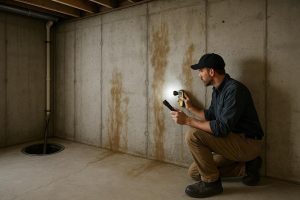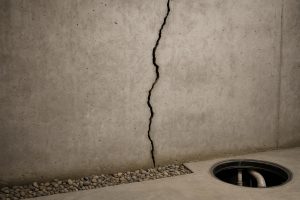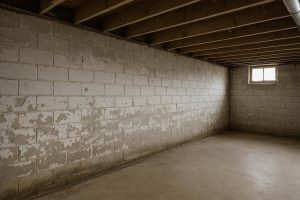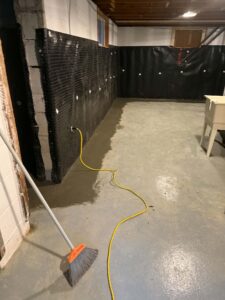
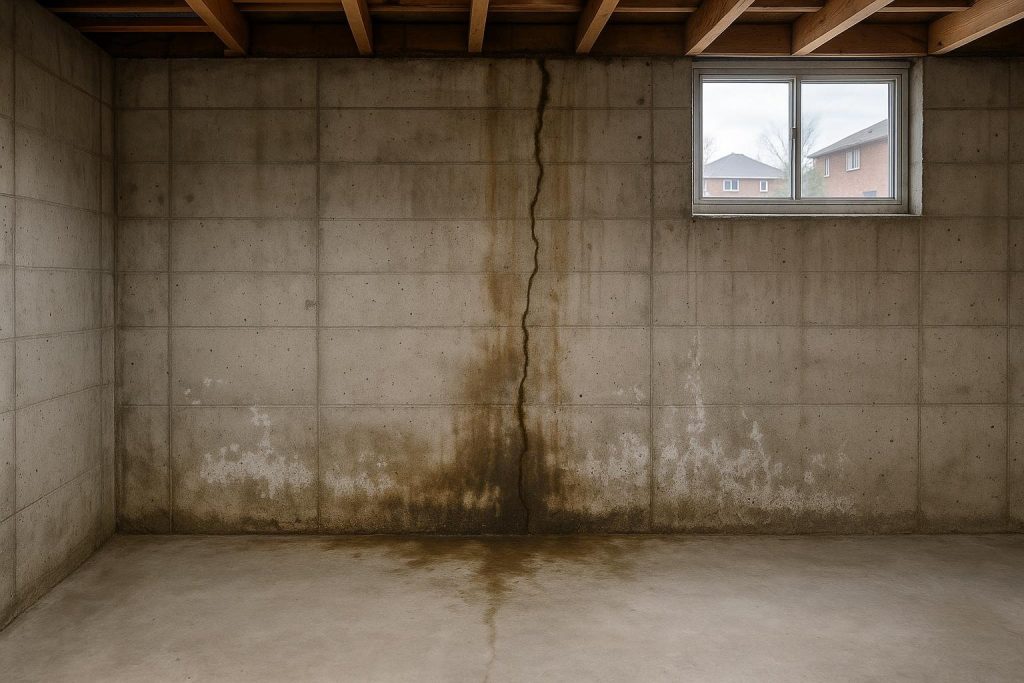
Basement leak repair Scarborough homeowners rely on most often addresses one root cause: hydrostatic pressure from the heavy clay soil that blankets most of the neighbourhood east of the Don Valley. Water does not simply drip through a wall by accident. It builds up against the foundation during spring thaw and summer downpours, finds the path of least resistance, and enters through cracks, failed parging, or silted-up weeping tile that has not moved water properly in decades.
Key Takeaways
- Scarborough’s clay-heavy soil holds water against foundation walls, making hydrostatic pressure the most common driver of basement leaks in the area.
- Most leaks enter through poured-concrete cracks, deteriorated parging, or failed original weeping tile, not through the concrete itself.
- A single crack injected from the interior typically costs $600 to $900; a full exterior waterproofing system on an average semi or detached runs roughly $6,000 to $9,000, depending on linear footage and excavation depth.
- Interior and exterior repairs are not interchangeable: the right choice depends on where water is entering and the condition of the existing drainage system.
- Spring thaw and heavy summer rain are the two peak failure windows for Scarborough foundations, so acting before those seasons reduces both damage and cost.
Definitions and Scope
A basement leak is any uncontrolled entry of water into the below-grade living or storage space of a home. In Scarborough, leaks fall into three broad categories: wall cracks that admit water under pressure, perimeter seepage where water migrates along the footing and rises through the floor-wall joint, and floor cracks where hydrostatic pressure from below pushes water upward through the slab.
The repair methods used to address these problems include polyurethane or epoxy crack injection, interior weeping tile systems draining to a sump pump, and full exterior waterproofing with a rubberised membrane, dimpled drainage board, and new weeping tile bedded in clear stone. Each method targets a different entry point and failure mechanism. Choosing the wrong one does not fix the problem; it only delays it.
This guide covers all three categories, explains which repair suits which situation, and gives honest cost ranges drawn from real jobs completed across Scarborough and the broader east GTA.
Warning Signs: Do You Need Basement Leak Repair in Scarborough?
Recognising the early indicators of a foundation water problem helps homeowners act before minor seepage becomes a costly structural issue. The table below lists the most common warning signs, what each one typically indicates, and how urgent the response should be.
| Warning Sign | Likely Cause | Urgency |
|---|---|---|
| White chalky deposits on wall surface (efflorescence) | Water moving through concrete under pressure, carrying mineral salts | Moderate: inspect and diagnose within one season |
| Visible crack in poured-concrete wall with staining or moisture | Shrinkage or settlement crack has reached the exterior face | High: inject before next freeze-thaw cycle widens it |
| Water at the floor-wall joint after rain or thaw | Failed or silted weeping tile; perimeter drainage no longer functioning | High: drainage system assessment required |
| Damp or musty smell without visible water | Vapour transmission through wall; early-stage seepage | Moderate: moisture reading recommended |
| Peeling paint or bubbling on interior wall surface | Moisture trapped behind surface coating | Moderate: do not re-paint without diagnosing source |
| Sump pump running continuously or cycling rapidly | High water table or failed weeping tile overwhelming the system | High: drainage capacity may be insufficient |
| Horizontal crack in block or poured wall | Lateral soil pressure; potential structural concern | Urgent: engineer assessment before any repair |
If you recognise two or more of these signs, basement leak repair in Scarborough should be scheduled before the next high-risk season. A free on-site estimate through the Scarborough waterproofing and foundation repair service page can confirm the source and scope before any work is committed.
Why Basement Leaks Are So Common in Scarborough
Scarborough sits on a thick deposit of glacial till and Leda clay that extends from the Scarborough Bluffs inland through most of the residential neighbourhoods. Clay is nearly impermeable. When rain falls or snow melts, the water cannot drain away quickly, so it pools against foundation walls and exerts sustained lateral and downward pressure. That pressure is what forces water through any gap it can find.
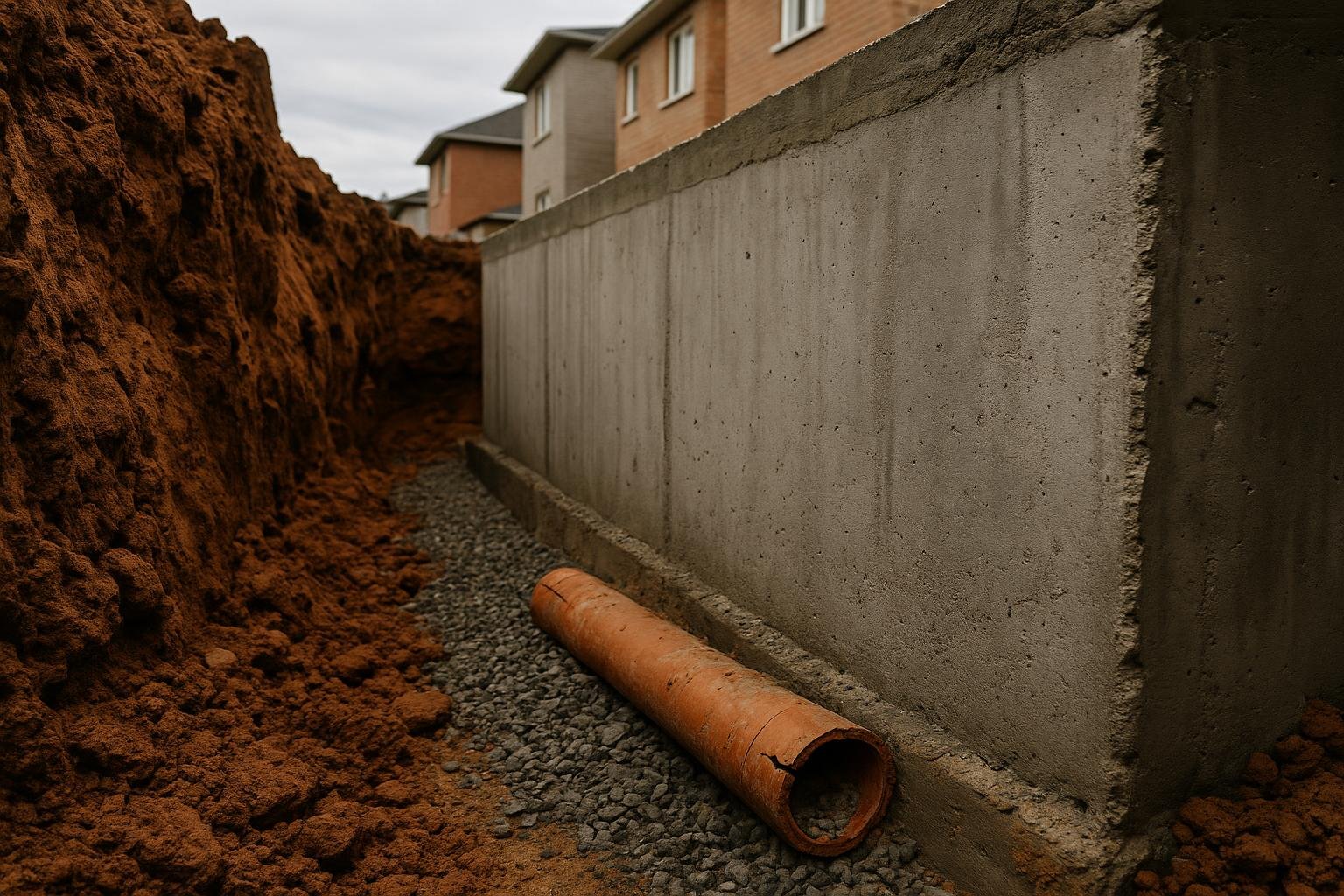
Older homes in Scarborough, particularly those built between the 1950s and the 1980s, were constructed with clay or concrete weeping tile laid at the footing. After 40 to 60 years, that original tile is almost always silted up, crushed, or both. When the drainage system stops working, all of the hydrostatic pressure that it once relieved stays against the wall.
Spring thaw and summer downpours are the two peak failure windows for Scarborough foundations. A drainage system that worked adequately in October can fail completely by April when frozen ground thaws and releases weeks of accumulated moisture all at once.
Newer homes are not immune. Poured-concrete foundations develop shrinkage cracks as the concrete cures, typically within the first few years. Those cracks are hairline-thin at first, but seasonal movement widens them over time. Once a crack reaches the exterior face of the wall, water under hydrostatic pressure will find it. The Canada Mortgage and Housing Corporation (CMHC) notes that foundation moisture problems are among the most common defects reported in Canadian home inspections, and Scarborough’s soil conditions make the area particularly susceptible. You can find CMHC’s homeowner guidance at cmhc-schl.gc.ca.
Your Options for Basement Leak Repair Scarborough
Polyurethane Crack Injection
Low-pressure polyurethane injection is the standard repair for a single active crack in a poured-concrete wall. Ports are surface-mounted along the crack at intervals of roughly 150 to 200 mm, and two-part polyurethane foam is injected under low pressure. The foam expands to fill the full depth of the crack, cures flexible, and tolerates the seasonal movement that Scarborough foundations experience as the clay soil swells and contracts with moisture changes.
This method works best when the crack is isolated, the wall is otherwise sound, and the surrounding drainage system is still functional. It is not appropriate for block foundations, for cracks that have shifted horizontally, or for situations where water is entering at multiple points along the footing.
Epoxy Crack Injection
Epoxy injection is reserved for structural cracks where the two faces of the wall must be re-bonded. Epoxy cures rigid and achieves compressive strengths that exceed the original concrete, which makes it the right choice when a crack shows signs of differential movement or when an engineer has identified a structural concern. Because it cures rigid, epoxy is not suitable for cracks that are still moving seasonally.
Interior Weeping Tile System
An interior system involves breaking the perimeter of the basement floor with a jackhammer, installing a new weeping tile channel at the footing level, and routing collected water to a sump basin where a pump discharges it away from the foundation. A vapour barrier is run up the wall and tucked behind the baseboard to intercept any wall seepage before it reaches the floor. The concrete is then re-poured over the tile.
This approach manages water rather than stopping it at the source, but it is highly effective for perimeter seepage and for homes where exterior excavation is impractical due to decks, driveways, or limited access. It is also the lower-cost option for whole-perimeter drainage problems.
Exterior Waterproofing
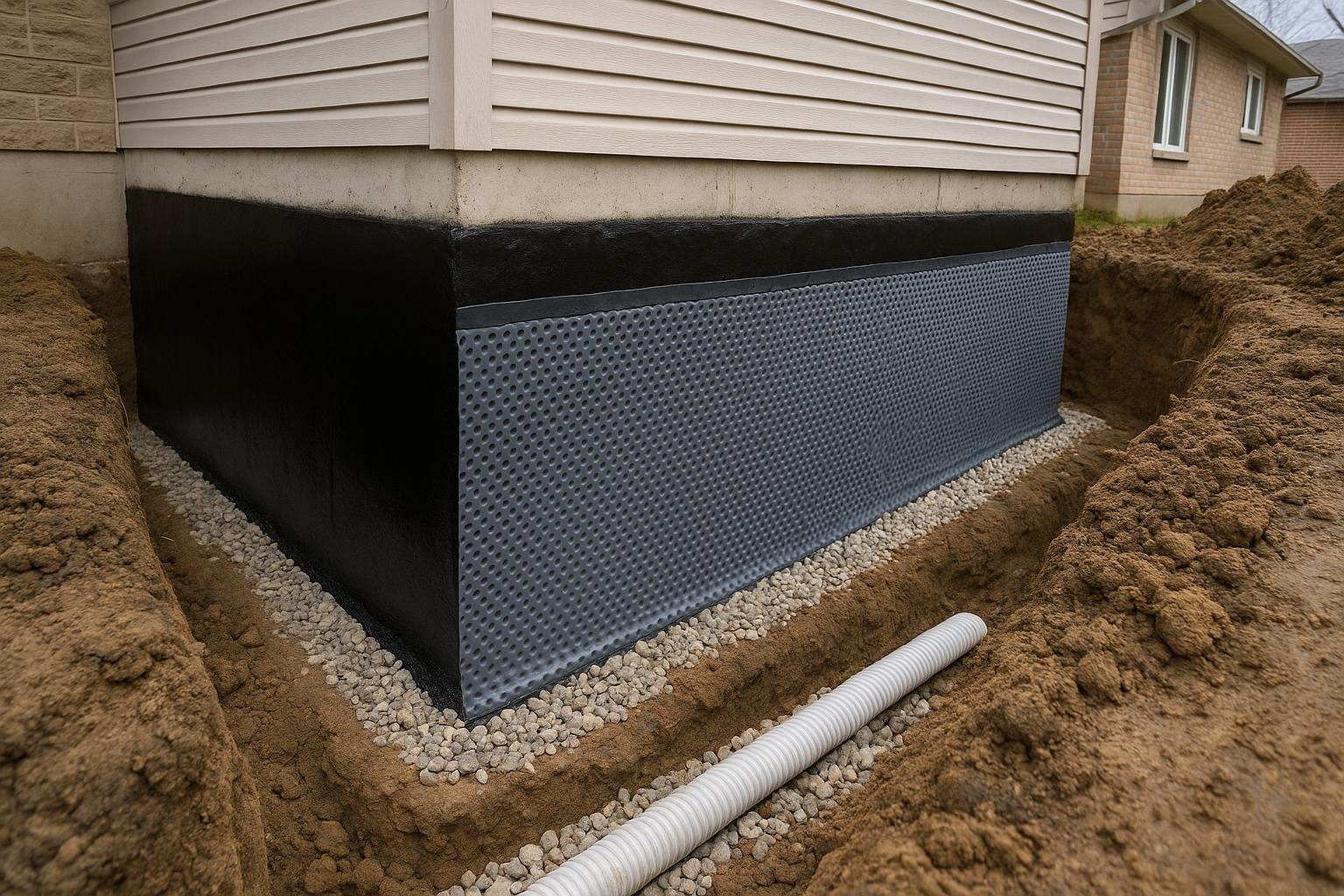
Full exterior waterproofing is the most comprehensive repair available. The process involves excavating to the footing, applying hydraulic cement to any voids or honeycombing in the wall, coating the exterior face with a rubberised waterproofing membrane, installing a dimpled drainage board to protect the membrane and direct water downward, laying new weeping tile in clear stone at the footing, and backfilling with corrected grade to direct surface water away from the house.
This is the right choice when the original weeping tile has failed, when multiple cracks are present on the same wall, or when the homeowner wants a permanent solution rather than ongoing management. On an average Scarborough semi or detached, full exterior waterproofing typically runs $6,000 to $9,000 depending on linear footage, excavation depth, and site access. The final figure always depends on a site inspection.
For a detailed breakdown of what exterior protection involves, see the complete guide to exterior foundation protection.
Sump Pump Installation or Replacement
A sump pump is the discharge mechanism for any interior drainage system, but it is also a standalone upgrade for homes that already have a weeping tile system but lack a functioning pump. In Scarborough, where spring thaw can saturate the soil rapidly, a battery backup sump pump is worth serious consideration. A primary pump that loses power during a storm is useless at exactly the moment it is needed most.
Parging Repair and Exterior Sealing
Parging is the mortar coating applied to the above-grade portion of the foundation wall. When it cracks or spalls, water can penetrate behind it and track down to the footing. Repairing parging is a surface-level fix that addresses cosmetic deterioration and minor above-grade moisture entry, but it does not address hydrostatic pressure below grade. It is appropriate as a maintenance measure, not as a primary waterproofing solution.
Options Compared
| Method | Best For | Typical Lifespan | Relative Cost | Disruption |
|---|---|---|---|---|
| Polyurethane crack injection | Single active poured-concrete crack | Long-term if crack is stable | Lowest ($600-$900 per crack) | Minimal, interior access only |
| Epoxy crack injection | Structural cracks requiring re-bonding | Permanent if crack is stable | Low to moderate | Minimal, interior access only |
| Interior weeping tile system | Perimeter seepage, failed original tile | 25+ years with pump maintenance | Moderate | Moderate, floor breaking required |
| Exterior waterproofing | Multiple cracks, failed tile, full protection | Lifetime with proper backfill | Highest ($6,000-$9,000 typical) | High, excavation required |
| Sump pump installation | Discharge for interior system, backup protection | 7-12 years per pump unit | Low to moderate | Low, pit excavation only |
| Parging repair | Above-grade cosmetic deterioration | 5-15 years depending on exposure | Low | Minimal |
The table above shows that no single method suits every situation. Crack injection is fast and affordable for an isolated problem, but it cannot replace a failed drainage system. Exterior waterproofing costs more and requires excavation, but it addresses the source of pressure rather than managing the result. Interior weeping tile sits in the middle: it handles whole-perimeter drainage without excavation, which makes it the practical choice when site access is restricted.
How to Choose the Right Repair
Choose polyurethane crack injection if you have a single vertical crack in a poured-concrete wall, the crack is actively wet or shows staining, the rest of the wall is dry, and the existing weeping tile is still draining. This is the most cost-effective starting point and can be completed in a few hours.
Choose epoxy injection if a structural engineer or inspector has identified a crack that shows differential movement, step cracking in block foundations, or horizontal displacement. Epoxy re-bonds the wall; polyurethane only seals it.
Choose an interior weeping tile system if water is entering at the floor-wall joint along multiple walls, if the original weeping tile is confirmed to be silted up, or if exterior excavation is blocked by a deck, patio, or attached structure. Interior systems are also the right choice when budget constraints make full exterior work impractical in the short term.
Choose full exterior waterproofing if the home has multiple cracks on the same wall, if a previous interior repair has failed, if the original weeping tile has completely collapsed, or if you want a permanent solution that addresses hydrostatic pressure at the source. Homes in Scarborough’s older neighbourhoods, where 1950s and 1960s clay tile is long past its service life, are strong candidates for basement leak repair Scarborough specialists recommend most often.
If you are unsure where water is entering, the Scarborough waterproofing and foundation repair service page explains how a free on-site estimate can pinpoint the source before any work is scoped.
Costs and Timelines
| Cost Driver | Why It Matters | Approximate Impact |
|---|---|---|
| Linear footage of wall to be treated | More wall means more membrane, tile, and labour | Primary driver for exterior and interior systems |
| Excavation depth | Deeper footings (common in older Scarborough homes) require more digging time and shoring | Can add $500-$1,500 to exterior jobs |
| Site access | Narrow side yards, fences, or decks slow excavation and may require hand-digging | Moderate to significant premium |
| Number of cracks | Each crack injection is priced individually at $600-$900 per crack | Additive per crack |
| Condition of existing weeping tile | Fully collapsed tile requires complete replacement rather than supplemental drainage | Increases scope of interior or exterior systems |
| Sump pump specification | Battery backup and alarm systems add cost but are strongly recommended in Scarborough | $300-$800 above basic pump cost |
As a general reference: a single crack injection runs $600 to $900. A full exterior waterproofing system on an average Scarborough semi or detached typically falls in the $6,000 to $9,000 range. Interior weeping tile systems generally cost less than exterior work for the same linear footage. Every figure here is approximate. The final price depends on a site inspection, because soil conditions, footing depth, and access vary significantly even between neighbouring properties on the same street.
Seasonal Risk Calendar for Scarborough Foundations
Basement leak repair Scarborough contractors schedule most heavily in spring and early summer, but risk is present year-round. The table below maps each season to its primary threat and the recommended action for homeowners.
| Season | Primary Risk | Recommended Action |
|---|---|---|
| Late winter (February to March) | Freeze-thaw cycling widens existing cracks; ground still frozen so drainage is blocked | Inspect interior walls for new staining or crack widening; book inspection early before spring backlog |
| Spring thaw (April to May) | Rapid snowmelt saturates clay soil; hydrostatic pressure peaks; weeping tile failures become visible | Monitor sump pump operation; address any active seepage immediately; highest-risk window for perimeter flooding |
| Early summer (June to July) | Heavy convective rainfall events; clay retains spring moisture so ground stays near saturation | Check window wells and grade drainage; confirm sump discharge is clear; ideal time for exterior waterproofing work |
| Late summer to fall (August to October) | Soil dries and contracts, widening shrinkage cracks; early fall rains re-saturate quickly | Best window for crack injection before freeze-thaw season; schedule exterior work while ground is accessible |
| Winter (November to January) | Frozen ground limits drainage; ice lens formation can exert lateral pressure on walls | Interior weeping tile and crack injection can proceed year-round; exterior excavation is weather-dependent |
Understanding the seasonal pattern helps homeowners time repairs for maximum effectiveness. Basement leak repair Scarborough professionals can complete interior work in any season, but exterior excavation is most efficient between May and October when ground conditions allow machinery access without frost complications.
The City of Toronto offers a Basement Flooding Protection Subsidy that may offset part of the cost of eligible work including sump pump installation and backwater valve installation. Scarborough properties within the former City of Toronto boundaries qualify. Check the Toronto basement flooding subsidy page for current program details.
Risks and Common Mistakes
The most common mistake Scarborough homeowners make is treating a symptom rather than the cause. Applying hydraulic cement or waterproofing paint to the interior face of a leaking wall stops water from appearing on the surface temporarily, but it does nothing to relieve the hydrostatic pressure building up outside. That pressure will eventually find another path, often through the floor-wall joint or a different section of wall.
A second frequent error is injecting a crack without confirming that the drainage system is functional. If the weeping tile is silted up, the crack will re-wet because the surrounding soil stays saturated. Crack injection and drainage repair are often needed together, not as alternatives.
Delaying basement leak repair Scarborough homeowners put off is also a significant risk. A hairline crack that costs $600 to $900 to inject today can widen over one or two freeze-thaw cycles to the point where the wall face spalls and the repair scope expands considerably. Water that enters repeatedly will also promote mould growth in wall cavities and on framing, adding remediation costs on top of the structural repair.
Never assume a dry summer means the problem has resolved. Scarborough’s clay soil retains moisture from spring thaw well into the summer months, and a single heavy rainfall event can re-saturate the ground and restart the pressure cycle within hours.
Finally, choosing a contractor based on price alone carries real risk. A weeping tile system installed without proper fall to the sump basin, or a membrane applied over a damp wall without parging voids first, will fail prematurely. Always ask for a written scope that specifies materials, drainage method, and warranty terms before signing anything. The guide on how to choose a reliable waterproofing contractor covers the key questions to ask.
How the Process Works
- Free on-site estimate and moisture assessment. A technician visits the property, inspects the interior walls, floor, and visible exterior grade, and uses moisture readings to identify active entry points and likely causes.
- Written scope with linear-foot pricing. You receive a written proposal specifying the method, materials, linear footage, drainage route, and warranty before any work begins. No verbal estimates.
- Preparation and access. For exterior work, excavation proceeds to the footing. For interior work, the perimeter concrete is broken with a jackhammer and debris is removed. For crack injection, ports are surface-mounted along the crack.
- Core repair work. Exterior: hydraulic cement is applied to voids, the rubberised membrane is rolled onto the clean wall face, dimpled drainage board is installed, and new weeping tile is laid in clear stone at the footing. Interior: weeping tile is installed to the sump basin, vapour barrier is run up the wall, and concrete is re-poured. Crack injection: polyurethane or epoxy is injected port by port until the material appears at the next port, confirming full penetration.
- Drainage connection and sump installation. Where a sump pump is part of the scope, the basin is set, the pump is installed, and the discharge line is run to daylight or a storm connection.
- Backfill and grade correction. Exterior excavations are backfilled in lifts and the grade is corrected to slope away from the foundation at a minimum of 5% over the first 1.5 metres, consistent with Ontario Building Code requirements.
- Final inspection and warranty documentation. The completed work is reviewed with the homeowner, and warranty paperwork is issued. DryShield’s warranty is transferable, which protects resale value.
Frequently Asked Questions
How do I know if my Scarborough basement leak needs injection or full waterproofing?
If water is entering through a single identifiable crack in a poured-concrete wall and the rest of the wall is dry, crack injection is usually the right starting point. If water appears at the floor-wall joint, along multiple walls, or after the original weeping tile has been confirmed as failed, a full drainage system is the appropriate repair. A free on-site estimate will give you a definitive answer based on your specific foundation.
How long does a polyurethane crack injection last?
Polyurethane cures flexible, which allows it to move with the foundation through seasonal cycles without cracking. When the underlying crack is stable and the drainage system is functional, an injection repair can last indefinitely. If the crack is still actively widening due to structural movement, the repair may need to be revisited and an engineer should assess the cause.
Can I waterproof my basement from the inside only?
Interior waterproofing manages water that has already entered the wall assembly and directs it to a sump pump before it reaches the floor. It is a proven and widely used approach, particularly where exterior excavation is not practical. It does not stop water from entering the wall itself, so it is best understood as a drainage solution rather than a barrier solution. For a deeper look at the tradeoffs, see the comparison of interior vs. exterior waterproofing.
What causes white powder on my basement walls?
The white chalky deposit is efflorescence: mineral salts carried through the concrete by water and deposited on the surface as the water evaporates. It is a reliable indicator that water is moving through the wall under pressure. Efflorescence itself is not structurally harmful, but the moisture causing it is. Treating the surface without addressing the source will not stop the process.
How much does basement leak repair cost in Scarborough?
A single crack injection typically runs $600 to $900. A full exterior waterproofing system on an average Scarborough semi or detached generally falls in the $6,000 to $9,000 range, depending on linear footage, excavation depth, and site access. Interior weeping tile systems typically cost less than exterior work for the same perimeter. Every job is priced after a site inspection because soil conditions and footing depth vary. For a broader cost breakdown, the basement leak repair cost guide for Toronto covers the main pricing variables in detail.
Does the City of Toronto offer any subsidy for basement waterproofing in Scarborough?
Yes. Scarborough properties within the former City of Toronto boundaries are eligible for the Basement Flooding Protection Subsidy Program, which can offset costs for sump pump installation, backwater valve installation, and related work. The subsidy does not cover membrane waterproofing directly, but qualifying drainage improvements can reduce your out-of-pocket cost meaningfully. Confirm current eligibility and amounts with the City before starting work.
How long does exterior waterproofing take?
A typical exterior waterproofing job on one or two walls of a Scarborough semi or detached takes one to two days once excavation is underway. Larger perimeters or restricted access can extend the timeline. Interior weeping tile systems on a full perimeter generally take one to two days as well. Crack injection on a single crack is usually completed in two to four hours.
Will fixing my basement leak increase my home’s resale value?
A documented, warranted waterproofing repair removes a material defect that buyers and their inspectors will flag. In the Scarborough resale market, a wet basement disclosure can reduce offers or kill a deal entirely. Addressing the problem before listing, and providing transferable warranty documentation, removes that risk and supports full market value. The repair pays for itself most clearly when it prevents a price reduction during negotiation.
Is crack injection covered by home insurance in Ontario?
Standard home insurance policies in Ontario do not cover gradual water infiltration or foundation maintenance. Coverage may apply if a sudden and accidental event, such as a burst pipe, causes the damage. Hydrostatic seepage through a foundation crack is almost always classified as a maintenance issue and excluded. Check your specific policy wording and speak with your broker before assuming coverage applies.
Ready to stop the water for good? Contact the DryShield Team for a free on-site estimate of your Scarborough home. We will identify exactly where water is entering, explain your options clearly, and provide a written scope with no-pressure pricing. Reach us through the contact page to book your assessment.