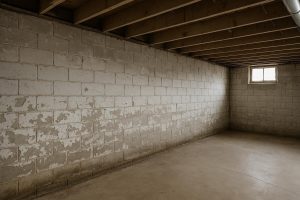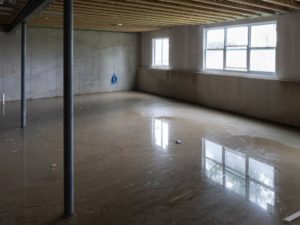
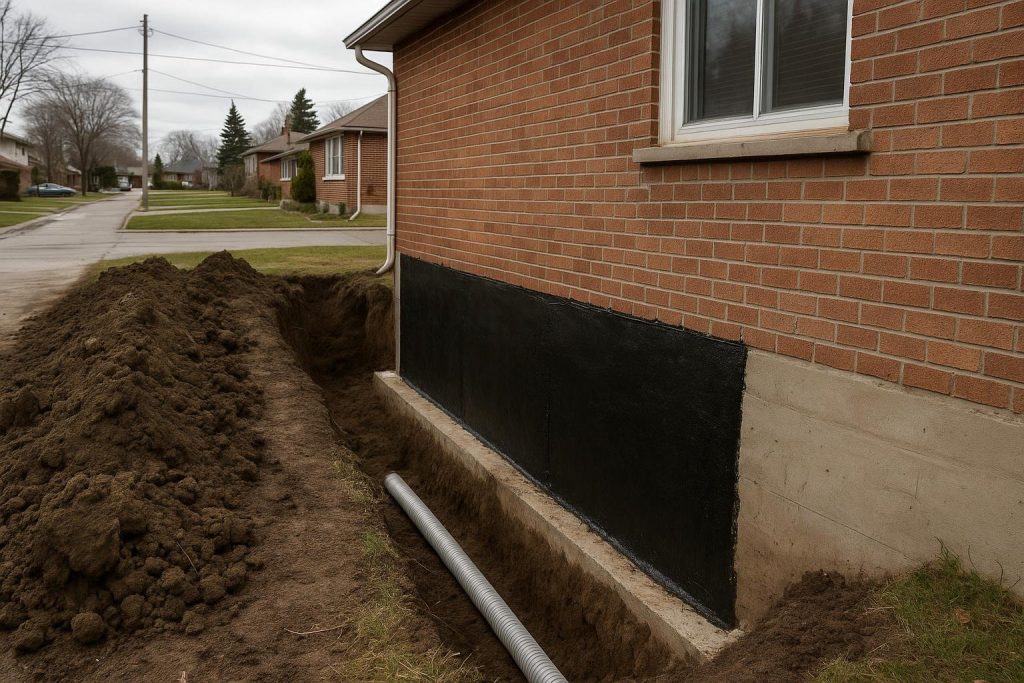
Basement waterproofing cost Scarborough homeowners pay in 2026 ranges from roughly $600 for a single crack injection up to $9,000 or more for a full exterior system, depending on the method, the linear footage of wall involved, and how deep the crew must excavate to reach the footing. Scarborough’s dense clay soil holds water against foundation walls long after a rainstorm, which means hydrostatic pressure, not surface moisture alone, is usually the root cause of a wet basement here. Understanding what drives the price before you call a contractor puts you in a much stronger position to evaluate quotes.
Key Takeaways
- A single polyurethane crack injection in Scarborough typically costs $600 to $900, all-in.
- Interior weeping-tile systems are generally less expensive than full exterior excavation for the same linear footage.
- Scarborough’s Lakeridge clay soil is a primary cost driver: it holds water, increases hydrostatic pressure, and makes excavation slower.
- Spring thaw and summer downpours are the two peak failure windows for Scarborough foundations.
- Every final price depends on a site inspection; ranges in this guide are starting points, not fixed quotes.
Definitions and Scope
Basement waterproofing is the process of preventing water from entering a foundation, whether through wall cracks, failed weeping tile, saturated soil, or a rising water table. In Scarborough, the term covers several distinct methods: exterior excavation with a rubberised membrane, interior weeping-tile drainage, polyurethane or epoxy crack injection, sump pump installation, and parging repairs. Each addresses a different entry point and carries a different price tag.
Scope matters enormously. A homeowner dealing with a single hairline crack in a poured-concrete wall needs a very different solution from one whose 1960s bungalow has fully silted-up original weeping tile running the entire perimeter. Scarborough’s housing stock skews toward post-war bungalows and split-levels, many of which were built with clay-pipe weeping tile that has long since collapsed or filled with silt. That context shapes both the method and the cost.
This guide covers residential basement waterproofing only. For commercial or parking-structure work, different scopes and pricing apply. All price ranges here reflect DryShield’s own completed jobs in the Toronto east end and Scarborough specifically; the final figure for any property always depends on a site inspection.
Why Basement Waterproofing Cost Scarborough Homeowners Face Is Higher Than Average
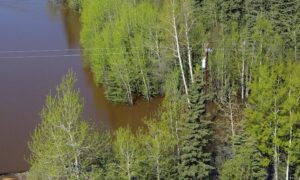
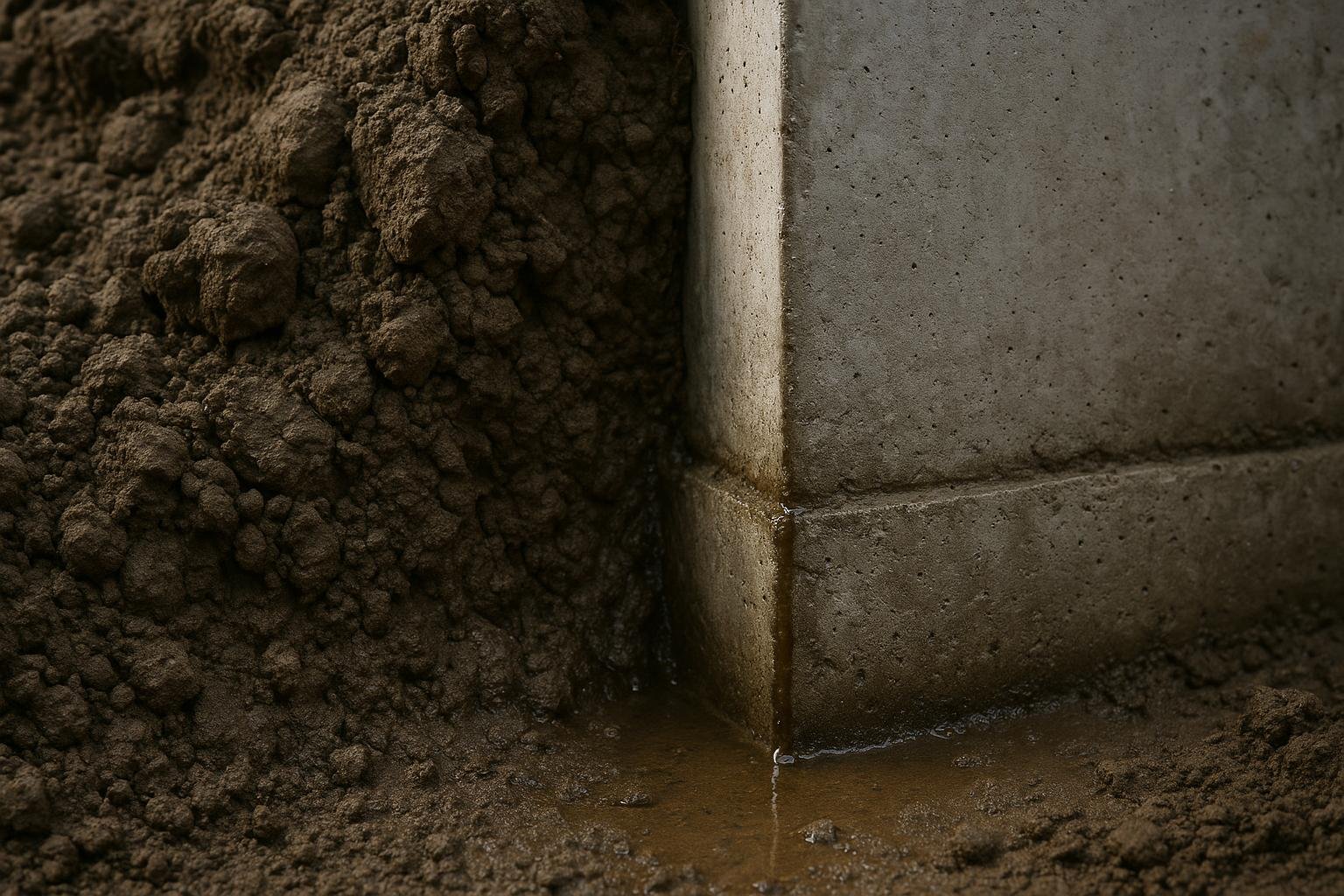
Scarborough sits on a thick layer of glacial till and Lakeridge clay that drains poorly. After a heavy rain or spring thaw, that clay stays saturated for days, pressing water against foundation walls at pressures that can force moisture through hairline cracks, mortar joints, and the cold joint where the wall meets the footing. The City of Toronto’s own stormwater data consistently shows the east end, including Scarborough, as one of the higher-risk zones for basement flooding during intense summer storms.
Older Scarborough homes, particularly those built between 1945 and 1975, were constructed with clay-pipe or bituminous-fibre weeping tile. After 50 or more years, that tile is almost always either collapsed, root-invaded, or packed with silt. When it fails, groundwater has nowhere to go except up through the floor slab or in through the wall. Replacing it is not optional at that point; it is the only permanent fix.
Delaying repairs compounds the cost. Water that seeps through a foundation wall accelerates concrete carbonation, promotes mould growth behind finished walls, and can eventually undermine the structural integrity of the footing. The Canada Mortgage and Housing Corporation (CMHC) notes that moisture is the single most common cause of premature deterioration in Canadian residential foundations. Acting at the first sign of a problem, whether that is efflorescence on the wall, a damp smell, or a visible crack, is almost always cheaper than waiting.
You can read more about the full range of basement waterproofing and foundation crack repair services available in Scarborough to understand which solutions apply to your specific situation.
Your Options
Polyurethane Crack Injection
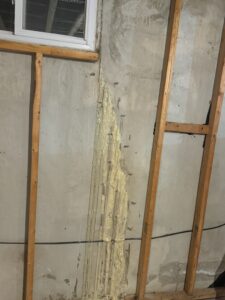
Low-pressure polyurethane injection seals active cracks from the interior without any excavation. A technician drills ports along the crack, pastes surface caps over them, then injects flexible polyurethane foam that expands to fill the void completely. Because the cured foam remains flexible, it tolerates the seasonal movement that is normal in a Scarborough foundation as the clay soil freezes and thaws. This method is best for isolated vertical or diagonal cracks in poured-concrete walls where the wall itself is not structurally compromised. It does not address failed weeping tile or perimeter drainage problems.
Epoxy Crack Injection
Epoxy injection is used specifically for structural cracks where the wall must be re-bonded to restore load-bearing capacity. The epoxy cures rigid and bonds to concrete at very high strength. Because it does not flex, it is not appropriate for cracks that are still moving seasonally. A qualified inspector must determine whether a crack is structural before recommending epoxy over polyurethane. This method is also interior-only and does not solve drainage or hydrostatic pressure issues on its own.
Interior Weeping Tile System
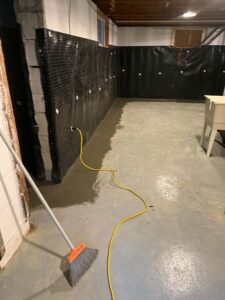
An interior system involves jackhammering a channel around the perimeter of the basement floor, installing a new perforated weeping-tile pipe bedded in clear stone, routing it to a sump basin, and re-pouring the concrete. A vapour barrier is run up the wall to direct any seepage that does pass through the wall down into the drainage channel rather than onto the floor. A sump pump then expels the collected water. This approach manages water that enters the foundation rather than stopping it at the wall face, making it a practical choice when exterior excavation is not feasible due to access, landscaping, or cost.
Exterior Waterproofing with Membrane
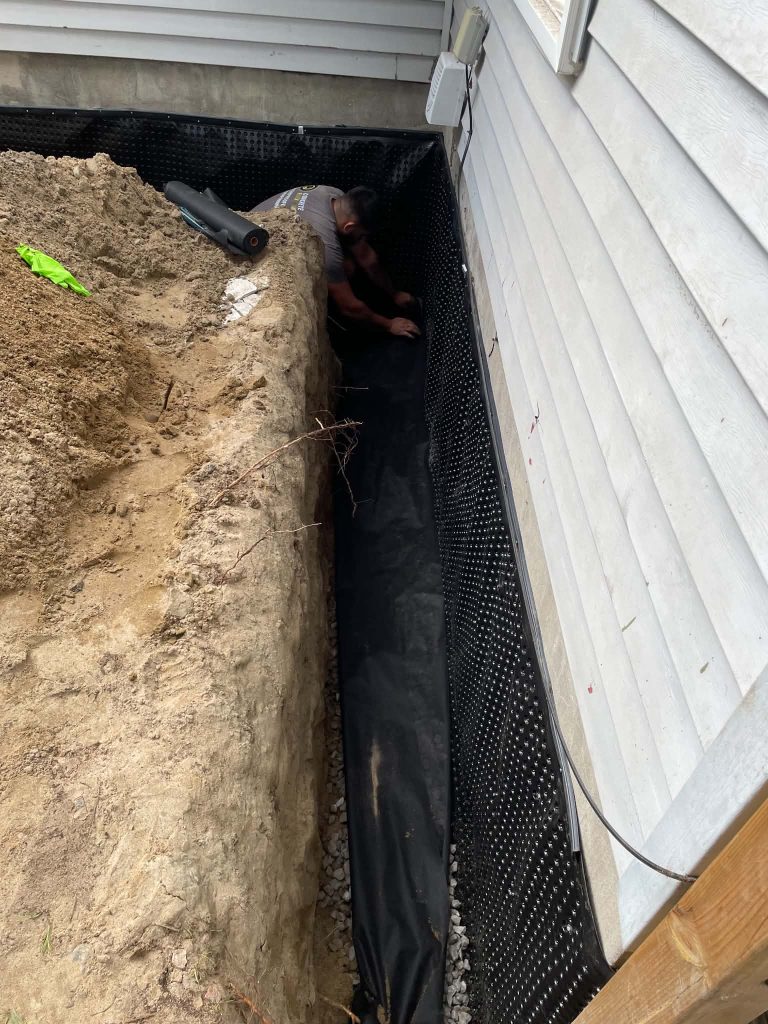
Full exterior waterproofing is the most comprehensive solution. The crew excavates down to the footing along the affected wall or the full perimeter, applies hydraulic cement to any voids or honeycombing in the concrete, then coats the wall with a rubberised waterproofing membrane. A dimpled drainage board protects the membrane and channels water downward to new weeping tile bedded in clear stone at the footing level. The trench is then backfilled and the grade is corrected to direct surface water away from the house. This method stops water at the source and is the preferred approach for Scarborough homes with chronic perimeter leakage or fully failed original weeping tile.
Sump Pump Installation or Replacement
A sump pump is often the final component of either an interior or exterior system, but it can also be installed as a standalone upgrade when an existing system is in place but the pump has failed or lacks battery backup. In Scarborough, where power outages during summer storms are not uncommon, a battery-backup sump pump is a worthwhile addition. The pump sits in a basin at the lowest point of the drainage system and activates automatically when water reaches a set level.
Parging and Surface Repairs
Parging is the application of a cement-based coating to the exterior face of a foundation wall, typically above grade. It seals minor surface porosity and protects the wall from freeze-thaw spalling. On its own, parging is a maintenance measure, not a waterproofing solution. It is almost always included as part of an exterior waterproofing job to fill voids before the membrane goes on, but it should not be sold as a standalone fix for an actively leaking wall.
Options Compared
| Method | Best For | Typical Lifespan | Relative Cost | Disruption |
|---|---|---|---|---|
| Polyurethane crack injection | Isolated cracks in poured concrete | Long-term if crack is stable | Lowest | Minimal, interior only, 1 day |
| Epoxy crack injection | Structural cracks requiring re-bonding | Permanent if crack stops moving | Low to moderate | Minimal, interior only, 1 day |
| Interior weeping tile system | Perimeter seepage, failed drainage, limited exterior access | 25 to 30 years with maintenance | Moderate | Moderate, jackhammer work inside |
| Exterior waterproofing with membrane | Chronic perimeter leakage, failed original weeping tile | 30 or more years | Highest | High, full excavation required |
| Sump pump installation | Final drainage component or standalone upgrade | 7 to 10 years per pump unit | Low to moderate | Low, basin work only |
| Parging | Surface maintenance, part of exterior system | 5 to 15 years depending on exposure | Low | Minimal |
The table above shows that crack injection and parging sit at the low end of both cost and disruption, but they address only specific, limited problems. Interior weeping tile occupies the middle ground: it manages perimeter water effectively without the cost of full excavation, but it does not stop water at the wall face. Exterior waterproofing is the most thorough solution and carries the longest expected service life, which is why it is the right choice for Scarborough homes with chronic, multi-wall leakage or original weeping tile that has never been replaced.
Full exterior waterproofing of an average Scarborough semi-detached or detached home typically runs $6,000 to $9,000, depending on linear footage, depth of excavation, and site access. A single crack injection is typically $600 to $900. Every final price depends on a site inspection.
How to Choose the Right Method
Choose polyurethane crack injection if you have one or two isolated vertical cracks in a poured-concrete wall, the cracks are not actively widening, and there is no sign of perimeter seepage along the floor-wall joint. This is the fastest and most cost-effective fix for that specific problem.
Choose epoxy injection if a structural engineer or experienced inspector has confirmed the crack is structural and the wall needs to be re-bonded. Do not choose epoxy for cosmetic or non-structural cracks; the rigidity of cured epoxy can cause the concrete to crack again nearby if seasonal movement continues.
Choose an interior weeping-tile system if water is entering along the perimeter floor-wall joint, if the original weeping tile has failed, or if exterior excavation is not practical because of a deck, driveway, or neighbouring structure directly against the wall. Interior systems are also the right choice when budget is a firm constraint and the exterior approach is not feasible this season.
Choose exterior waterproofing if you want to stop water at the source, if multiple walls are affected, if the original weeping tile is known to be failed or silted, or if you are planning a finished basement and want the highest-confidence solution before investing in interior finishes. For a detailed look at how the exterior process works, the complete guide to exterior foundation protection covers every stage.
Choose a sump pump upgrade if you already have a drainage system but the pump is more than seven years old, lacks battery backup, or has no alarm. Scarborough’s summer storm season makes backup power a practical necessity, not a luxury.
Basement Waterproofing Cost Scarborough: Key Drivers and Timelines
| Cost Driver | Why It Affects Price | Approximate Impact |
|---|---|---|
| Linear footage of wall treated | More wall means more membrane, more weeping tile, more labour | Primary driver for perimeter systems |
| Depth of excavation | Deeper footings require more digging time and shoring; Scarborough clay slows excavation | Can add 15 to 30 percent to exterior jobs |
| Site access | Narrow side yards, decks, fences, or driveways against the wall restrict equipment and add hand-digging time | Significant on older Scarborough lots with tight setbacks |
| Number of cracks | Each crack injection is priced individually; multiple cracks add up | $600 to $900 per crack |
| Condition of existing weeping tile | Fully failed tile requires complete replacement; partial failure may allow spot repair | Full replacement adds to both interior and exterior system cost |
| Sump basin and pump | New basin, pump, and battery backup add to interior system cost | Moderate addition to interior system total |
| Concrete re-pour | Interior systems require jackhammering and re-pouring the perimeter slab | Included in interior system pricing |
The two biggest levers on basement waterproofing cost Scarborough homeowners face are linear footage and site access. A detached home with a clear perimeter and a shallow footing will come in at the lower end of the exterior range. A semi-detached with a shared wall, a deck on one side, and a driveway on the other requires more hand labour and more time, which pushes the price higher. Crack injection pricing is more predictable: the $600 to $900 range per crack holds across most Scarborough jobs, with variation based on crack length and whether secondary ports are needed. For a broader look at what drives pricing across Ontario, the foundation waterproofing cost guide provides useful context.
Timeline: a crack injection is typically completed in a single day. An interior weeping-tile system for an average Scarborough basement takes two to three days. Full exterior waterproofing along one wall takes one to two days; a full perimeter job may take three to five days depending on access and depth.
Risks and Common Mistakes
| Symptom | Likely Cause | Correct Fix |
|---|---|---|
| Water along floor-wall joint after rain | Failed weeping tile or hydrostatic pressure at footing | Interior or exterior weeping-tile replacement |
| Vertical crack leaking after spring thaw | Shrinkage or settlement crack in poured concrete | Polyurethane crack injection |
| Horizontal crack in block wall | Lateral soil pressure, potentially structural | Structural assessment first; may require wall reinforcement |
| White powder (efflorescence) on wall | Mineral deposits left by evaporating moisture moving through concrete | Identify and seal the moisture source; efflorescence itself is a symptom |
| Damp smell with no visible water | Vapour transmission through porous concrete or block | Moisture assessment; may need interior membrane or drainage |
The most common mistake Scarborough homeowners make is treating a symptom rather than the cause. Painting a damp wall with hydraulic cement or a waterproofing paint may stop visible seepage for one season, but it does nothing to relieve the hydrostatic pressure building up on the other side of the wall. That pressure will eventually find a new path, often at the footing or through a new crack.
A second frequent error is choosing an interior system when the wall itself is the problem. Interior drainage manages water after it enters; it does not stop water at the wall face. For a wall that is actively deteriorating from water contact, exterior waterproofing with a membrane is the correct answer. The basement leak repair cost guide for Toronto covers this distinction in detail and is directly relevant to Scarborough homeowners comparing quotes.
A third mistake is skipping the sump pump battery backup. Scarborough experiences power outages during the same summer storms that produce the highest groundwater levels. A primary pump without backup will fail precisely when it is needed most.
Never accept a quote that does not include a written scope specifying the method, the linear footage, the materials (membrane type, pipe diameter, stone specification), and the warranty terms. Vague quotes protect the contractor, not the homeowner.
How the Process Works
- Free on-site inspection and moisture assessment. A technician visits the property, inspects the foundation walls, floor slab, and exterior grade, and uses moisture meters to map where water is entering and how severe the saturation is in the surrounding soil.
- Written scope with linear-foot pricing. You receive a written proposal specifying the method, the exact walls or cracks being treated, the materials, the timeline, and the warranty. For exterior work, this includes the excavation depth and backfill specification.
- Preparation and protection. Interior contents near the work area are protected. For exterior jobs, any landscaping, fencing, or hardscaping that must be temporarily removed is documented and planned for reinstatement.
- Core work. For exterior waterproofing: excavation to the footing, hydraulic cement parging of voids, rubberised membrane application, dimpled drainage board installation, new weeping tile bedded in clear stone. For interior systems: jackhammer perimeter channel, install weeping tile to sump basin, vapour barrier up the wall, re-pour concrete. For crack injection: port drilling, paste application, low-pressure polyurethane or epoxy injection.
- Backfill and grade correction. Exterior trenches are backfilled in lifts and compacted. The grade is corrected to slope away from the foundation at a minimum of one inch per foot for the first six feet, as required by the Ontario Building Code.
- Final inspection and documentation. The completed work is inspected, photographed, and documented. Warranty paperwork is issued. The homeowner is walked through what was done and what to watch for going forward.
The Ontario Building Code governs drainage and grading requirements for residential foundations. For homeowners who want to understand the compliance side, the Ontario Building Code basement waterproofing compliance guide explains the relevant sections in plain language. The CMHC also publishes guidance on residential moisture control at cmhc-schl.gc.ca, which is a useful independent reference for understanding moisture thresholds and ventilation requirements.
Frequently Asked Questions
What is the average basement waterproofing cost in Scarborough?
Basement waterproofing cost Scarborough homeowners pay varies widely by method. A single crack injection runs $600 to $900. An interior weeping-tile system for an average Scarborough basement typically falls below the exterior range. Full exterior waterproofing of a semi-detached or detached home generally runs $6,000 to $9,000, depending on linear footage, excavation depth, and site access. Every final price requires a site inspection.
Why is Scarborough clay soil a cost factor?
Lakeridge clay holds water against foundation walls for extended periods after rain, increasing hydrostatic pressure and the likelihood of seepage. It also slows excavation because it does not break apart easily, which adds labour time to exterior jobs. Homes in Scarborough’s older neighbourhoods, where the clay layer is thickest, tend to sit at the higher end of the exterior waterproofing range.
Is interior or exterior waterproofing better for a Scarborough home?
Exterior waterproofing stops water at the wall face and is the more comprehensive solution. Interior systems manage water after it enters and are appropriate when exterior access is limited or budget is a constraint. For a Scarborough home with chronic perimeter leakage and original weeping tile that has never been replaced, exterior is the preferred long-term answer. A site inspection is the only reliable way to determine which applies to your property.
How long does basement waterproofing last?
A properly installed exterior system with a rubberised membrane and new weeping tile can last 30 or more years. Interior weeping-tile systems typically perform well for 25 to 30 years with periodic sump pump maintenance. Polyurethane crack injections are long-lasting in stable cracks but may need re-treatment if the crack continues to move. Sump pump units themselves typically need replacement every 7 to 10 years.
Does waterproofing require a building permit in Scarborough?
Interior drainage work and crack injection generally do not require a permit. Exterior excavation that alters the grade or drainage pattern may require notification to the City of Toronto. Your contractor should advise you on permit requirements as part of the written scope. The Ontario Building Code sets the grading and drainage standards that all work must meet regardless of permit status.
Can I waterproof only one wall instead of the full perimeter?
Yes. Single-wall exterior waterproofing is common and appropriate when leakage is clearly isolated to one side of the foundation. The cost scales with linear footage, so treating one wall costs significantly less than a full perimeter job. However, if the original weeping tile has failed, it has usually failed around the entire perimeter, and spot-treating one wall may shift the problem rather than solve it. A thorough inspection will clarify whether a partial or full treatment is warranted.
What is the difference between polyurethane and epoxy crack injection?
Polyurethane cures flexible and is the standard choice for non-structural cracks in poured-concrete walls. It tolerates seasonal foundation movement without re-cracking. Epoxy cures rigid and is used only when a crack is structural and the wall must be re-bonded to restore load-bearing capacity. Using epoxy on a moving crack can cause the concrete to crack again nearby. A qualified inspector should determine which material is appropriate before any injection work begins.
Will waterproofing increase my home’s resale value in Scarborough?
A dry, documented basement is a meaningful selling point in Scarborough’s competitive real estate market. Buyers and their inspectors look closely at foundation condition, and a transferable warranty from a reputable contractor removes a significant objection. While waterproofing is not a renovation that adds square footage, it protects the value already in the home and prevents the much larger cost of structural remediation if water damage is left unaddressed.
How do I know if my original weeping tile has failed?
The clearest signs are water entering along the floor-wall joint during or after heavy rain, a persistently damp floor slab, or efflorescence running along the base of the wall. A camera inspection of the existing weeping tile, where accessible, can confirm whether the pipe is intact, silted, or collapsed. Most Scarborough homes built before 1975 have clay-pipe or bituminous-fibre weeping tile that is at or past the end of its service life. When that tile fails, basement waterproofing cost Scarborough homeowners face rises significantly because full replacement is the only lasting fix.
How do I compare basement waterproofing cost Scarborough contractors quote?
Request written scopes from at least two contractors. Each scope should specify the method, the linear footage being treated, the membrane or pipe materials, the warranty terms, and the timeline. Basement waterproofing cost Scarborough quotes that lack these details protect the contractor, not you. Compare scopes line by line rather than comparing totals alone, and confirm that each contractor carries liability insurance and offers a transferable warranty.
Ready to get a clear picture of what your Scarborough basement needs and what it will cost? Contact the DryShield Team for a free on-site inspection and written scope. There is no obligation, and the inspection gives you the specific information you need to make a confident decision.