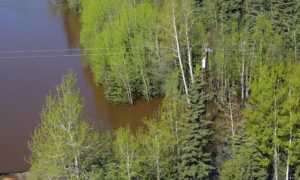
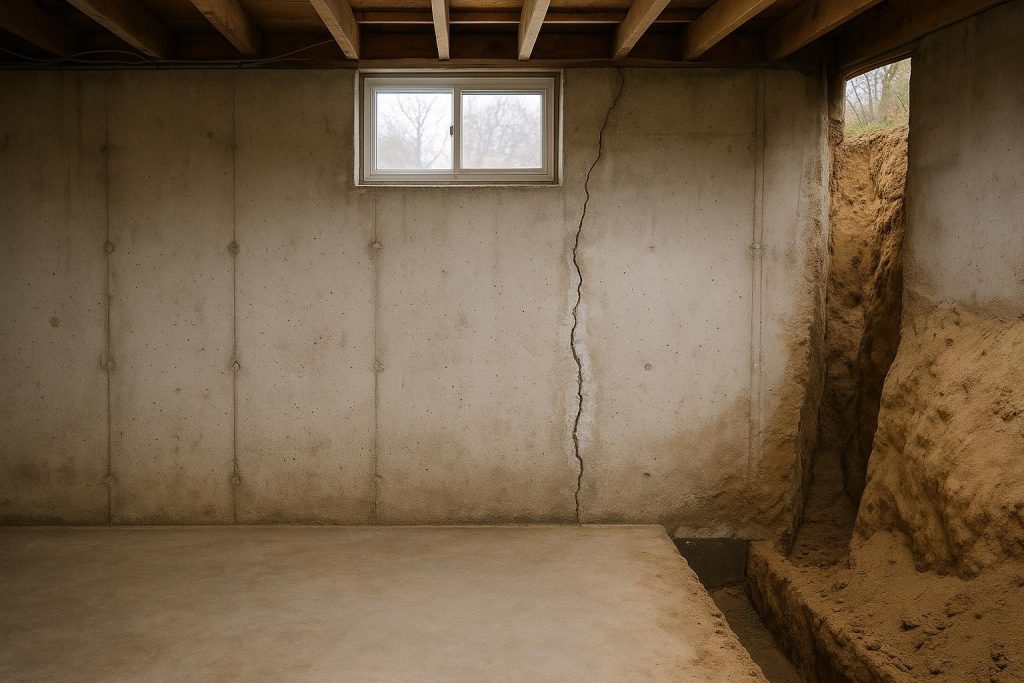
Foundation crack repair Tiny Township homeowners need is shaped by conditions specific to this part of Simcoe County: sandy, well-drained soils near Georgian Bay give way to heavier till further inland, and the freeze-thaw cycle here is among the most aggressive in southern Ontario. A crack in a Tiny Township foundation wall is rarely cosmetic. Left alone, it becomes a channel for water, soil gas and, over successive winters, a progressively wider gap that undermines the structural integrity of the wall.
Key Takeaways
- Most Tiny Township foundation cracks are caused by freeze-thaw movement and hydrostatic pressure, not structural failure.
- Low-pressure polyurethane injection seals non-structural cracks from the interior without excavation, typically in a single visit.
- A single crack injection in Tiny runs roughly $600 to $900; full exterior waterproofing with new weeping tile ranges from $6,000 to $9,000 depending on linear footage and access.
- Sandy soils near the bay drain quickly, but clay-rich till pockets inland hold water against the footing and accelerate crack growth.
- Spring thaw and summer downpours are the two peak failure windows when cracks that were dormant all winter suddenly begin to seep.
Definitions and Scope
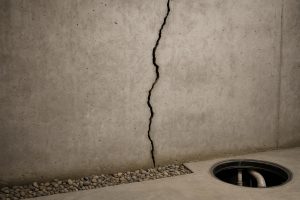
A foundation crack is any fracture in a poured concrete or concrete block wall that runs from the interior face toward the exterior. Cracks are classified by orientation, width and whether they are actively moving. Vertical cracks in poured concrete walls are the most common type in Tiny Township and almost always result from concrete shrinkage during curing or from seasonal frost heave. Diagonal cracks, particularly those that widen at one end, suggest differential settlement. Horizontal cracks in block foundations are the most serious category because they indicate lateral soil pressure against the wall.
The scope of repair depends on which category applies. A hairline shrinkage crack that has been stable for years is a waterproofing problem. A horizontal crack in a block wall that has deflected inward is a structural problem that requires an engineer’s assessment before any injection or membrane work begins. This guide covers the waterproofing and sealing side of foundation crack repair, which accounts for the large majority of calls DryShield receives from Tiny Township and the surrounding Simcoe County area.
Why Foundation Cracks Matter in Tiny Township
Tiny Township sits on the southeastern shore of Georgian Bay, and the local geology is more varied than many homeowners expect. Lots close to the water often have sandy, coarse-grained soil that drains freely. Lots further inland, particularly around Wyevale and Perkinsfield, sit on heavier glacial till with significant clay content. Clay holds water against the foundation wall for weeks after a rain event, building hydrostatic pressure that forces water through even a hairline crack.
The freeze-thaw cycle compounds this. Tiny Township regularly records more than 60 freeze-thaw cycles per winter season. Each cycle expands water trapped inside a crack by roughly nine percent, widening the gap incrementally. A crack that measured two millimetres in October can measure four or five millimetres by April. The Canadian Mortgage and Housing Corporation notes that freeze-thaw action is one of the leading causes of foundation deterioration in Canadian residential construction, and Tiny’s proximity to Georgian Bay means moisture is rarely in short supply.
Older homes in the township, particularly those built before 1980, often have original clay weeping tile that has silted up completely. When the drainage system around the footing fails, all groundwater pressure transfers directly to the foundation wall. That is when cracks that were previously dry begin to seep.
Hydrostatic pressure, not rainfall alone, is the root cause of most wet basements in Tiny Township. A failed or silted weeping tile system means every rain event pushes water directly against your foundation wall.
Your Options for Foundation Crack Repair in Tiny
Low-Pressure Polyurethane Injection
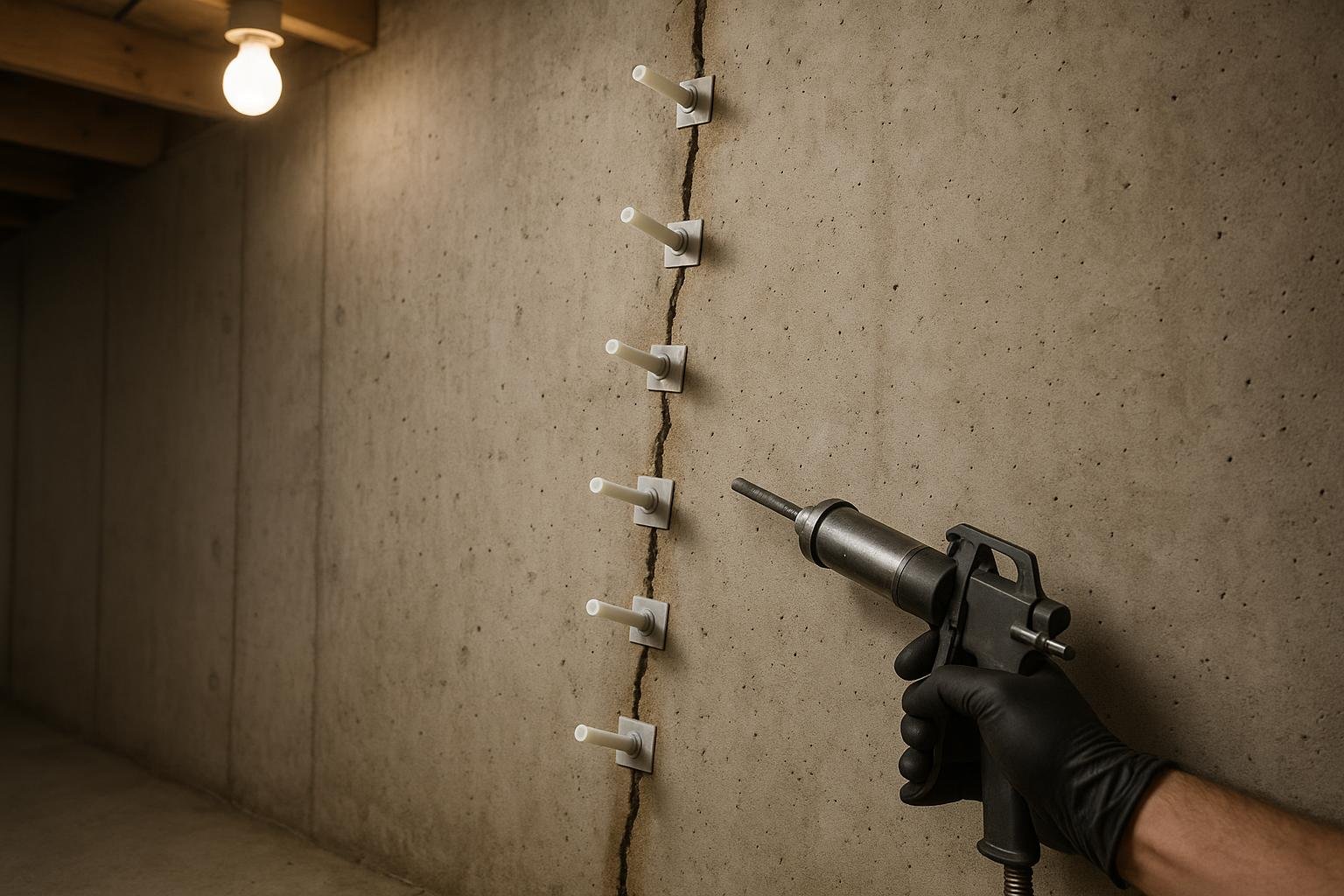
Polyurethane injection is the standard repair for non-structural vertical and diagonal cracks in poured concrete walls. A technician drills or hammers injection ports into the crack face at intervals of roughly 20 to 30 centimetres, pastes a surface seal over the crack between ports, then injects a two-part polyurethane resin under low pressure. The resin travels the full depth of the crack, reacts with any moisture present and expands to fill every void. Once cured, the material remains flexible, which is critical in Tiny Township where seasonal foundation movement continues year after year. A rigid filler would simply re-crack at the bond line.
This method works from the interior, requires no excavation and is typically completed in two to four hours. It is best suited to active or previously wet cracks in poured concrete where the wall is otherwise sound. It does not address the source of hydrostatic pressure, so it is often paired with drainage improvements on larger jobs.
Epoxy Injection
Epoxy injection uses a two-part structural adhesive rather than a flexible foam. The cured material bonds the two faces of the crack together and restores a significant portion of the wall’s original tensile strength. Epoxy is the correct choice when a crack has compromised the structural integrity of the wall and the two faces must be re-bonded. It is not appropriate for cracks that are still moving, because the rigid bond will fail under continued seasonal movement. In Tiny Township, epoxy is used selectively, typically on cracks that an engineer has identified as structurally significant.
Exterior Crack Repair with Membrane
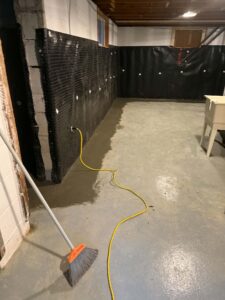
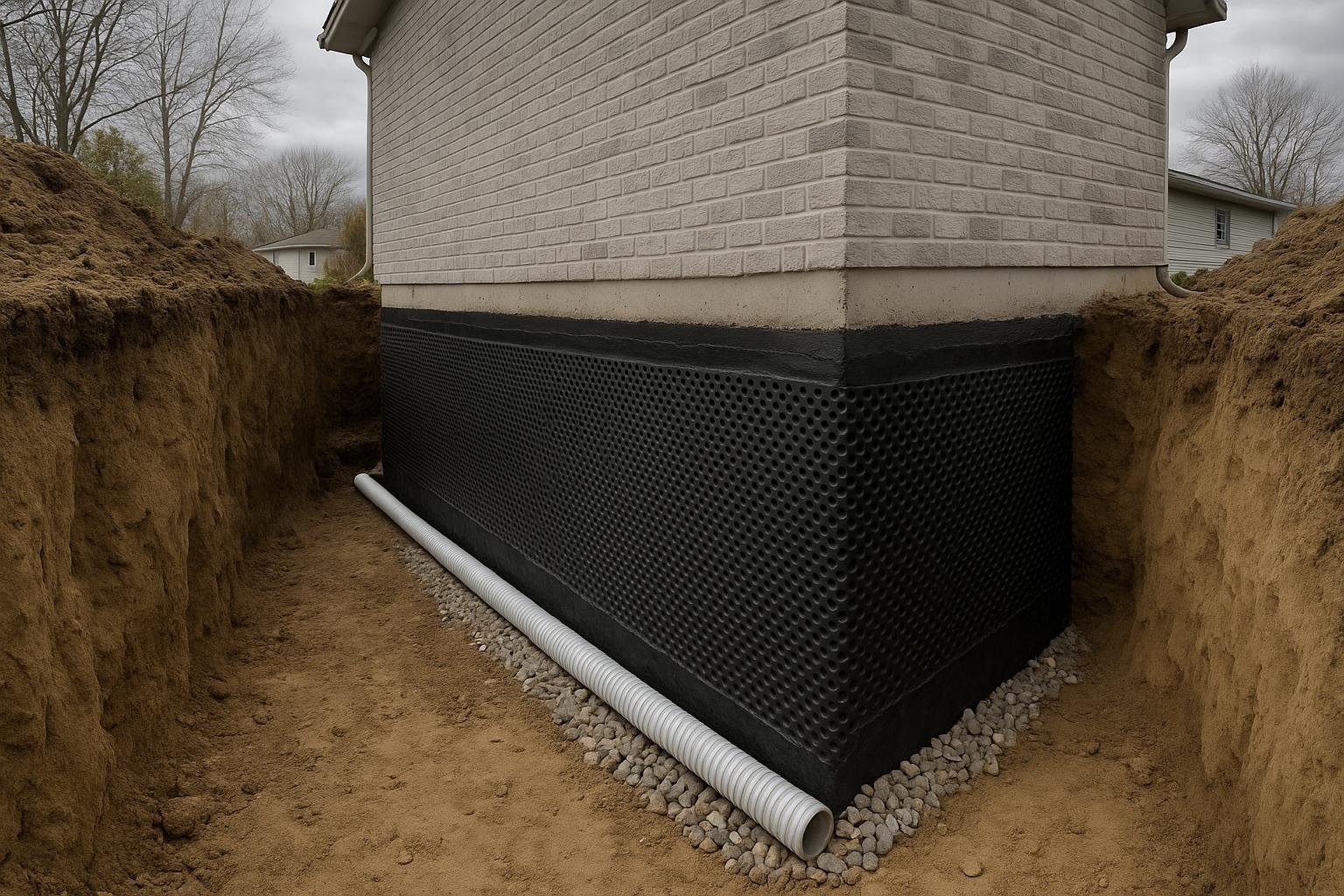
Where a crack is wide, actively leaking or located near the footing, exterior repair is the most thorough option. The process involves excavating the soil beside the foundation wall down to the footing, cleaning and parging any voids with hydraulic cement, then applying a rubberised waterproofing membrane over the entire exposed wall face. A dimpled drainage board is installed over the membrane to direct water downward, and new weeping tile bedded in clear stone is laid at the footing before backfilling. This approach eliminates the crack as a water entry point and rebuilds the drainage system at the same time. It is more disruptive and more expensive than interior injection, but it addresses both the symptom and the cause.
Interior Weeping Tile System
When multiple cracks are present or when the entire perimeter is wet, an interior weeping tile system manages water that has already entered the wall rather than stopping it at the source. A technician jackhammers the concrete floor along the perimeter, installs a perforated drainage channel that directs water to a sump basin, then re-pours the concrete. A vapour barrier is run up the wall face. The sump pump discharges water away from the foundation. This system does not seal the cracks themselves but keeps the basement dry regardless of how much water enters the wall assembly. It is well-suited to Tiny Township cottages and seasonal homes where exterior excavation is impractical due to landscaping, decks or limited access.
Hydraulic Cement Patching
Hydraulic cement is a fast-setting, expanding mortar applied directly to a crack or void that is actively leaking at the moment of repair. It is a short-term measure, useful for stopping an acute leak while a more permanent solution is planned. It does not bond flexibly to the surrounding concrete, so it is prone to re-cracking under freeze-thaw movement. In Tiny Township, hydraulic cement patching is used as a temporary fix, not a final repair.
Parging
Parging is a coat of mortar applied to the exterior face of a foundation wall, typically above grade. It covers surface imperfections and minor cracking but does not seal cracks that run through the full wall thickness. Parging is a cosmetic and surface-protection measure. It is commonly applied as part of a full exterior waterproofing job after the membrane is in place, but it is not a standalone crack repair method.
Options Compared
| Method | Best For | Typical Lifespan | Relative Cost | Disruption |
|---|---|---|---|---|
| Polyurethane injection (interior) | Non-structural vertical/diagonal cracks in poured concrete | Long-term with flexible cure | Low ($600-$900 per crack) | Minimal, no excavation |
| Epoxy injection | Structural cracks requiring wall re-bonding | Permanent if crack is stable | Low to moderate | Minimal, interior only |
| Exterior repair with membrane | Wide or footing-level cracks, full waterproofing upgrade | 25+ years with proper drainage | High ($6,000-$9,000+) | High, full excavation required |
| Interior weeping tile system | Multiple cracks, perimeter seepage, seasonal homes | Long-term with sump maintenance | Moderate to high | Moderate, interior jackhammer work |
| Hydraulic cement patching | Temporary stop for active leaks | Short-term only | Very low | Minimal |
| Parging | Surface protection above grade | 5-10 years | Low | Minimal |
For most Tiny Township homeowners, foundation crack repair Tiny contractors recommend starts with polyurethane injection when a single leaking vertical crack is present. It is fast, affordable and durable. Exterior repair becomes the better choice when the crack is near the footing, when multiple cracks are present or when the original weeping tile has failed and needs replacement at the same time. An interior weeping tile system suits seasonal cottages where the goal is reliable dryness rather than crack-by-crack sealing.
How to Choose the Right Repair
Choose polyurethane injection if you have one or two vertical cracks in a poured concrete wall, the wall shows no inward deflection, and the cracks are above the footing. Foundation crack repair Tiny homeowners pursue through interior injection is the most cost-effective path and can be completed in a single visit with no disruption to landscaping or decks.
Choose epoxy injection if a structural engineer has assessed the crack and determined that the wall faces need to be re-bonded. Do not use epoxy on a crack that is still moving seasonally.
Choose exterior repair with a new membrane and weeping tile if the crack is at or near the footing, if water is entering under significant pressure, or if your home is more than 40 years old and has never had the original drainage system replaced. Tiny Township homes built in the 1960s and 1970s almost certainly have clay tile weeping systems that are now fully silted. Replacing them at the same time as the crack repair is far more economical than returning for a second excavation later.
Choose an interior weeping tile system if your property has limited exterior access, if you have a seasonal cottage that sits unoccupied for months, or if multiple wall sections are seeping. The system manages water reliably without requiring perfect exterior conditions.
If your Tiny Township home was built before 1980 and has never had its weeping tile replaced, assume the original system has failed. Addressing drainage at the footing is the single most effective step you can take to protect the foundation long-term.
Costs and Timelines
| Cost Driver | Why It Affects Price | Approximate Range |
|---|---|---|
| Number of cracks | Each crack requires its own ports, resin and labour time | $600-$900 per crack (injection) |
| Crack depth and width | Wider or deeper cracks consume more resin and take longer to fill completely | Included in per-crack range above |
| Linear footage (exterior work) | Excavation, membrane and weeping tile are priced per linear foot of wall | $6,000-$9,000 for average home |
| Excavation depth | Deeper footings require more machine time and shoring | Increases total by 10-25% |
| Site access | Decks, fences, mature trees and tight lots add excavation complexity | Variable, assessed on site |
| Weeping tile condition | Full replacement costs more than supplementing an existing system | Included in exterior range above |
All prices above are approximate ranges drawn from completed DryShield jobs and depend on a site inspection. Tiny Township properties with tight access due to decks, mature trees or proximity to the water can fall at the higher end of any range. Interior injection jobs are typically completed in one day. Full exterior waterproofing takes two to four days depending on linear footage and soil conditions. Final pricing is always confirmed in a written scope after the on-site assessment.
For a broader view of what crack sealing costs across Ontario, the foundation crack sealing cost guide breaks down pricing by method and region.
Risks and Common Mistakes
| Symptom | Likely Cause | Correct Fix |
|---|---|---|
| Crack re-opens after rigid patching | Seasonal freeze-thaw movement continuing | Flexible polyurethane injection |
| New crack appears beside old repair | Hydrostatic pressure not addressed at source | Drainage improvement plus injection |
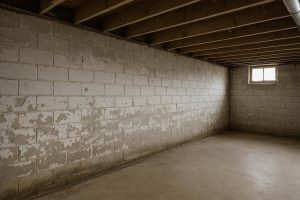
| Efflorescence (white mineral deposits) around crack | Long-term water migration through the wall | Injection plus assessment of weeping tile |
| Horizontal crack with inward wall deflection | Lateral soil pressure, potential structural issue | Engineer assessment before any repair |
| Crack dry in summer, wet in spring | Seasonal water table rise and frost heave | Polyurethane injection timed for dry conditions |
The most common mistake Tiny Township homeowners make is applying hydraulic cement or a surface sealant to a crack that is still moving. These rigid materials cannot accommodate the seasonal expansion and contraction of a poured concrete wall, and they typically fail within one or two winters. The second most common mistake is treating the crack without addressing the drainage system. If the weeping tile around the footing is silted, water will continue to build pressure against the wall and find a new path in, even after the original crack is sealed. A thorough inspection always includes an assessment of the drainage system, not just the visible crack.
Never apply a rigid surface patch to a crack that is still moving seasonally. Polyurethane cures flexible for a reason: Tiny Township foundations move every winter, and the repair material must move with them.
How the Repair Process Works
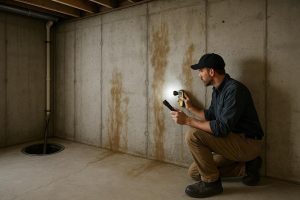
- Free on-site inspection and moisture assessment. A technician visits the property, measures and photographs each crack, probes for moisture with a calibrated meter and assesses the condition of the weeping tile and sump system. Tiny Township properties are evaluated for soil type, drainage grade and seasonal water table behaviour.
- Written scope with fixed pricing. For foundation crack repair Tiny homeowners receive a detailed scope in writing, with per-crack or per-linear-foot pricing clearly stated. No work begins without written agreement.
- Surface preparation. For injection work, the crack face is wire-brushed clean and ports are installed at regular intervals. For exterior work, excavation proceeds to the footing using appropriate equipment for the site conditions.
- Repair execution. Polyurethane or epoxy resin is injected under low pressure until it emerges from the next port, confirming full penetration. For exterior jobs, hydraulic cement is applied to voids, the rubberised membrane is rolled onto the wall, the dimpled drainage board is installed and new weeping tile is bedded in clear stone at the footing.
- Backfill and grade correction. Exterior jobs are backfilled and the grade is corrected to slope away from the foundation, reducing surface water accumulation against the wall.
- Final inspection and documentation. The completed repair is photographed and documented. The homeowner receives a written record of what was done and the warranty terms.
Foundation Crack Repair Tiny: Frequently Asked Questions
How do I know if my Tiny Township foundation crack needs professional repair?
Any crack that is actively leaking, wider than a credit card thickness, horizontal, or accompanied by inward wall deflection needs professional assessment. Hairline cracks that are dry and stable can be monitored, but any crack that has changed in width or length since you first noticed it should be inspected. Foundation crack repair Tiny is most cost-effective when cracks are addressed before they widen through additional freeze-thaw cycles.
Can polyurethane injection be done in winter?
Injection works best when the crack is dry or only slightly damp and when temperatures are above freezing at the wall face. In Tiny Township, late spring through early autumn is the ideal window. Winter injection is possible in heated basements where the wall temperature stays above 5 degrees Celsius, but frozen or frost-filled cracks must be allowed to thaw completely before ports are installed.
How long does a polyurethane crack injection last?
A properly executed polyurethane injection in a stable, non-structural crack typically lasts the life of the foundation when the drainage system is also functioning correctly. The flexible cure accommodates ongoing seasonal movement without re-cracking. If the weeping tile around the footing has failed and hydrostatic pressure continues to build, new cracks can form beside the repaired one, which is why drainage assessment is always part of the inspection.
Is my Tiny Township cottage foundation at higher risk than a year-round home?
Yes, for two reasons. First, seasonal homes are unheated for months, which means the foundation wall experiences the full depth of frost penetration without any interior heat moderating the temperature gradient. Second, unoccupied homes are not monitored, so a crack that begins to seep in March may not be discovered until the cottage is opened in May. The guide on freeze-thaw foundation cracks in cottage country covers this in detail.
What is the difference between a structural and a non-structural crack?
A non-structural crack does not compromise the load-bearing capacity of the wall. Most vertical cracks in poured concrete fall into this category. A structural crack has caused the wall to deflect, shift or lose its ability to transfer load properly. Horizontal cracks in block foundations and diagonal cracks that widen significantly at one end are the most common structural types. The guide on how to tell if a foundation crack is structural explains the visual indicators in detail.
Do I need a permit for foundation crack repair in Tiny Township?
Interior polyurethane injection does not typically require a building permit in Ontario. Exterior waterproofing that involves excavation beside the foundation may require a permit depending on the scope and the Township of Tiny’s current requirements. The Ontario Building Code sets the baseline standards for foundation waterproofing, and your contractor should confirm permit requirements as part of the scoping process. The Ontario Building Code basement waterproofing guide covers compliance requirements in plain language.
How does sandy soil near Georgian Bay affect crack repair?
Sandy soil drains quickly, which reduces sustained hydrostatic pressure compared to clay-rich till. However, it also means the soil provides less lateral support to the foundation wall, and water can travel rapidly to the footing during heavy rain or snowmelt. Homes on sandy lots near the bay are less likely to experience the prolonged wall-saturation that clay soils produce, but they can still experience acute pressure events during Georgian Bay storm surges and rapid spring thaw.
What warranty should I expect on a crack injection repair?
A reputable contractor should offer a written warranty on the injected crack. DryShield provides a lifetime transferable warranty on qualifying work, which means the coverage transfers to a new owner if the property is sold. This is particularly relevant for Tiny Township cottage owners who may sell the property in future. Always confirm warranty terms in writing before work begins and ask specifically whether the warranty is transferable.
Ready to get a clear picture of what your foundation crack repair Tiny Township project will cost? Contact the DryShield Team for a free on-site inspection and written scope. We serve Tiny Township and the surrounding Simcoe County area and can typically schedule an assessment within a few business days. Visit our Simcoe County waterproofing and foundation repair hub to see the full range of services available in your area, or go directly to DryShield.ca to request your inspection.