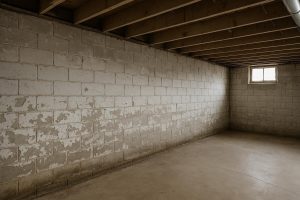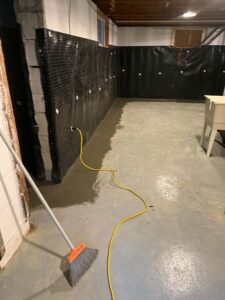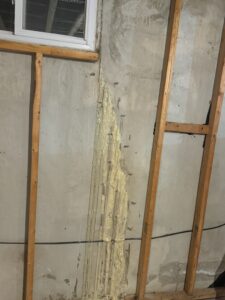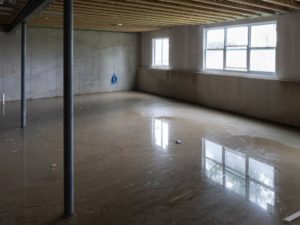
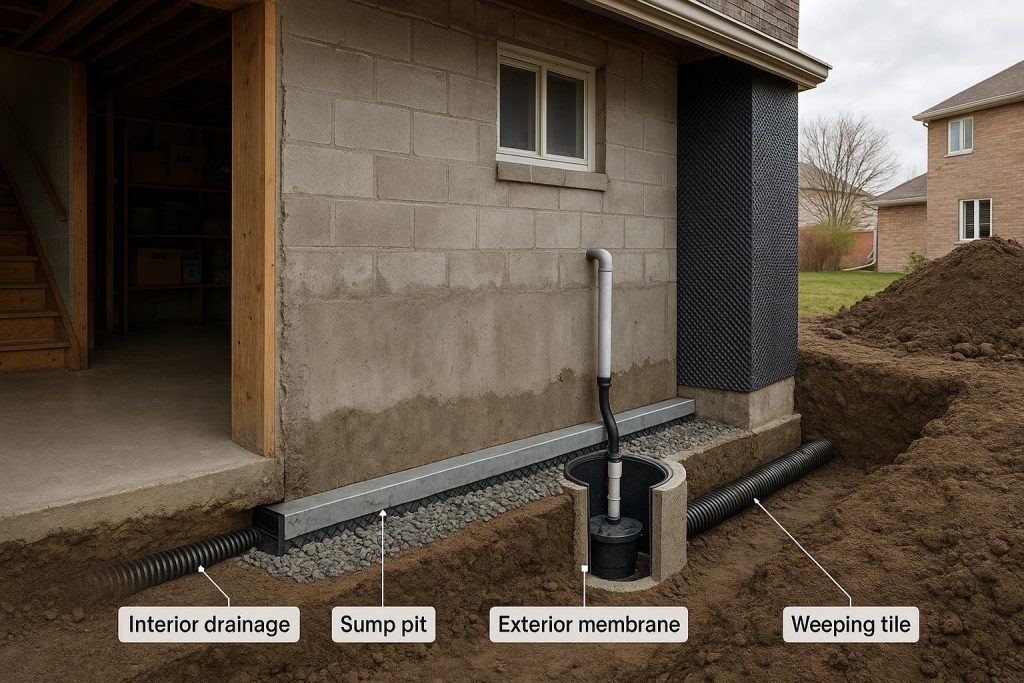
Waterproofing a basement means applying a combination of drainage, sealing and structural repair methods to prevent water from entering your home below grade. The right approach depends on where water is entering, your foundation type, soil conditions and budget. Interior drainage systems manage water that has already entered; exterior membranes stop it at the wall; crack injection seals individual breaches. Most Ontario homes need more than one method working together for a lasting result.
Key takeaways
- No single product waterproofs a basement on its own; effective systems combine drainage, sealing and crack repair.
- Exterior waterproofing addresses the source of water entry; interior waterproofing manages water that has already penetrated the wall.
- Polyurethane crack injection is the most targeted fix for isolated poured-concrete wall cracks.
- Weeping tile and sump pumps are the backbone of any perimeter drainage solution.
- Choosing the wrong method for your specific failure mode can waste money and leave the problem unsolved.
Definitions & scope
Basement waterproofing is the practice of controlling groundwater, surface runoff and hydrostatic pressure so that water does not enter the living or storage space below grade. It is distinct from simple damp-proofing, which is a thin bituminous coating applied to new construction that resists soil moisture but is not designed to withstand sustained hydrostatic pressure.
The scope of a waterproofing project can range from injecting a single hairline crack in an afternoon to a full exterior excavation that takes several days. Key terms you will encounter include:
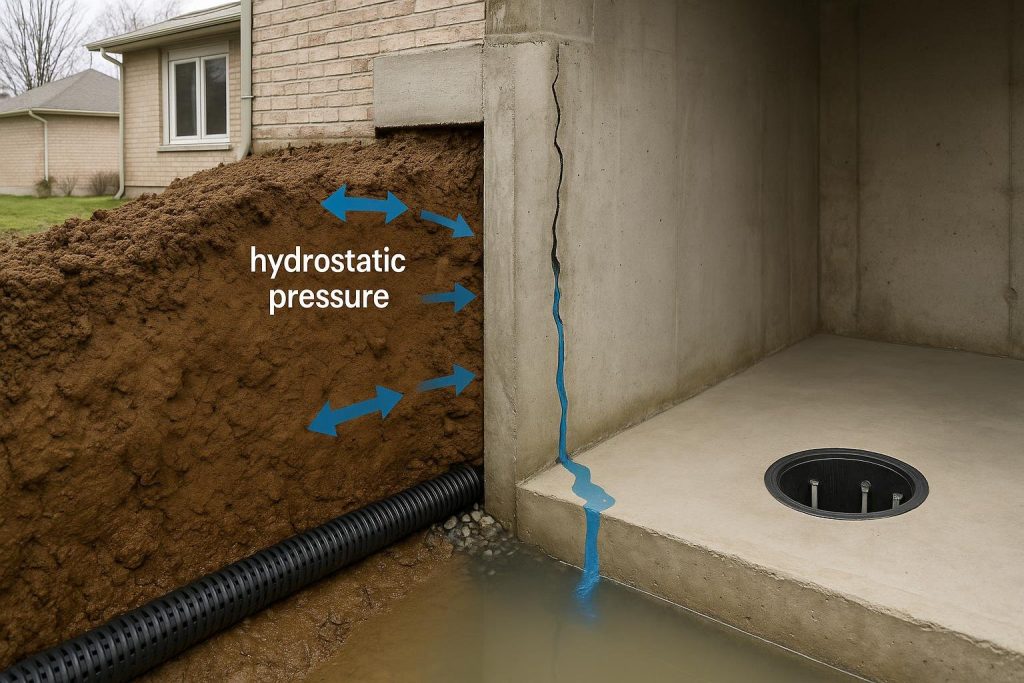
- Hydrostatic pressure: the force exerted by saturated soil against a foundation wall or floor.
- Weeping tile: a perforated pipe installed at footing level to collect and redirect groundwater away from the foundation.
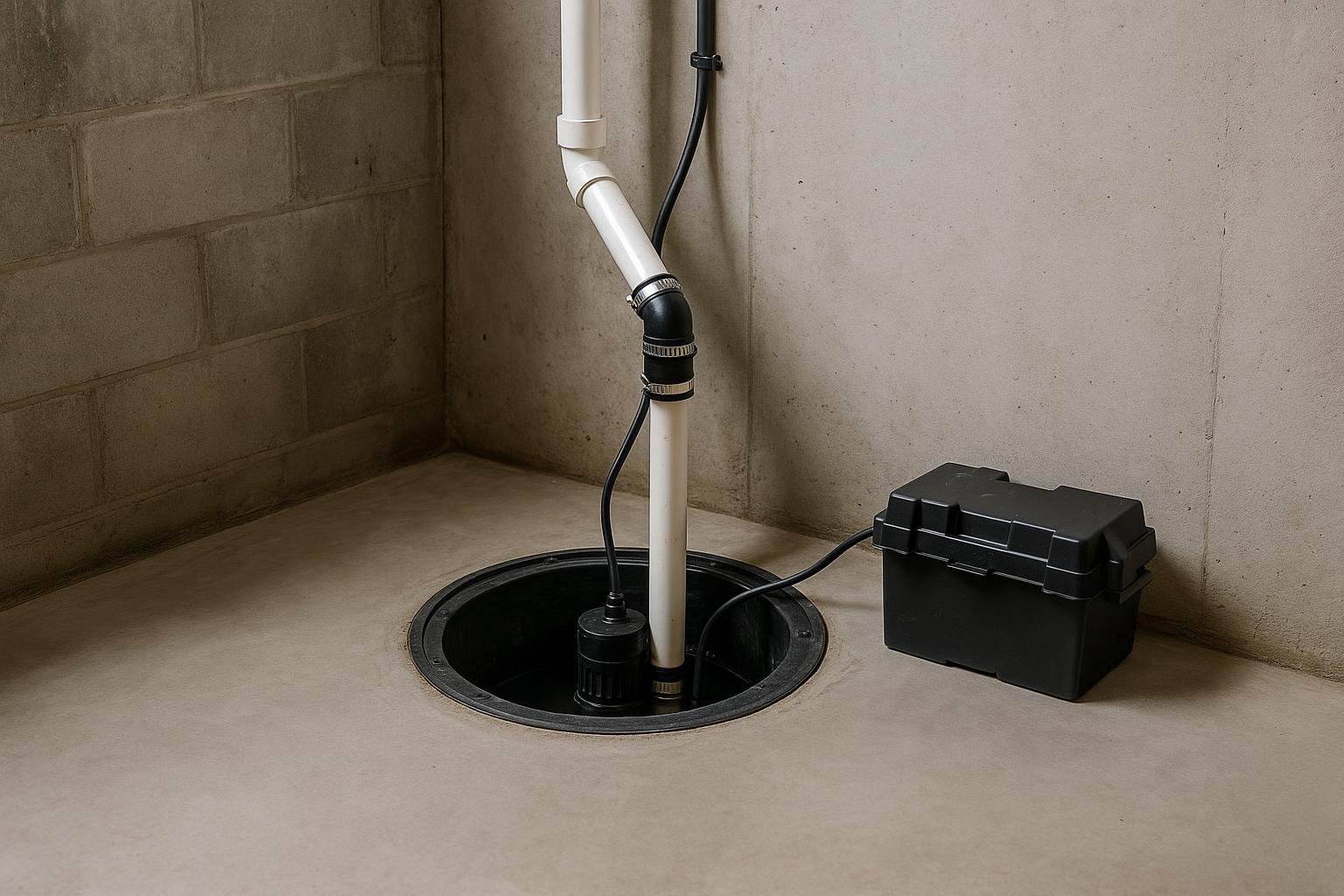
- Sump pit and pump: a collection basin and pump that discharges water gathered by interior drainage to the exterior.
- Crack injection: the process of filling a crack under pressure with polyurethane or epoxy resin to restore the wall’s water barrier.
- Membrane: a waterproof coating or sheet material bonded to the exterior face of a foundation wall.
For a full glossary of terms, see the Basement Waterproofing Glossary.
Why this matters
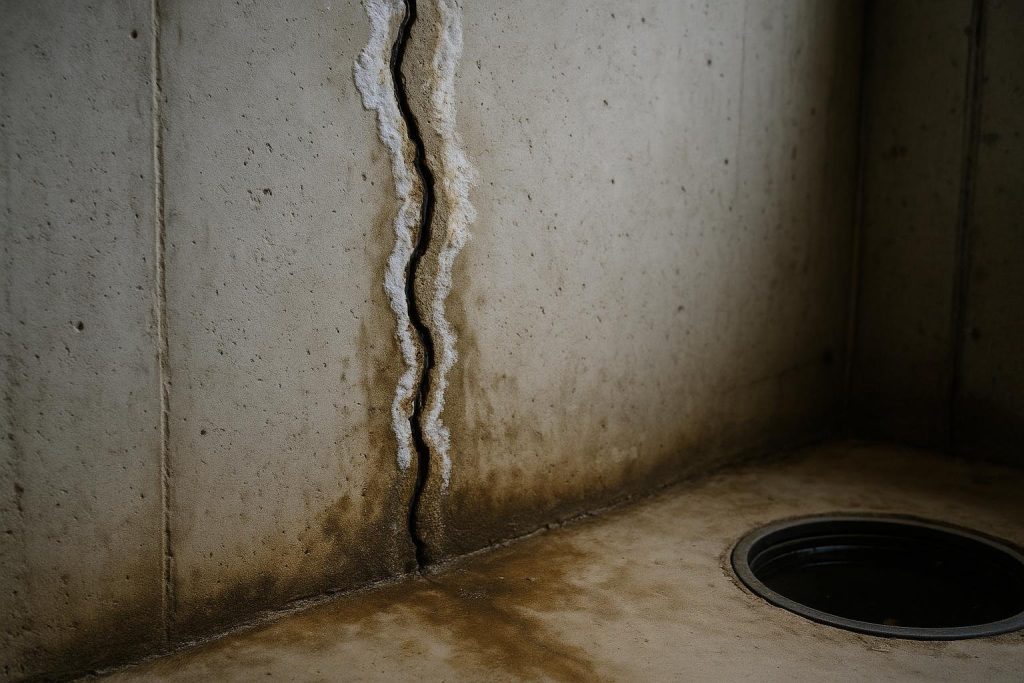
Water is the single most destructive force acting on a residential foundation. When groundwater saturates the soil around a basement, it exerts hydrostatic pressure that can push through poured concrete walls via shrinkage cracks, cold joints and tie-rod holes. Block foundations are especially vulnerable because mortar joints absorb moisture readily. Over time, repeated wetting and drying cycles cause efflorescence, spalling and, in severe cases, inward wall deflection.
Ontario’s climate intensifies these risks. Freeze-thaw cycling, which can occur dozens of times per winter in the GTA and far more frequently in cottage country, forces water into micro-cracks and expands them. Spring snowmelt delivers large volumes of water to the soil in a short period, spiking hydrostatic pressure just as the frost is releasing its grip on the ground. Clay-rich soils common across the Greater Toronto Area and Simcoe County retain water rather than draining it, keeping pressure elevated for weeks after a rain event.
The consequences of ignoring a wet basement extend beyond a damp floor. Persistent moisture promotes mold growth, which affects indoor air quality throughout the home. Structural deterioration of the foundation wall can eventually compromise the building’s load-bearing capacity. Water damage also affects resale value and can complicate home insurance claims; insurers increasingly exclude gradual water ingress from standard policies. Acting early, with the correct method, is almost always less expensive than remediation after significant structural or mold damage has occurred.
See also: Foundation Waterproofing: Your Complete Homeowner’s Guide and Does Home Insurance Cover Basement Waterproofing & Foundation Cracks in Ontario?
Your options
1. Polyurethane crack injection
What it is: A two-component or single-component polyurethane resin is injected under low pressure into a foundation wall crack through a series of surface ports. The resin expands as it cures, filling the crack from face to back and bonding to the concrete.
How it works: Ports are glued at intervals along the crack. Resin is injected starting at the lowest port and moving upward until the material appears at the next port, confirming full penetration. The flexible cured foam accommodates minor future movement without re-cracking.
Best for: Isolated vertical or diagonal shrinkage cracks in poured-concrete walls where the wall is otherwise structurally sound. Can often be completed from the interior without excavation.
Limitations: Not suitable for horizontal cracks (which indicate lateral pressure and may require structural repair), active flowing water without a two-stage approach, or block foundations where mortar joints are the primary failure point. Does not address the underlying drainage conditions that caused the crack to leak.
Learn more: Polyurethane Crack Injection Toronto & GTA and Polyurethane Injection: Expert Crack Repair Guide.
2. Interior drainage system (interior weeping tile)
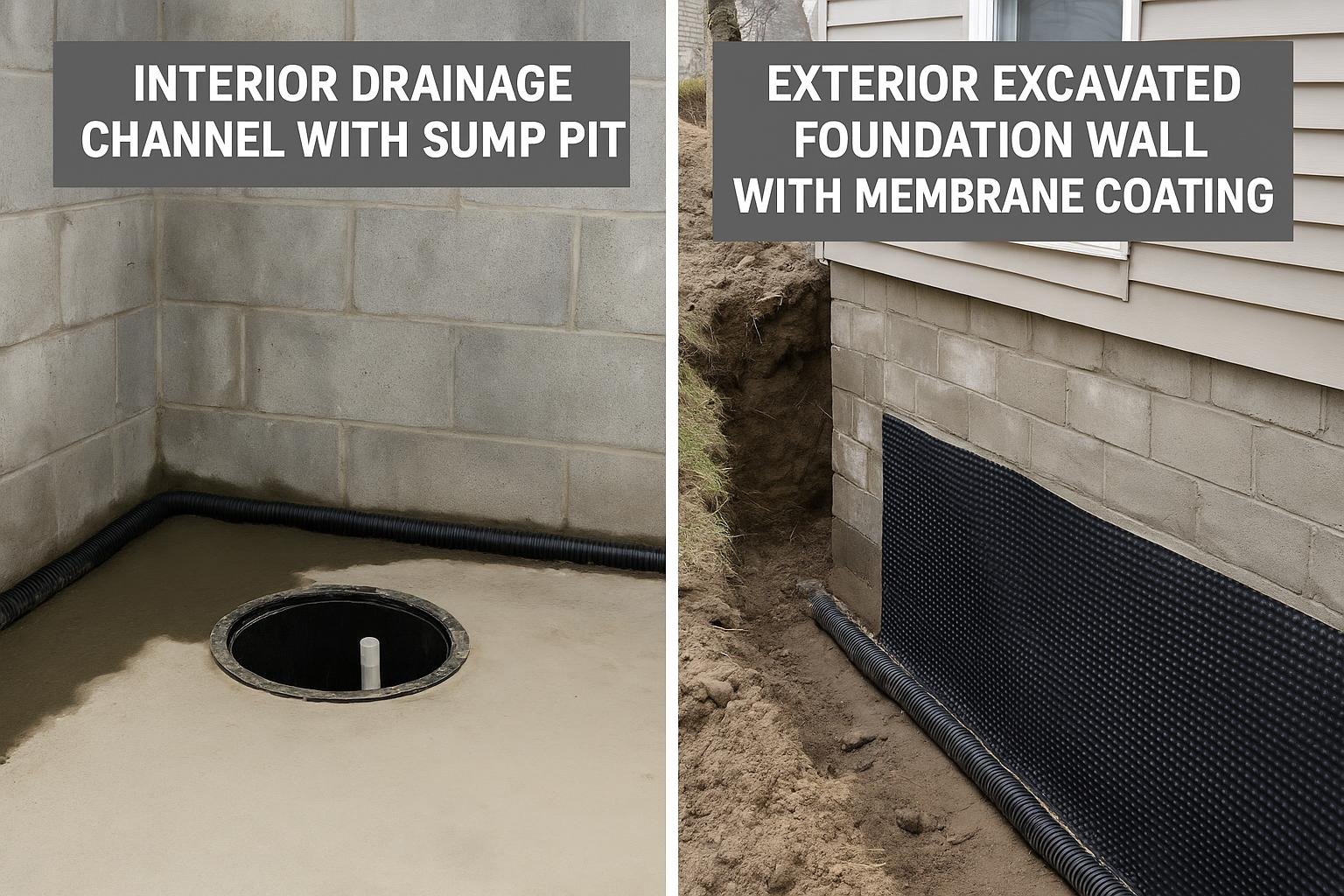
What it is: A perforated drainage channel is installed along the interior perimeter of the basement floor at footing level. Water that enters through the wall or floor joint is captured and directed to a sump pit, where a pump discharges it outside.
How it works: A narrow trench is saw-cut along the inside perimeter of the slab. Drainage board or pipe is laid, connected to a sump pit, and the trench is backfilled with concrete. A wall membrane may be added to direct seepage down to the channel rather than onto the floor.
Best for: Homes where exterior excavation is impractical (finished landscaping, proximity to neighbouring structures, limited access), perimeter seepage through multiple points, and high water-table situations where water management is more realistic than total exclusion.
Limitations: Manages water rather than stopping it at the source. Does not address exterior soil saturation or membrane deterioration. Requires a functioning sump pump; a power failure without battery backup can result in flooding.
3. Exterior waterproofing
What it is: The foundation wall is fully excavated to the footing. The exterior face is cleaned, any cracks are repaired, and a waterproof membrane (spray-applied rubberized asphalt, sheet membrane or similar) is applied. New weeping tile and drainage board are installed before backfilling.
How it works: Excavation exposes the full wall height. The membrane is applied in accordance with the manufacturer’s specification and protected by a drainage board. Weeping tile at the footing level collects groundwater and directs it to daylight or a sump. The trench is backfilled with granular material to promote drainage.
Best for: Walls with failed or absent original damp-proofing, multiple active leaks, deteriorated original weeping tile, or situations where a permanent, source-level solution is the priority.
Limitations: Most disruptive and typically the highest-cost option. Requires access around the perimeter, which may mean removing decks, landscaping or driveways. Not always feasible for attached or semi-detached homes on tight lots. See Exterior Basement Waterproofing Services.
4. Weeping tile replacement
What it is: Existing perimeter drainage pipe (weeping tile) that has collapsed, crushed or become blocked with silt or root intrusion is excavated and replaced with new perforated pipe and clean stone.
How it works: Can be done from the exterior (full excavation) or, in some cases, from the interior. New pipe is wrapped in filter fabric to prevent silt migration, surrounded by clear stone, and connected to a sump or gravity outlet.
Best for: Homes built before the 1980s with original clay or concrete weeping tile that has deteriorated, or any home where a camera inspection reveals blocked or collapsed drainage.
Limitations: Exterior replacement is a major excavation project. Interior replacement does not address membrane condition on the outside of the wall. See Weeping Tile Installation & Replacement Toronto.
5. Sump pump installation
What it is: A sump pit is excavated in the lowest point of the basement floor. A submersible pump sits in the pit and automatically activates when water reaches a set level, discharging it through a pipe to the exterior.
How it works: The pit collects water from interior drainage channels or direct groundwater infiltration. A float switch triggers the pump. Battery backup systems maintain operation during power outages, which often coincide with the heavy rain events that cause flooding.
Best for: Any home with an interior drainage system, high water-table conditions, or a history of flooding during heavy rain or snowmelt. Also the primary backup for homes that cannot achieve full exterior waterproofing.
Limitations: A sump pump is a mechanical device that requires maintenance and eventual replacement. It does not stop water from entering the wall; it only manages water after entry. Power dependency is a real risk without a backup system. See Sump Pump Installation Services.
6. Epoxy crack injection
What it is: A two-part epoxy resin is injected into a structural crack to restore the tensile strength of the concrete, effectively welding the crack closed.
How it works: Similar port-and-injection process to polyurethane, but epoxy is rigid when cured and bonds with very high strength to concrete. Requires a dry or only slightly damp crack for proper adhesion.
Best for: Structural cracks where restoring load-bearing capacity is the goal, such as cracks in load-bearing walls or floors where movement has stopped.
Limitations: Epoxy does not flex; if the crack continues to move, the repair can fail. Not suitable for active water infiltration or cracks that are still widening. See Epoxy Crack Injection for Foundation Cracks and the comparison guide Epoxy vs Polyurethane Crack Injection.
 Options compared
| Method | Best for | Typical considerations | Durability / limitations |
|---|---|---|---|
| Polyurethane crack injection | Single vertical/diagonal cracks, poured concrete | Interior access only; no excavation; fast turnaround | Flexible; long-lasting if crack is stable; does not address drainage |
| Interior drainage system | Perimeter seepage, high water table, limited exterior access | Saw-cutting required; sump pump dependency; minimal disruption outside | Manages water indefinitely if maintained; does not stop exterior ingress |
| Exterior waterproofing | Failed membrane, multiple leaks, full perimeter failure | Full excavation; highest disruption and cost; most comprehensive | Addresses source; membrane lifespan varies by product and installation |
| Weeping tile replacement | Collapsed or blocked original drainage pipe | Often combined with exterior waterproofing; excavation required | New pipe with filter fabric lasts decades; gravity outlet preferred |
| Sump pump installation | High water table, interior drainage complement, backup protection | Mechanical device; requires maintenance and power or battery backup | Effective while operational; pump lifespan typically 7-15 years |
| Epoxy crack injection | Structural cracks, dry or dormant cracks | Requires dry conditions; rigid cure; restores tensile strength | Very strong bond; brittle if crack continues to move |
No single method suits every situation. Homes with a single isolated crack in an otherwise dry poured-concrete wall are strong candidates for crack injection alone. Homes with perimeter seepage, a high water table or deteriorated original drainage almost always need a system approach combining interior drainage, a sump pump and, where feasible, exterior membrane work. The comparison above is a starting framework; a proper site assessment is needed before committing to any method.
How to choose
Use the following decision framework as a starting point. A professional inspection is the only way to confirm which method is appropriate for your specific foundation and soil conditions.
- Choose polyurethane crack injection if you have one or two identifiable vertical or diagonal cracks in a poured-concrete wall, the wall is otherwise structurally sound, and water entry is clearly localized to those cracks. This is typically the least invasive and most cost-effective first step.
- Choose epoxy crack injection if the crack is in a load-bearing wall, movement has stopped, and restoring structural integrity is the primary goal. Confirm with a structural engineer if you are unsure whether the crack is structural. See How to Tell If a Foundation Crack Is Structural.
- Choose an interior drainage system if water is entering along the floor-wall joint or through multiple points on the perimeter, exterior excavation is not feasible, or you need a solution that can be installed with minimal outdoor disruption.
- Choose exterior waterproofing if the original damp-proofing membrane has failed, you are already excavating for another reason, or you want to address the problem at its source and have the access and budget to do so.
- Choose weeping tile replacement if a camera inspection or excavation reveals that the original drainage pipe is collapsed, crushed or blocked, regardless of what other methods you also apply.
- Always add a sump pump if you install any interior drainage system, your lot sits in a low area, or your water table is seasonally high. A battery backup is strongly advisable.
For help identifying your specific problem before choosing a method, use the Identify Your Problem tool or the Basement Leak Diagnostic Tool.
Costs & timelines
No verified current price data has been supplied to this guide. Rather than publish figures that may be outdated or inapplicable to your specific situation, the following describes the primary cost drivers in ranked order of influence. For Ontario-specific cost context, see Basement Waterproofing Cost in Southern Ontario (2026).
| Cost driver | Why it matters | Relative impact |
|---|---|---|
| Method selected | Exterior excavation involves equipment, labour and backfill; crack injection requires only materials and a technician | Highest |
| Linear footage or wall area | Interior drainage and exterior membrane costs scale directly with perimeter length | High |
| Access and site conditions | Tight lots, finished landscaping, decks or driveways increase excavation time and cost | High |
| Foundation depth | Deeper foundations require more excavation, shoring and membrane material | Medium-high |
| Soil type | Dense clay is slower to excavate and backfill than granular soil | Medium |
| Number and severity of cracks | Each crack injection port adds material and labour time | Medium (for injection) |
| Sump pump specification | Horsepower rating, battery backup, alarm systems and brand all affect price | Low-medium |
| Permit requirements | Structural repairs and excavation may require a building permit under the Ontario Building Code | Low-medium |
Timeline ranges vary similarly: crack injection on a single wall crack can be completed in a few hours; a full exterior waterproofing project on a detached home typically takes several days. Interior drainage installation usually falls between those extremes. Confirm timelines with your contractor at the assessment stage.
 Risks & common mistakes
Understanding what can go wrong helps you evaluate contractor proposals and avoid costly errors.
Treating symptoms rather than causes
Applying hydraulic cement or paint-on sealers to a leaking wall without addressing drainage is the most common homeowner mistake. These products can slow seepage temporarily but cannot withstand sustained hydrostatic pressure. Water will find another path, often causing more damage before it reappears.
Choosing the wrong injection resin
Using epoxy in an active-leak or moving-crack situation, or using polyurethane where structural strength is needed, produces a repair that fails prematurely. The choice of resin must match the crack condition and the repair goal. See Foundation crack injection vs waterproofing: When injection works.
Skipping the sump pump backup
Installing an interior drainage system without a battery backup sump pump creates a single point of failure. Power outages are most likely during the severe storms that generate the most water, precisely when the pump is most needed.
Inadequate grading and downspout management
Even a well-installed waterproofing system can be overwhelmed if surface water is directed toward the foundation by negative grading or downspouts that discharge too close to the wall. These surface drainage issues should be corrected alongside any waterproofing work.
Not identifying horizontal cracks correctly
Horizontal cracks in a block or poured-concrete wall indicate lateral soil pressure and are a structural concern, not simply a waterproofing issue. Injecting a horizontal crack without addressing the structural cause can be dangerous. A structural engineer’s assessment is warranted before any repair. See Foundation Crack Diagnosis: Vertical vs. Horizontal.
Hiring on price alone
Basement waterproofing is a long-term investment. A contractor who cannot explain why they are recommending a specific method for your specific failure mode, or who does not offer a written warranty, presents a significant risk. See How to Choose a Reliable Waterproofing Contractor (2026 Guide).
How the process works
While the exact sequence varies by method, a professional waterproofing engagement typically follows these steps:
- Inspection and diagnosis: A technician assesses the foundation type, crack patterns, evidence of water entry, exterior grading and drainage conditions. The source and pathway of water infiltration are identified before any method is proposed.
- Proposal and scope definition: A written scope of work is provided, specifying the method, materials, affected areas, permit requirements and warranty terms. This is the stage to ask questions and compare proposals.
- Preparation: Interior work requires clearing the perimeter of stored items. Exterior work requires marking utilities, obtaining permits where required, and arranging access for equipment. Downspouts and grading issues are flagged for correction.
- Core repair work: Crack injection ports are installed and resin is injected; drainage channels are saw-cut and installed; or excavation, membrane application and weeping tile installation are completed, depending on the method selected.
- Drainage connection and sump installation: Interior drainage is connected to the sump pit; the pump is installed, tested and, where applicable, a battery backup and alarm are commissioned.
- Restoration: Interior concrete is poured to restore the floor. Exterior trenches are backfilled with granular material and compacted. Disturbed landscaping or hardscaping is restored to the agreed scope.
- Final inspection and warranty documentation: The completed work is reviewed with the homeowner. Warranty documents are provided in writing. Maintenance requirements, such as annual sump pump testing, are explained.
Frequently asked questions
What is the difference between damp-proofing and waterproofing a basement?
Damp-proofing is a thin bituminous coating applied to new foundations during construction. It resists soil moisture under normal conditions but is not designed to withstand hydrostatic pressure from a saturated water table. Waterproofing uses membranes, drainage systems and crack repair methods engineered to handle sustained water pressure. Most Ontario homes built before the 1980s have only damp-proofing, which deteriorates over time and is a common reason for basement leaks in older neighbourhoods.
Can I waterproof my basement from the inside only?
Interior waterproofing methods, primarily drainage channels and sump pumps, are effective at managing water that has already entered the wall. They do not stop water at the source or repair the exterior membrane. For many homes, interior solutions provide a durable and practical result, particularly where exterior access is limited. However, if the exterior membrane has failed completely or the weeping tile is collapsed, interior management alone may not be sufficient long-term. A site assessment determines which approach is appropriate.
How long does polyurethane crack injection last?
A properly executed polyurethane injection into a stable crack can last for many years. The flexible cured foam accommodates minor thermal movement without re-opening. The repair is more likely to fail if the crack is still actively moving due to ongoing structural settlement or lateral pressure, or if the injection did not achieve full penetration through the wall. Addressing the drainage conditions that caused the crack to leak in the first place extends the life of the repair. See Polyurethane Injection: Expert Crack Repair Guide.
Do I need a permit to waterproof my basement in Ontario?
Permit requirements depend on the scope of work and the municipality. Structural foundation repairs and exterior excavation that affects the structural integrity of the foundation typically require a building permit under the Ontario Building Code. Interior drainage installation that does not involve structural work may not require a permit, but requirements vary by municipality. Your contractor should confirm permit obligations before work begins. For a general overview, see Ontario Building Code Basement Waterproofing 2026. Always verify current requirements directly with your local building department, as regulations change.
How do I know if my weeping tile needs to be replaced?
Signs that weeping tile may have failed include persistent perimeter seepage that does not respond to surface drainage improvements, water entry along the floor-wall joint around the entire perimeter, and a sump pit that rarely or never collects water despite a wet basement. A camera inspection of the existing drainage pipe can confirm whether it is blocked, crushed or root-intruded. Homes built before the 1980s with original clay or concrete tile are at higher risk of failure than those with more recent plastic perforated pipe.
Is basement waterproofing worth it for resale?
A dry, documented basement is a positive factor in a home sale. Buyers and their inspectors look for evidence of water infiltration, and a disclosed history of leaks without documented repair can reduce offers or trigger conditions. A transferable warranty on waterproofing work provides additional value. However, the primary financial case for waterproofing is preventing the far greater cost of structural damage, mold remediation and emergency flood repair. For a detailed discussion, see Will Basement Waterproofing Increase My Home Value in the GTA?
What causes basement walls to crack in Ontario?
The most common cause of vertical and diagonal cracks in poured-concrete walls is concrete shrinkage during the original cure, which is normal and present in most homes. These cracks become a problem when groundwater finds them under hydrostatic pressure. Horizontal cracks are caused by lateral soil pressure and are a structural concern. Freeze-thaw cycling widens existing cracks over time. Clay soils, which are prevalent across the GTA, retain water and maintain higher sustained pressure against walls than sandy or granular soils. See Is Your Foundation Crack Dangerous? The GTA Homeowner’s Guide to Basement Cracks.
How often should a sump pump be tested?
Industry guidance generally recommends testing a sump pump at least once per year, ideally before the spring snowmelt season when demand is highest. Testing involves pouring water into the pit to confirm the float switch activates and the pump discharges correctly. Battery backup units should be tested according to the manufacturer’s schedule, typically every three to six months. Pump impellers and check valves should be inspected for debris. For a detailed testing procedure, see How to Test Smart Sump Pump Sensors.
If you are unsure which waterproofing method is right for your home, DryShield offers assessments across Toronto, the GTA and Ontario cottage country. Visit the Basement Waterproofing Services page or contact the team to arrange an inspection. A lifetime transferable warranty is available on qualifying work.