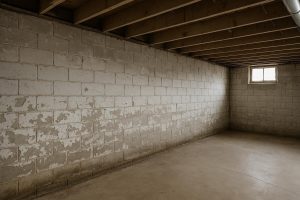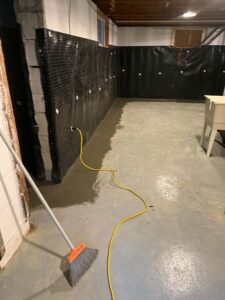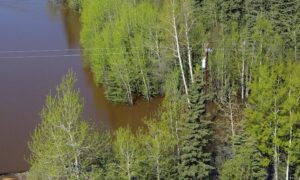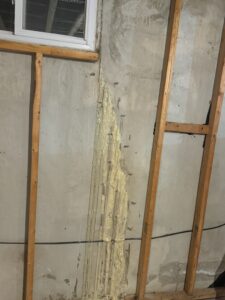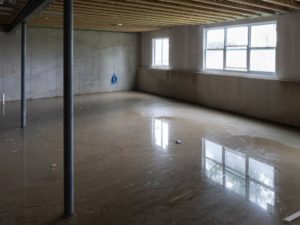
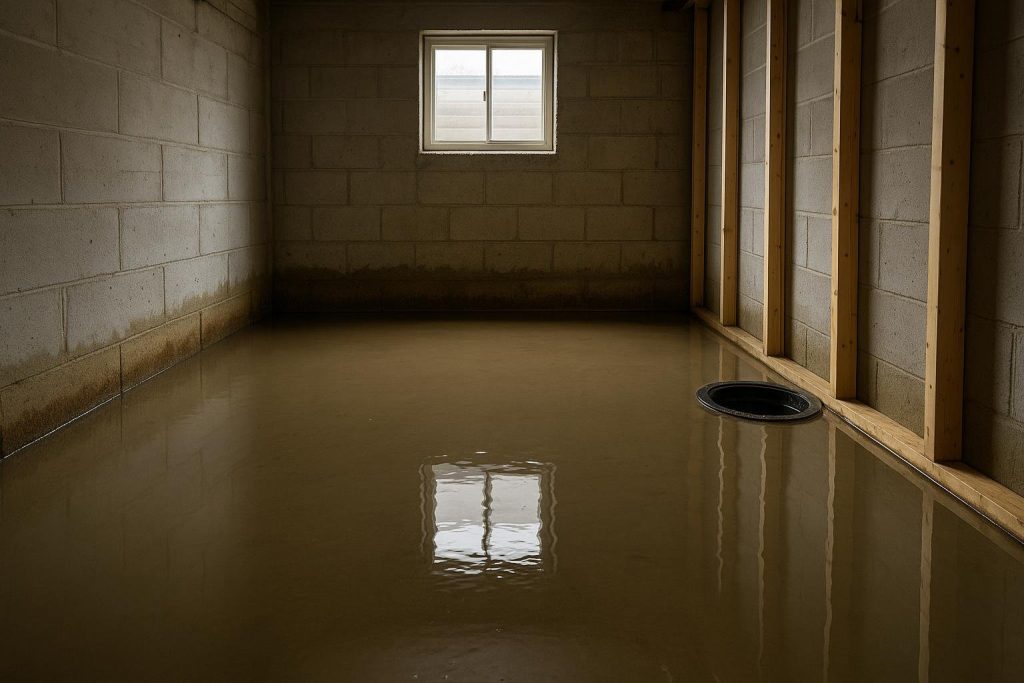
Basement flooding Vaughan homeowners experience is almost always traced to one of three root causes: hydrostatic pressure from the region’s heavy clay soil, failed or fully silted-up original weeping tile, or foundation cracks that open a direct path for water. Understanding which cause is at work in your home determines every decision that follows, from the repair method to the budget to the timeline. This guide covers all three causes, every realistic fix, and honest cost ranges drawn from jobs completed across Vaughan and the broader GTA.
Key Takeaways
- Vaughan’s Leda clay and glacial till soils hold water against foundation walls far longer than sandy soils, making hydrostatic pressure the primary driver of wet basements in the city.
- A single injected foundation crack typically costs $750 to $1,000; a full interior weeping-tile system or exterior waterproofing job runs considerably more, with the final figure depending on a site inspection.
- Spring snowmelt and summer convective downpours are the two peak failure windows for Vaughan foundations.
- Older homes in Woodbridge, Maple and Concord commonly have original clay-pipe weeping tile that has collapsed or silted over decades.
- Doing nothing accelerates damage: water that enters through a hairline crack widens it with every freeze-thaw cycle.
Definitions and Scope
Basement flooding covers a spectrum from a thin film of moisture on the floor after heavy rain to several centimetres of standing water following a major storm. The term is used loosely, but the repair approach differs significantly depending on the entry point. Water can enter through wall cracks, through the joint where the wall meets the footing, through a saturated floor slab, or through a window well that has no drainage.
Hydrostatic pressure is the force that saturated soil exerts against a foundation wall. In Vaughan, where clay content is high, this pressure builds quickly after rain and dissipates slowly. The wall does not need a visible crack to let water through: concrete is slightly porous, and sustained pressure will push moisture through the matrix itself. That is why surface-applied coatings alone rarely solve a chronic wet-basement problem in this region.
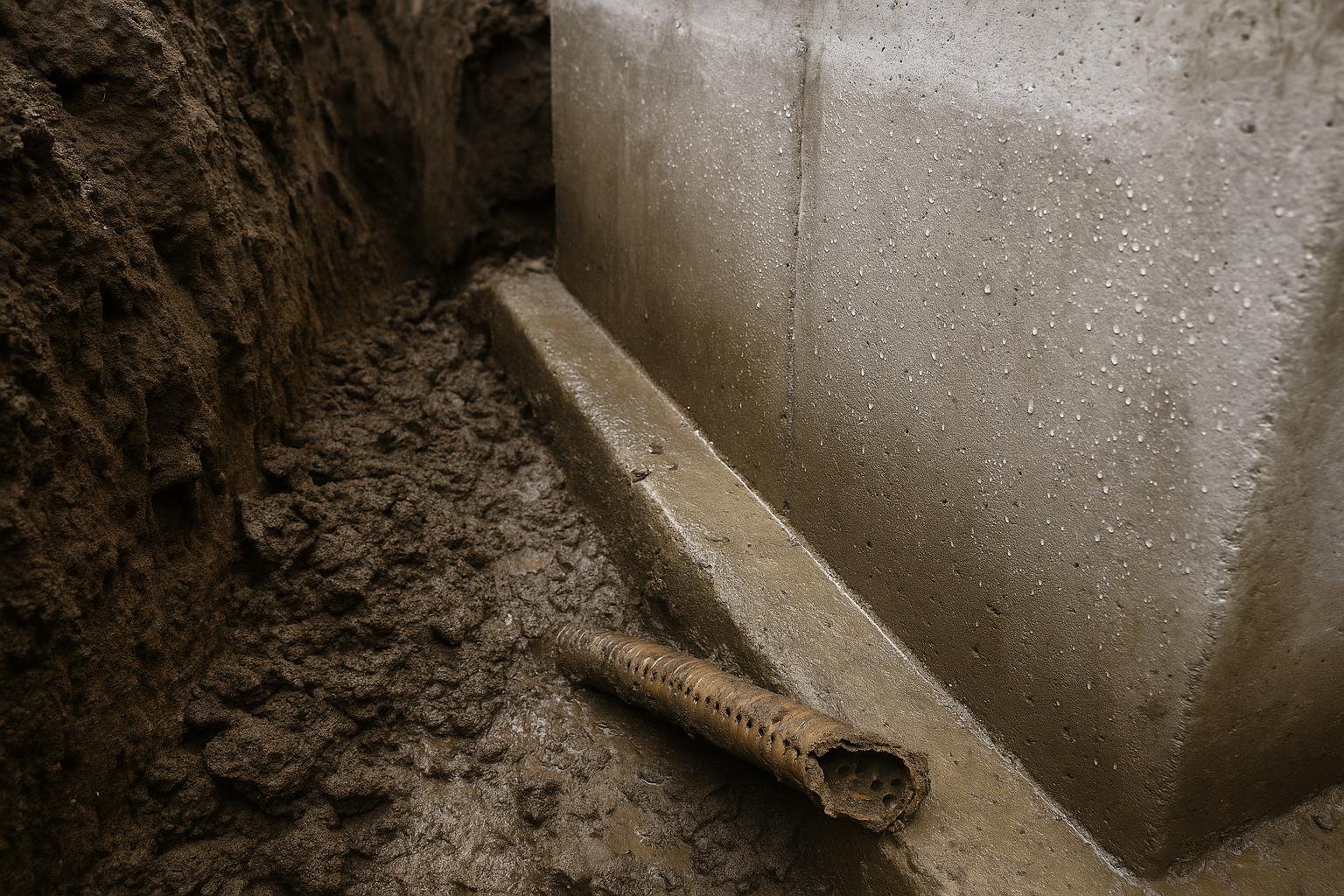
Weeping tile is the perforated pipe, either original clay or modern PVC, that runs along the outside of the footing to collect groundwater and route it away from the foundation. When it silts up or collapses, water has nowhere to go except against the wall.
Why This Matters for Vaughan Homeowners
Basement flooding Vaughan residents deal with is shaped by the city’s soil profile. Vaughan sits on a mix of Leda clay and glacial till deposited during the last ice age. Both soil types drain poorly. After a significant rainfall, water that cannot percolate downward accumulates at the level of the footing and stays there, sometimes for days. The City of Vaughan has expanded rapidly since the 1980s, which means a large proportion of the housing stock was built in a single era with similar foundation details, and those details are now reaching the end of their service life at roughly the same time.
Spring thaw is the most dangerous window. Snowpack that has accumulated across York Region melts over a period of weeks, and the ground beneath it is often still frozen, so meltwater cannot percolate and instead runs laterally toward the lowest point it can find, which is frequently a foundation wall. Summer is the second peak: convective thunderstorms common to the GTA can drop 40 to 60 mm of rain in under an hour, overwhelming both municipal storm sewers and residential drainage systems simultaneously.
For context on how rain-driven entry differs from chronic seepage, the guide on why basements leak when it rains explains the distinction in detail. The broader picture of waterproofing options for Vaughan homes is covered on the Vaughan basement waterproofing and foundation crack repair service page.
Clay soil in Vaughan can hold water against a foundation wall for 48 to 72 hours after a major rainfall event, sustaining hydrostatic pressure long after the storm has passed.
Seasonal Risk Calendar for Vaughan Foundations
Basement flooding Vaughan homeowners experience is not evenly distributed across the year. The table below maps each season to its primary risk mechanism and the warning signs most likely to appear in your basement.
| Season | Primary Risk | Typical Warning Signs | Recommended Action |
|---|---|---|---|
| Spring (March to May) | Snowmelt on frozen ground; sustained hydrostatic pressure | Perimeter seepage, sump pump running continuously, efflorescence appearing | Inspect weeping tile; test sump pump and battery backup |
| Summer (June to August) | Convective thunderstorms; 40 to 60 mm/hr rainfall overwhelming drainage | Sudden standing water after storms; window well flooding | Check window well drains; confirm sump pump capacity |
| Autumn (September to November) | Prolonged moderate rain saturating clay soil | Slow seepage along wall-footing joint; damp patches on lower walls | Grade inspection; clear eavestroughs and downspout extensions |
| Winter (December to February) | Freeze-thaw cycles widening existing cracks | New or widening cracks; staining that was not present in autumn | Crack mapping; schedule injection repair before spring thaw |
Reviewing this calendar before each season allows Vaughan homeowners to catch early warning signs before a minor seepage issue becomes a full basement flooding event.
Diagnosing the Entry Point: Symptoms and Likely Causes
Correctly diagnosing basement flooding Vaughan homes present requires matching the symptom pattern to the most probable entry mechanism. The table below is a first-pass diagnostic tool; a professional inspection confirms the finding.
| Symptom | Most Likely Cause | Least Likely Cause | Recommended First Step |
|---|---|---|---|
| Water along entire perimeter of floor | Failed weeping tile or footing drain | Single wall crack | Interior weeping-tile assessment |
| Water at one specific point on wall | Foundation crack or cold joint | Systemic drainage failure | Crack mapping and injection quote |
| Water only after heavy rain, not chronic | Surface grading directing runoff toward foundation | Hydrostatic pressure from groundwater | Grade inspection and correction |
| Water in one corner near a window | Window well with no drain | Failed exterior membrane | Window well drain installation |
| Sump pit dry even during heavy rain | Weeping tile fully silted; water bypassing pit | Pump failure | Camera inspection of existing tile |
| Damp walls but no standing water | Hydrostatic pressure through porous concrete | Active crack | Moisture meter survey; membrane assessment |
Using this symptom guide alongside a professional site visit gives Vaughan homeowners the clearest path to the correct repair, avoiding the common mistake of treating the symptom rather than the cause.
Your Options for Stopping Basement Flooding in Vaughan
Interior Weeping Tile System
An interior weeping-tile system is installed by jackhammering a channel around the perimeter of the basement floor, laying a new perforated PVC pipe in clear stone, and routing it to a sump basin. A sump pump then discharges the collected water away from the foundation. A vapour barrier is applied up the wall before the concrete is re-poured over the channel. This method does not stop water from entering the wall, but it intercepts it before it reaches the floor and removes it before damage occurs. It is the most common solution for basement flooding Vaughan homes face when excavation is not practical, and it works well when the footing drain is the primary failure point.
Exterior Waterproofing
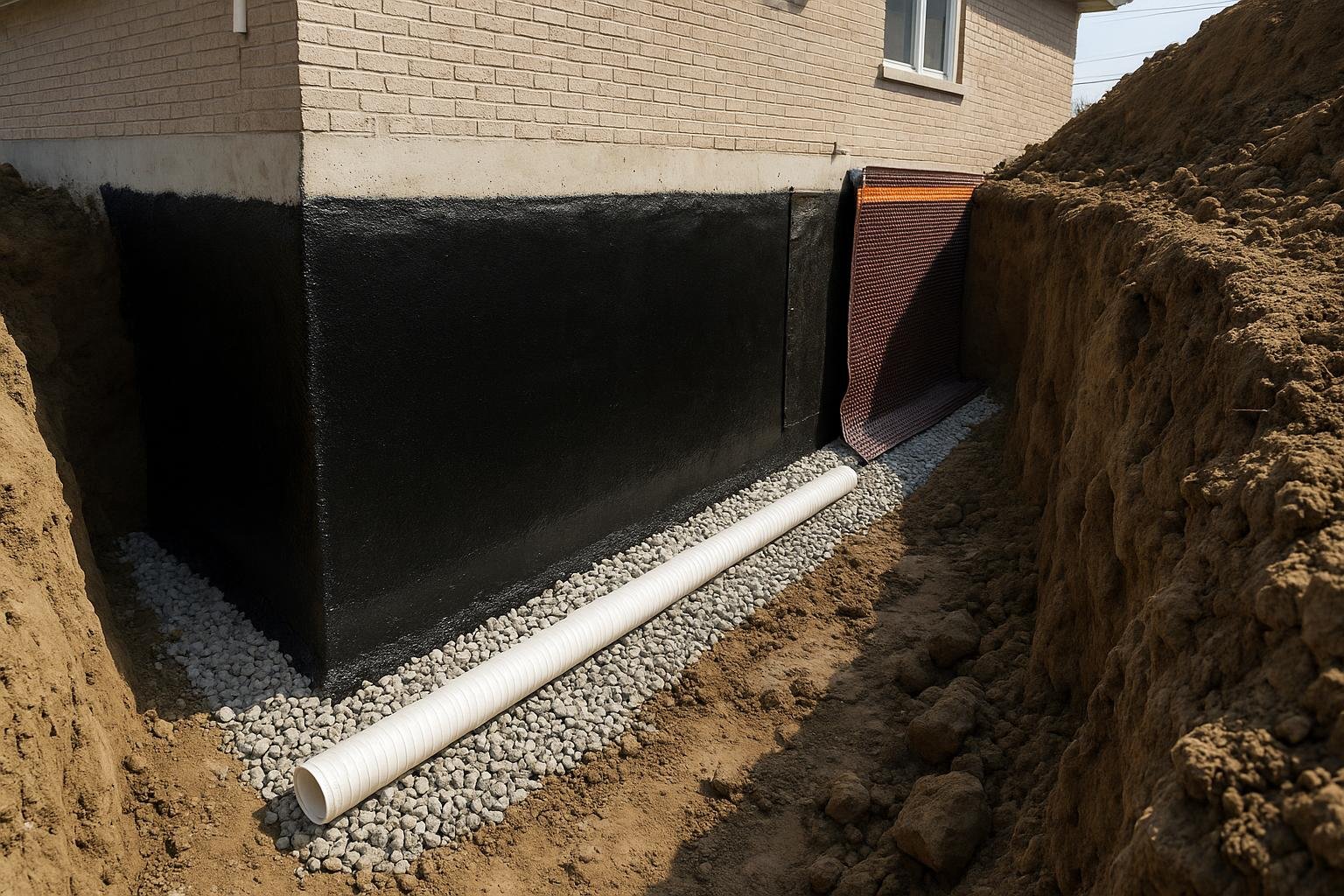
Exterior waterproofing addresses the problem at its source. The process involves excavating to the footing, applying hydraulic cement to any voids in the wall, coating the exterior face with a rubberised membrane, installing a dimpled drainage board over the membrane, laying new weeping tile bedded in clear stone, and backfilling with graded material. This is the most comprehensive solution and the one most likely to carry a long-term warranty. It is best suited to homes where the original exterior membrane has failed or where the weeping tile has collapsed. The main limitation is disruption: excavation requires removing landscaping, driveways or decks that sit against the foundation.
Polyurethane Crack Injection
For a single active crack in a poured-concrete wall, low-pressure polyurethane injection is often the correct and most cost-effective fix. Ports are surface-mounted at intervals along the crack, and expanding polyurethane foam is injected under low pressure until it fills the crack from the interior face to the exterior face. Polyurethane cures flexible, which matters in Vaughan because seasonal frost movement causes foundations to shift slightly each year. A rigid filler would re-crack; a flexible one moves with the wall. Epoxy injection is reserved for structural cracks where the wall must be re-bonded, not just sealed against water.
Sump Pump Installation or Replacement
A sump pump is the active component of any interior drainage system. Without a functioning pump, even a perfectly installed weeping-tile system will eventually fill and overflow. Vaughan homes that already have a sump pit but experience basement flooding during heavy rain often have an undersized pump, a failed float switch, or no battery backup for power-outage events. Upgrading to a higher-capacity pump with a battery backup unit is a relatively low-cost intervention that can prevent significant damage. The sump pump installation service page covers sizing and backup options in detail.
Window Well Drainage
Basement windows that sit below grade are a common and often overlooked entry point. If the window well has no gravel bed and no drain connected to the weeping-tile system, it acts as a collection basin during heavy rain. Adding a gravel-filled well with a drain, or installing a clear polycarbonate cover, eliminates this entry point without major excavation. This fix is appropriate when flooding is confined to one corner near a window and the rest of the basement is dry.
Parging and Grade Correction
Parging is the application of a cement-based coating to the above-grade portion of the foundation wall, sealing surface porosity and minor surface cracks. Grade correction means re-sloping the soil around the perimeter so that surface water drains away from the foundation rather than toward it. Both are low-cost interventions that address surface-level problems. They are not substitutes for weeping-tile replacement or membrane work when hydrostatic pressure is the root cause, but they are appropriate as a first step when the problem is clearly surface water rather than groundwater.
Options Compared
| Method | Best For | Typical Lifespan | Relative Cost | Disruption Level |
|---|---|---|---|---|
| Interior weeping tile + sump | Failed footing drain, chronic perimeter seepage | 20+ years with pump maintenance | Moderate | Interior floor jackhammering; no exterior dig |
| Exterior waterproofing | Failed membrane, collapsed exterior weeping tile | 25+ years | Higher | Full excavation; landscaping removed temporarily |
| Polyurethane crack injection | Single active crack in poured-concrete wall | Permanent if wall is stable | Low ($600-$900 per crack) | Minimal; interior access only |
| Sump pump upgrade | Existing system overwhelmed during storms | 7-10 years (pump motor) | Low to moderate | Minimal; pit already exists |
| Window well drainage | Flooding at below-grade window only | 10-15 years | Low | Minimal; localised excavation |
| Parging and grade correction | Surface water, minor above-grade porosity | 5-10 years | Lowest | Minimal |
The table above shows that no single method suits every situation. Exterior waterproofing delivers the most comprehensive protection and the longest service life, but it carries the highest cost and the most disruption. Interior weeping tile is a strong middle-ground option for homes where excavation is not practical. Crack injection is the right call when the problem is a single identifiable crack rather than a systemic drainage failure. Choosing the wrong method wastes money and leaves the root cause of basement flooding Vaughan homeowners are experiencing unresolved.
How to Choose the Right Fix
Choose exterior waterproofing if water is entering along the full perimeter of the basement, if the original exterior membrane is visibly failing, or if the weeping tile is confirmed to be collapsed or silted. This is also the right choice when you want the longest possible warranty and are planning to sell the home within a few years, since a transferable warranty adds measurable resale value.
Choose an interior weeping-tile system if excavation is blocked by a driveway, a deck, or a neighbouring structure, or if the budget does not allow for full exterior work right now. Interior systems are also appropriate when the wall itself is sound but the footing drain has failed.
Choose polyurethane crack injection if a single vertical crack in a poured-concrete wall is the only entry point and the wall shows no signs of lateral movement or structural distress. If the crack is horizontal or stair-stepped through block, get a structural assessment before injecting.
Choose a sump pump upgrade if basement flooding Vaughan storms trigger only occurs during power outages or during storms that exceed the pump’s rated capacity, and the rest of the drainage system is intact.
Choose parging and grade correction as a first step if the problem is clearly surface water pooling against the wall and the basement is otherwise dry. If the problem returns after grading, escalate to a drainage solution.
A free on-site inspection is the only reliable way to confirm which entry point is active. Moisture meters, visual crack mapping and a review of the drainage grade around the perimeter all inform the diagnosis before any scope is written.
Costs and Timelines
| Cost Driver | Why It Affects Price | Approximate Impact |
|---|---|---|
| Linear footage of affected wall | More wall means more membrane, more weeping tile, more labour | Primary driver for exterior and interior systems |
| Depth of excavation | Deeper footings require more digging time and shoring | Significant for exterior work; older Vaughan homes often have deeper footings |
| Access constraints | Decks, driveways, fences and utilities increase excavation complexity | Can add 15-30% to exterior job cost |
| Number of cracks | Each crack requires its own injection ports and material | $600-$900 per crack, final figure depends on site inspection |
| Sump basin and pump specification | Battery backup, alarm systems and higher-capacity pumps increase unit cost | Moderate; worthwhile for homes in low-lying Vaughan areas |
| Concrete re-pour after interior work | Interior weeping-tile jobs require re-pouring the perimeter floor channel | Included in most interior system quotes |
As a general orientation, a single foundation crack injected from the interior typically falls in the $600 to $900 range. A full exterior waterproofing job on an average Vaughan semi-detached or detached home runs roughly $6,000 to $9,000 depending on linear footage, excavation depth and site access. Interior weeping-tile systems typically fall below the exterior range. All figures depend on a site inspection, and the basement leak repair cost guide for the GTA provides a fuller breakdown of what drives the final number. The Canada Mortgage and Housing Corporation (CMHC) also publishes guidance on moisture management and foundation maintenance at cmhc-schl.gc.ca that is worth reviewing alongside any contractor quote.
Risks and Common Mistakes
The most common mistake Vaughan homeowners make is treating the symptom rather than the cause. Applying hydraulic cement or a paint-on waterproofing product to the interior face of a wall that is under sustained hydrostatic pressure will fail within one to three seasons. The pressure behind the wall is greater than the bond strength of any surface coating.
A second frequent error is replacing only the sump pump without addressing the drainage system feeding it. If the weeping tile is silted, the pump has nothing to collect and the water still accumulates at the footing. Conversely, installing a new interior weeping-tile system without a reliable pump leaves the system unable to discharge.
Ignoring a hairline crack because it appears minor is a third risk. Polyurethane injection is straightforward and relatively inexpensive when a crack is small and stable. Left untreated, water entering the crack freezes in winter, expands, and widens the crack. By the following spring the crack may be wide enough to admit a significant flow, turning a minor repair into a full basement flooding Vaughan emergency.
Finally, incorrect grading is often overlooked after landscaping work. Contractors who re-sod or re-pave around a home sometimes leave the grade sloping toward the foundation. This alone can cause a previously dry basement to flood within a season or two, and it is one of the first things a qualified inspector will check.
How the Process Works
- Free on-site inspection and moisture assessment. A technician visits the property, maps visible cracks, checks the grade, probes for moisture with a meter, and reviews the existing drainage configuration. No charge and no obligation at this stage.
- Written scope with linear-foot pricing. A detailed written scope is provided, specifying the method, the materials, the linear footage of wall or pipe involved, and the total investment range. This is the document to compare across contractors.
- Preparation and access. For exterior work, landscaping or paving adjacent to the affected wall is carefully removed and set aside. For interior work, the basement is cleared along the perimeter and the floor channel is marked.
- Core repair work. Exterior: excavation to the footing, hydraulic cement parging of voids, rubberised membrane application, dimpled drainage board, new weeping tile in clear stone, backfill and grade correction. Interior: jackhammer perimeter channel, install weeping tile to sump basin, vapour barrier up the wall, re-pour concrete. Crack injection: port-and-paste method, low-pressure polyurethane fill, ports removed and surface finished.
- Sump pump installation or verification. Where an interior system is installed, the sump pump is sized to the basin volume and a battery backup unit is recommended for Vaughan homes in areas prone to storm-related power outages.
- Final inspection and warranty documentation. The completed work is inspected, the warranty is documented, and the homeowner receives guidance on what to monitor going forward.
Exterior waterproofing on a typical Vaughan home takes two to four days from excavation to backfill, weather permitting. Interior weeping-tile systems are usually complete in one to two days with no exterior disruption.
Frequently Asked Questions
What causes basement flooding in Vaughan specifically?
The primary cause of basement flooding Vaughan homeowners report is hydrostatic pressure from the city’s heavy clay soil, which holds water against foundation walls for extended periods after rain. Secondary causes include failed or silted original weeping tile, foundation cracks in poured-concrete walls, and inadequate surface grading that directs runoff toward the home. Spring snowmelt and summer thunderstorms are the two events most likely to trigger acute flooding.
How do I know if my weeping tile has failed?
Signs include water seeping along the base of the basement wall rather than through a specific crack, a sump pit that never fills even during heavy rain (suggesting the tile is too silted to deliver water to the pit), and efflorescence or mineral staining along the entire perimeter of the floor. A camera inspection of the existing tile, where accessible, gives a definitive answer.
Is basement flooding covered by home insurance in Ontario?
Standard home insurance policies in Ontario typically cover sudden and accidental water damage but exclude gradual seepage or flooding caused by a maintenance issue such as failed weeping tile. Overland water coverage and sewer backup coverage are separate endorsements that some insurers offer. Review your specific policy before assuming coverage applies. The guide on home insurance and basement waterproofing in Ontario covers this topic in full.
Can I fix a flooded basement myself?
Temporary measures such as improving the surface grade, sealing a visible crack with hydraulic cement, or replacing a sump pump are within reach for a capable homeowner. Permanent solutions involving weeping tile, exterior membranes or structural crack repair require professional equipment and experience. An incorrect DIY repair can mask the problem while allowing damage to continue behind the wall.
How long does exterior waterproofing take in Vaughan?
A typical exterior waterproofing job on a Vaughan semi-detached or detached home takes two to four days from excavation to backfill, assuming no buried utilities or access complications. Interior weeping-tile systems are usually complete in one to two days. Crack injection on a single crack is typically a half-day job.
Will waterproofing increase my home’s resale value in Vaughan?
A documented waterproofing system with a transferable warranty is a meaningful selling point in Vaughan’s competitive real estate market. Buyers and their home inspectors look specifically for evidence of past water intrusion, and a professionally completed repair with warranty documentation removes that concern from the negotiation. The guide on basement waterproofing ROI in the GTA examines the resale data in detail.
What is the difference between polyurethane and epoxy crack injection?
Polyurethane injection cures flexible and is used to seal active water-bearing cracks in poured-concrete walls. It tolerates the seasonal foundation movement common in Vaughan’s frost-affected soil. Epoxy injection cures rigid and is used only when the crack is structural and the two faces of the wall must be re-bonded. Using epoxy in a crack that continues to move will cause the repair to fail.
How often should a sump pump be replaced?
A residential sump pump motor typically has a service life of seven to ten years under normal cycling conditions. Pumps in Vaughan homes that run frequently during spring thaw and summer storms may reach the lower end of that range. Annual testing of the float switch and the backup battery, combined with a professional inspection every three to five years, is the recommended maintenance schedule.
Does the City of Vaughan offer any subsidy for basement waterproofing?
The City of Vaughan has historically offered a Basement Flooding Protection Subsidy Program for eligible improvements including backwater valves, sump pumps and window well covers. Basement flooding Vaughan residents experience may qualify for partial cost recovery through this program. Program availability, eligible work and subsidy amounts change periodically. Contact the City of Vaughan’s infrastructure services department directly to confirm current program details before starting any work.
If your Vaughan basement has flooded or you are seeing early warning signs such as efflorescence, damp patches or a crack that was not there last season, the right next step is a free on-site inspection. The DryShield Team serves Vaughan and all of York Region and can assess your foundation, identify the entry point, and provide a written scope with no obligation. Request your free inspection today and get a clear answer before the next storm season arrives.