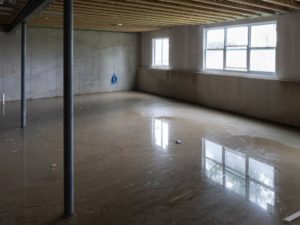
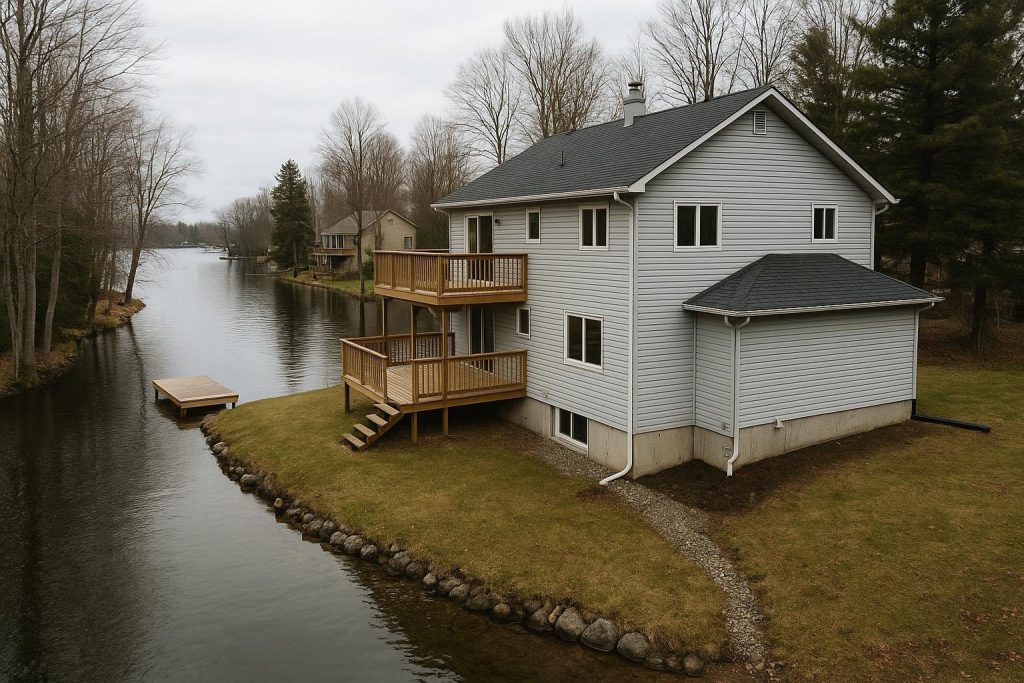
Sump pump installation in Ramara is one of the most effective ways to protect a basement or crawl space from the seasonal flooding and persistent groundwater pressure that affect properties throughout this lakeside township. Ramara sits between Lake Simcoe and Lake Couchiching, and its low-lying terrain, high seasonal water tables and clay-over-sand soil profiles create conditions where a properly sized and installed sump system is often the first line of defence against water intrusion. This guide explains every option, how to choose between them and what drives the cost.
- Ramara’s proximity to Lake Simcoe and Lake Couchiching keeps the water table elevated for much of the year, especially after spring snowmelt.
- A sump pump works alongside, not instead of, other waterproofing measures such as weeping tile and crack repair.
- Pump type, pit size, discharge routing and backup power are the four decisions that most affect long-term performance.
- Battery backup or water-powered backup systems are especially important for seasonal and waterfront properties where power outages coincide with storms.
- Ontario Building Code requirements govern pit construction, discharge location and electrical connections; a permit may be required depending on scope.
Definitions & scope
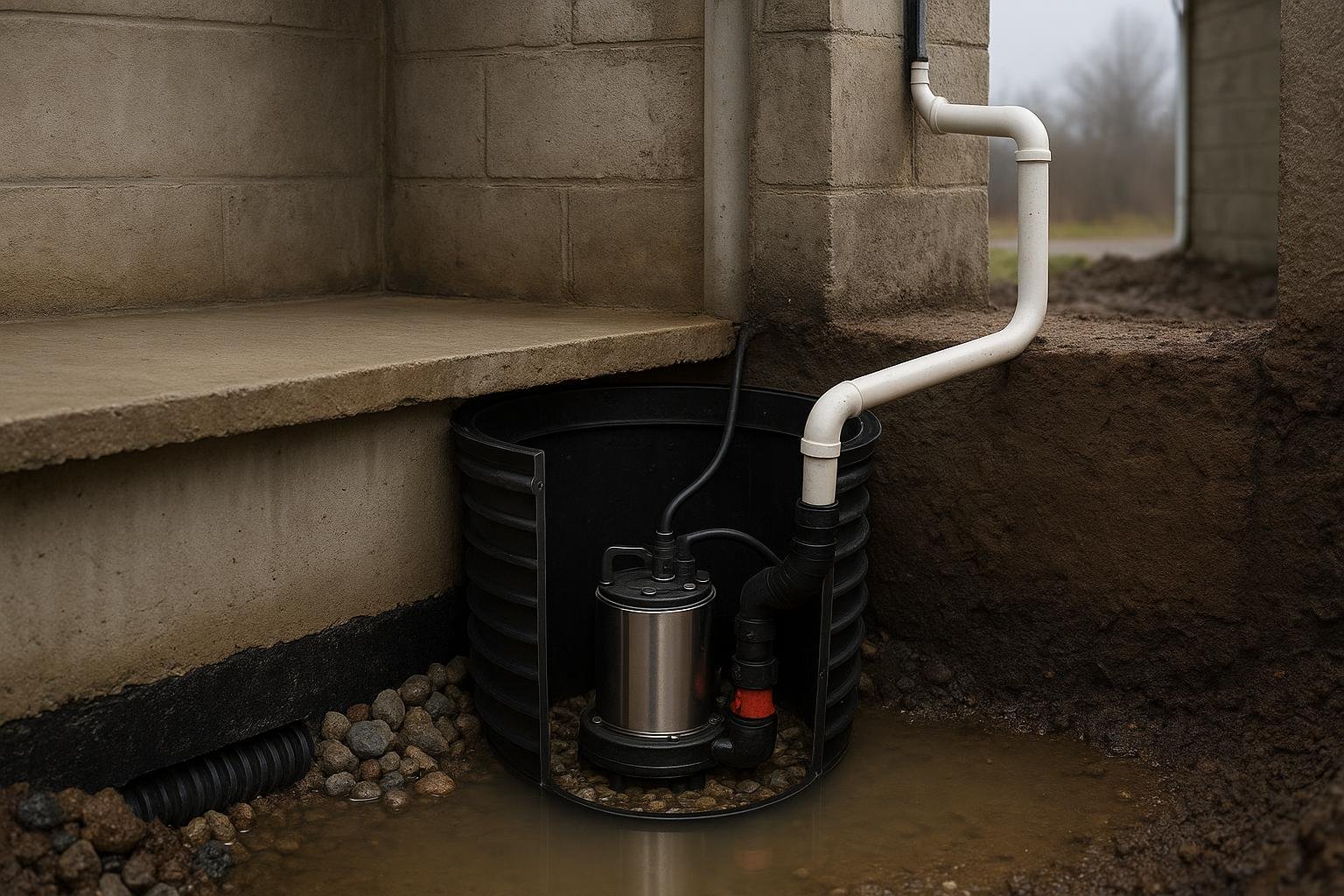
A sump pump is a submersible or pedestal electric pump installed in a pit (the sump basin) at the lowest point of a basement or crawl space. When groundwater rises to a set level, a float switch activates the pump, which moves water through a discharge pipe to a safe outlet away from the foundation.
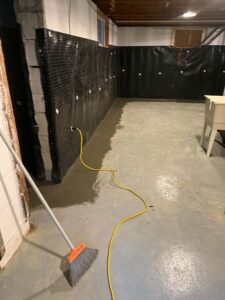
In the context of a complete waterproofing system, the sump pit collects water directed to it by an interior drainage channel (often called a weeping tile or French drain system installed along the footing). The pump then expels that water before it can rise above the floor slab. Without a functioning pump, even a well-designed drainage channel will eventually overflow.
Scope for this guide covers residential sump pump installation in Ramara Township, including the communities of Brechin, Lagoon City, Washago, Uphill and surrounding rural and waterfront properties. It addresses pedestal and submersible primary pumps, battery backup systems, water-powered backups, combination units and smart monitoring. It does not cover commercial or municipal drainage infrastructure.
Why this matters
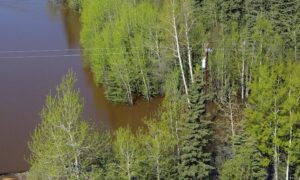
Ramara Township occupies a narrow land corridor between two of Ontario’s largest inland lakes. The Ontario Ministry of Natural Resources and Forestry has documented that the Lake Simcoe watershed experiences significant seasonal water-level fluctuations driven by spring snowmelt and summer storm events. Groundwater in low-lying areas of the township can rise quickly and remain elevated for weeks.
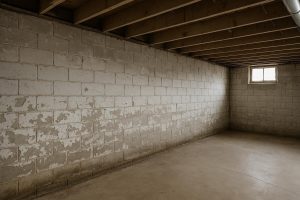
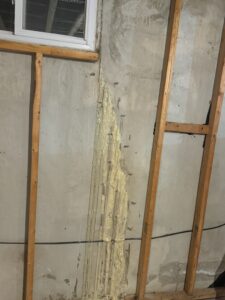
Many homes in Ramara, particularly in Lagoon City and along the Lake Couchiching shoreline, were built on fill or near-shore soils with limited natural drainage. Older homes may have clay-tile or no weeping tile at all. Poured-concrete and concrete-block foundations in these areas are subject to hydrostatic pressure that forces water through cracks, cold joints and floor-wall interfaces.
Seasonal and year-round cottages face an additional risk: the property may be unoccupied during the highest-risk periods (spring thaw, major fall storms), meaning a pump failure goes undetected for days. A pump that runs without a backup system during a power outage, which are common during Ontario lake-country storms, can allow enough water to enter to cause structural damage, mould growth and loss of stored contents.
Addressing groundwater with a correctly specified sump system reduces hydrostatic pressure on the foundation, lowers interior humidity and protects finished or storage space. It also complements other waterproofing measures. For a broader view of waterproofing options in this region, see the Simcoe County Basement Waterproofing Guide.
Your options
Submersible primary sump pump
A submersible pump sits entirely inside the sump pit, submerged in water when the pit fills. The motor is sealed and cooled by the surrounding water. Most modern residential installations use submersible pumps because they are quieter than pedestal units, handle debris better and take up no floor space above the pit.
How it works: A float switch (tethered or vertical) rises with the water level and triggers the pump motor. Water is drawn through the pump housing and expelled through a discharge pipe that exits the foundation wall above grade.
Best for: Most Ramara homes with a full basement, including waterfront properties with moderate to high groundwater volume.
Limitations: Motor access requires removing the pump from the pit. Pump lifespan is typically seven to twelve years depending on run frequency and water quality; hard or silty water can accelerate wear. A power outage disables the pump entirely without a backup system.
Pedestal sump pump
A pedestal pump has the motor mounted on a vertical shaft above the pit, keeping it dry. Only the pump impeller sits in the water.
How it works: The float switch activates the motor, which spins the impeller at the base of the shaft to draw water up and out through the discharge line.
Best for: Narrow pits where a submersible unit will not fit, or where easy motor access for maintenance is a priority.
Limitations: Louder than submersible units. The exposed motor can be damaged if the pit overflows. Generally considered less suitable for high-volume applications common in Ramara’s lakeside zones.
Battery backup sump pump
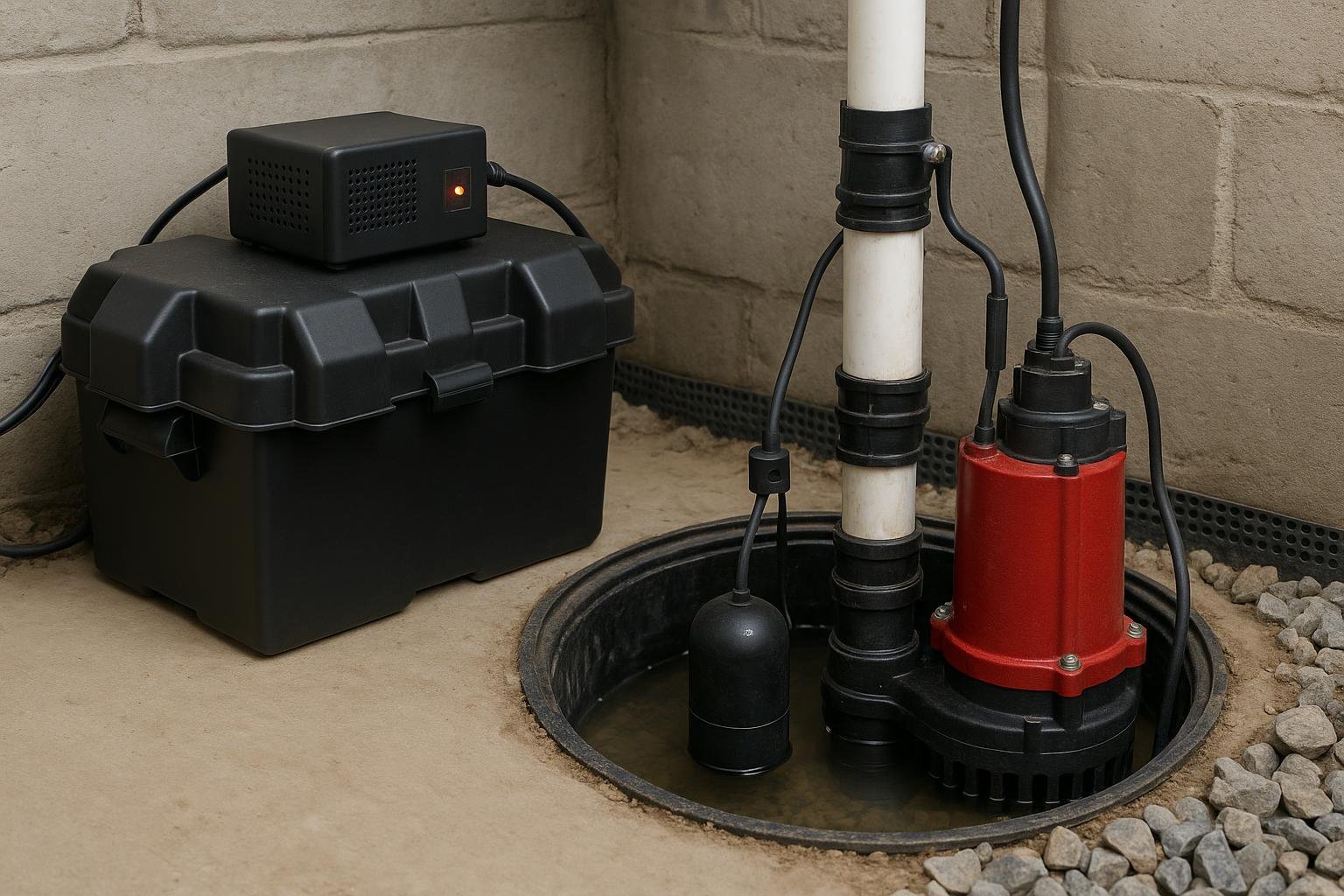
A battery backup system is a secondary pump powered by a 12-volt or 24-volt deep-cycle battery. It activates automatically when the primary pump fails or when the water level rises faster than the primary pump can handle.
How it works: A dedicated float switch set slightly higher than the primary pump’s switch triggers the backup unit. A battery charger keeps the battery at full charge during normal operation. Most systems include an alarm that sounds when the backup activates.
Best for: Any Ramara property, but especially seasonal cottages and waterfront homes where power outages during storms are a realistic risk. See also the guide on sump pumps for seasonal and unoccupied cottages.
Limitations: Battery capacity is finite; a deep-cycle battery typically provides six to twelve hours of pumping depending on inflow volume. Batteries require replacement every three to five years. The backup pump’s discharge capacity is usually lower than the primary pump’s.
Water-powered backup sump pump
A water-powered backup uses municipal water pressure to create a venturi effect that draws sump water up and out through the discharge line. It requires no electricity and no battery.
How it works: When the primary pump fails, a float valve opens a municipal water supply line. Pressurized water flowing through a venturi nozzle creates suction that lifts sump water and carries it out through the discharge pipe. For every litre of municipal water used, approximately two litres of sump water are removed.
Best for: Homes on municipal water supply where power outages are the primary concern and battery maintenance is undesirable.
Limitations: Not suitable for properties on well water, which is common in rural Ramara. Municipal water consumption during a backup event adds to the water bill. Some municipalities restrict or regulate the connection; verify local requirements before installation.
Combination pump unit
A combination unit integrates a primary submersible pump and a battery backup into a single housing installed in one pit. The manufacturer pre-wires and pre-plumbs both pumps, simplifying installation.
How it works: The primary pump handles normal operation. If water rises above the primary pump’s switch level, the integrated backup activates automatically.
Best for: New installations where simplicity and space efficiency are priorities, and where the homeowner wants a single-vendor warranty covering both pumps.
Limitations: If the housing or shared discharge line fails, both pumps may be affected simultaneously. Replacement of one component may require replacing the entire unit depending on the manufacturer’s design.
Smart sump pump with monitoring
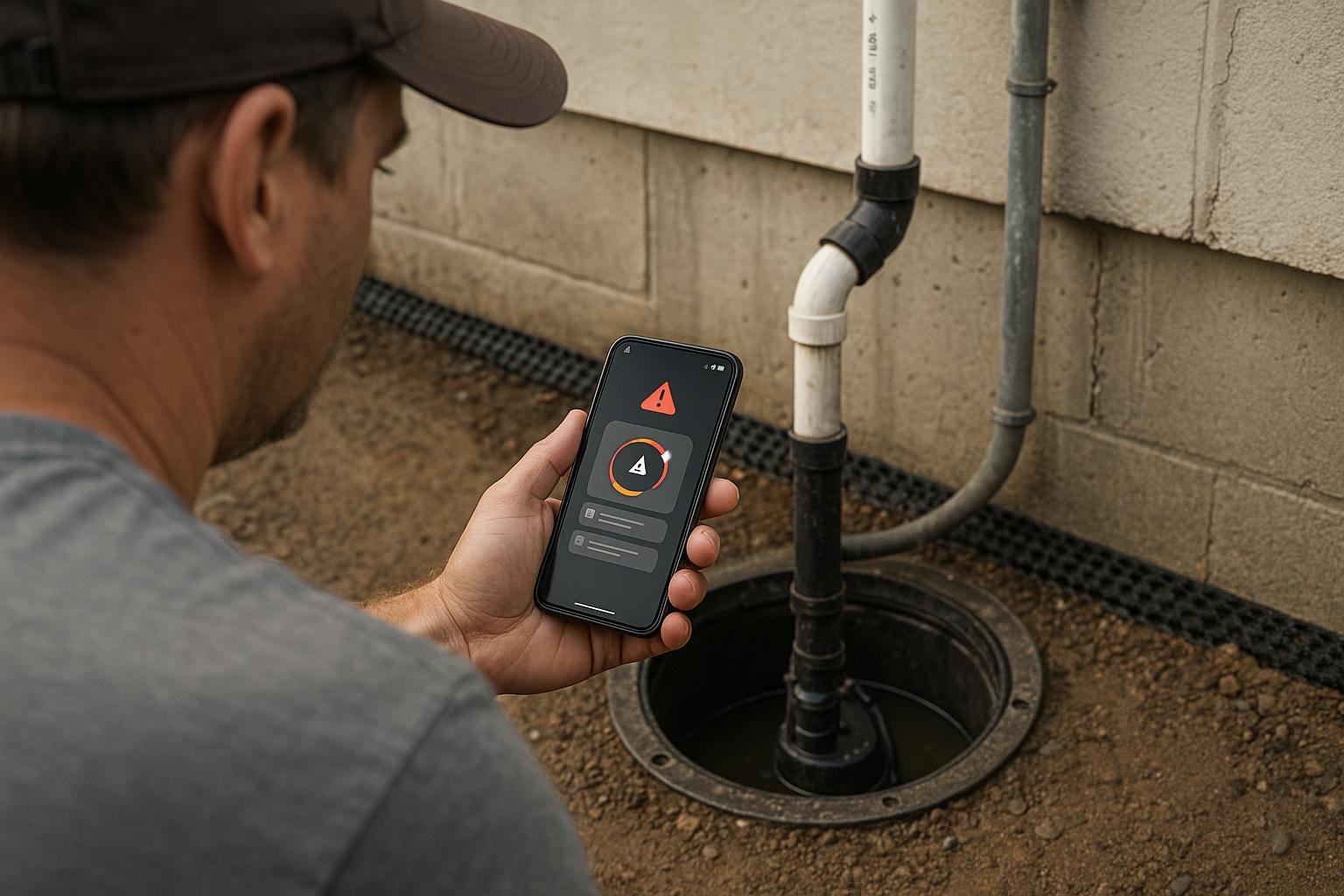
Smart pumps or smart monitoring devices add Wi-Fi or cellular connectivity to an existing or new pump system. They send alerts to a smartphone when the pump activates, when the battery is low, when water reaches an alarm level or when the pump has not run within an expected cycle.
How it works: A sensor module connects to the pump’s electrical circuit and to a home Wi-Fi network or cellular network. The companion app logs run cycles and sends push notifications or SMS alerts.
Best for: Seasonal Ramara cottages and investment properties where the owner is not on-site to notice a pump failure. See the guide on how to test smart sump pump sensors for diagnostic steps.
Limitations: Requires a reliable Wi-Fi or cellular signal at the pump location. Monitoring does not replace a backup pump; it only provides earlier warning of a problem.
Options compared
| Option | Best for | Key considerations | Durability / limitations |
|---|---|---|---|
| Submersible primary pump | Most full-basement homes; moderate to high inflow | Quiet; requires sealed pit lid; motor cooled by water | 7-12 years typical; silty water accelerates wear |
| Pedestal primary pump | Narrow pits; easy motor access needed | Louder; motor exposed above pit; lower debris tolerance | Longer motor life if kept dry; less suited to high volume |
| Battery backup | Any property; essential for cottages and waterfront | Battery replacement every 3-5 years; limited run time | 6-12 hours capacity per charge; lower flow rate than primary |
| Water-powered backup | Municipal water supply; power-outage risk | No electricity or battery; uses municipal water during event | Unlimited run time while water pressure holds; not for wells |
| Combination unit | New installs; space efficiency; single warranty | Integrated primary and backup; simpler wiring | Shared housing; component failure may affect both pumps |
| Smart monitoring | Unoccupied or seasonal properties | Requires Wi-Fi or cellular signal; app-based alerts | Does not replace backup pump; depends on network availability |
For most Ramara properties, the practical choice is a submersible primary pump paired with a battery backup and a smart monitoring device. The combination addresses the three most common failure scenarios in this area: high inflow volume during spring melt, power outages during lake-country storms and delayed detection at unoccupied seasonal properties. Water-powered backup is worth considering for year-round homes on municipal supply in Brechin or Washago, but rural and waterfront properties on well water should rely on battery backup instead.
How to choose
Use the following decision framework to narrow your selection before speaking with a waterproofing contractor.
Choose a submersible primary pump if your basement has a standard pit diameter (typically 45-60 cm), you want quiet operation and your inflow volume during heavy rain or snowmelt is moderate to high. This is the default recommendation for most Ramara homes.
Choose a pedestal pump if your existing pit is too narrow to accommodate a submersible unit and excavating a wider pit is not feasible. Confirm with your contractor that the pedestal unit’s flow rate matches your inflow volume.
Choose a battery backup if your property is on well water, if power outages during storms are a known risk in your area, or if the property is a seasonal cottage that may be unoccupied during high-risk periods. This applies to the majority of Ramara waterfront and rural properties.
Choose a water-powered backup if your home is on municipal water supply, you want a backup that requires no battery maintenance and your municipality permits the connection. Verify current local requirements before installation, as regulations vary.
Choose a combination unit if you are doing a new installation and want a single integrated system with one warranty and simplified installation.
Add smart monitoring in all cases where the property is not occupied year-round. The cost of a monitoring device is modest relative to the cost of undetected flooding damage.
Consider pump horsepower carefully. Undersizing is a common mistake. A contractor should assess the expected inflow rate based on your soil type, lot elevation, proximity to the lake and the size of the drainage area feeding the pit. A pump rated for a low-inflow suburban basement may be inadequate for a Lagoon City property at near-lake-level elevation.
Costs & timelines
No verified current price quotes for Ramara-specific sump pump installation have been supplied to this guide. The following describes cost drivers only, ranked by typical influence on the final project cost. Homeowners should obtain itemized written quotes from licensed contractors before making any financial decisions.
| Rank | Cost driver | Why it matters |
|---|---|---|
| 1 | Pit excavation and construction | Cutting through an existing concrete slab, excavating the pit and installing a liner is the most labour-intensive part of a new installation. Depth and diameter affect cost. |
| 2 | Interior drainage channel integration | If a perimeter weeping tile or French drain system is installed at the same time, this significantly increases scope and cost but improves system effectiveness. |
| 3 | Pump type and horsepower | Higher-capacity pumps and combination units cost more than basic submersible units. Battery backup systems add to the equipment cost. |
| 4 | Discharge line routing | Longer discharge runs, routing through finished walls or directing water to a municipal storm sewer (where permitted) add labour and materials. |
| 5 | Electrical work | A dedicated GFCI-protected circuit is required. If the panel lacks capacity or the circuit must be run a long distance, electrical costs increase. |
| 6 | Access and site conditions | Finished basements, low ceiling heights, remote rural access and waterfront lot constraints all add to labour time. |
| 7 | Permit fees | The Township of Ramara may require a building permit for structural work associated with pit construction. Permit fees vary by scope. |
Timeline for a straightforward pump replacement in an existing pit is typically one day. A new installation with pit construction and drainage channel integration may take two to three days. Scheduling during spring or after a flooding event may extend lead times due to demand. Homeowners should confirm permit requirements with the Township of Ramara before work begins.
Risks & common mistakes
Undersizing the pump. Selecting a pump based on price rather than inflow capacity is the most common installation error. A pump that cannot keep up with peak inflow during a spring melt event will allow the pit to overflow. A contractor should calculate the required flow rate before specifying equipment.
No backup system. A primary pump without any backup is a single point of failure. Power outages during the storms most likely to cause flooding are common in Ramara’s lake-country setting. Installing a primary pump without a battery or water-powered backup leaves the property unprotected during the highest-risk moments.
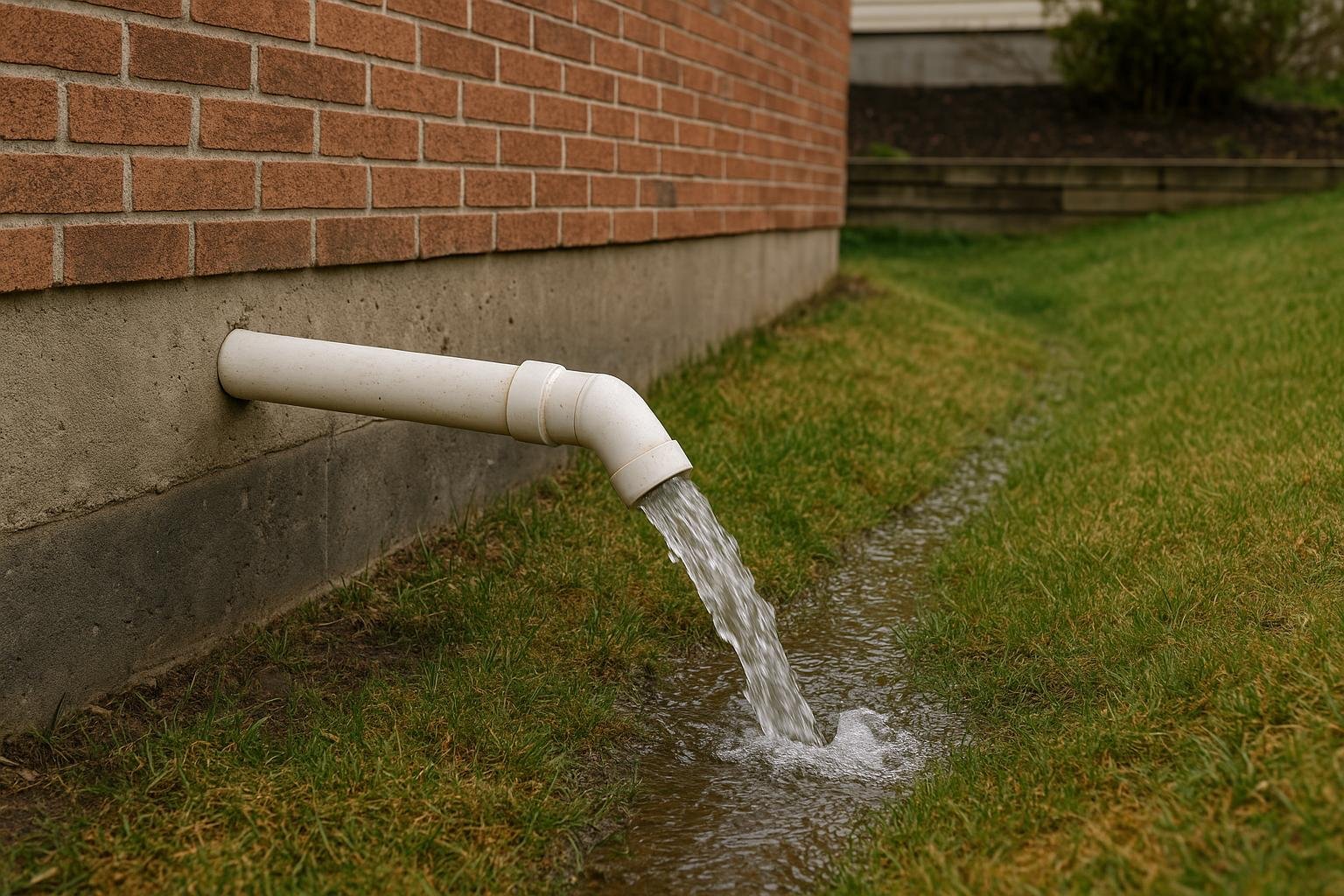
Incorrect discharge location. Discharging sump water too close to the foundation simply recirculates it back into the soil around the house. Ontario Building Code requires discharge to daylight at a point that drains away from the building. Discharging onto a neighbour’s property or into a municipal sanitary sewer is not permitted.
No check valve on the discharge line. Without a check valve, water in the discharge pipe flows back into the pit when the pump stops, causing the pump to cycle repeatedly and wear out prematurely. A check valve should be installed on every discharge line.
Ignoring the pit liner and lid. An open or cracked pit allows radon, soil gases and humidity into the basement. A sealed pit lid with a grommet for the discharge pipe and electrical cord is a basic requirement, not an optional upgrade.
Skipping the dedicated electrical circuit. Plugging a sump pump into a shared circuit risks tripping a breaker during a storm when other loads are active. A dedicated GFCI-protected circuit is required by the Ontario Electrical Safety Code.
Neglecting maintenance. Sump pumps require periodic testing, cleaning of the inlet screen and float switch inspection. A pump that has not been tested before the spring melt season may fail at the worst possible time. For seasonal properties, test the pump at spring opening and again at fall closing.
For related waterproofing concerns that often accompany sump pump installation, see the guide on drain tile systems and the overview of waterproofing a basement.
How the process works
- Assessment and system design. A waterproofing contractor inspects the basement, measures the pit location (or determines the optimal location for a new pit), assesses inflow sources, checks the existing electrical panel and reviews discharge routing options. This step determines pump type, horsepower, backup system and whether an interior drainage channel is needed.
- Permit application (if required). For new pit construction or structural work, the contractor or homeowner applies for a building permit from the Township of Ramara. Work should not begin until the permit is issued.
- Pit construction or preparation. For a new installation, the concrete slab is cut, the pit is excavated to the required depth, a perforated liner is set and the slab is patched around the liner. For a replacement, the existing pit is cleaned and inspected.
- Drainage channel integration (if applicable). If a perimeter interior weeping tile system is being installed at the same time, the channel is cut, the pipe is laid to slope toward the pit and the trench is filled with clean stone and capped.
- Pump and backup installation. The primary pump is set in the pit, the float switch is adjusted to the correct activation level, the discharge line is run and a check valve is installed. The backup system is wired and tested. A sealed lid is fitted over the pit.
- Electrical connection. A licensed electrician connects the pump to a dedicated GFCI-protected circuit. If smart monitoring is included, the device is connected and the app is configured.
- Testing and handover. The contractor fills the pit with water to verify activation, pump-down rate and backup system function. The homeowner is shown how to test the system, where the alarm is located and how to interpret monitoring alerts.
Frequently asked questions
Does a sump pump installation in Ramara require a building permit?
It depends on the scope of work. Replacing an existing pump in an existing pit typically does not require a permit. Constructing a new pit, cutting the slab or integrating a perimeter drainage system may require a building permit from the Township of Ramara. Confirm requirements with the township’s building department before work begins, as requirements can change and vary by project scope.
How do I know if my Ramara property needs a sump pump?
Signs that a sump pump is likely needed include water seeping through the floor-wall joint, efflorescence or staining on basement walls, a damp or musty smell after rain or snowmelt, a visibly high water table on the property, or a history of basement flooding. Properties in low-lying areas near Lake Simcoe or Lake Couchiching are at elevated risk due to the persistently high seasonal water table in those zones.
What happens to my sump pump during a power outage?
A primary electric sump pump stops working immediately when power is lost. Power outages during storms are common in rural and lake-country Ontario, which is exactly when the pump is most needed. A battery backup system or water-powered backup (for homes on municipal water) will continue to remove water from the pit during an outage. Smart monitoring can alert you to the situation even when you are off-site.
How long does a sump pump last?
Most submersible sump pumps have a service life of approximately seven to twelve years under normal residential use. Pumps in high-inflow environments, or those exposed to silty or hard water, may wear out sooner. Battery backup units have similar pump lifespans, but the battery itself typically requires replacement every three to five years. Annual testing and periodic cleaning of the inlet screen extend pump life.
Can I install a sump pump myself?
Replacing an existing pump in an existing pit is within the capability of a mechanically competent homeowner, provided the electrical connection is handled by a licensed electrician as required by the Ontario Electrical Safety Code. Constructing a new pit, cutting a concrete slab or integrating a drainage channel involves structural and waterproofing work that is generally best left to a licensed contractor. Errors in pit depth, discharge routing or float switch adjustment can result in pump failure or property damage.
Where should sump pump discharge water go?
Discharge water must be directed away from the foundation to a point where it drains naturally away from the building, such as a sloped lawn, a municipal storm sewer connection (where permitted by the municipality) or a dry well. It must not discharge onto a neighbouring property, into a sanitary sewer or back toward the foundation. The discharge outlet should be at least 1.5 to 3 metres from the foundation wall, though local requirements may specify a greater distance.
Do I need a sump pump if I already have weeping tile?
Weeping tile collects and directs groundwater but does not expel it from the property on its own. Interior weeping tile systems drain to a sump pit, which requires a pump to remove the collected water. Exterior weeping tile drains by gravity to daylight or to a municipal connection, but if the outlet is insufficient or the water table is above the outlet elevation, a pump is still needed. In most Ramara installations, weeping tile and a sump pump work together as a system. See the drain tile guide for more detail.
What size sump pump do I need for a waterfront property in Ramara?
Pump sizing depends on the expected inflow rate, which is influenced by lot elevation relative to the lake, soil permeability, the size of the drainage area feeding the pit and the depth of the water table. A contractor should calculate the required flow rate in litres per minute before specifying horsepower. Waterfront and near-lake properties in Lagoon City and along Lake Couchiching typically require higher-capacity pumps than inland properties. Undersizing is a common and costly mistake; always err toward a higher-capacity unit when inflow potential is uncertain.
How do I maintain my sump pump between seasons?
Test the pump at least twice a year by slowly pouring water into the pit until the float switch activates. Clean the inlet screen of any debris. Inspect the float switch for free movement and the discharge line for blockages or ice (in winter). Check the battery backup charge level and replace the battery if it no longer holds a full charge. For seasonal cottages, test at spring opening and confirm the system is operational before closing the property in fall. The guide on closing and opening your cottage covers seasonal preparation steps in more detail.
If you are dealing with an active leak or flooding event at a Ramara property, the flooded cottage basement guide provides immediate steps to take before a contractor arrives.
DryShield has served Simcoe County and Ontario cottage country for more than 25 years. If you are ready to assess your Ramara property’s drainage needs, contact the DryShield team or use the sump pump installation service page to learn more about available options. You can also start with the basement leak diagnostic tool to identify the source of any existing water intrusion before deciding on a solution.