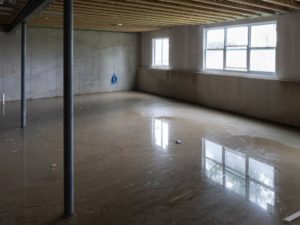
Foundation crack repair in Ramara means sealing or stabilizing cracks in poured-concrete or block foundations before seasonal water infiltration, freeze-thaw cycling and the high water table common near Lake Simcoe and the Trent-Severn Waterway cause lasting structural or moisture damage. The right repair method depends on crack type, width, activity and the source of water pressure. This guide explains every option, how to compare them and what drives cost so Ramara homeowners can make an informed decision.
- Not every crack is structural, but every crack that admits water should be repaired before winter.
- Polyurethane injection is the most common interior fix for non-structural poured-concrete cracks; exterior excavation addresses the root cause when water pressure is severe.
- Ramara’s clay and organic-soil pockets near the lake shoreline and low-lying townships create elevated hydrostatic pressure that accelerates crack growth.
- Crack type (vertical, horizontal, diagonal, stair-step) determines the appropriate repair and whether a structural engineer’s assessment is needed first.
- Repair is almost always less expensive than remediation of the mould, framing rot and insulation damage that follows prolonged water entry.
Definitions & scope
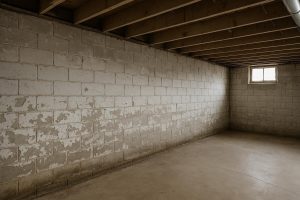
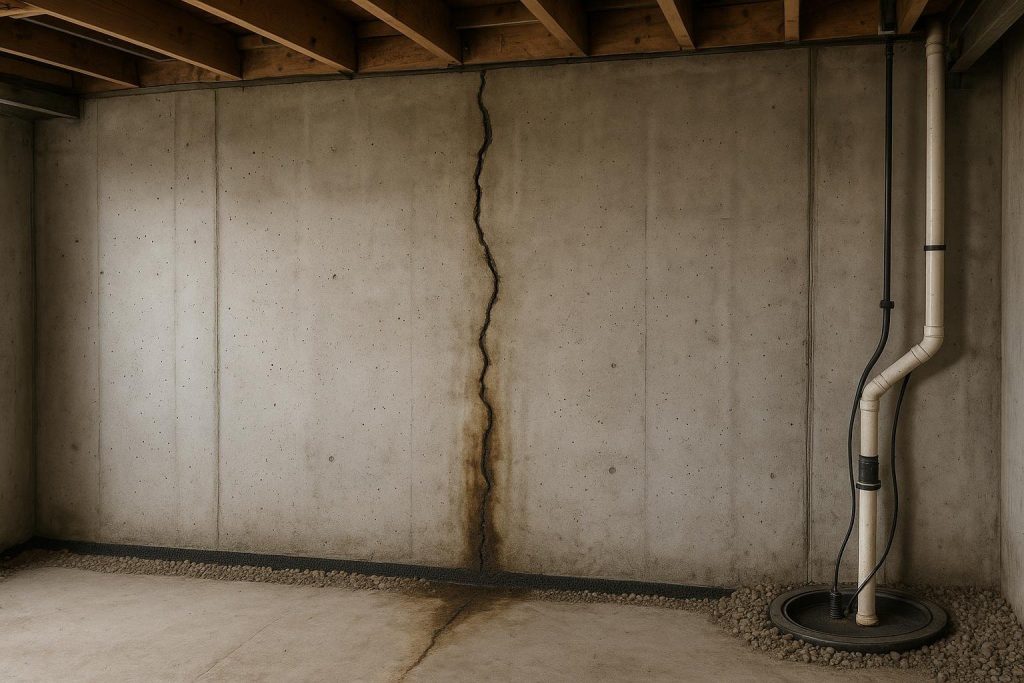
A foundation crack is any discontinuity in a basement wall or floor that breaks the structural or waterproof plane of the concrete or masonry. In Ramara, the most common foundation types are poured concrete (common in homes built after the 1970s) and concrete block or stone (older rural and lakefront properties). Cracks are classified by orientation, width and whether they are active (still moving) or dormant.
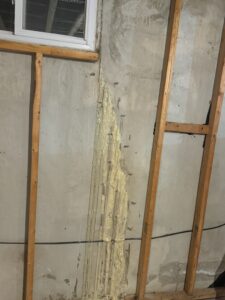
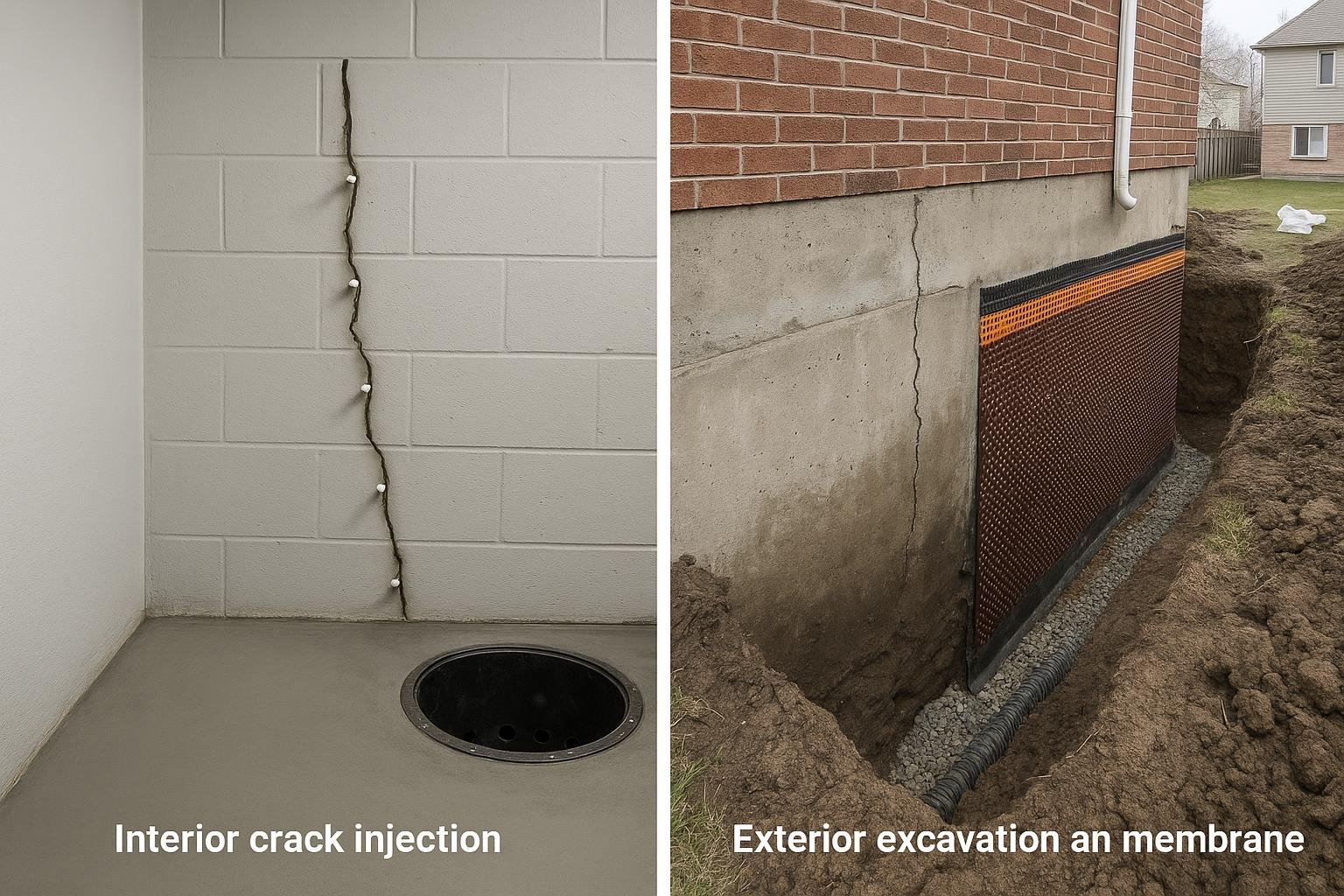
Crack injection is the process of filling a crack under low pressure with a liquid resin that cures inside the void, restoring the waterproof plane. Polyurethane injection uses a flexible foam resin suited to wet or actively leaking cracks. Epoxy injection uses a rigid resin that bonds concrete and is suited to dry, structurally significant cracks. Exterior crack repair involves excavating the soil beside the foundation, cleaning the crack face, applying a waterproof membrane and often adding drainage protection board before backfilling.
This guide covers residential foundation walls and floor cracks in Ramara Township, including properties in Brechin, Lagoon City, Washago, Uptergrove and surrounding rural concessions. It does not cover commercial or industrial foundations, which involve different code requirements.
For homes and cottages in Ramara, see how we handle foundation crack repair on Lake Simcoe-area properties.
Why this matters
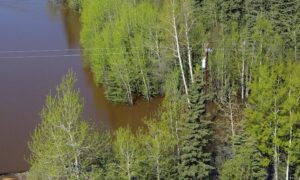
Ramara Township sits at the southern end of Lake Simcoe and straddles the Trent-Severn Waterway. Much of the low-lying land near the lake and the waterway corridor is underlain by lacustrine clay, silty lake-bottom deposits and pockets of organic material left by post-glacial Lake Algonquin. These soils hold water well and drain slowly, keeping the water table elevated for extended periods after rain and snowmelt.
Ontario’s freeze-thaw cycle is a particular concern in this region. Temperatures in the Ramara area regularly cross the freezing point multiple times between November and March. Water that has entered a hairline crack expands when it freezes, widening the crack incrementally with each cycle. By spring, what began as a 0.1 mm shrinkage crack can become a visible gap admitting meaningful water flow.
Lakefront and near-shore properties face an additional challenge: seasonal fluctuations in Lake Simcoe’s water level, combined with high shoreline water tables, create hydrostatic pressure that pushes against foundation walls from the outside. Older stone or block foundations in Washago and along the Severn River corridor are especially vulnerable because mortar joints deteriorate faster than poured concrete.
Leaving cracks unrepaired allows water to reach the interior, where it promotes mould growth, degrades wood framing and insulation, and can eventually undermine the structural integrity of the wall itself. Early repair is consistently less disruptive and less costly than remediation after water damage has accumulated. For context on how crack type affects urgency, see Types of Foundation Cracks: What Each One Means and How to Fix It.
Your options
Polyurethane crack injection (interior)
What it is: A two-part polyurethane resin is injected through surface ports drilled or surface-mounted along the crack. The resin expands to fill the void and cures into a flexible, waterproof seal.
How it works: A technician cleans the crack face, installs injection ports at intervals, seals the surface between ports with hydraulic cement or epoxy paste, then injects resin from the lowest port upward until the material appears at the next port. The flexible cure accommodates minor ongoing movement.
Best for: Non-structural vertical or diagonal cracks in poured-concrete walls, including actively leaking cracks. This is the most common repair for Ramara homes with isolated wall cracks.
Limitations: Does not address the external source of water pressure. Not suitable for horizontal cracks indicating lateral soil pressure, wide structural cracks, or block and stone foundations where the void geometry is irregular. See also: Does Crack Injection Work? A Complete Homeowner’s Guide.
Epoxy crack injection (interior)
What it is: A two-part epoxy resin injected under low pressure into dry cracks. When cured, epoxy is rigid and bonds the two faces of the crack, restoring structural continuity.
How it works: The process is similar to polyurethane injection but requires the crack to be dry or nearly dry. Epoxy does not expand and does not tolerate active water infiltration during cure.
Best for: Dry, dormant cracks where structural bond restoration is the goal, such as cracks in load-bearing walls assessed by an engineer as needing re-bonding.
Limitations: Rigid cure means the repair can re-crack if the foundation continues to move. Unsuitable for wet or actively leaking cracks. Costs are generally higher than polyurethane for equivalent crack length. See the comparison: Epoxy vs Polyurethane Crack Injection: Which Is Best?
Exterior crack repair (excavation and membrane)
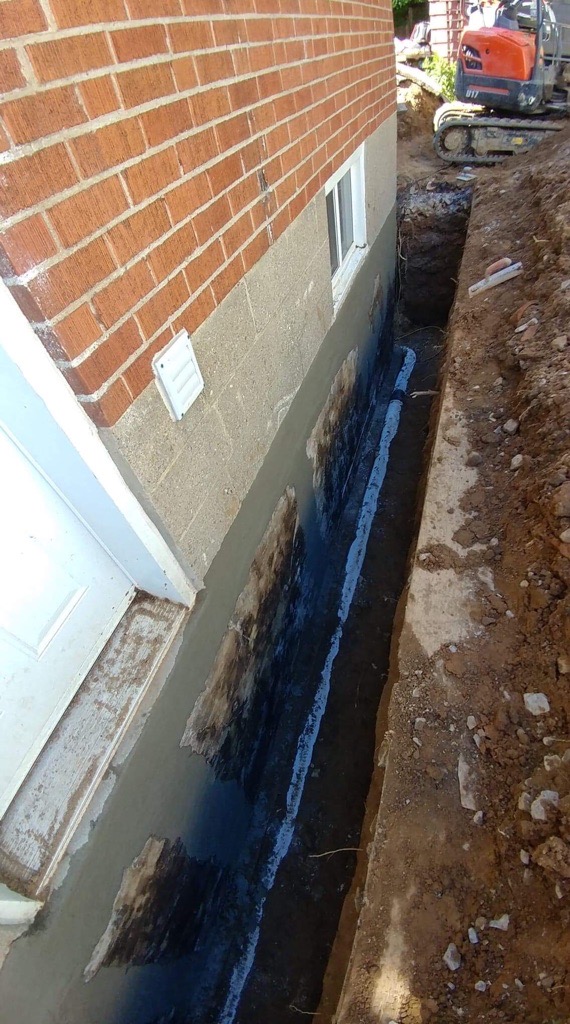
What it is: The soil beside the cracked wall is excavated to footing depth, the crack is cleaned and filled, and a waterproof membrane (typically rubberized asphalt or a spray-applied product) is applied to the full exterior face. Drainage board and, where appropriate, new weeping tile are installed before backfilling.
How it works: Excavation exposes the foundation exterior. The crack is routed, filled with hydraulic cement or polyurethane, and the entire wall face is coated. This addresses both the crack and the surrounding wall surface, and it redirects groundwater away from the foundation before it can build pressure.
Best for: Severe or recurring cracks, situations where the interior injection has failed, properties with high hydrostatic pressure from clay soils or a high water table, and cases where the weeping tile system also needs replacement.
Limitations: Significantly more disruptive and costly than interior injection. Requires access for excavation equipment, which may be limited on tight lakefront lots. Work is weather-dependent. See: Interior Crack Injection vs Exterior Foundation Crack Repair: Which Do You Need?
Carbon fibre straps or wall anchors (structural stabilization)
What it is: Carbon fibre straps or steel wall anchors are fastened to a cracked or bowing wall to arrest inward movement caused by lateral soil pressure. These are structural interventions, not waterproofing solutions on their own.
How it works: Straps are bonded vertically to the interior wall face with epoxy. Anchors are driven through the wall into stable soil and tensioned. Both methods transfer load and prevent further deflection.
Best for: Horizontal cracks or inward-bowing block or poured-concrete walls where lateral soil pressure is the cause. A structural engineer’s assessment is typically required before this work proceeds.
Limitations: Does not seal the crack against water entry on its own; a waterproofing step is still needed. Does not reverse existing deflection in most cases. See: How to Tell If a Foundation Crack Is Structural.
Hydraulic cement (temporary or emergency stop)
What it is: A fast-setting cementitious compound pressed into an actively leaking crack or hole to stop water flow quickly.
How it works: The material is mixed to a putty consistency and held in place against the crack while it sets, typically within three to five minutes. It expands slightly as it cures, plugging the void.
Best for: Emergency situations where water is actively flowing and a permanent repair cannot be completed immediately. Useful as a preparatory step before injection.
Limitations: Not a permanent waterproofing solution. Hydraulic cement is brittle, does not bond well to wet concrete long-term, and will eventually fail if the underlying pressure is not addressed. See: Hydraulic Cement vs Crack Injection: Which Fix Actually Lasts?
Interior drainage system with sump pump (water management)
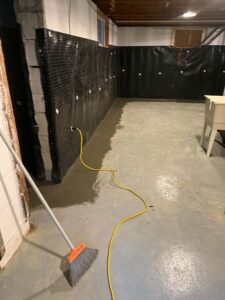
What it is: A perimeter drainage channel is installed at the base of the interior foundation wall, collecting water that enters through cracks or the wall-floor joint and directing it to a sump pit where a pump discharges it away from the home.
How it works: A narrow trench is cut in the basement floor along the perimeter, a slotted drainage pipe is laid, and the trench is filled with gravel and a concrete cap. The sump pump activates automatically when water reaches a set level.
Best for: Homes where exterior excavation is impractical, where multiple cracks or diffuse seepage make crack-by-crack injection insufficient, or where the water table is persistently high and some water entry is unavoidable.
Limitations: Manages water rather than excluding it. The sump pump requires power and maintenance; a battery backup is advisable for Ramara properties that may experience power outages during storms. Does not address structural crack issues.
 Options compared
| Method | Best for | Typical considerations | Durability / limitations |
|---|---|---|---|
| Polyurethane injection (interior) | Non-structural vertical/diagonal cracks in poured concrete, wet or dry | Minimal disruption; no excavation; can be done in most weather | Long-lasting when crack is non-structural; may need re-injection if foundation continues to move |
| Epoxy injection (interior) | Dry, dormant cracks needing structural bond | Crack must be dry; rigid cure; higher material cost | Strong bond but can re-crack if movement continues; not suitable for wet cracks |
| Exterior excavation and membrane | Severe, recurring or high-pressure cracks; combined weeping tile replacement | Most disruptive and costly; equipment access required; weather-dependent | Addresses root cause; longest-lasting when combined with drainage; not always feasible on tight lots |
| Carbon fibre straps / wall anchors | Horizontal cracks, bowing walls, lateral pressure | Structural engineer assessment typically required; does not waterproof on its own | Arrests movement effectively; does not reverse existing deflection |
| Hydraulic cement | Emergency active leak stoppage | Fast and low cost; temporary only | Brittle; fails under sustained pressure; not a permanent fix |
| Interior drainage and sump pump | Multiple cracks, high water table, impractical exterior access | Manages rather than excludes water; requires ongoing pump maintenance | Effective long-term water management; pump dependent on power supply |
Polyurethane injection suits the majority of isolated crack calls in Ramara because most residential cracks in poured-concrete walls are non-structural and can be sealed from the interior without excavation. Exterior repair becomes the better choice when hydrostatic pressure is severe, when injection has been attempted and failed, or when the weeping tile system also needs attention. Structural methods (straps, anchors) are a separate category and should always be preceded by an engineering assessment. Interior drainage is a complementary system, not a substitute for crack repair.
How to choose
Use the following framework to narrow down the right approach for your Ramara property.
Choose polyurethane injection if the crack is vertical or diagonal, located in a poured-concrete wall, is less than roughly 6 mm wide, and shows no sign of inward bowing. This applies to the majority of shrinkage and settlement cracks seen in Ramara homes built after the 1970s. The repair can typically be completed in a single visit with minimal disruption.
Choose epoxy injection if the crack is dry, dormant and in a load-bearing wall where a structural engineer has confirmed that re-bonding the concrete is appropriate. Do not choose epoxy for wet or actively leaking cracks.
Choose exterior excavation if interior injection has been attempted and the crack has re-opened or water continues to enter, if the crack is wide and recurring, if the weeping tile system is also failed or absent, or if you are undertaking a full exterior waterproofing project. Lakefront properties in Lagoon City or along the Trent-Severn corridor with persistently high water tables are strong candidates.
Choose carbon fibre straps or wall anchors if the crack is horizontal or the wall is visibly bowing inward. Stop using the space and consult a structural engineer before proceeding with any repair.
Choose hydraulic cement as a first step only if water is actively flowing and you need to stop it immediately before a permanent repair can be scheduled.
Add an interior drainage system if multiple cracks exist across the perimeter, if the water table is persistently high and some seepage is unavoidable, or if exterior excavation is not feasible due to lot constraints. A battery-backup sump pump is strongly advisable for seasonal or part-time Ramara properties. See: Basement Crack Repair Before Finishing Your Basement.
If you are unsure of the crack type, the Foundation Crack Diagnosis tool can help you identify what you are looking at before calling for an assessment.
Costs & timelines
No verified current price data specific to Ramara has been supplied to this guide. The following describes cost drivers only, ranked from most to least influential. For general Ontario cost ranges, see Crack Injection Cost in Southern Ontario and Foundation Crack Sealing Cost in Ontario.
| Cost driver | Why it matters | Direction of effect |
|---|---|---|
| Repair method | Interior injection is the least costly; exterior excavation is the most costly | Injection lowest; excavation highest |
| Crack length and width | More resin, more ports, more labour time | Longer / wider = higher cost |
| Number of cracks | Each additional crack adds material and labour; some contractors offer per-crack pricing | More cracks = higher total |
| Access and site conditions | Finished walls requiring demolition, tight lakefront lots limiting equipment, or deep foundations all add time | Difficult access = higher cost |
| Structural involvement | Engineering assessment, straps or anchors add professional fees and materials | Structural work = significant premium |
| Combined scope | Adding weeping tile, sump pump or exterior membrane to a crack repair increases total but may reduce per-item cost | Combined scope = higher total, possible efficiency |
| Travel and mobilization | Ramara is a rural township; contractor travel from Barrie, Orillia or the GTA affects pricing | Remote location = potential surcharge |
Interior polyurethane injection is typically completed in a few hours for a single crack. Exterior excavation for one wall section can take one to three days depending on depth and soil conditions. Structural stabilization timelines depend on engineering review and material lead times. Obtain written quotes from at least two contractors before committing to any scope.
 Risks & common mistakes
Ignoring horizontal cracks. Horizontal cracks in block or poured-concrete walls signal lateral soil pressure, which is a structural concern. Treating them with injection alone without addressing the structural cause is a serious mistake. Always have horizontal cracks assessed by a qualified professional before any repair.
Using hydraulic cement as a permanent fix. Hydraulic cement is widely available and fast-acting, but it is brittle and does not bond durably to wet concrete under sustained pressure. Homeowners who rely on it as a final repair often find the same crack leaking again within one to two seasons.
Sealing the interior surface only. Applying a crystalline or cementitious coating to the interior wall face does not fill the crack through its full depth. Water can continue to travel through the crack behind the coating and emerge elsewhere, or the coating can delaminate under hydrostatic pressure.
Finishing the basement before repairing cracks. Installing drywall, insulation or flooring over an unrepaired crack traps moisture, accelerates mould growth and makes the eventual repair far more expensive. See: Basement Crack Repair Before Finishing Your Basement.
Choosing a contractor without a written warranty. Crack injection quality depends heavily on technique and material. A contractor who does not offer a written warranty on the repair gives you no recourse if the crack re-opens. DryShield offers a lifetime transferable warranty on qualifying crack injection work.
Neglecting drainage after crack repair. Repairing the crack without improving grading, downspout extensions or weeping tile means the same hydrostatic pressure will continue to stress the repaired area and may open new cracks nearby.
DIY injection without proper equipment. Low-pressure injection requires calibrated equipment and experience to ensure the resin fills the full depth of the crack rather than just the surface. Underfilled cracks appear sealed but fail quickly. For a detailed comparison, see DIY Foundation Crack Repair Kit vs Professional Crack Injection.
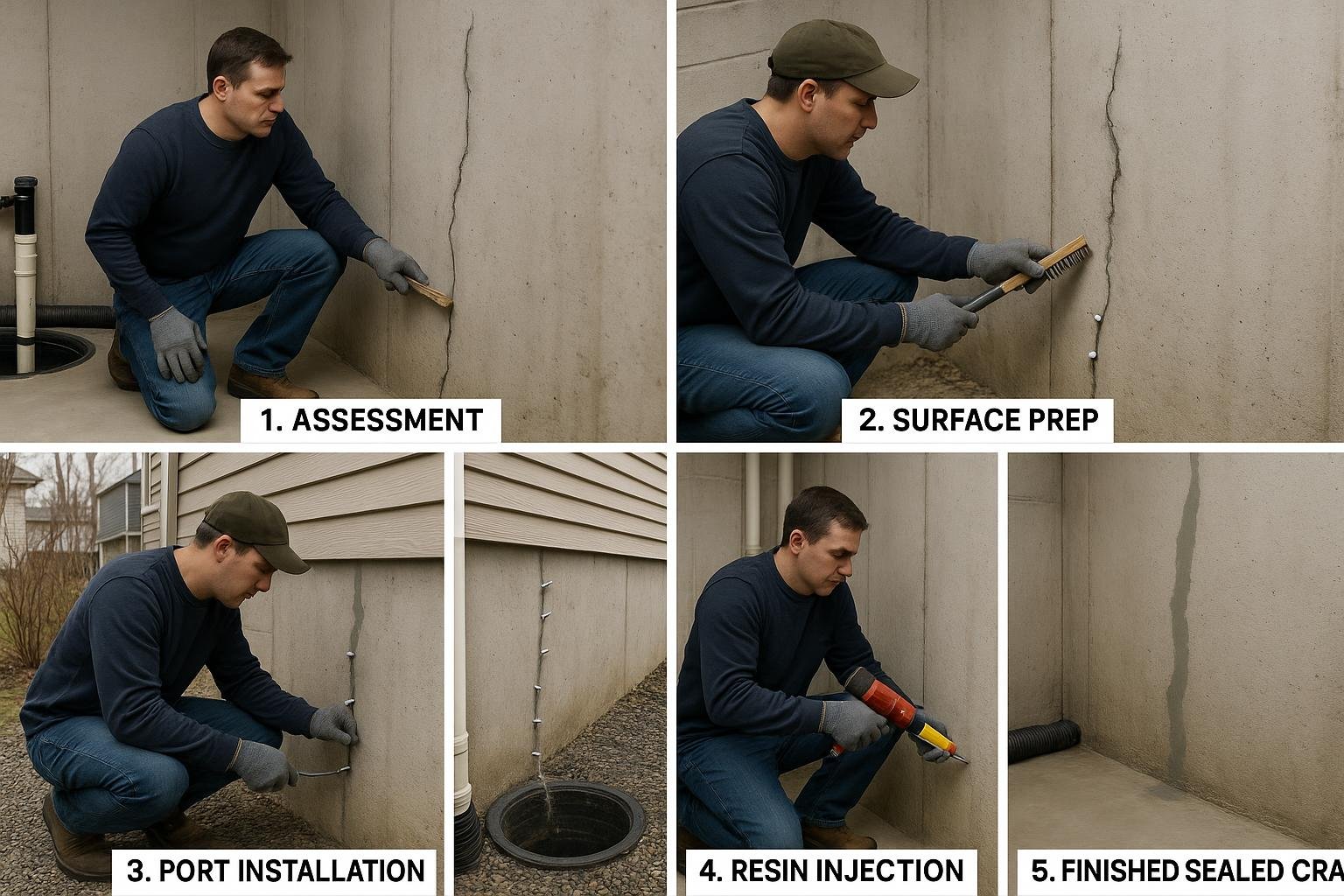
How the process works
- Assessment and crack mapping. A technician inspects the foundation interior and, where accessible, the exterior. Crack orientation, width, length, activity (wet or dry) and any signs of structural movement are documented. This step determines which repair method is appropriate.
- Surface preparation. The crack face is cleaned of loose concrete, efflorescence and contaminants. For injection, the surface between ports is sealed with a surface paste to contain the resin during injection.
- Port installation. Injection ports are installed at intervals along the crack, typically every 150 to 300 mm depending on crack width and depth.
- Resin injection. Starting at the lowest port, resin is injected under low pressure until it appears at the next port, confirming the void is filled. The technician moves up the crack sequentially. For polyurethane, the resin expands and cures within minutes to hours.
- Port removal and surface finishing. Once cured, ports are removed and the surface is ground flush. The repair is visually inspected for completeness.
- Drainage and grading review. A responsible contractor will note any grading, downspout or weeping tile issues that contributed to the crack and recommend corrective action to reduce future pressure.
- Documentation and warranty. The completed repair is documented and a warranty certificate is issued where applicable. Homeowners should retain this for insurance and resale purposes. See: Does Home Insurance Cover Basement Waterproofing and Foundation Cracks in Ontario?
Frequently asked questions
How do I know if a crack in my Ramara foundation is serious?
Crack orientation is the first indicator. Vertical and diagonal cracks in poured concrete are usually non-structural settlement or shrinkage cracks, though they should still be sealed against water entry. Horizontal cracks or cracks accompanied by inward bowing are structural warning signs requiring professional assessment before any repair. Width matters too: cracks wider than about 6 mm or cracks that are visibly growing warrant prompt attention. When in doubt, have a qualified contractor inspect the crack in person. See: How to Tell If a Foundation Crack Is Structural.
Can I repair a foundation crack myself?
DIY injection kits are available, but they rely on gravity-feed or low-pressure cartridge systems that often fail to fill the full depth of the crack, leaving voids that allow water to re-enter. Surface-applied sealants and hydraulic cement are not permanent solutions. Professional injection uses calibrated low-pressure equipment and materials that fill the crack through its entire thickness. For most Ramara homeowners, the cost difference between DIY and professional repair is modest relative to the risk of a failed repair. See: DIY Foundation Crack Repair Kit vs Professional Crack Injection.
Why do Ramara homes near Lake Simcoe crack more than inland properties?
Properties near Lake Simcoe and the Trent-Severn Waterway sit on lacustrine clay and silty lake-bottom soils that retain water and drain slowly. This keeps the water table elevated for extended periods after rain or snowmelt, increasing hydrostatic pressure against foundation walls. Freeze-thaw cycling in this region also repeatedly stresses concrete through winter. Both factors accelerate crack initiation and growth compared with properties on well-drained sandy or gravelly soils.
Does home insurance cover foundation crack repair in Ramara?
Standard Ontario home insurance policies generally do not cover gradual water damage or the cost of repairing foundation cracks caused by settlement, hydrostatic pressure or freeze-thaw cycling. Coverage may apply if a sudden, accidental event caused the damage, but this is policy-specific. Some policies include overland water or sewer backup endorsements that affect related claims. Review your policy with your insurer and retain repair documentation. See: Does Home Insurance Cover Basement Waterproofing and Foundation Cracks in Ontario?
How long does polyurethane crack injection last?
When properly installed in a non-structural crack, polyurethane injection can last for many years. The flexible cure accommodates minor ongoing movement, which is an advantage over rigid epoxy. The repair is most durable when the underlying cause of water pressure (grading, weeping tile, downspout discharge) is also addressed. Cracks that continue to move due to ongoing settlement or structural loading may eventually re-open and require re-injection. A written warranty from the contractor provides recourse if this occurs within the warranty period.
Should I repair cracks before listing my Ramara property for sale?
Yes. Foundation cracks discovered during a home inspection can trigger buyer concern, price renegotiation or deal collapse. Repairing cracks before listing, and retaining the warranty documentation, demonstrates proactive maintenance and removes a common negotiating point. A transferable warranty can also be presented as a positive feature to prospective buyers. See: Foundation Crack Found During Home Inspection: What to Do Next.
What is the difference between a crack repair and full basement waterproofing?
Crack repair addresses a specific discontinuity in the foundation wall or floor. Full basement waterproofing is a broader scope that may include exterior membrane application, weeping tile installation or replacement, sump pump installation and interior drainage systems. Crack repair is often sufficient when the problem is isolated. Full waterproofing is appropriate when water entry is diffuse, the drainage system has failed, or hydrostatic pressure is severe enough that isolated repairs are unlikely to hold. See: Waterproofing a Basement: Your Complete Homeowner’s Guide.
Do I need a permit to repair a foundation crack in Ramara?
Interior crack injection by itself does not typically require a building permit under the Ontario Building Code. Exterior excavation that involves structural repair or underpinning may require a permit from the Township of Ramara. Structural stabilization work (wall anchors, carbon fibre straps) may also trigger permit requirements depending on scope. Confirm with the Township of Ramara building department before beginning any exterior or structural work. Your contractor should be familiar with local requirements.
Can a crack be repaired in winter?
Interior polyurethane injection can generally be performed year-round because the work takes place inside the conditioned basement space. Exterior excavation in winter is more challenging due to frozen ground and is typically deferred unless urgent. If a crack is actively leaking in winter, interior injection or a temporary hydraulic cement stop is the practical first response. See: Can You Waterproof a Basement in Winter?
What should I look for when hiring a foundation crack repair contractor in Ramara?
Look for a contractor who provides a written assessment identifying crack type and cause, not just a quote for injection. Ask whether the repair carries a written warranty and whether it is transferable. Confirm that the contractor carries liability insurance and WSIB coverage. Request references or documented project examples. Be cautious of contractors who quote without inspecting the crack in person or who recommend the most expensive option without explaining why simpler methods are insufficient. See: How to Choose a Reliable Waterproofing Contractor.
DryShield has served homeowners across Simcoe County and the broader Ontario cottage country region for over 25 years. If you have a crack in your Ramara foundation and are not sure what you are looking at, contact the DryShield team for an assessment, or use the Basement Leak Diagnostic Tool to start narrowing down the cause before your appointment. For the broader regional context, visit the Simcoe County Basement Waterproofing and Foundation Crack Repair guide.