A hairline crack in your foundation is most often caused by normal concrete shrinkage as a new wall cures, or by minor seasonal movement in older walls. Most hairline cracks are non-structural, but they can allow water infiltration and should be monitored closely. Your first step is to measure the crack width, photograph it, and note whether any moisture is present. If the crack is wider than 0.3 mm, actively leaking, or accompanied by wall displacement, contact a waterproofing or foundation specialist promptly.
- Most hairline cracks in poured concrete foundations result from shrinkage or minor thermal movement and are not immediately structural.
- Even a crack under 1 mm wide can admit water under hydrostatic pressure, leading to efflorescence, mold, and long-term concrete deterioration.
- Crack width, orientation, and whether it is growing are the three most important factors in assessing severity.
- Polyurethane injection is the standard professional repair for non-structural hairline cracks; it seals the full depth of the crack and remains flexible.
- Temporary surface patches do not address the root cause and rarely last more than one or two freeze-thaw cycles.
Confirm it’s actually a hairline crack in your foundation
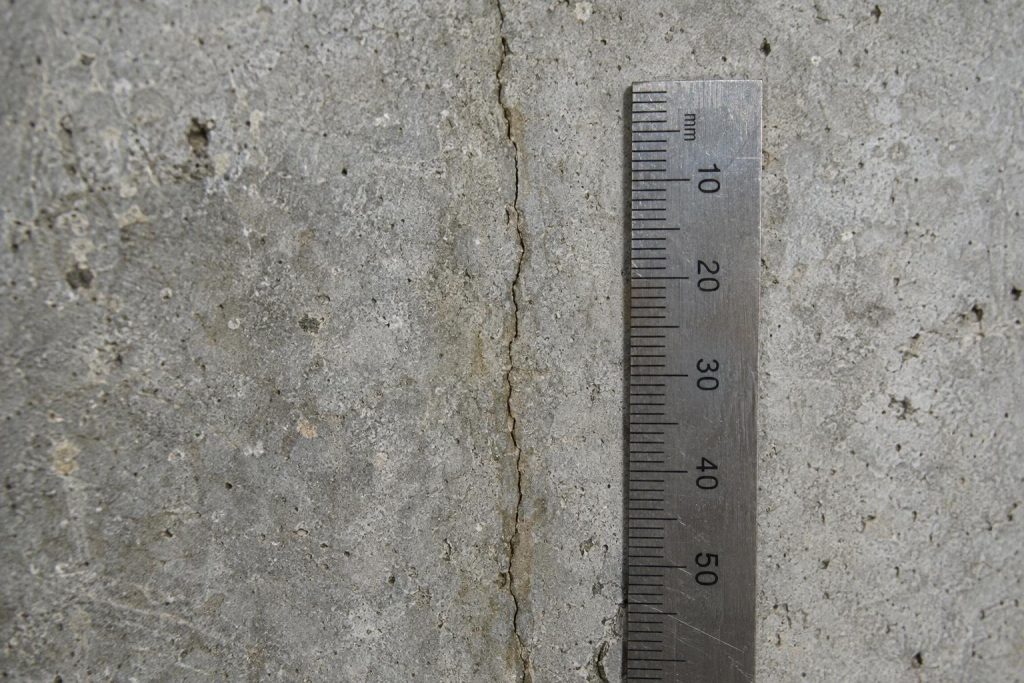
A true hairline crack is a tight, shallow-looking line in the concrete surface, typically less than 0.3 mm wide. In poured concrete walls, these cracks most often run vertically or at a slight diagonal. The edges are flush; neither side is raised or offset. The crack may be a single line or a short network of fine lines concentrated in one area.
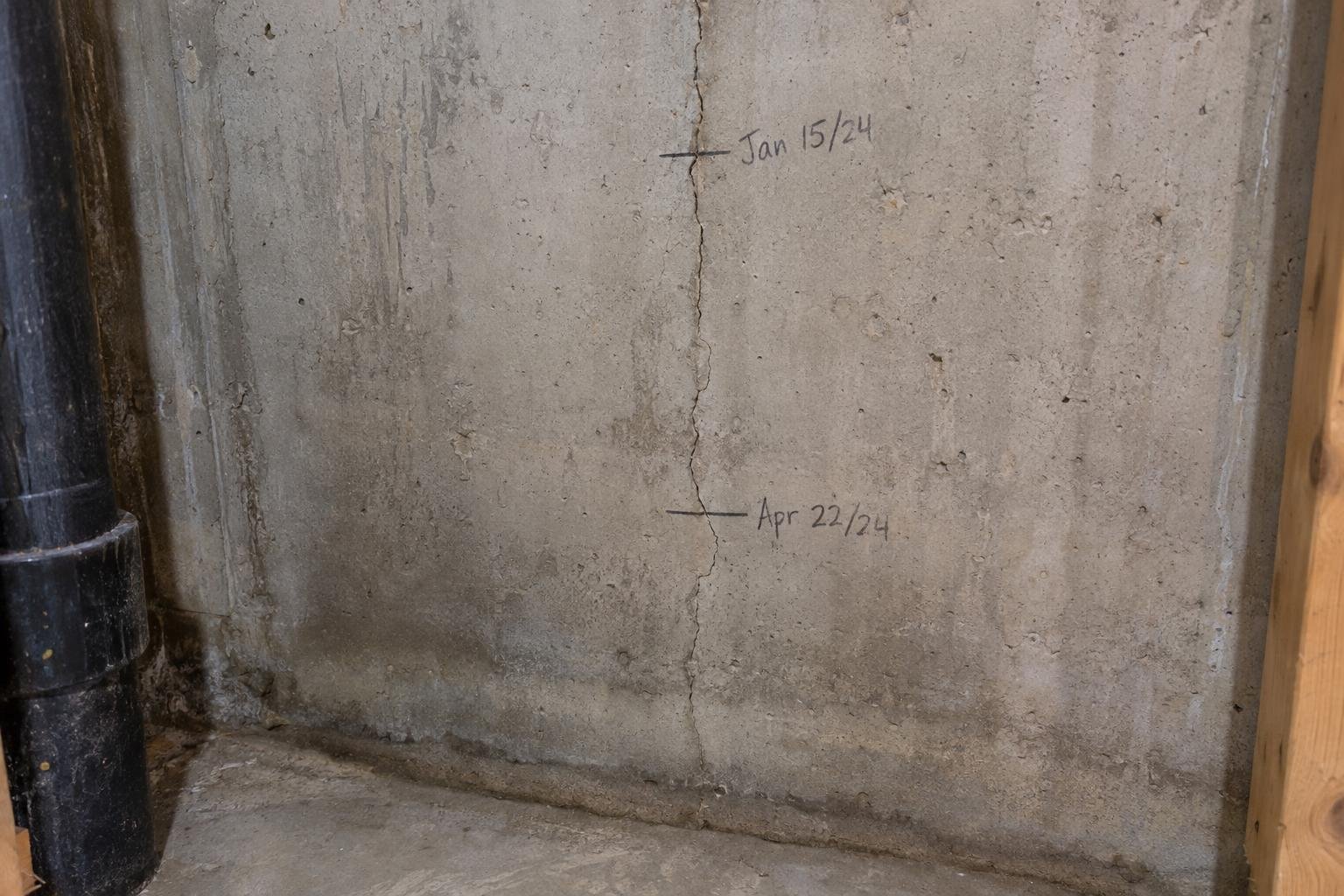
Run your fingernail across the crack. If both sides are at the same level and the gap is too narrow to insert a credit card, it is consistent with a hairline crack. Look for white mineral staining (efflorescence) along the crack line, which indicates water has moved through it even if the wall feels dry now. Photograph the crack with a ruler for scale, and mark the ends with a pencil and date so you can detect future growth.
Problems it gets confused with
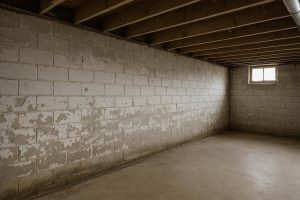
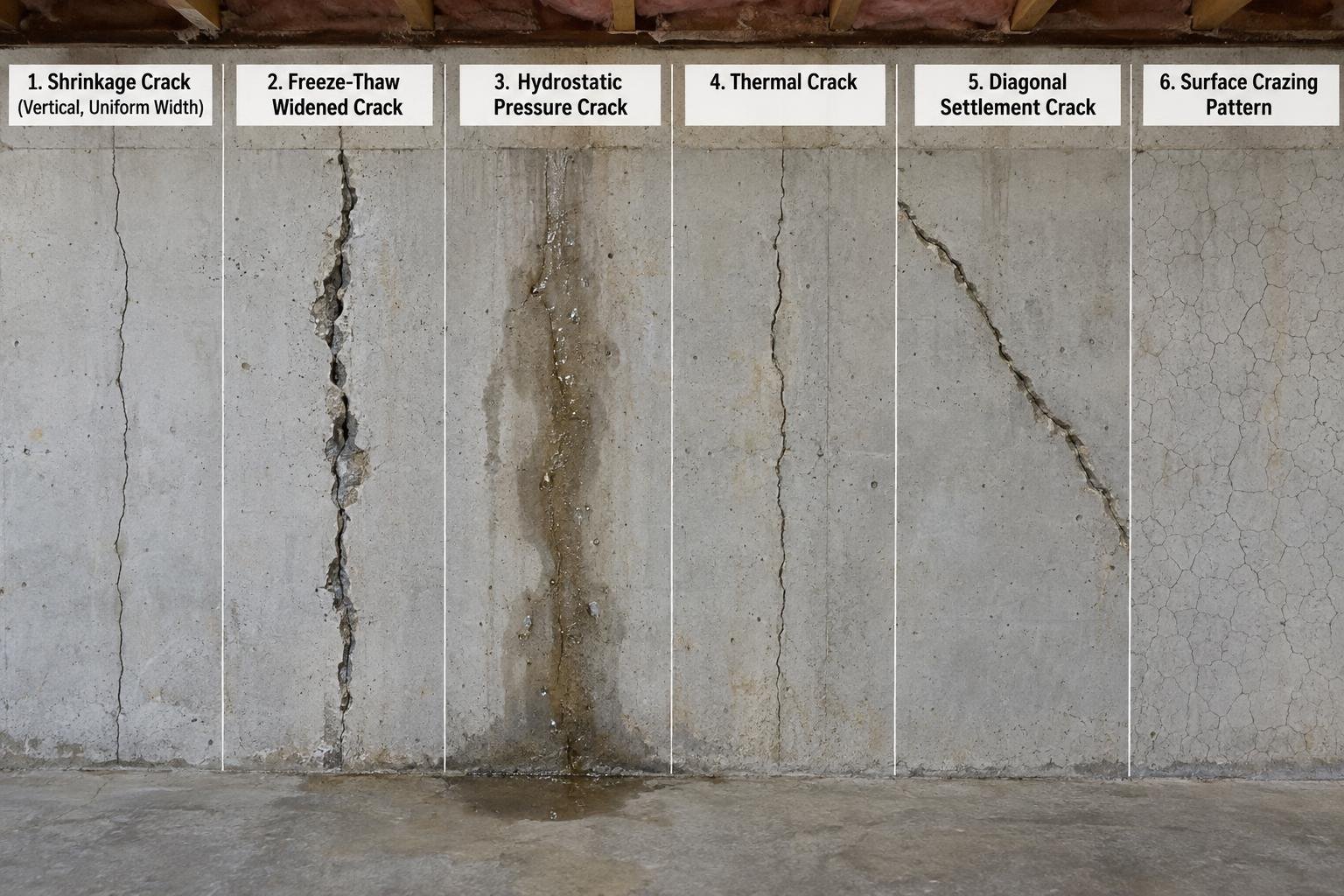
Hairline cracks are frequently confused with surface crazing, a network of very fine interconnected lines caused by the concrete surface drying faster than the interior. Crazing is cosmetic and does not penetrate the full wall depth. Shrinkage cracks in block foundations tend to follow mortar joints rather than cutting through the block face.
Cold joints, which form when a concrete pour is interrupted and the first layer partially sets before the second is placed, can look like a horizontal hairline but run the full wall length. Snap tie holes are small circular voids, not cracks. If you see a line that steps diagonally along mortar joints in a block wall, that is a stair-step crack with different causes. Whether the line cuts through masonry units or follows joints is the key distinguishing feature.
Causes, ranked
1. Concrete shrinkage during curing (most common)
When poured concrete cures, it loses moisture and contracts. The resulting cracks are typically vertical or slightly diagonal, run through the wall thickness, and appear within the first few years after construction. They are generally uniform in width along their length. The telltale sign is a crack that appeared in a relatively new home and has not changed since it formed. Shrinkage cracks are non-structural but can still admit water. See our guide on shrinkage cracks in new home foundations for more detail.
2. Freeze-thaw cycling
Ontario’s climate subjects foundations to repeated freeze-thaw cycles each winter. Water that has entered a micro-crack expands by roughly 9 percent when it freezes, widening the crack slightly with each cycle. The telltale sign is a crack that is noticeably wider or longer after winter than it was the previous autumn. Our page on freeze-thaw foundation cracks explains this mechanism in detail.
3. Hydrostatic pressure from saturated soil
When soil around a foundation becomes saturated after heavy rain or snowmelt, water pressure builds against the wall and can force water through existing hairline cracks. The telltale sign is a crack that leaks or shows new dampness specifically after rain events or during spring thaw, then dries out between wet periods. Clay-heavy soils, common across much of the GTA and southern Ontario, retain water longer and sustain higher hydrostatic pressure than sandy soils.
4. Thermal expansion and contraction
Concrete expands in heat and contracts in cold. In walls with limited control joints, this movement concentrates stress at weak points and can open hairline cracks. The telltale sign is a crack that appears to open slightly in cold weather and close slightly in warm weather, with no associated moisture.
5. Minor differential settlement
If one section of a foundation settles slightly more than another due to variable soil conditions, the resulting stress can produce diagonal hairline cracks, often running from the corners of window or door openings. The telltale sign is a crack that is wider at one end than the other, or that is accompanied by a slightly out-of-square frame above. Diagonal cracks wider than 3 mm or actively growing warrant a structural engineer’s assessment.
6. Construction defects or poor concrete mix
A concrete mix with too high a water-to-cement ratio or inadequate curing time can produce a wall more prone to cracking. The telltale sign is multiple hairline cracks appearing across a wide wall area, sometimes combined with surface scaling or spalling. This cause is less common but more likely in older homes or those built during periods of rapid construction.
Cause → solution table
| Cause | Telltale sign | Appropriate fix | Urgency |
|---|---|---|---|
| Concrete shrinkage | Vertical crack, stable width, appeared in first few years | Polyurethane crack injection | Act soon if damp; monitor if dry |
| Freeze-thaw cycling | Crack wider after winter; may show efflorescence | Polyurethane injection; address drainage if water source is external | Act soon before next winter |
| Hydrostatic pressure | Leaks after rain or snowmelt; dries between events | Crack injection plus drainage improvement (weeping tile, grading) | Act soon to urgent |
| Thermal movement | Width changes seasonally; no moisture | Flexible polyurethane injection; monitor | Monitor to act soon |
| Minor differential settlement | Diagonal crack, wider at one end, stable | Professional assessment; injection if stable | Act soon; structural engineer if growing |
| Construction defect / poor mix | Multiple cracks across wide wall area; surface scaling | Full professional assessment; may require exterior waterproofing | Act soon |
Use this table as a starting framework, not a final diagnosis. A single crack can have more than one contributing cause, and the appropriate fix depends on crack orientation, wall type, soil conditions, and drainage. A professional inspection is the only way to confirm which cause or combination of causes applies to your specific wall.
What you can safely check yourself
- Measure the width. Use a crack comparator card or feeler gauge. Note the widest point. A crack under 0.3 mm is hairline; 0.3 to 3 mm is moderate; over 3 mm warrants prompt professional attention.
- Mark and date the ends. Draw a small pencil line across each end of the crack and write the date. Recheck after two to four weeks to see if the crack has extended.
- Check for moisture. Run a dry cloth along the crack. Return after a heavy rain and repeat.
- Look for efflorescence. White chalky deposits along the crack line mean water has moved through it, even if the wall appears dry today.
- Check the exterior grade. Soil that slopes toward the house directs surface water toward the foundation. Correcting the grade is a low-cost preventive step.
- Inspect eavestroughs and downspouts. Blocked or missing downspout extensions can deposit large volumes of water directly against the foundation. Extend downspouts at least 1.8 m from the wall.
What NOT to do
Do not fill a hairline crack with hydraulic cement or standard caulk and consider the problem solved. These materials bond rigidly to concrete and cannot flex with seasonal movement; they typically crack again within one or two winters. Hydraulic cement is designed for active water leaks, not for sealing a dry or intermittently damp hairline crack through the full wall depth.
Do not apply a surface waterproofing paint or membrane over an unrepaired crack, as these coatings can trap moisture behind the wall and mask a growing problem. Do not ignore a crack that is actively leaking or that has appeared suddenly. And do not assume a crack is harmless simply because it is small. Water infiltration through even a hairline crack can promote mold growth and accelerate concrete deterioration. Our page on mold in your basement explains the health and structural risks.
How a professional diagnoses a hairline crack in your foundation
A professional inspection begins with a visual survey of the entire foundation wall, both interior and exterior where accessible. The inspector notes crack orientation (vertical, horizontal, diagonal, or stair-step), width at multiple points, length, and whether the edges are flush or offset. Offset edges suggest movement beyond simple shrinkage.
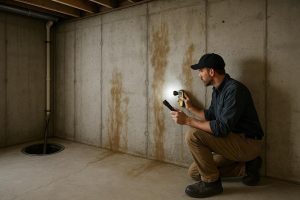
The inspector will probe the crack to assess depth and check whether it penetrates the full wall thickness, and will look for associated signs: efflorescence, staining patterns, active moisture, and any bowing or displacement. Exterior conditions are assessed where possible: soil grade, downspout placement, and visible signs of water pooling near the foundation.
Where settlement or structural movement is suspected, a structural engineer’s assessment may be recommended before repair. For most hairline cracks in poured concrete walls, the diagnosis leads to a recommendation for polyurethane crack injection. Learn more at our foundation crack repair service page and our guide on whether crack injection works.
Temporary vs permanent fixes
Temporary measures can slow water entry while you arrange a permanent repair, but they do not address the crack through the full wall thickness.
| Approach | What it does | Lifespan | Limitations |
|---|---|---|---|
| Surface caulk or hydraulic cement | Seals the interior face only | 1-3 years (often less through freeze-thaw) | Does not seal full depth; cracks again with movement |
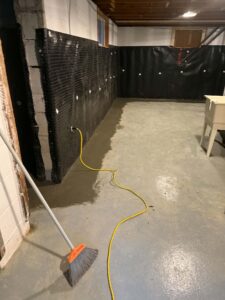
| Interior drainage channel | Captures water that enters and routes it to a sump | Long-term if maintained | Manages water rather than stopping it; crack remains open |
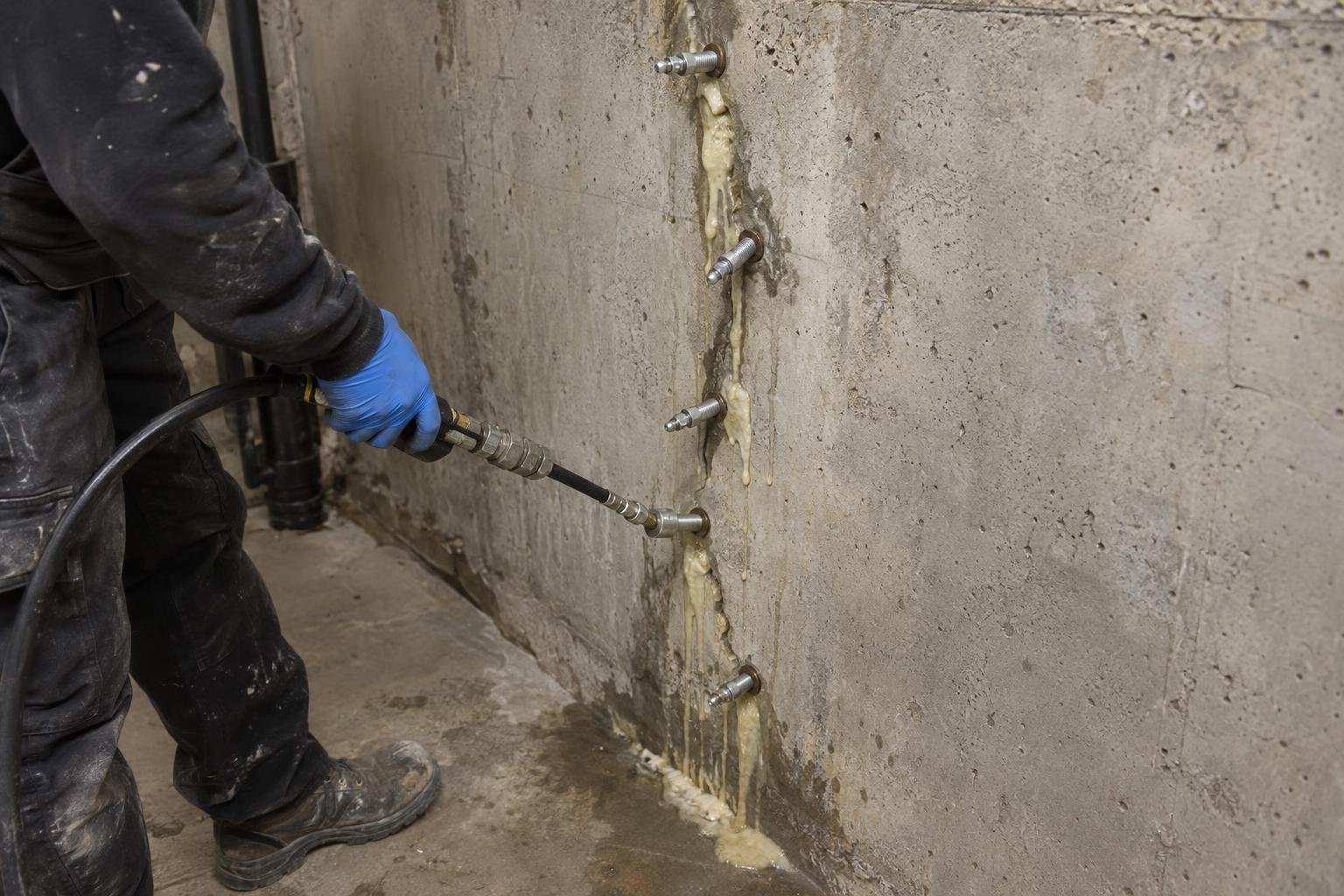
| Polyurethane crack injection | Fills crack from face to face with flexible, waterproof foam | Long-term; flexible material accommodates minor movement | Requires professional equipment for reliable penetration |
| Exterior excavation and membrane | Seals crack from outside; applies waterproof membrane to full wall | Long-term | Higher cost and disruption; warranted when multiple cracks or drainage issues exist |
For a single non-structural hairline crack, polyurethane injection is the standard permanent repair. It is performed from the interior, requires no excavation, and the flexible foam accommodates minor seasonal movement. Exterior excavation is typically reserved for situations where multiple cracks are present, the exterior waterproofing membrane has failed, or drainage conditions need to be corrected at the same time. Our guide comparing interior crack injection vs exterior foundation crack repair explains when each approach is appropriate.
Frequently asked questions
Is a hairline crack in a foundation wall serious?
Most hairline cracks in poured concrete foundations are caused by normal shrinkage or minor thermal movement and are not immediately structural. However, even a very fine crack can admit water under hydrostatic pressure, leading to efflorescence, mold, and gradual concrete deterioration. Monitor the crack for growth and have it assessed by a professional if it is damp, growing, or accompanied by any wall displacement.
How do I know if a hairline crack is getting worse?
Mark both ends of the crack with a pencil and write the date. Recheck every two to four weeks. If the crack has extended beyond your marks, widened noticeably, or begun showing moisture that was not present before, it is getting worse. Our page on foundation cracks getting wider explains the monitoring process in detail.
Can I repair a hairline crack myself?
DIY crack injection kits are available, but reliable penetration through the full wall thickness requires controlled injection pressure and the right material viscosity. Surface caulk and hydraulic cement are not suitable permanent repairs for a through-wall crack. Our guide comparing DIY kits vs professional crack injection outlines the trade-offs so you can make an informed decision.
Will a hairline crack let water into my basement?
Yes, it can. Even a crack under 0.3 mm wide can transmit water when hydrostatic pressure is high enough, such as during heavy rain or spring snowmelt. Efflorescence along the crack line is evidence that water has already moved through it. If the crack faces saturated soil, the risk of water entry is higher regardless of how narrow the crack appears.
What is the best repair method for a hairline crack in a poured concrete foundation?
Polyurethane crack injection is the standard professional repair for non-structural hairline cracks. The material is injected under low pressure through ports placed along the crack, filling it from the interior face to the exterior face. The cured foam is flexible, waterproof, and accommodates minor seasonal movement. Epoxy injection is an alternative for cracks requiring structural bonding, but it is rigid and less suited to walls that experience any movement. See our comparison of hydraulic cement vs crack injection for more context.
How much does it cost to repair a hairline crack in a foundation?
Repair costs depend on crack length, wall thickness, accessibility, and whether drainage improvements are needed. We do not publish price ranges without verified current data, as costs vary and change over time. Our crack injection cost page and online cost calculator provide current guidance, and a free on-site assessment will give you an accurate quote for your specific situation.
Do hairline cracks in a foundation affect home value?
Unrepaired foundation cracks are a disclosure item in Ontario real estate transactions and can affect buyer confidence and negotiated price. A professionally repaired crack with documentation is generally viewed more favorably than an unrepaired one. Our guide on basement waterproofing and home value in the GTA discusses the broader relationship between foundation condition and resale outcomes.
When should I call a structural engineer instead of a waterproofing contractor?
Call a structural engineer if the crack is wider than 3 mm, if one side is higher than the other (displacement), if the crack is horizontal or accompanied by wall bowing, or if multiple cracks have appeared suddenly. A waterproofing contractor can seal a crack, but only a licensed structural engineer can assess whether the wall’s load-bearing capacity is affected. Our guide on how to tell if a foundation crack is structural covers the key indicators.
If you have found a hairline crack in your foundation and are unsure what it means, DryShield offers free on-site assessments across Toronto, the GTA, and Ontario cottage country. An experienced technician will measure the crack, check for moisture, assess the surrounding conditions, and give you an honest recommendation, whether that is monitoring, injection, or a more comprehensive solution. Book your free assessment or use our basement leak diagnostic tool to start identifying the problem right now.