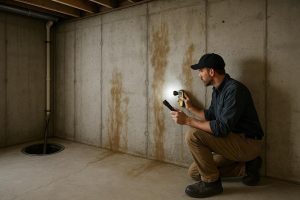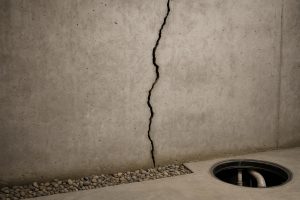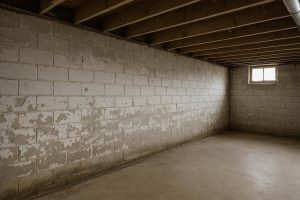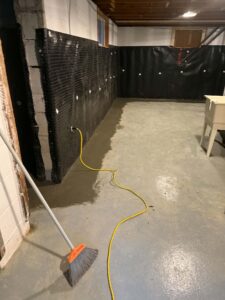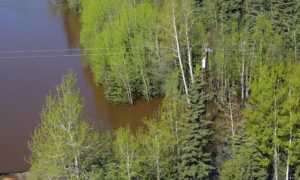
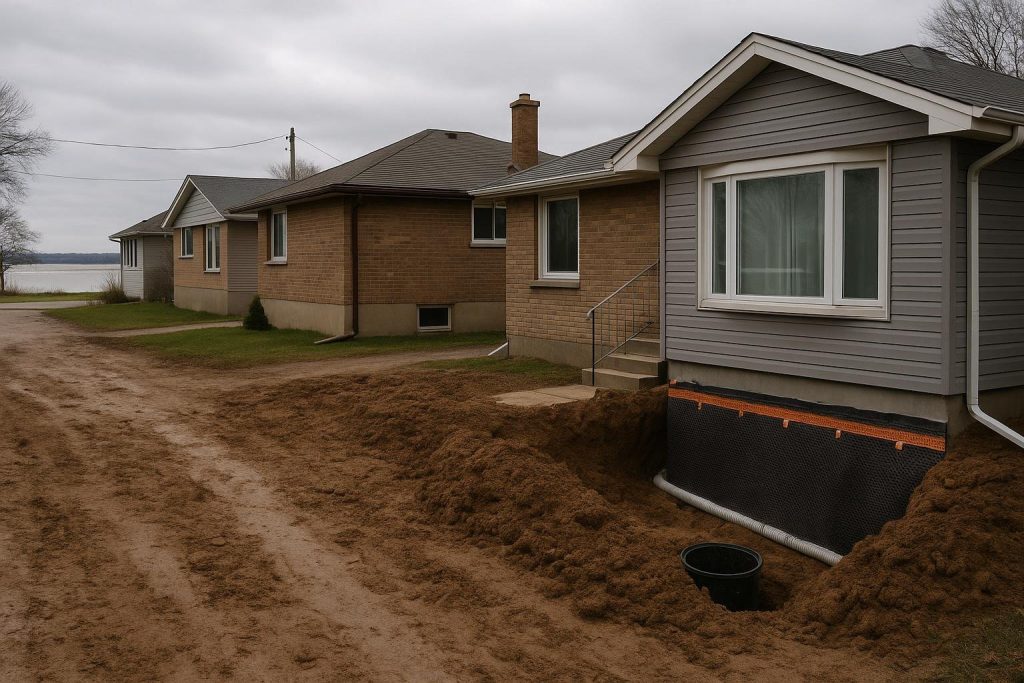
Basement leak repair in Pickering typically involves one or more of polyurethane crack injection, interior drainage with a sump pump, or full exterior waterproofing, depending on where water is entering and why. South of Highway 401, low-lying lakefront neighbourhoods such as Bay Ridges and West Shore sit on filled land beside Frenchman’s Bay, where the water table barely drops year-round. North of the 401, newer subdivisions in Seaton and Duffin Heights are still settling on re-graded clay over Duffins Creek’s drainage basin, creating persistent hydrostatic pressure against poured-concrete foundations.
- The source of the leak determines the correct repair method; misdiagnosing it leads to repeat failures.
- Pickering’s clay soils and high shoreline water table mean hydrostatic pressure is a year-round concern, not just a spring issue.
- Crack injection seals individual cracks from the inside without excavation; exterior waterproofing addresses the root cause at the wall face.
- Interior drainage systems manage water that cannot be stopped at the source, routing it safely to a sump pump.
- Choosing the wrong method for your soil conditions or crack type can void warranties and leave the problem unsolved.
Definitions & scope
Basement leak repair covers any intervention that stops water from entering a below-grade living or storage space through walls, the floor, window wells, or the wall-floor joint (cove joint). In Pickering, the term most often refers to repairs to poured-concrete foundations, which are standard in homes built from the 1960s onward across Bay Ridges, Fairport Beach, West Shore, and the newer Duffin Heights and Seaton developments.
Repairs range from a single crack injection completed in a few hours to a full perimeter excavation and membrane installation that takes several days. The scope is set by three factors: the entry point (crack, joint, floor, window well), the driving force (hydrostatic pressure, surface water, condensation), and the foundation type. This guide focuses on water intrusion through the structure itself, not on surface drainage or condensation management, though those issues are briefly noted where they overlap.
For context on how leak repair differs from structural foundation repair, see Waterproofing vs Foundation Repair: Which Does Your Basement Actually Need?
Why this matters
Pickering’s geography creates conditions that make basement leaks more likely than in many inland Ontario cities. South of Highway 401, the old lakefront neighbourhoods of Bay Ridges, West Shore, and Fairport Beach occupy low-lying land adjacent to Frenchman’s Bay. Fill material and lacustrine clay hold moisture, and the water table in these areas remains high throughout the year, not only during spring thaw. Even a hairline crack in a poured-concrete wall is enough for hydrostatic pressure to force water through.
North of the 401, Seaton and Duffin Heights represent some of the newest large-scale residential development in the region. Foundations here sit on re-graded clay that has not fully consolidated. Settlement cracks are common in the first decade after construction, and the clay soils around Duffins Creek retain water after heavy rain, rebuilding hydrostatic pressure quickly. Durham Region’s climate also delivers significant freeze-thaw cycling each winter, which widens existing cracks over successive seasons.
Leaving a basement leak unaddressed accelerates mold growth, degrades insulation, corrodes steel reinforcement, and can reduce a home’s resale value. Early intervention with the correct method is consistently less costly than remediation after structural deterioration has begun. For a broader look at Durham Region waterproofing conditions, see Basement Waterproofing in Durham Region: Local Causes, Solutions & Service Areas.
Your options
Polyurethane crack injection
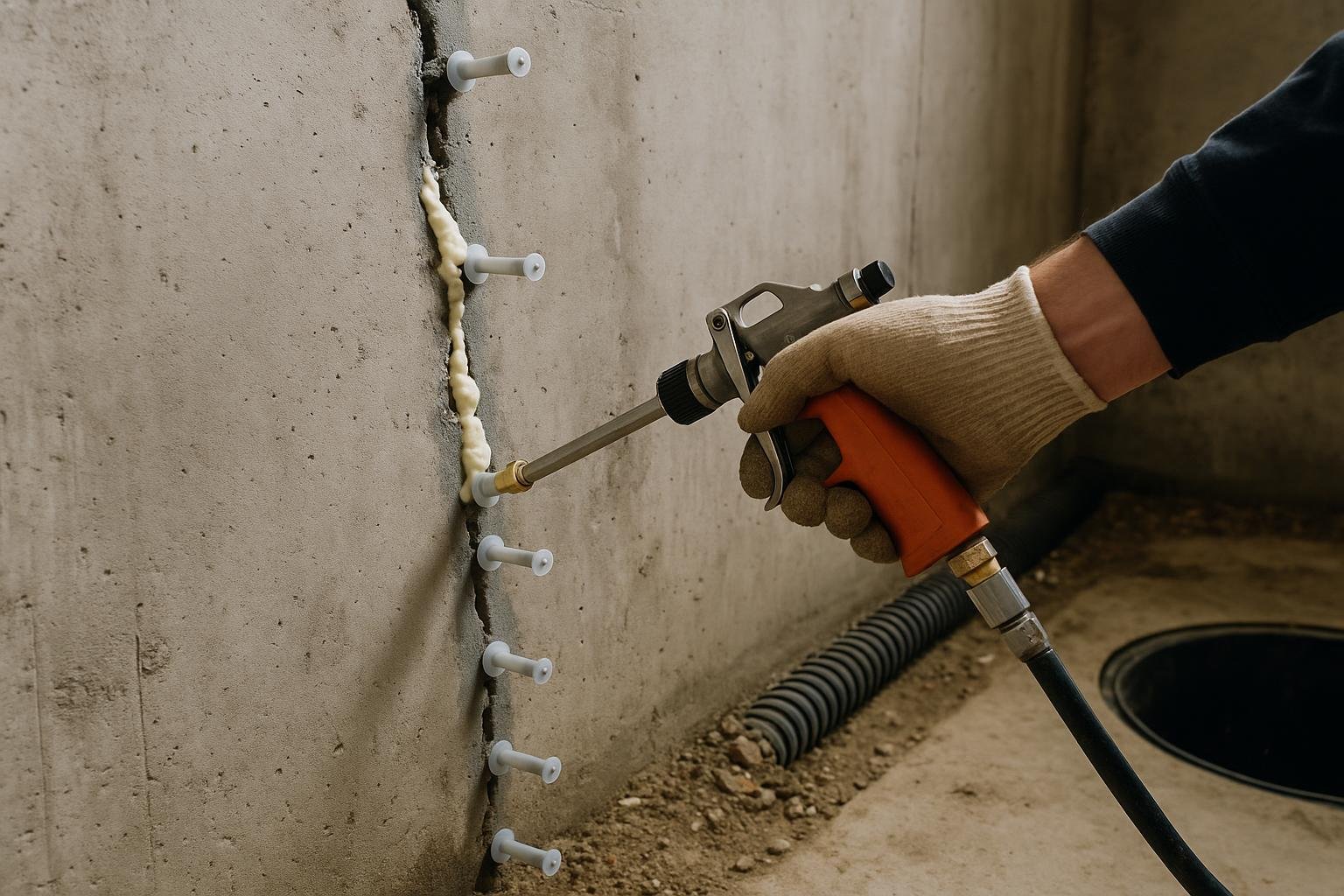
What it is and how it works: A low-pressure injection system delivers flexible polyurethane foam or resin directly into a crack from the interior wall face. The material expands on contact with moisture, fills the crack through its full depth, and cures to a flexible, waterproof seal that moves with the concrete through seasonal temperature changes.
Best for: Single or multiple vertical shrinkage cracks in poured-concrete walls where the wall itself is structurally sound. Common in Seaton and Duffin Heights new builds and in older Bay Ridges homes where settlement has produced isolated cracks.
Limitations: Does not address the underlying cause of hydrostatic pressure. Not suitable for horizontal cracks (which indicate lateral soil pressure and may be structural), severely deteriorated concrete, or block foundations. See Types of Foundation Cracks: What Each One Means and How to Fix It to identify your crack type before choosing this method.
Interior drainage system with sump pump
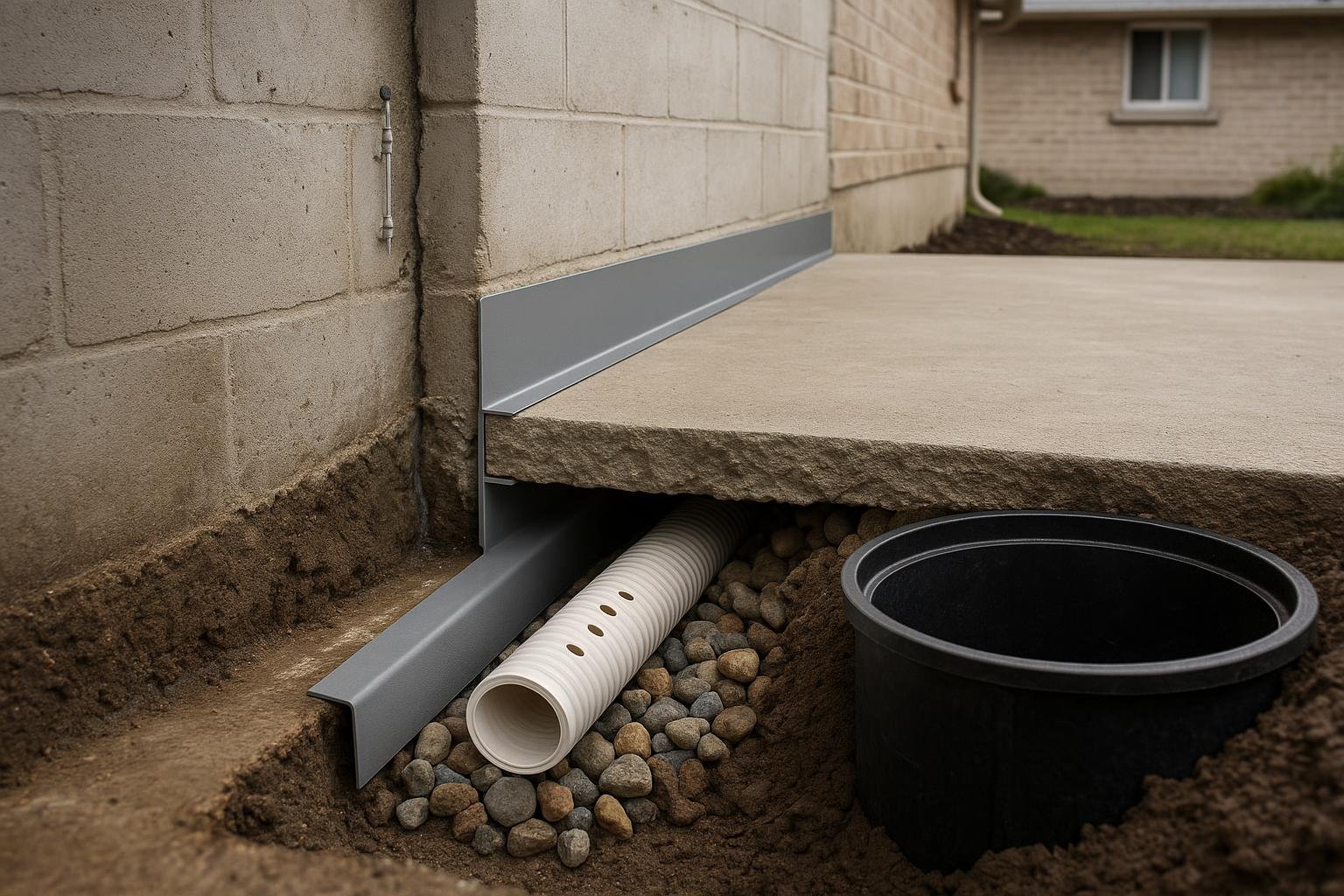
What it is and how it works: A channel is cut along the interior perimeter of the basement floor at the wall-floor joint. A perforated drain pipe is installed below the slab, directing water to a sump pit where a pump discharges it away from the foundation. The channel is then re-concreted.
Best for: Homes where the water table is persistently high and cannot be managed at the exterior, including many Bay Ridges and West Shore properties. Also effective when exterior excavation is not feasible due to finished landscaping, decks, or proximity to neighbouring structures.
Limitations: Manages water after it enters the wall cavity rather than preventing entry at the source. Requires ongoing pump maintenance and a reliable power supply. A battery backup is strongly recommended in Pickering given the area’s storm-related power interruptions. See Sump Pump Not Working in Toronto? Here Is What to Check First for maintenance guidance.
Exterior waterproofing
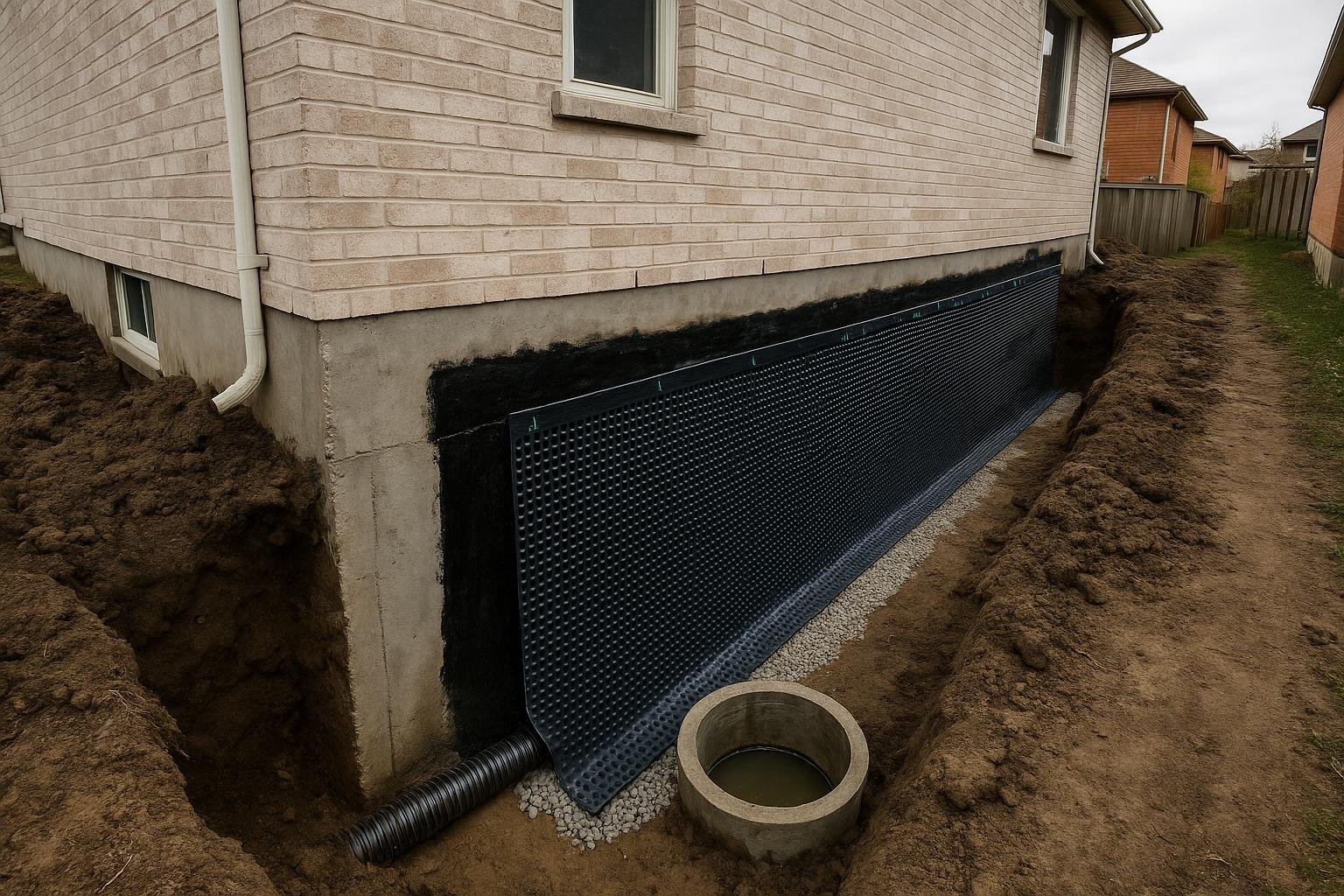
What it is and how it works: The soil is excavated to the footing along the affected wall or full perimeter. The foundation wall is cleaned, any cracks are repaired, and a waterproof membrane (typically rubberized asphalt or spray-applied polymer) is applied to the exterior face. New weeping tile and drainage board are installed before backfilling.
Best for: Homes with multiple or recurring leaks, deteriorated original waterproofing, or where interior methods have already failed. Provides the most comprehensive protection because it addresses the wall face where water first contacts the structure.
Limitations: Most disruptive and typically the highest-cost option. Requires excavation, which may disturb landscaping, driveways, or utilities. Not always practical on properties with limited side-yard clearance, which is common in some Pickering subdivisions. See Stop Foundation Leaks Permanently with Exterior Waterproofing for a detailed method overview.
Weeping tile repair or replacement
What it is and how it works: Original weeping tile (perforated pipe at the footing) installed in older Pickering homes may be crushed, root-infiltrated, or silted. Replacement involves excavating to the footing, removing the failed tile, and installing modern perforated pipe with filter sock and drainage stone.
Best for: Homes built before the mid-1980s where perimeter drainage has failed and water is entering at the cove joint or through the floor rather than through wall cracks. Common in older Bay Ridges and Fairport Beach properties.
Limitations: Requires excavation. If the existing tile is interior, replacement is less disruptive but still requires breaking the basement floor. Weeping tile alone does not seal existing wall cracks.
Window well drainage repair
What it is and how it works: Basement window wells that lack adequate gravel drainage or a cover allow surface water to pond and enter through the window frame or surrounding wall. Repair involves installing or deepening the gravel bed, adding a drain connected to the weeping tile system, and fitting a polycarbonate cover.
Best for: Leaks that occur specifically during or immediately after heavy rain and are localized to a window area. A common secondary entry point in Pickering homes during Lake Ontario storm events.
Limitations: Addresses only window well entry; does not resolve wall cracks or high water table issues elsewhere in the foundation. For more detail, see Fixing Window Well Flooding in Your Basement: Practical Solutions to Prevent Water Damage.
Options compared
| Method | Best for | Typical considerations | Durability / limitations |
|---|---|---|---|
| Polyurethane crack injection | Isolated vertical cracks, poured concrete | Interior access only; minimal disruption; no excavation | Long-lasting when crack is stable; may need re-injection if crack widens further |
| Interior drainage + sump pump | High water table, cove joint seepage, multiple entry points | Floor cutting required; ongoing pump maintenance | Manages water indefinitely if pump is maintained; does not stop water at source |
| Exterior waterproofing | Recurring leaks, failed original membrane, multiple cracks | Excavation required; highest disruption and cost | Most comprehensive; membrane lifespan depends on product and backfill quality |
| Weeping tile replacement | Failed perimeter drainage, cove joint and floor seepage | Excavation (exterior) or floor cutting (interior) | Restores drainage function; does not seal wall face |
| Window well drainage repair | Rain-triggered leaks at window openings | Minimal disruption; low complexity | Effective for window entry only; does not address broader water table issues |
No single method suits every Pickering home. Properties in Bay Ridges and West Shore with a persistently high water table often need interior drainage combined with crack injection, because the water table pressure cannot be eliminated at the exterior alone without major site work. Newer Seaton and Duffin Heights homes with isolated settlement cracks are frequently well-served by crack injection alone, provided the crack is not horizontal or actively widening. Exterior waterproofing is the most thorough solution but is best reserved for situations where interior methods have failed or where the original membrane is clearly compromised.
How to choose
Use the following decision framework to narrow your options before speaking with a contractor.
Choose polyurethane crack injection if: You have one or a few vertical cracks in a poured-concrete wall, the cracks are not actively widening, the surrounding concrete is sound, and water entry is clearly localized to those cracks. This is a common scenario in Seaton and Duffin Heights homes less than 15 years old.
Choose interior drainage with a sump pump if: Water is entering at the cove joint or through the floor rather than through a specific crack, the water table in your area is persistently high (as in Bay Ridges or West Shore), or exterior excavation is not feasible. Also consider this method as a complement to crack injection when hydrostatic pressure is severe.
Choose exterior waterproofing if: You have had repeated interior repairs that have not held, the original exterior membrane is visibly failed or absent, you are planning significant landscaping or hardscaping work that would require excavation anyway, or a home inspection has identified deteriorated exterior waterproofing as a deficiency.
Choose weeping tile replacement if: Your home was built before approximately 1985, water enters primarily at the base of the wall or through the floor slab, and a camera inspection or excavation has confirmed the existing tile is crushed or blocked.
Choose window well repair if: Leaks occur only during or immediately after rain, are confined to the area around a basement window, and the rest of the foundation is dry. This is a standalone fix only when the window well is the confirmed sole entry point.
If you are unsure of the entry point, use DryShield’s Basement Leak Diagnostic Tool or consult The 2026 Wet Basement and Basement Leak Master Guide: Diagnosis, Causes & Fixes before committing to a repair method.
Costs & timelines
No verified current price data specific to Pickering has been supplied to this guide, and publishing unverified price figures would be misleading. The following cost drivers are ranked by their typical influence on total project cost; actual quotes will vary by contractor, site conditions, and material costs at the time of work.
| Cost driver | Why it matters | Typical direction of influence |
|---|---|---|
| Method selected | Crack injection is the lowest-cost intervention; full exterior waterproofing is the highest | Strongest driver |
| Linear footage of wall affected | Interior drainage and exterior membrane costs scale with perimeter length | Strong driver |
| Excavation depth and access | Deeper footings and tight side yards increase excavation time and equipment cost | Strong driver |
| Number and type of cracks | More cracks or complex crack geometry increases injection material and labour | Moderate driver |
| Sump pump specification | Battery backup, horsepower rating, and smart monitoring add cost but reduce risk | Moderate driver |
| Concrete floor reinstatement | Interior drainage requires cutting and re-pouring the slab perimeter | Moderate driver |
| Finished basement | Removing and reinstating drywall, flooring, and framing adds significant cost | Situational but can be substantial |
For a general Ontario cost reference, see Basement Waterproofing Cost in Southern Ontario (2026). Crack injection cost guidance is available at Crack Injection Cost in Southern Ontario (2026). Timeline for crack injection is typically one day or less per crack. Interior drainage installation for a standard Pickering semi-detached or detached home typically takes two to three days. Exterior waterproofing on a full perimeter may take three to five days, weather permitting.
Risks & common mistakes
Misidentifying the entry point: Applying hydraulic cement or a surface sealer over a crack without addressing the cause is one of the most common errors. Surface patches do not bond adequately under hydrostatic pressure and typically fail within one to two seasons. The crack must be injected through its full depth or addressed at the exterior.
Ignoring horizontal cracks: Horizontal cracks in a poured-concrete wall indicate lateral soil pressure and may signal structural movement. These require engineering assessment before any waterproofing work begins. Injecting a horizontal crack without addressing the structural cause can mask a worsening condition. See How to Tell If Foundation Crack Is Structural for guidance.
Skipping a battery backup on the sump pump: Pickering’s Lake Ontario storm events can cause simultaneous power outages and peak water infiltration. A sump pump without battery backup will fail precisely when it is needed most. See Sump Pump Failed and Basement Flooded: What to Do Right Now for what to do if this happens.
Choosing interior drainage as a permanent substitute for exterior repair: Interior drainage manages water after entry. On properties where the exterior membrane has failed entirely, ongoing water contact with the concrete can continue to degrade the wall even when the interior appears dry. Exterior repair should be considered when the wall face itself is deteriorating.
Delaying repair on new construction cracks: Settlement cracks in Seaton and Duffin Heights homes are often dismissed as cosmetic. Cracks wider than approximately 0.3 mm or showing signs of moisture should be assessed promptly; freeze-thaw cycling widens them each winter. See Shrinkage Cracks in a New Home Foundation: Ontario Homeowner’s Complete Guide.
Not verifying contractor warranty terms: Waterproofing warranties vary significantly in what they cover and whether they transfer to a new owner. Confirm in writing what is covered, for how long, and under what conditions before signing a contract.
How the process works
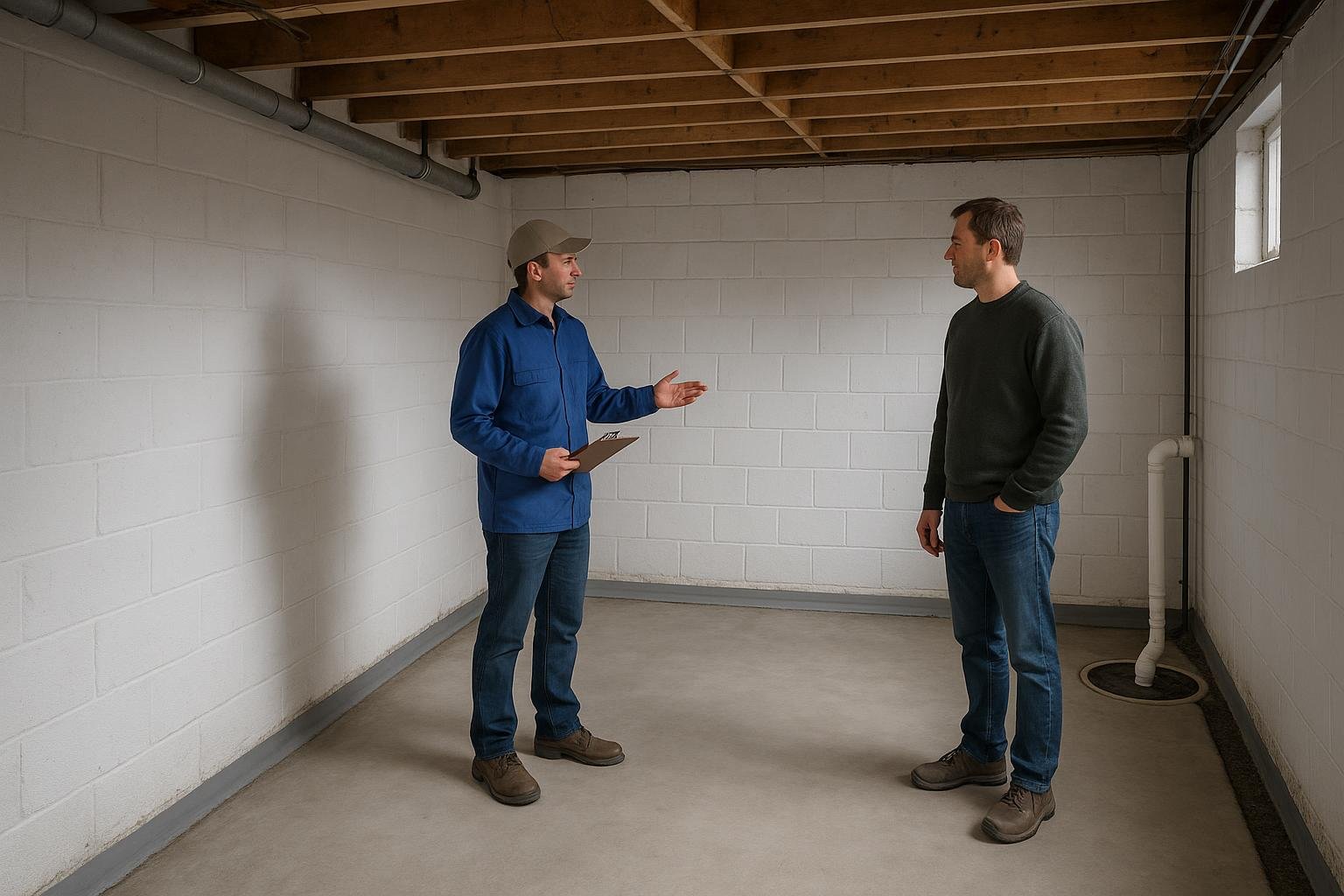
- Inspection and diagnosis: A technician inspects the interior and, where accessible, the exterior of the foundation. Entry points are identified, crack types are classified, and moisture sources are distinguished from condensation. Photos and measurements are taken.
- Method selection and proposal: Based on the inspection findings, a repair method or combination of methods is recommended. The proposal should specify materials, scope, timeline, and warranty terms.
- Site preparation: Interior work requires clearing the affected wall area and protecting flooring. Exterior work requires locating and marking utilities before any excavation begins, in accordance with Ontario’s requirements for calling before you dig.
- Repair execution: Crack injection ports are installed and material is injected under low pressure. Interior drainage channels are cut, pipe is laid, and the sump pit is formed. Exterior excavation exposes the wall, the membrane is applied, drainage board and new weeping tile are installed, and the trench is backfilled in compacted lifts.
- Sump pump installation and testing: Where a sump pump is part of the scope, the pump, discharge line, and battery backup are installed and tested before the floor is reinstated.
- Reinstatement: Concrete is poured to restore the floor slab where cut. Exterior grade is restored and downspout extensions are confirmed to direct water away from the foundation.
- Final walkthrough and documentation: The completed work is reviewed with the homeowner, warranty documentation is provided, and maintenance requirements (pump testing, crack monitoring) are explained.
Frequently asked questions
How do I know if my Pickering basement leak is from hydrostatic pressure or surface water?
Hydrostatic pressure leaks typically appear during or after prolonged rain or snowmelt and often show as seepage through cracks or at the cove joint, regardless of whether surface water is visibly pooling. Surface water leaks tend to appear quickly during heavy rain and may be linked to window wells, poor grading, or blocked downspouts. A contractor can distinguish the two during an inspection by examining where water appears and how quickly it responds to rainfall versus sustained wet periods.
Can crack injection fix a leak in a Seaton or Duffin Heights new build?
Yes, in most cases. Settlement cracks in new poured-concrete foundations are a common target for polyurethane injection. The material is flexible enough to accommodate minor ongoing movement. However, if a crack is wider than a few millimetres, is horizontal, or is actively growing, an assessment is needed before injection to rule out a structural issue. New-build cracks should not be left unaddressed simply because the home is under a Tarion warranty; confirm what the warranty covers before assuming it applies to water infiltration through a crack.
Is exterior waterproofing always better than interior waterproofing?
Exterior waterproofing addresses the wall face where water first contacts the structure, which is the most thorough approach. However, it is not always the most appropriate choice. For homes with a persistently high water table, interior drainage may be the more practical long-term management strategy. For isolated cracks in otherwise sound walls, injection is sufficient. The best method depends on the specific entry point, soil conditions, and site constraints, not on a general ranking of methods.
How long does basement leak repair take in Pickering?
Crack injection for one or two cracks is typically completed in a single day. Interior drainage installation for a standard detached home generally takes two to three days. Full exterior waterproofing on a single wall takes one to two days; a full perimeter may take three to five days depending on excavation depth and access. Weather can affect exterior work timelines, particularly in late autumn when ground conditions in Pickering can change quickly.
Will my home insurance cover basement leak repair?
Most standard Ontario home insurance policies do not cover gradual water infiltration or the cost of waterproofing repairs. Sudden and accidental water damage from a specific event may be covered under certain policies, but the repair of the underlying structural deficiency is generally excluded. Some policies offer sewer backup or overland water endorsements that may cover resulting damage but not the repair itself. Review your policy and speak with your insurer before assuming coverage. See Does Home Insurance Cover Basement Waterproofing & Foundation Cracks in Ontario? for a detailed overview.
Do I need a permit for basement waterproofing in Pickering?
The City of Pickering follows the Ontario Building Code. Interior crack injection and interior drainage installation are generally not permit-required, but exterior excavation that affects the foundation structure may require a building permit. Confirm with the City of Pickering’s Building Services department before work begins, as requirements can change. Your contractor should be familiar with local permit obligations and should advise you accordingly. See Ontario Building Code Basement Waterproofing 2026: Practical Compliance Guide for general guidance.
What is the difference between weeping tile and a French drain?
In Canadian residential construction, weeping tile refers to the perforated pipe installed at the footing of the foundation to collect and redirect groundwater. A French drain is a broader term for any gravel-filled trench with a perforated pipe used to redirect surface or subsurface water. In practice, the two terms are sometimes used interchangeably, but weeping tile specifically refers to the foundation perimeter drainage system. For a full explanation, see Drain Tile Drain: The Complete Homeowner’s Guide.
How do I maintain my basement after waterproofing?
Test your sump pump monthly by pouring water into the pit to confirm the float activates. Inspect the battery backup annually and replace the battery on the manufacturer’s schedule. Check that downspout extensions direct water at least 1.8 metres from the foundation. Inspect window well covers after storms and clear debris from the gravel bed. Monitor any previously injected cracks annually; a small mark at each end of the crack lets you detect widening. Report any new moisture promptly rather than waiting to see if it resolves on its own.
If you are dealing with a wet basement in Pickering, Bay Ridges, West Shore, Fairport Beach, Seaton, or Duffin Heights, DryShield Services has 25+ years of experience diagnosing and repairing basement leaks across the GTA and Durham Region. Visit the Pickering service page or contact the team to arrange an inspection and get a clear recommendation for your specific situation.