Foundation crack repair in Pickering is a common need for homeowners across Bay Ridges, West Shore, Fairport Beach, Seaton and Duffin Heights. Pickering’s clay-dominant soils along Duffins Creek and the persistently high shoreline water table south of Highway 401 create hydrostatic pressure that stresses poured-concrete foundations year-round. This guide explains every repair method available, how to choose the right one, what drives cost, and what mistakes to avoid before you call a contractor.
- Pickering’s lakefront clay and newly graded Seaton soils make foundation cracking a widespread issue, not an isolated one.
- Most poured-concrete wall cracks are non-structural and can be sealed permanently from the interior using polyurethane injection.
- Structural cracks, horizontal cracks and cracks wider than 6 mm require professional assessment before any repair is attempted.
- The right repair method depends on crack type, soil conditions, access and whether the crack is actively leaking.
- Delaying repair allows water infiltration to worsen, potentially turning a low-cost injection job into a full excavation project.
Definitions and scope
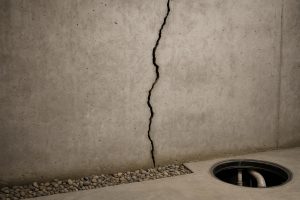
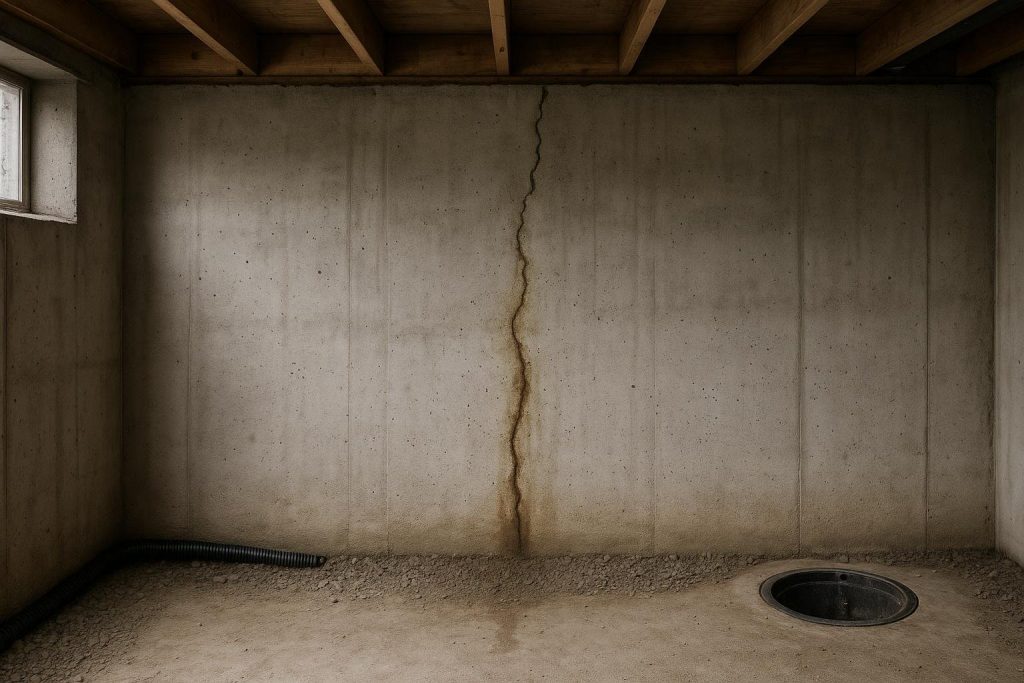
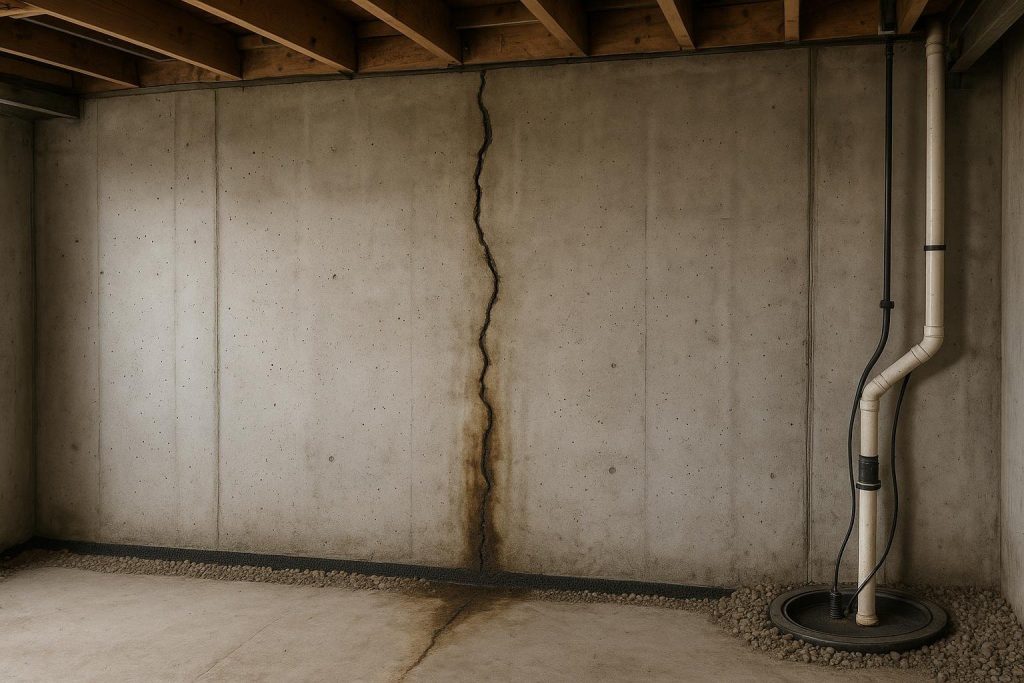
A foundation crack is any discontinuity in a concrete or masonry foundation wall or floor. In Pickering, the vast majority of residential foundations built after the 1970s are poured concrete, which cracks in predictable patterns. Cracks are broadly classified as non-structural or structural. Non-structural cracks do not compromise the load-bearing capacity of the wall; they are pathways for water. Structural cracks indicate movement, settlement or lateral pressure that may threaten the wall’s integrity.
Foundation crack repair encompasses any method that seals, stabilizes or reinforces a cracked foundation element. The scope of this guide covers poured-concrete basement walls and floors in residential properties throughout Pickering, including older lakefront neighbourhoods such as Bay Ridges and West Shore, and newer subdivisions in Seaton and Duffin Heights where concrete is still curing and settling on re-graded clay fill. Block or stone foundations require different approaches and are noted where relevant.
For a broader look at crack types and what each pattern signals, see Types of Foundation Cracks: What Each One Means and How to Fix It.
Why this matters
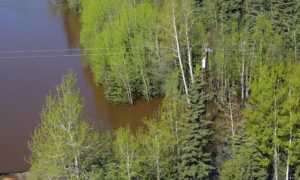
Pickering sits at the intersection of two distinct geological zones. South of Highway 401, neighbourhoods like Bay Ridges, West Shore and Fairport Beach occupy low-lying land beside Frenchman’s Bay, where the water table barely drops all year. The filled and regraded ground in these areas holds moisture against foundation walls continuously, not just after heavy rain.
North of the 401, Seaton and Duffin Heights are among the newest large subdivisions in Ontario. Homes here sit on re-graded clay that is still consolidating. Settlement cracks in relatively new concrete are common and expected, but they still need to be sealed before water infiltration begins.
The clay soils around Duffins Creek are particularly problematic. Clay expands when wet and contracts when dry, cycling hydrostatic pressure against foundation walls with every rain event and every dry spell. Over time this cycling widens hairline cracks into active leaks. Ontario’s freeze-thaw cycle compounds the problem: water that enters a crack in autumn freezes, expands and forces the crack wider before spring arrives.
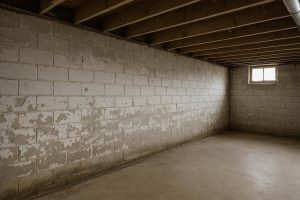
Left unaddressed, a leaking foundation crack can cause efflorescence, mould growth, deterioration of interior finishes and, in severe cases, structural compromise. Early repair is almost always less disruptive and less costly than deferred repair. For context on the broader waterproofing picture in Durham Region, see Basement Waterproofing in Durham Region: Local Causes, Solutions and Service Areas.
Your options
Polyurethane crack injection (interior)
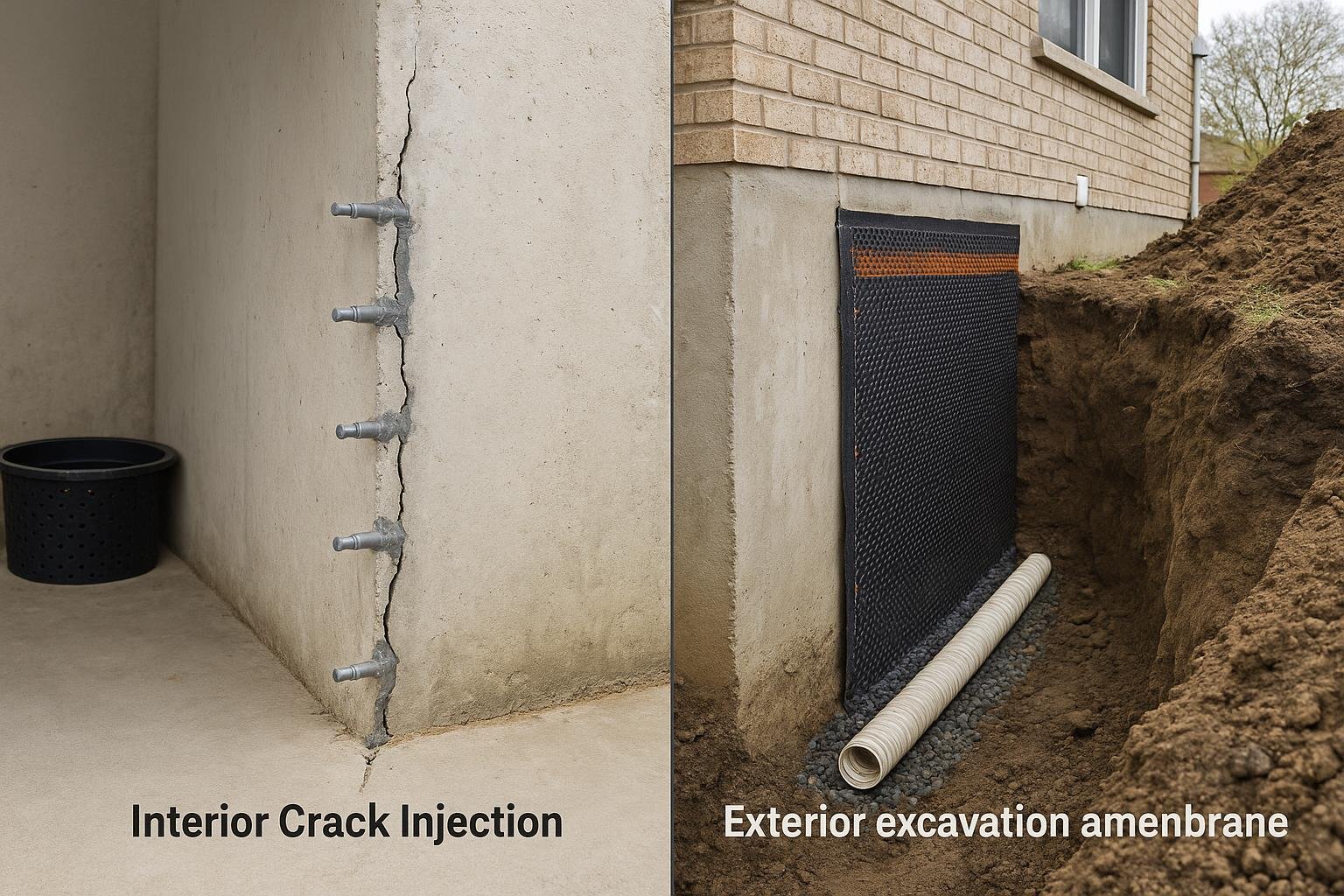
Polyurethane injection is the most widely used method for sealing non-structural cracks in poured-concrete walls. A low-viscosity polyurethane resin is injected under controlled pressure through ports installed along the crack. The resin expands as it cures, filling the full depth of the crack and bonding to the concrete on both sides. The cured material remains flexible, accommodating minor future movement without re-cracking.
Best for: Vertical and diagonal non-structural cracks in poured-concrete walls that are actively leaking or at risk of leaking. Suitable for most Bay Ridges, West Shore and Seaton homes with standard poured walls.
Limitations: Does not address the external source of water pressure. Not appropriate for horizontal cracks indicating lateral wall movement, cracks wider than approximately 6 mm without prior assessment, or block and stone foundations. See Polyurethane Crack Injection for technical detail.
Epoxy crack injection (interior)
Epoxy injection uses a two-part structural adhesive injected under low pressure. When cured, epoxy creates a bond stronger than the surrounding concrete, effectively welding the crack shut. It does not expand and is rigid once set.
Best for: Dry, non-leaking structural cracks where restoring tensile strength across the crack plane is the goal. Used in some commercial and engineered applications.
Limitations: Epoxy cannot be injected into wet or actively leaking cracks because moisture prevents proper adhesion. Its rigidity means it can crack again if the underlying movement continues. For a direct comparison, see Hydraulic Cement vs Crack Injection: Which Fix Actually Lasts?
Exterior excavation and membrane waterproofing
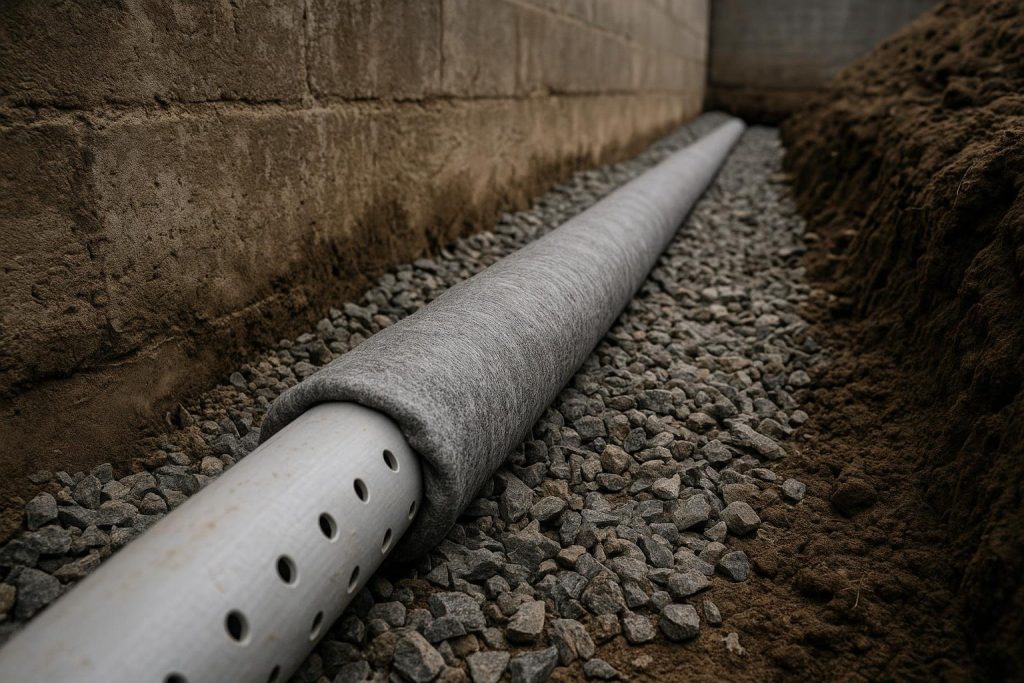
The exterior approach involves excavating the soil beside the affected wall down to the footing, cleaning the concrete surface, repairing the crack directly, and applying a waterproof membrane and drainage board before backfilling. This addresses the crack and eliminates the external water source simultaneously.
Best for: Cracks with significant external water pressure, walls with multiple cracks, situations where interior access is limited, or where a comprehensive long-term solution is preferred. Also appropriate when the existing exterior membrane has failed.
Limitations: Requires excavation, which is disruptive, weather-dependent and more costly than interior methods. Landscaping, decks or driveways adjacent to the wall complicate access. See Stop Foundation Leaks Permanently with Exterior Waterproofing for a full breakdown.
Interior drainage system with sump pump
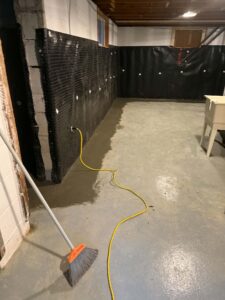
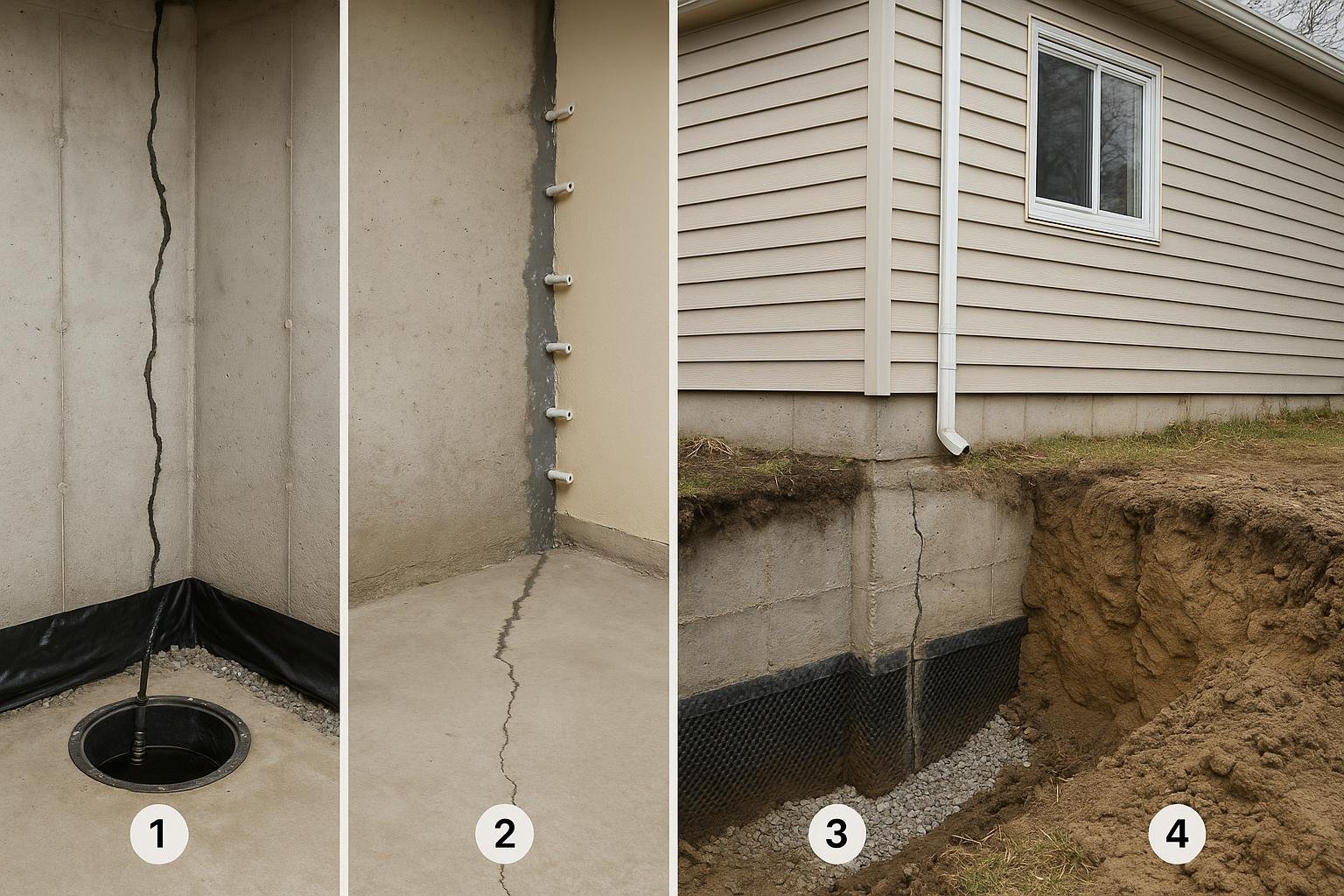
Where cracks are part of a broader water management problem, an interior drainage channel installed at the base of the wall collects infiltrating water and directs it to a sump pit and pump. This does not seal the crack itself but manages water that enters through it and through the wall-floor joint.
Best for: Homes with multiple entry points, perimeter seepage, or where exterior excavation is not feasible. Common in older Bay Ridges homes where the exterior membrane has long since failed.
Limitations: Manages water rather than excluding it. Requires ongoing sump pump maintenance. See Sump Pump Installation Services and Interior Basement Waterproofing Solutions.
Carbon fibre straps and wall anchors (structural stabilization)
Where a foundation wall shows horizontal cracking or inward bowing caused by lateral soil pressure, carbon fibre straps or wall anchors are used to stabilize the wall and prevent further movement. These are structural interventions, not waterproofing measures.
Best for: Walls with measurable inward deflection, horizontal cracks at mid-wall height, or walls in older Pickering homes where clay soil pressure has accumulated over decades.
Limitations: Does not seal the crack against water. Must be combined with a waterproofing method. A structural engineer’s assessment is advisable before proceeding. See Bowing Basement Foundation Wall: Causes, Urgency and Fixes.
Hydraulic cement (temporary patching)
Hydraulic cement is a fast-setting material that can be pressed into an actively leaking crack to stop immediate water flow. It sets in minutes and can be used in wet conditions.
Best for: Emergency situations where water is actively flowing and a permanent repair cannot be completed immediately.
Limitations: Hydraulic cement is a temporary measure. It does not bond to the full depth of the crack, is rigid and prone to re-cracking with movement, and does not address the underlying cause. It should be followed by a permanent repair method.
 Options compared
| Method | Best for | Typical considerations | Durability and limitations |
|---|---|---|---|
| Polyurethane injection (interior) | Non-structural, leaking vertical/diagonal cracks in poured concrete | Minimal disruption; no excavation; completed in hours | Long-lasting when crack is non-structural; flexible material tolerates minor movement |
| Epoxy injection (interior) | Dry structural cracks requiring tensile strength restoration | Crack must be dry; rigid cure | Very strong bond; can re-crack if movement continues; not suitable for wet cracks |
| Exterior excavation and membrane | Multiple cracks, failed exterior membrane, high external pressure | Excavation required; weather-dependent; higher cost | Addresses root cause; comprehensive; disrupts landscaping |
| Interior drainage and sump pump | Perimeter seepage, multiple entry points, inaccessible exterior | Manages water rather than excluding it; sump maintenance required | Effective long-term water management; does not seal cracks |
| Carbon fibre straps / wall anchors | Horizontal cracks, bowing walls, lateral soil pressure | Structural intervention; engineer assessment advisable | Stabilizes wall; must be paired with waterproofing |
| Hydraulic cement | Emergency active leak stoppage | Fast-setting; temporary only | Short-term; rigid; prone to re-cracking; follow-up repair required |
For most Pickering homeowners dealing with a single vertical or diagonal crack in a poured-concrete wall, polyurethane injection is the appropriate first-line repair. It is minimally disruptive, addresses the full depth of the crack, and the flexible cure accommodates the minor ongoing movement common in clay-soil environments. Exterior excavation becomes the better choice when multiple cracks are present, when the exterior membrane has failed, or when the crack is accompanied by significant water pressure that injection alone cannot overcome. Structural methods are reserved for walls showing measurable movement and should not be confused with waterproofing.
How to choose
Use the following framework to narrow down the right approach for your Pickering home.
Choose polyurethane injection if: you have one or two vertical or diagonal cracks in a poured-concrete wall, the wall is not bowing or deflecting, and the crack is leaking or at risk of leaking. This applies to the majority of homes in Bay Ridges, West Shore, Fairport Beach and newer Seaton builds where settlement cracks are common.
Choose epoxy injection if: the crack is dry, the wall has no measurable movement, and restoring structural continuity across the crack plane is the goal. This is less common in residential settings and is more often specified by engineers for commercial or load-bearing applications.
Choose exterior excavation if: you have multiple cracks along the same wall, the existing exterior waterproofing membrane is visibly failed or absent, water is entering at the wall-footing joint as well as through cracks, or you are planning a major renovation and want a comprehensive solution while the site is already disrupted.
Choose interior drainage with a sump pump if: exterior access is blocked by a structure, the water entry is diffuse rather than concentrated at a single crack, or you need to manage water from multiple sources simultaneously. This is often combined with crack injection rather than used as a standalone solution.
Choose structural stabilization if: you observe horizontal cracking at mid-wall height, the wall is visibly bowing inward, or a crack has been widening over time. In these cases, stopping water entry is secondary to stopping movement. See How to Tell If Foundation Crack Is Structural for guidance on distinguishing structural from non-structural cracks.
If you are unsure which category your crack falls into, the Foundation Crack Diagnosis: Vertical vs. Horizontal tool can help you identify the pattern before calling a contractor.
Costs and timelines
No verified current price quotes for Pickering are available to this publication. The following describes cost drivers only, ranked by their typical influence on the final price. Always obtain written quotes from licensed contractors before committing to any repair.
| Cost driver | Why it matters | Relative impact |
|---|---|---|
| Repair method | Interior injection is the least costly; exterior excavation is the most costly | High |
| Number and length of cracks | Each additional crack or linear metre of crack adds material and labour | High |
| Crack width and depth | Wider cracks require more resin and may need preparatory work | Medium |
| Access conditions | Finished basements, low clearance or obstructions increase labour time | Medium |
| Soil and excavation complexity | Clay soil in Pickering can be dense; proximity to utilities or structures adds cost | Medium to high (exterior only) |
| Structural involvement | Engineer reports, wall anchors and carbon fibre systems add significant cost | High (structural cases only) |
Interior polyurethane injection is generally completed in a single visit of a few hours. Exterior excavation is typically a multi-day project. Structural stabilization timelines vary depending on the scope of wall movement and whether engineered drawings are required. For a broader cost reference, see Crack Injection Cost in Southern Ontario (2026) and Foundation Crack Sealing Cost in Ontario: What Homeowners Actually Pay.
Risks and common mistakes
Treating a structural crack as non-structural. Horizontal cracks and cracks accompanied by wall deflection are structural until proven otherwise. Injecting a structural crack without addressing the underlying movement is not a repair; it is a temporary cosmetic fix that may mask a worsening condition. If a crack is horizontal or the wall is bowing, get a professional assessment before any repair work begins.
Using hydraulic cement as a permanent fix. Hydraulic cement stops active flow quickly, which makes it feel like a solution. It is not. The rigid patch does not bond to the full crack depth, and the clay-driven movement common in Pickering soils will re-open the crack, often within one or two freeze-thaw cycles.
Applying interior paint-on sealers to leaking cracks. Crystalline or cementitious coatings applied to the interior wall surface do not fill the crack through its full depth. Under hydrostatic pressure from Pickering’s high water table, these coatings will eventually fail. They are not a substitute for injection or excavation.
Ignoring cracks in new Seaton and Duffin Heights homes. Shrinkage cracks in recently poured concrete are normal, but they still need to be sealed. Re-graded clay fill continues to consolidate for several years after construction, meaning cracks that appear minor today can widen as the soil settles. See Shrinkage Cracks in a New Home Foundation: Ontario Homeowner’s Complete Guide.
Delaying repair before finishing the basement. Many Pickering homeowners discover cracks when planning a basement renovation. Finishing over an unrepaired crack traps moisture, promotes mould and makes the eventual repair far more disruptive. See Basement Crack Repair Before Finishing Your Basement.
Choosing a contractor based on price alone. The lowest quote may reflect inadequate resin volume, skipped port spacing or no warranty. Confirm that the contractor provides a written warranty on the repair and uses a proven injection resin. DryShield offers a lifetime transferable warranty on qualifying crack injection repairs.
How the process works
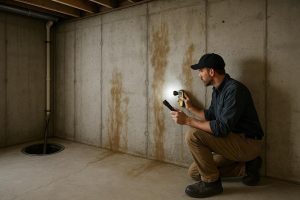
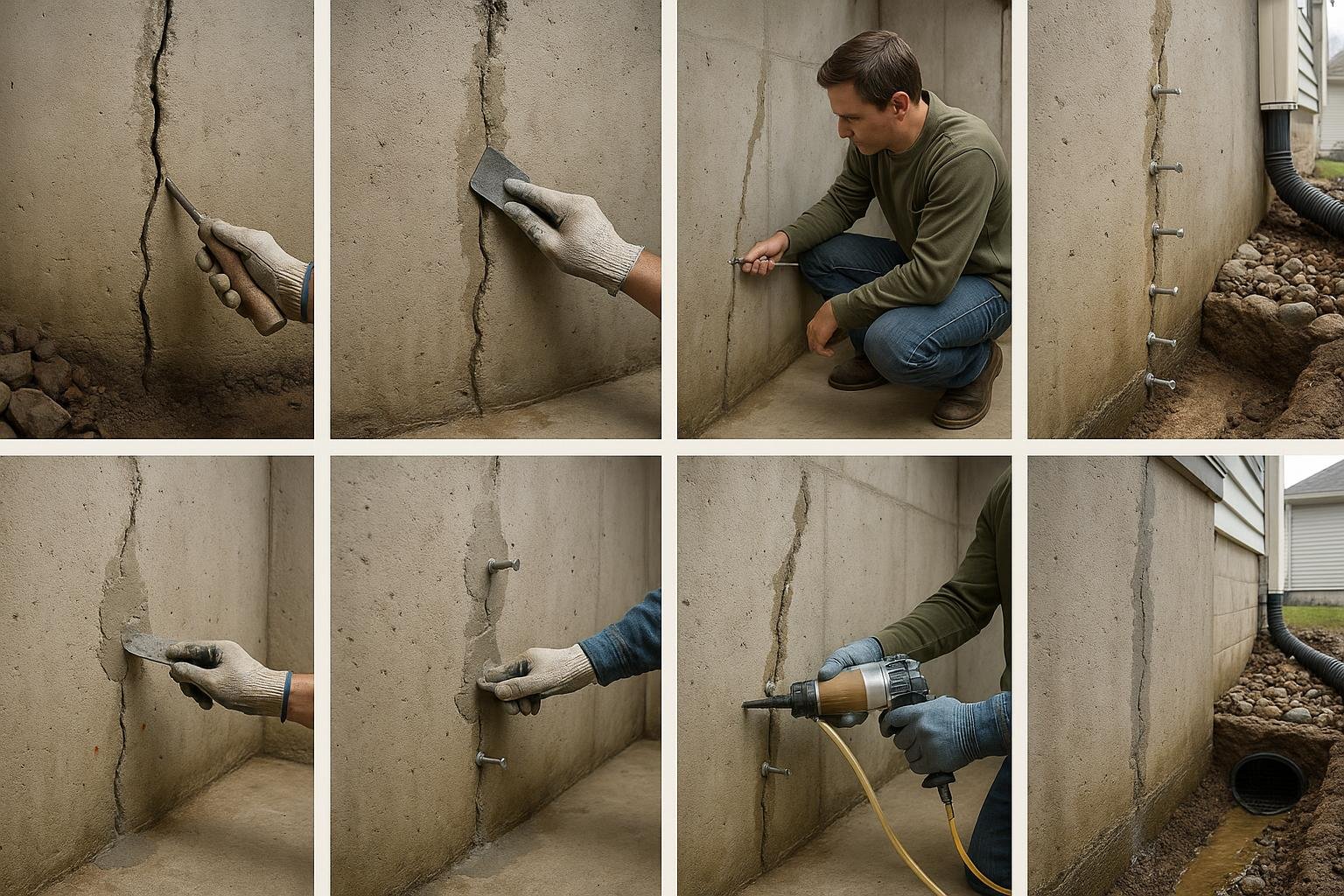
- Inspection and crack classification. A technician examines the crack’s orientation, width, depth and any signs of movement or active leaking. The wall is checked for bowing or deflection. The crack is classified as structural or non-structural before any repair method is selected.
- Surface preparation. The crack face is cleaned of efflorescence, loose concrete and any previous patch material. For injection, the surface is dried as much as possible around each port location.
- Port installation. Injection ports are installed at regular intervals along the crack, typically every 20 to 30 centimetres, depending on crack width and depth.
- Resin injection. Polyurethane resin is injected at low pressure through each port in sequence, starting at the lowest point. The technician monitors for resin appearing at adjacent ports, confirming the crack is filling through its full depth.
- Cure and inspection. The resin is allowed to cure. Ports are removed and the surface is finished. The technician confirms the repair is complete and documents the work for warranty purposes.
- Drainage and grading review. A responsible contractor will also note any surface drainage issues, such as negative grading toward the foundation or blocked downspout extensions, that may be contributing to water pressure. Correcting these reduces the likelihood of new cracks forming.
- Written warranty issuance. A warranty document is provided. For transferable warranties, the homeowner receives documentation suitable for disclosure in a future property sale.
Frequently asked questions
How do I know if my Pickering foundation crack is serious?
Horizontal cracks, cracks wider than 6 mm, cracks accompanied by inward wall deflection, and cracks that have visibly widened over time are the most serious patterns. Vertical and diagonal cracks in poured concrete are usually non-structural but still need sealing. If you are unsure, have a professional assess the crack before attempting any repair. The guide How to Tell If Foundation Crack Is Structural provides a detailed framework.
Why do so many Pickering homes have foundation cracks?
Pickering’s clay soils along Duffins Creek expand when wet and contract when dry, cycling pressure against foundation walls with every rain event. South of Highway 401, the water table near Frenchman’s Bay stays high year-round. In Seaton and Duffin Heights, re-graded clay fill continues to consolidate after construction. Ontario’s freeze-thaw cycle then widens any existing crack each winter. These combined factors make foundation cracking common across the city.
Can I repair a foundation crack myself?
DIY injection kits are available for hairline non-structural cracks, but they typically deliver resin at lower pressure and in smaller volumes than professional equipment, which can leave voids in the crack. Hydraulic cement is accessible but temporary. For any crack that is actively leaking, wider than a hairline, or in a wall showing movement, professional repair is strongly recommended. See DIY Foundation Crack Repair Kit vs Professional Crack Injection: Which Should You Choose? for an honest comparison.
How long does polyurethane crack injection last?
When correctly applied to a non-structural crack in a stable wall, polyurethane injection is a long-lasting repair. The flexible cured resin accommodates minor ongoing movement without re-cracking. The repair is considered permanent for non-structural cracks, which is why reputable contractors offer long-term warranties. If the underlying cause of movement is not addressed, new cracks may form adjacent to the repaired one over time.
Does fixing a foundation crack require a permit in Pickering?
Interior crack injection on a residential foundation wall is generally considered maintenance and does not typically require a building permit in Ontario. Exterior excavation that involves structural repair or underpinning may require a permit under the Ontario Building Code. Confirm permit requirements with the City of Pickering’s building department before beginning any exterior or structural work. DryShield does not provide regulatory advice; always verify current requirements directly with the municipality.
Will my home insurance cover foundation crack repair in Pickering?
Most standard Ontario home insurance policies do not cover foundation crack repair resulting from gradual deterioration, soil movement or hydrostatic pressure. Sudden and accidental damage may be covered depending on your policy wording. Review your policy carefully and speak with your insurer before assuming coverage. For a detailed overview, see Does Home Insurance Cover Basement Waterproofing and Foundation Cracks in Ontario?
How does a foundation crack repair affect my home’s resale value?
An unrepaired foundation crack disclosed during a home inspection in Pickering can reduce buyer confidence and negotiating leverage. A professionally repaired crack with a transferable warranty is a positive disclosure: it demonstrates the issue was identified and resolved correctly. Buyers and their inspectors generally view a warranted repair more favourably than an unrepaired crack. See Foundation Crack Found During Home Inspection: What to Do Next.
What is the difference between a crack repair and waterproofing?
Crack repair seals a specific discontinuity in the foundation wall. Waterproofing is a broader system that may include exterior membranes, drainage boards, weeping tile and sump pumps to manage water around the entire foundation. A crack repair addresses a defined entry point; waterproofing addresses the overall water management strategy. Many Pickering homes need both. See Waterproofing vs Foundation Repair: Which Does Your Basement Actually Need?
If you have noticed a crack in your Pickering foundation, or if your basement has been showing signs of moisture, the DryShield team serves Bay Ridges, West Shore, Fairport Beach, Seaton, Duffin Heights and all surrounding areas. Visit the Pickering service page or use the contact page to arrange an inspection. You can also explore the Basement Leak Diagnostic Tool to help describe your situation before your appointment.