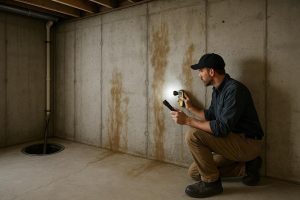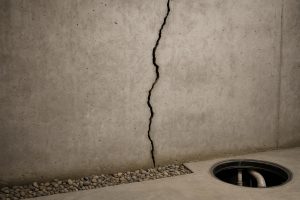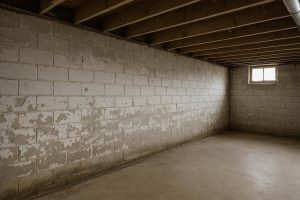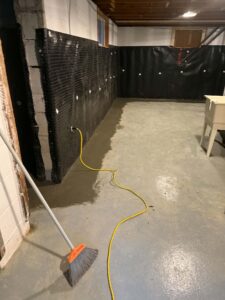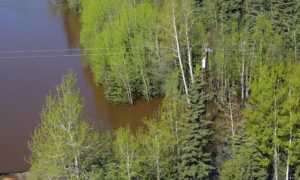
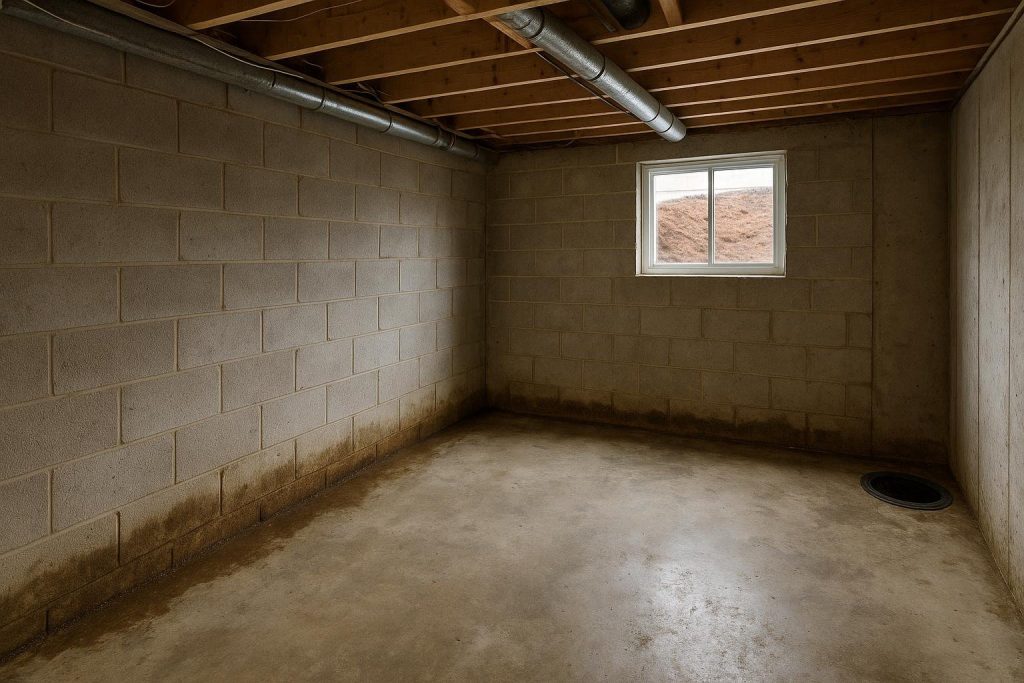
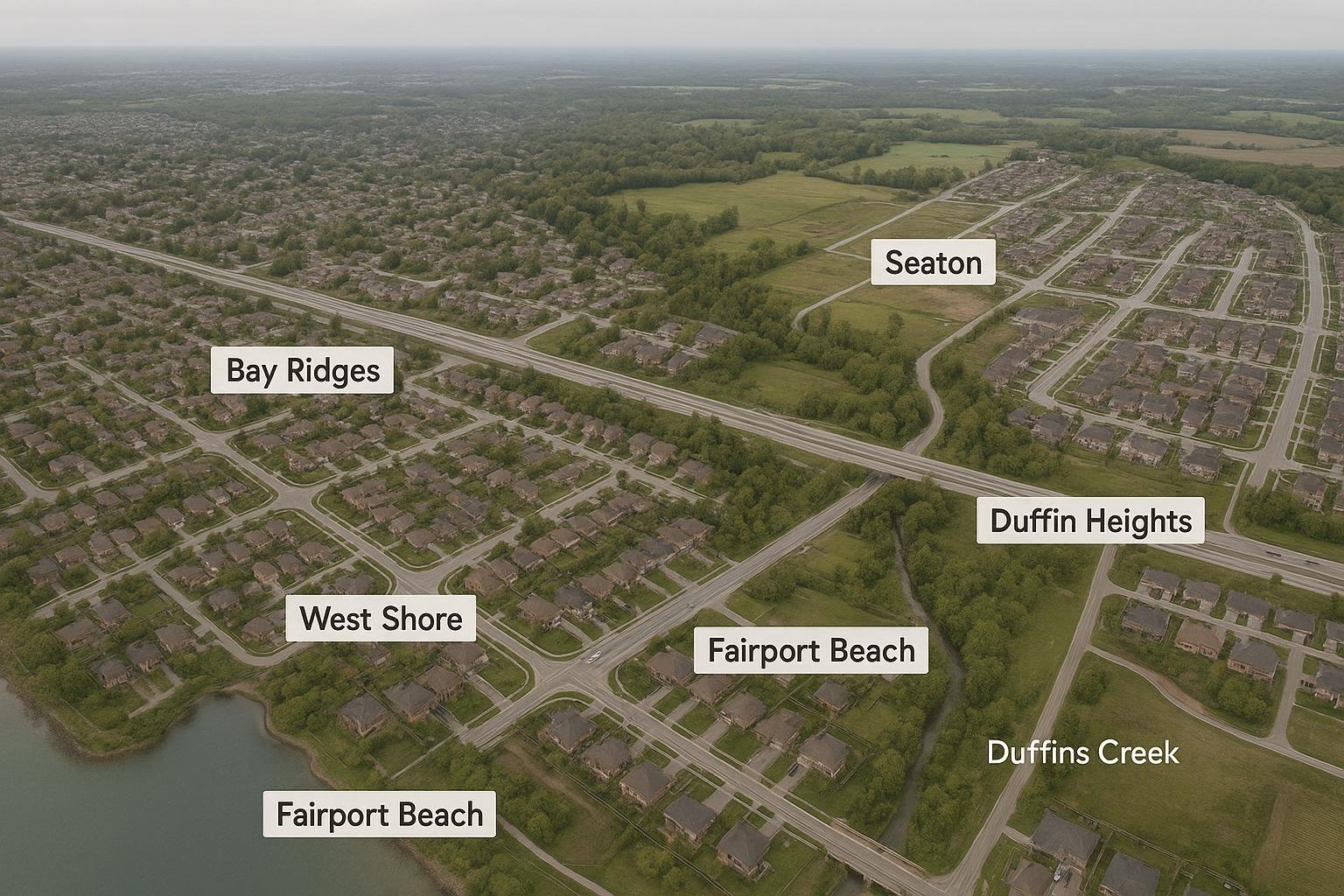
A wet basement in Pickering is most often caused by the combination of Lake Ontario’s persistently high shoreline water table, the clay and re-graded soils found across Bay Ridges, West Shore, Fairport Beach, Seaton and Duffin Heights, and the hydrostatic pressure those conditions generate against foundation walls and floors. Understanding which specific mechanism is driving moisture into your basement determines which repair method will actually work long term. This guide walks through every major option, compares them honestly and explains how to choose.
- Pickering’s low-lying lakefront neighbourhoods and newer clay-heavy subdivisions face above-average hydrostatic pressure year-round.
- The right fix depends on the source of water entry: wall cracks, floor seepage, failed drainage or a combination.
- Interior and exterior approaches solve different problems; one does not automatically replace the other.
- Cost drivers include excavation depth, soil type, foundation age and whether drainage infrastructure needs replacement.
- Structural cracks require a different repair path than non-structural shrinkage cracks.
Definitions & scope
A wet basement describes any condition in which liquid water, water vapour or both enter the below-grade living or storage space of a home. In Pickering, the term covers a wide spectrum: a hairline crack weeping during spring thaw, a perimeter seam leaking after heavy rain, floor drain backup during a storm, or chronic wall dampness from hydrostatic pressure.
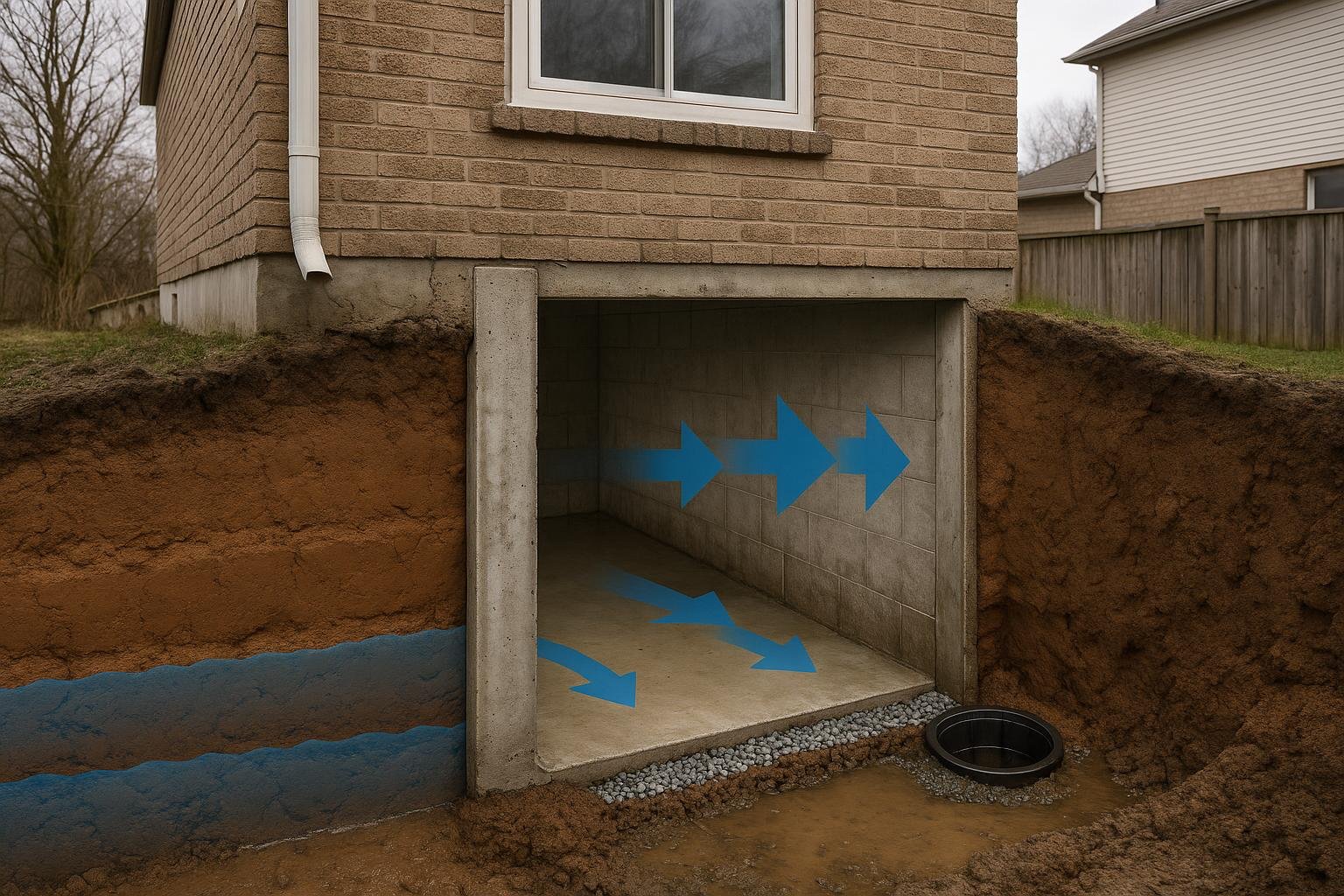
Hydrostatic pressure is the outward force that saturated soil exerts on a foundation wall or slab. Clay soils hold water rather than draining it, so pressure builds and remains elevated long after a rain event ends. South of Highway 401, the filled land beside Frenchman’s Bay keeps the water table close to the surface almost continuously. North of the 401, Seaton and Duffin Heights are built on re-graded clay that has not yet fully consolidated, creating variable drainage conditions and settlement-related cracking.
This guide covers poured-concrete residential foundations. Block foundations and crawl spaces have overlapping but distinct considerations. For crawl space issues, see the Wet Crawl Space guide. For a broader comparison of repair versus waterproofing, see Waterproofing vs Foundation Repair.
Why this matters
Water in a basement is not simply an inconvenience. Persistent moisture degrades concrete over time through a process called freeze-thaw cycling: water that enters a crack expands when it freezes, widening the crack and allowing more water in during the next thaw. Duffins Creek and the Lake Ontario shoreline mean Pickering homeowners experience this cycle repeatedly each winter.
Mould growth can begin within 24 to 48 hours of a wetting event on organic materials such as wood framing, drywall and stored belongings. Beyond health concerns, visible water damage and active leaks are material defects that must be disclosed in a real estate transaction in Ontario. A documented, professionally repaired and warranted waterproofing system can support a property’s marketability, though the degree of impact varies by market conditions and buyer expectations. For context on the resale dimension, see Will Basement Waterproofing Increase My Home Value in the GTA?
Insurance coverage for basement water damage in Ontario is policy-specific and frequently excludes gradual seepage. Understanding what your policy covers before a loss event is important. The guide Does Home Insurance Cover Basement Waterproofing in Ontario? covers this in detail.
For newer homes in Seaton and Duffin Heights, Tarion warranty coverage for water penetration through the foundation applies during specific warranty periods. Homeowners should verify current Tarion terms directly at tarion.com before assuming coverage applies to their situation, as warranty periods and conditions change.
Your options for a wet basement in Pickering
Polyurethane crack injection
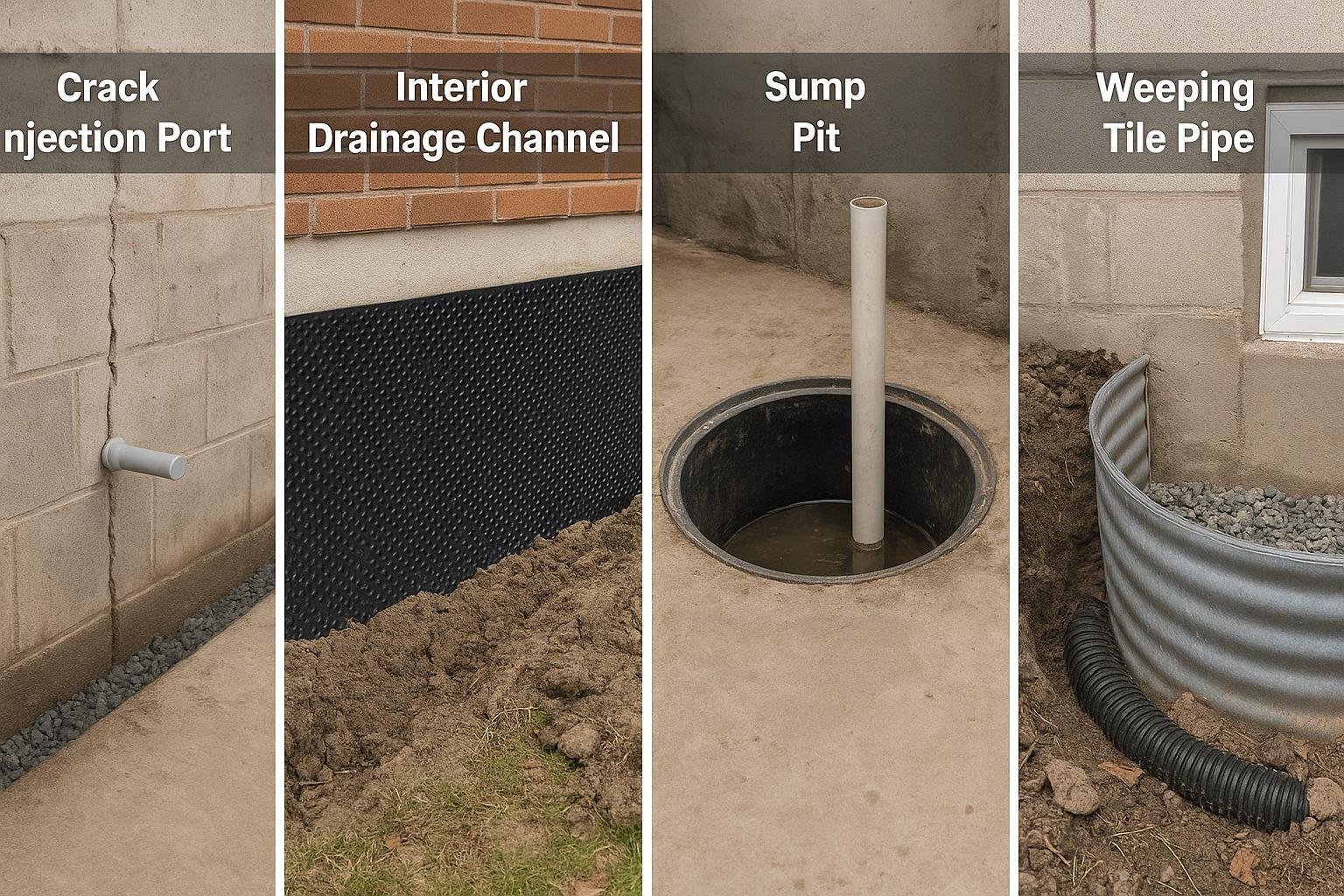
Polyurethane crack injection fills a foundation wall crack from the inside by injecting a flexible, expanding foam resin under low pressure through a series of ports installed along the crack. The foam expands to fill the full depth of the crack and bonds to the concrete. Because polyurethane remains flexible after curing, it can accommodate minor ongoing movement without re-cracking.
Best for: Non-structural vertical or diagonal shrinkage cracks in poured-concrete walls that are actively leaking or have a documented history of leaking. Common in both older Bay Ridges bungalows and newer Duffin Heights builds where settlement cracks have appeared.
Limitations: Does not address the source of hydrostatic pressure. If drainage around the foundation is failing, injection seals the current entry point but water may find a new path. Not suitable for horizontal cracks, which indicate lateral soil pressure and require structural assessment. See DIY Foundation Crack Repair Kit vs Professional Crack Injection for a comparison of approaches.
Interior waterproofing with weeping tile
Interior waterproofing installs a drainage channel along the interior perimeter of the basement floor, connected to a sump pit and pump. Water that enters through the walls or floor is captured before it can spread across the slab and directed to the sump for discharge. The system does not stop water from entering the wall but manages it before it causes damage.
Best for: Homes where exterior excavation is impractical (attached garages, finished landscaping, proximity to property lines), chronic perimeter seepage, and situations where the water table is consistently high regardless of rainfall, as is common in the West Shore and Fairport Beach areas near Frenchman’s Bay.
Limitations: Does not address the exterior membrane or soil drainage. The sump pump requires power; a battery backup is strongly recommended in Pickering given the frequency of storm-related outages. See Sump Pump Not Working and Putting In a Sump Pump for related guidance.
Exterior waterproofing
Exterior waterproofing excavates the soil around the foundation down to the footing, cleans and repairs the wall surface, applies a waterproof membrane and drainage board, installs or replaces the weeping tile at the footing, and backfills with granular material that drains freely. It addresses the source of water entry rather than managing water after it arrives.
Best for: Homes with a failed or absent original waterproofing membrane, severely deteriorated or collapsed weeping tile, or repeated interior leaks that have not responded to interior management. Older homes in Bay Ridges built before modern waterproofing standards are frequent candidates.
Limitations: Significant excavation cost and disruption. Requires access around the perimeter. In dense lakefront neighbourhoods, lot lines and landscaping can constrain access. Permit requirements under the Ontario Building Code may apply for deep excavation; homeowners should confirm with the City of Pickering before work begins. For a detailed comparison, see Stop Foundation Leaks Permanently with Exterior Waterproofing.
Sump pump installation or replacement
A sump pump is a submersible or pedestal pump installed in a pit at the lowest point of the basement. It activates when water in the pit reaches a set level and discharges water away from the foundation. It is a component of both interior and exterior waterproofing systems but can also be installed as a standalone measure where the primary problem is groundwater accumulation rather than wall penetration.
Best for: Homes that already have reasonable wall integrity but experience seasonal flooding from a rising water table, particularly in low-lying areas near Duffins Creek. Also essential as a backup system in any home with interior drainage.
Limitations: Dependent on electricity. A failed pump during a power outage is a common cause of basement flooding. Battery backup units and water-powered backup pumps are available options. See Sump Pump Failed and Basement Flooded for immediate steps if this has already occurred.
Weeping tile repair or replacement
Original weeping tile in Pickering homes built before the 1990s is often clay or perforated plastic that has collapsed, silted up or been displaced by root intrusion. Replacing it, either from the exterior during a full excavation or from the interior as part of an interior drainage system, restores the foundation’s ability to relieve hydrostatic pressure at the footing level.
Best for: Homes where inspection or camera scoping reveals that the existing tile is blocked or absent, and where perimeter seepage is the dominant symptom rather than discrete wall cracks.
Limitations: Exterior replacement requires full excavation. Interior replacement avoids excavation but does not restore the exterior membrane. See Drain Tile Drain: The Complete Homeowner’s Guide for a full explanation of how weeping tile systems work.
Window well drainage repair
Basement windows that sit below grade are surrounded by window wells. When the well’s drainage fails or the well fills with debris, water pools against the window frame and enters the basement. This is a distinct entry point from wall cracks or floor seepage and requires its own fix: cleaning or replacing the well drain, adding a gravel bed, or installing a well cover.
Best for: Homes where leaking is clearly correlated with rainfall and concentrated at or below window openings. Common in older Bay Ridges split-levels and bungalows with original steel wells.
Limitations: Fixing the well does not address broader drainage or hydrostatic issues. See Fixing Window Well Flooding in Your Basement for step-by-step guidance.
Options compared
| Method | Best for | Typical considerations | Durability / limitations |
|---|---|---|---|
| Polyurethane crack injection | Discrete vertical/diagonal shrinkage cracks | Minimal disruption; interior access only; no excavation | Long-lasting when crack is non-structural; does not address drainage |
| Interior waterproofing + weeping tile | Chronic perimeter seepage; high water table | Moderate disruption; slab cutting required; sump pump needed | Manages water entry; pump dependent on power |
| Exterior waterproofing | Failed membrane; collapsed exterior tile | High disruption; excavation required; permit may be needed | Addresses root cause; most comprehensive long-term solution |
| Sump pump (standalone) | Groundwater accumulation; seasonal flooding | Low disruption; requires pit installation if absent | Effective while operational; requires battery backup |
| Weeping tile replacement | Collapsed or silted original tile | Exterior: excavation required; interior: slab cutting | Restores footing drainage; exterior version most thorough |
| Window well drainage repair | Leaks at or below window openings | Low disruption; targeted repair | Effective for that entry point only; does not address wall or floor issues |
No single method is universally superior. Homes in the low-lying lakefront areas of Pickering often need a combination: crack injection to seal discrete entry points, interior drainage to manage the persistently high water table, and a reliable sump pump with battery backup. Newer homes in Seaton and Duffin Heights more commonly present with settlement cracks that respond well to injection alone, provided the drainage infrastructure is intact. A proper diagnosis before committing to any method is the most important step.
How to choose
Use the following framework to narrow your options before speaking with a contractor.
Choose polyurethane crack injection if: you have one or more visible vertical or diagonal cracks in a poured-concrete wall, the crack is not horizontal, the surrounding wall is otherwise dry, and the crack has been leaking during rain or thaw events. This is the most targeted and least disruptive starting point for many Pickering homes, particularly newer builds in Seaton and Duffin Heights where settlement cracks are common.
Choose interior waterproofing with a sump pump if: water enters along the wall-floor joint or across a broad section of wall rather than through a discrete crack, the problem recurs seasonally regardless of specific rainfall events, or exterior excavation is not feasible due to lot constraints. This is frequently the practical solution for West Shore and Fairport Beach homes where the water table stays high year-round.
Choose exterior waterproofing if: the home is older with no documented original membrane, multiple wall sections are leaking, interior methods have been tried and have not resolved the problem, or a camera inspection confirms collapsed weeping tile. This is the most comprehensive option and is worth the investment when the foundation’s exterior protection has genuinely failed.
Choose sump pump installation or upgrade if: you have an interior drainage system but no pump, the existing pump is aging or undersized, or you are in a low-lying area and want a primary defence against groundwater. Always pair with a battery backup in Pickering given storm frequency.
Choose window well repair if: leaking is clearly isolated to the area directly below a window and correlates precisely with rainfall rather than groundwater rise.
When symptoms are ambiguous, a professional diagnostic inspection is the appropriate first step. Use DryShield’s Basement Leak Diagnostic Tool as a starting point, or see The 2026 Wet Basement and Basement Leak Master Guide for a detailed self-assessment framework.
Costs & timelines
No verified current price quotes for Pickering specifically are available to this guide. The following describes cost drivers only, ranked by typical impact on total project cost. For Ontario-wide approximate ranges, see Basement Waterproofing Cost in Southern Ontario and the 2026 Waterproofing Cost Calculator.
| Cost driver | Why it matters | Relative impact |
|---|---|---|
| Method selected | Exterior excavation is significantly more labour-intensive than interior injection | Highest |
| Linear footage or wall area | Interior drainage and exterior membrane pricing scales with perimeter length | High |
| Excavation depth and soil conditions | Clay soils in Pickering require more effort to excavate and backfill than granular soils | High |
| Access constraints | Tight lot lines in Bay Ridges and West Shore can require hand-digging, raising labour cost | Medium-high |
| Foundation age and condition | Older walls may need surface preparation or crack repair before membrane application | Medium |
| Sump pump specification | Battery backup, horsepower rating and alarm systems add to base pump cost | Medium |
| Permit requirements | Structural or deep excavation work may require a City of Pickering building permit; verify before work begins | Low-medium |
Timeline varies by method. Crack injection on a single crack is typically completed in a few hours. Interior drainage installation along a full perimeter is generally a multi-day project. Full exterior excavation and membrane work can take several days to a week or more depending on perimeter length and site conditions. Obtain a written scope and timeline from any contractor before work begins.
Risks & common mistakes
Treating symptoms without diagnosing the source. Applying hydraulic cement or a paint-on sealant to a leaking wall without understanding why water is entering is the most common mistake. These products can temporarily mask a crack or seam but do not address hydrostatic pressure. If the underlying drainage problem is not resolved, water will find a new path. See Hydraulic Cement vs Crack Injection for a direct comparison.
Ignoring horizontal cracks. A horizontal crack in a basement wall is a different category of problem from a vertical shrinkage crack. Horizontal cracking can indicate lateral soil pressure causing the wall to bow inward. This is a structural concern that requires engineering assessment, not injection alone. See Bowing Basement Foundation Wall and How to Tell If a Foundation Crack Is Structural.
Skipping the battery backup on a sump pump. Power outages during the same storms that drive the highest water table are a real risk in Pickering. A sump pump without a battery backup or water-powered backup is a single point of failure at the worst possible moment.
Assuming a new home is protected. Newer subdivisions in Seaton and Duffin Heights are built on re-graded clay that is still consolidating. Settlement cracks can appear within the first few years. The presence of a builder’s warranty does not mean a crack will be repaired promptly; homeowners should document and report defects within applicable Tarion warranty periods. Verify current Tarion terms at tarion.com.
Delaying action on an active leak. Water that enters a basement during one season and appears to stop does not mean the problem has resolved. Seasonal fluctuation in the water table can create a false impression of improvement. Mould, efflorescence and concrete deterioration continue between visible leak events.
Choosing a contractor based on price alone. The lowest quote is not always the best value when the work involves excavation, membrane application or structural drainage. Ask about warranty terms, what is included in the scope, and whether the contractor carries appropriate liability insurance. See How to Choose a Reliable Waterproofing Contractor for a checklist.
How the process works
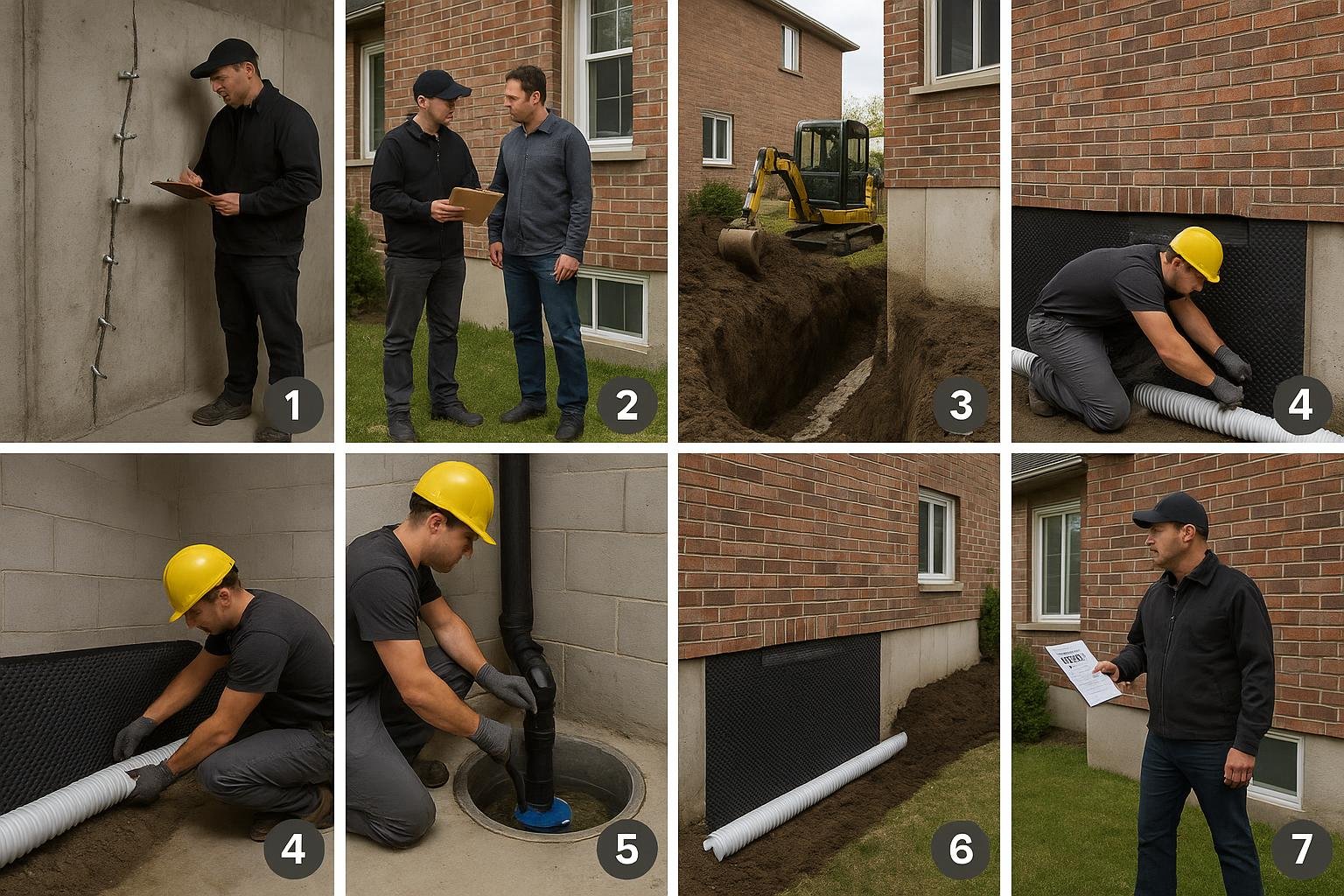
- Inspection and diagnosis. A technician examines the interior and, where accessible, the exterior of the foundation. Entry points, crack types, moisture patterns and drainage conditions are documented. This step determines which method or combination of methods is appropriate.
- Scope and proposal. A written proposal outlines the recommended method, materials, warranty terms, timeline and total cost. For exterior work, permit requirements are identified at this stage.
- Site preparation. Interior work involves protecting finished areas and cutting the slab if drainage channels are needed. Exterior work involves excavating the soil around the affected wall sections down to the footing.
- Repair and waterproofing installation. Cracks are injected, membranes are applied, drainage systems are installed, and weeping tile is repaired or replaced as specified in the scope.
- Sump and drainage connection. Interior drainage channels connect to the sump pit. The pump is installed, tested and, if specified, a battery backup unit is connected.
- Backfill and restoration. Exterior excavations are backfilled with granular material. Interior slab sections are patched with concrete. The site is cleaned and restored as closely as practical to pre-work condition.
- Final inspection and warranty documentation. The completed work is reviewed with the homeowner. Warranty documentation is provided in writing. DryShield offers a lifetime transferable warranty on qualifying work.
Frequently asked questions
Why does my Pickering basement leak only when it rains heavily?
Rain-correlated leaking typically points to surface water management rather than a persistently high water table. Downspout discharge too close to the foundation, negative grading that slopes toward the house, or a blocked window well drain can all funnel surface water against the foundation during heavy rain. Crack injection or improved grading and drainage at grade level often resolves this pattern. See Why Does My Basement Leak When It Rains? for a detailed breakdown.
Is my new Seaton or Duffin Heights home covered by Tarion for foundation cracks?
Tarion’s Ontario New Home Warranty covers water penetration through the basement or foundation walls during specific warranty periods. The exact coverage terms, exclusions and reporting deadlines are set by Tarion and are subject to change. Homeowners in new Pickering subdivisions should review their warranty documentation and verify current terms directly at tarion.com rather than relying on a summary. Document any crack or leak with photographs and report it within the applicable period.
Can I inject a foundation crack myself?
DIY polyurethane injection kits are available, and they can work on simple, accessible, non-structural cracks. The risk is in misidentifying the crack type or failing to achieve full-depth penetration, which leaves voids that allow water to continue entering. A professional injection uses calibrated low-pressure equipment and verifies fill depth. For a balanced comparison, see DIY Foundation Crack Repair Kit vs Professional Crack Injection.
How do I know if my weeping tile has failed?
Signs of failed weeping tile include chronic perimeter seepage at the wall-floor joint, water entry that is not correlated with specific cracks, and efflorescence (white mineral deposits) along the base of the wall. A camera inspection of the existing tile, where accessible, can confirm collapse or blockage. Homes in Bay Ridges and West Shore built before the 1990s are particularly likely to have original clay tile that has deteriorated. See Weeping Tile Problems for more detail.
Do I need a permit for basement waterproofing in Pickering?
Permit requirements depend on the scope of work. Interior crack injection and sump pump installation generally do not require a permit. Exterior excavation that is structural in nature, or work that affects the foundation’s structural integrity, may require a building permit from the City of Pickering under the Ontario Building Code. Homeowners should confirm requirements with the City before work begins. A reputable contractor will identify permit obligations as part of the proposal process. For a broader overview, see Ontario Building Code Basement Waterproofing 2026.
What is the difference between interior and exterior waterproofing?
Exterior waterproofing excavates the soil, repairs the wall surface and installs a membrane and drainage system on the outside of the foundation, addressing water before it contacts the wall. Interior waterproofing installs a drainage channel inside the basement perimeter to capture water that has already entered the wall and direct it to a sump pump. Exterior is more comprehensive; interior is less disruptive and more practical when access is limited. See Interior vs. Exterior Waterproofing for a full comparison.
How long does a waterproofing repair last?
Durability depends on the method and the quality of installation. Professionally injected polyurethane cracks in stable, non-structural conditions can remain sealed indefinitely. Interior drainage systems are mechanical and require periodic maintenance, particularly the sump pump, which has a finite service life. Exterior membranes, when properly installed with appropriate drainage board and backfill, are designed to last for decades. Warranty terms vary by contractor and method; ask for written documentation before work begins.
Should I waterproof before finishing my basement?
Yes. Finishing a basement before resolving any active or potential water entry is a significant risk. Framing, insulation and drywall installed over a leaking or damp wall will trap moisture, accelerate mould growth and require costly removal to access the foundation for repair later. Resolve all water entry issues and allow the foundation to dry before beginning any finishing work. See Basement Crack Repair Before Finishing Your Basement for a full guide.
What neighbourhoods in Pickering are most at risk for wet basements?
South of Highway 401, Bay Ridges, West Shore and Fairport Beach sit on low-lying filled land beside Frenchman’s Bay where the water table remains close to the surface throughout the year, creating persistent hydrostatic pressure. North of the 401, Seaton and Duffin Heights are among Ontario’s newest large subdivisions, built on re-graded clay that is still settling, making settlement-related cracking more common in the early years of a home’s life. Homes near Duffins Creek in any part of Pickering may also experience elevated seasonal groundwater.
Does DryShield serve Pickering and the surrounding Durham Region?
Yes. DryShield serves Pickering and the broader Durham Region, including neighbouring communities. See the Pickering service page for contact and service details, or visit the Basement Waterproofing in Durham Region guide for area-wide context. Nearby service pages include Ajax, Whitby and Oshawa.
If your Pickering basement is showing signs of moisture, active leaking or foundation cracking, the most important step is an accurate diagnosis before committing to a repair method. DryShield has served the Toronto, GTA and Ontario cottage country region for over 25 years. Contact DryShield to arrange an inspection, or use the Basement Leak Diagnostic Tool to begin identifying the likely source of your problem.