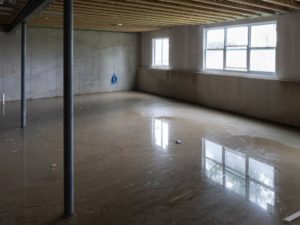
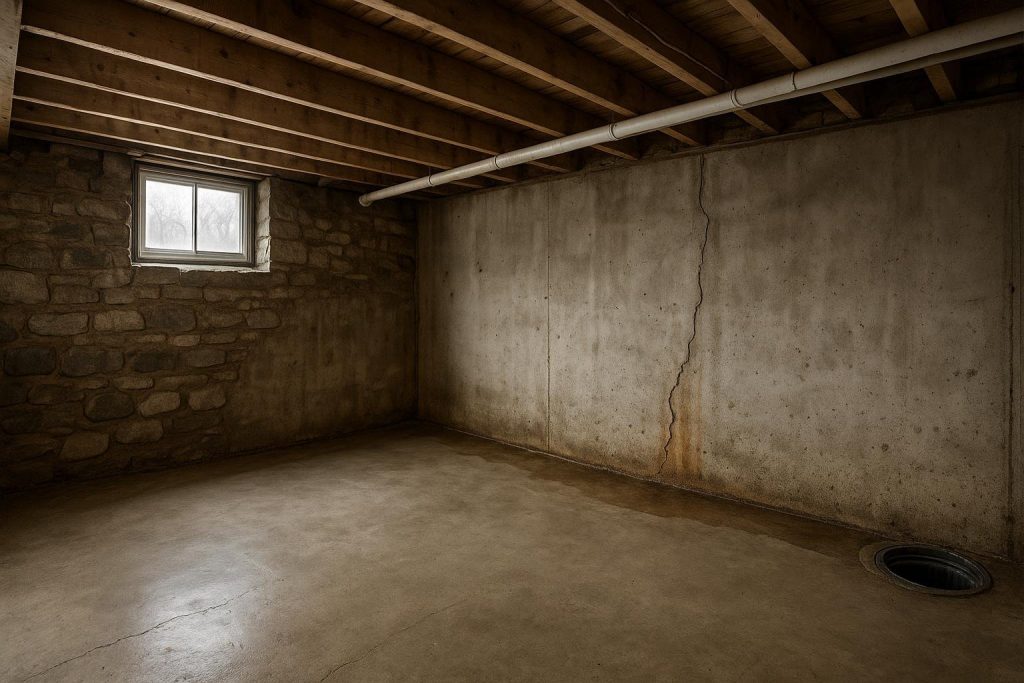
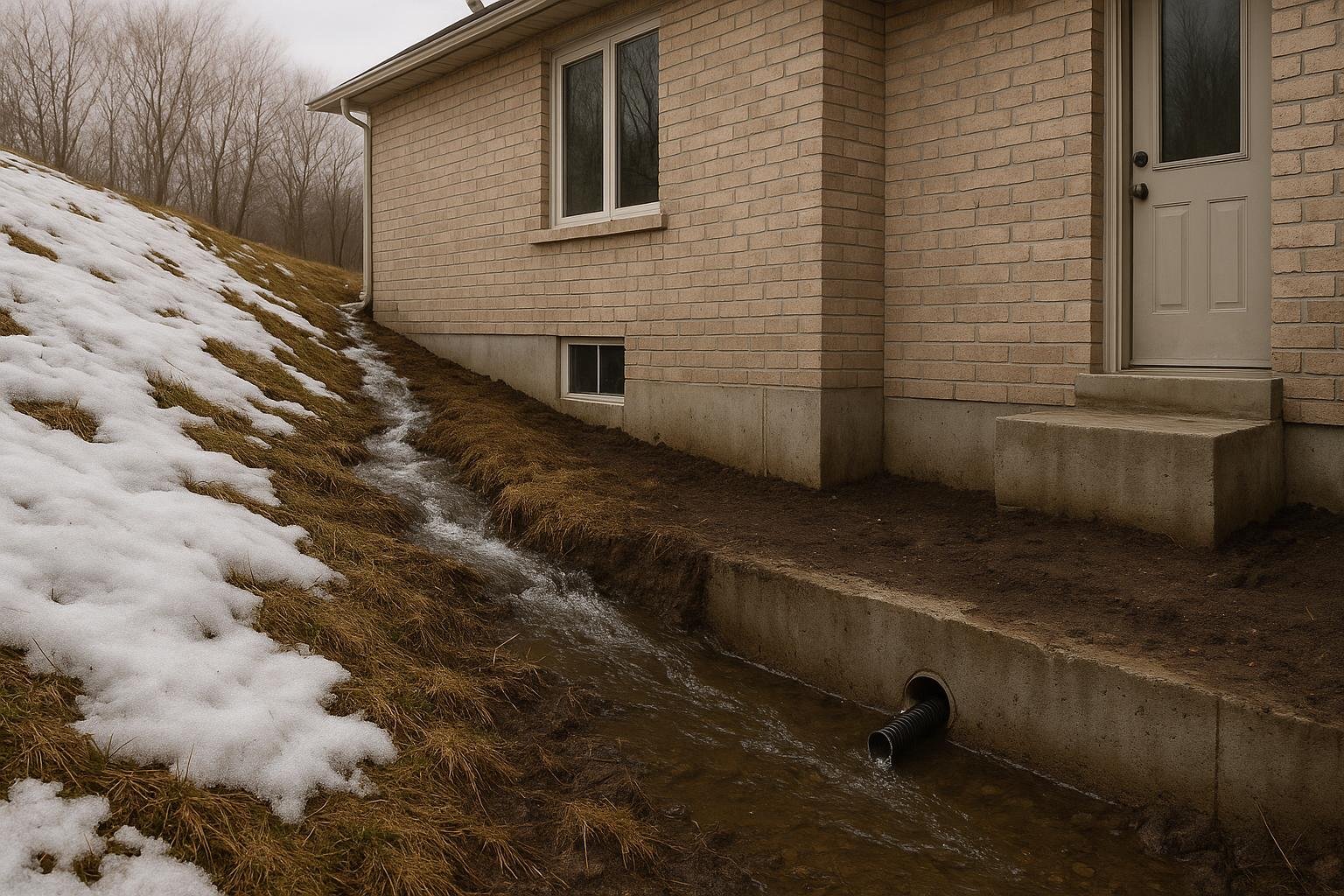
Basement leak repair in Clearview means diagnosing where water enters a foundation, then applying the method that stops it at its source. Clearview Township sits on a mix of Simcoe County clay-till, limestone bedrock outcrops and sandy glacial deposits that behave very differently from one property to the next. Freeze-thaw cycling is severe at Clearview’s elevation near the Niagara Escarpment, and spring snowmelt from the Blue Mountain and Duntroon highlands can push significant volumes of water against basement walls in a short window. The right repair depends on the leak source, foundation type, soil conditions and how the home is used.
- Clearview’s clay-till soils hold water against foundations long after rain or snowmelt, sustaining hydrostatic pressure.
- Limestone bedrock near the Escarpment can channel groundwater laterally toward foundations in ways that surface grading alone cannot redirect.
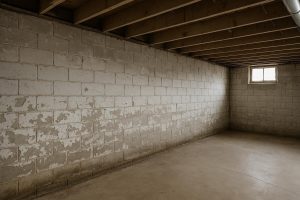
- Poured-concrete walls typically crack vertically under shrinkage or settlement; block foundations are more vulnerable to horizontal pressure from saturated clay.
- Interior and exterior repair methods each have a role; the correct choice depends on the leak type, not on cost alone.
- Structural cracks require professional assessment before any sealant is applied.
Definitions & scope
Basement leak repair covers any intervention that stops water from entering a below-grade living or storage space through the foundation walls, floor, wall-floor joint or pipe penetrations. It is distinct from cosmetic damp-proofing, which only slows vapour transmission, and from structural repair, which addresses load-bearing capacity. In practice the two often overlap: a crack that leaks also weakens the wall over time.
In Clearview Township, the relevant foundation types are poured concrete (most homes built after the 1970s), concrete block (common in older rural properties and farmhouses), and rubble or fieldstone (heritage homes in Stayner, Creemore and Nottawa). Each responds differently to water and to repair methods. The scope of this guide covers wall cracks, wall-floor joint seepage, floor seepage, window-well leaks and failed weeping tile, which together account for the majority of wet-basement complaints in the region. It does not cover sewer backup, which requires a licensed plumber and a separate scope of work.
Why this matters
Clearview Township’s geography creates conditions that accelerate basement water problems. The township straddles the Niagara Escarpment and the lower Simcoe County plain, so elevation, soil type and drainage patterns vary sharply within a few kilometres. Homes in Creemore and Dunedin sit on thin soils over fractured limestone, where groundwater moves quickly through bedrock joints. Homes on the lower plain near Stayner and Wasaga Beach Road sit on heavy clay-till that drains slowly and holds hydrostatic pressure against walls for days after a rain event.
Freeze-thaw cycling is a particular concern. The Escarpment area receives above-average snowfall, and temperatures fluctuate across the freezing point repeatedly through winter and early spring. Each freeze-thaw cycle can widen an existing crack by a small but cumulative amount. Over several seasons, a hairline shrinkage crack can become a channel for significant water entry. Left unaddressed, persistent moisture leads to efflorescence, mould growth, deterioration of concrete and, in block foundations, mortar joint erosion.
Seasonal cottage and hobby-farm properties in Clearview add another dimension: unoccupied homes in winter are not monitored, so a slow leak can saturate insulation, rot framing and promote mould for months before it is discovered. Early, correct repair is less disruptive and less costly than remediation after secondary damage has occurred. Understanding the available methods and their appropriate applications is the first step toward a durable solution.
Your options
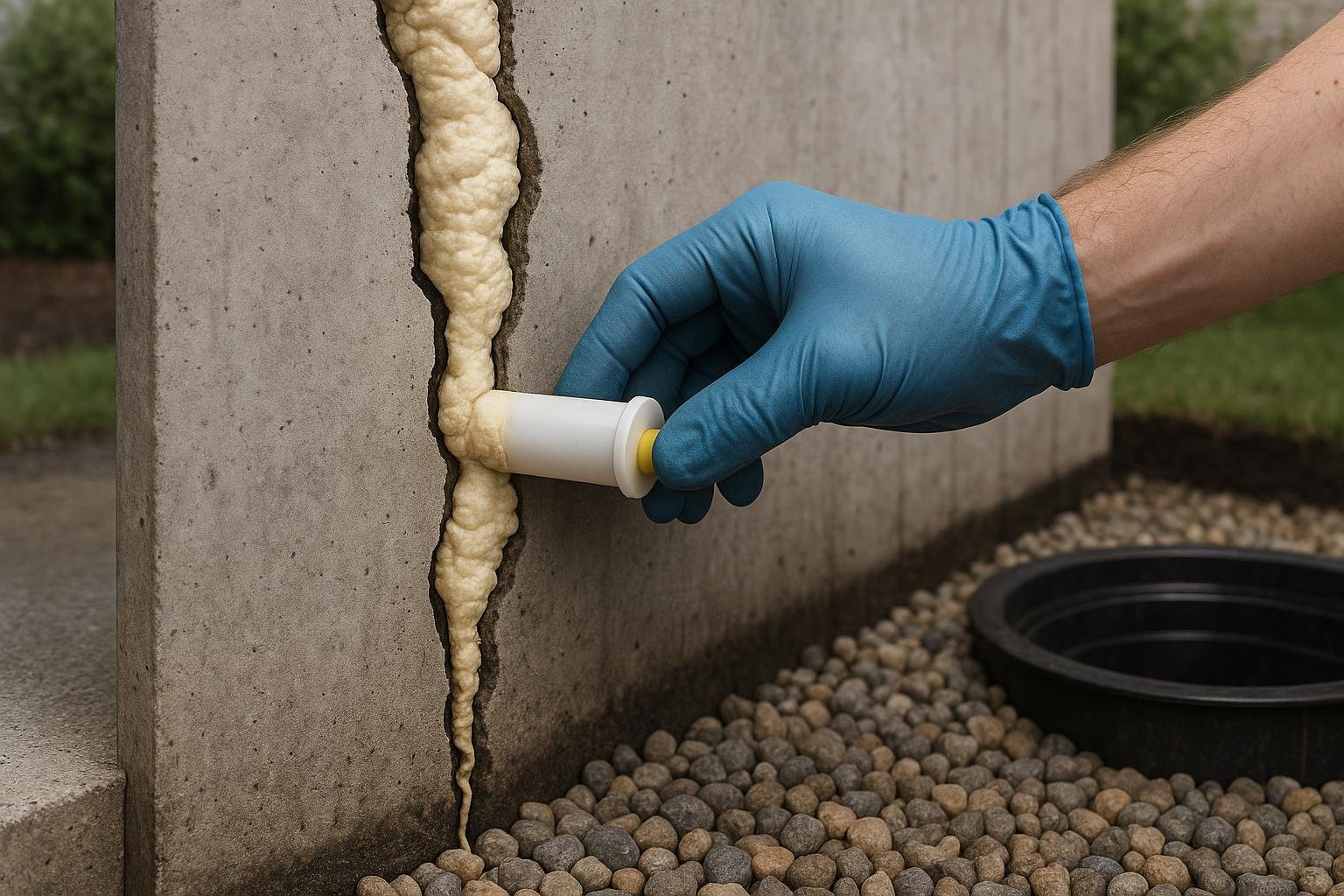
Polyurethane crack injection
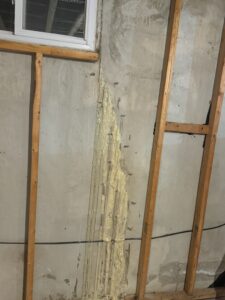
Polyurethane foam is injected under low pressure into a crack from the interior, filling the void and expanding to form a flexible, waterproof seal. The foam remains pliable after curing, which allows it to accommodate minor future movement without re-opening. This is the most common repair for active or dormant hairline-to-moderate vertical cracks in poured-concrete walls. See the polyurethane injection guide for a detailed explanation of the process.
Best for: Isolated vertical or diagonal shrinkage cracks in poured concrete where the wall is otherwise structurally sound.
Limitations: Not suitable for horizontal cracks, which indicate lateral soil pressure and may require structural intervention. Does not address the source of water if the crack is fed by failed weeping tile or a high water table. Block and stone foundations are generally not candidates because the void network is too irregular for reliable injection.
Exterior excavation and waterproofing membrane
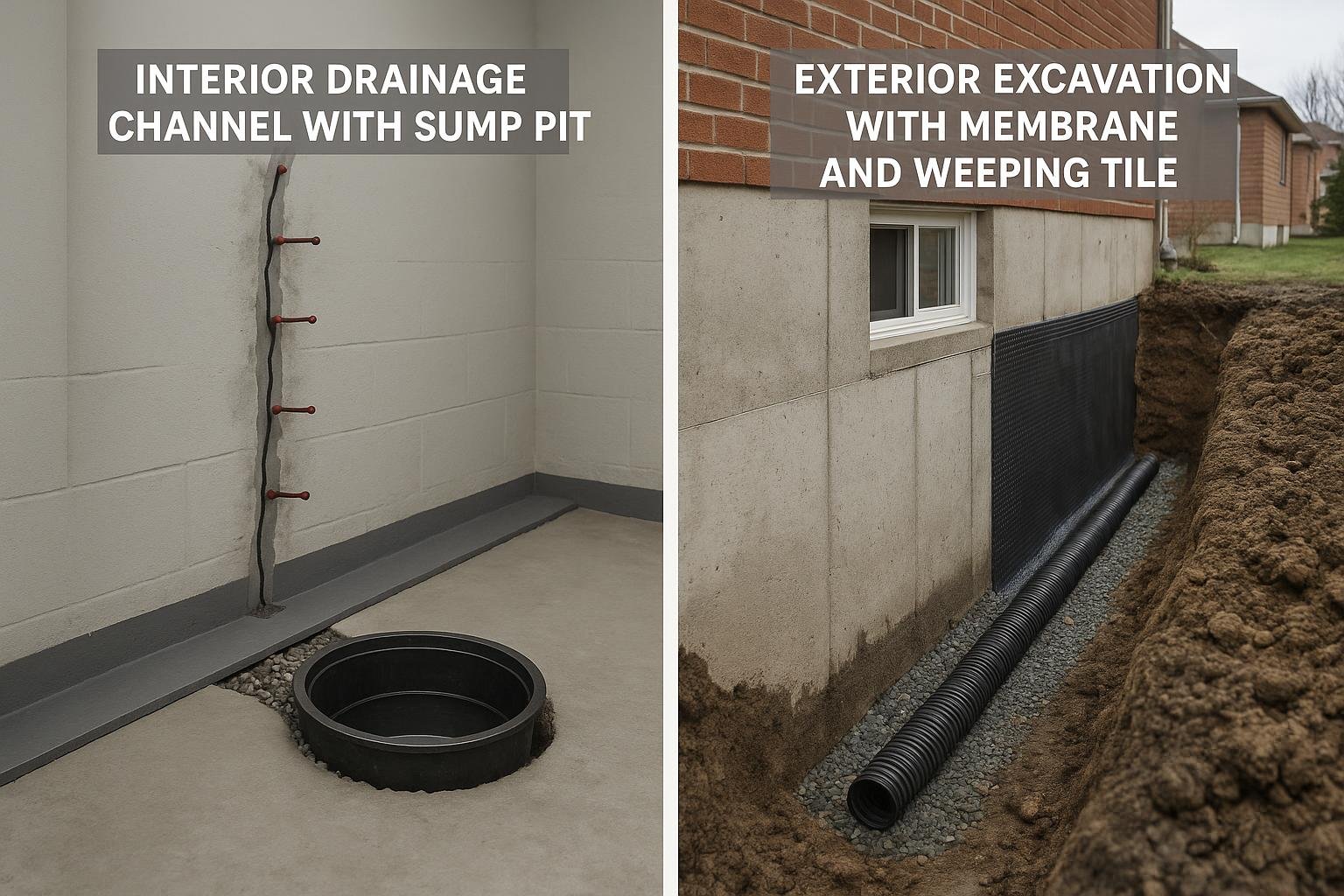
The soil is excavated to the footing along the affected wall. The foundation surface is cleaned, any cracks are repaired, and a waterproofing membrane (typically a rubberized asphalt or polymer sheet system) is applied to the exterior face. New drainage board and weeping tile are installed, and the trench is backfilled with clear stone. This is the most comprehensive single-wall repair available.
Best for: Walls with multiple cracks, failed original damp-proofing, or where interior injection has already been attempted and re-leaked. Also appropriate when weeping tile replacement is needed simultaneously.
Limitations: Requires excavation, which is disruptive, weather-dependent and more costly than interior methods. Landscaping, decks, driveways or finished grading adjacent to the wall must be removed and restored. Not always feasible on properties with very limited side-yard clearance.
Interior drainage system (perimeter channel and sump pump)
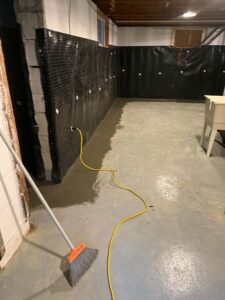
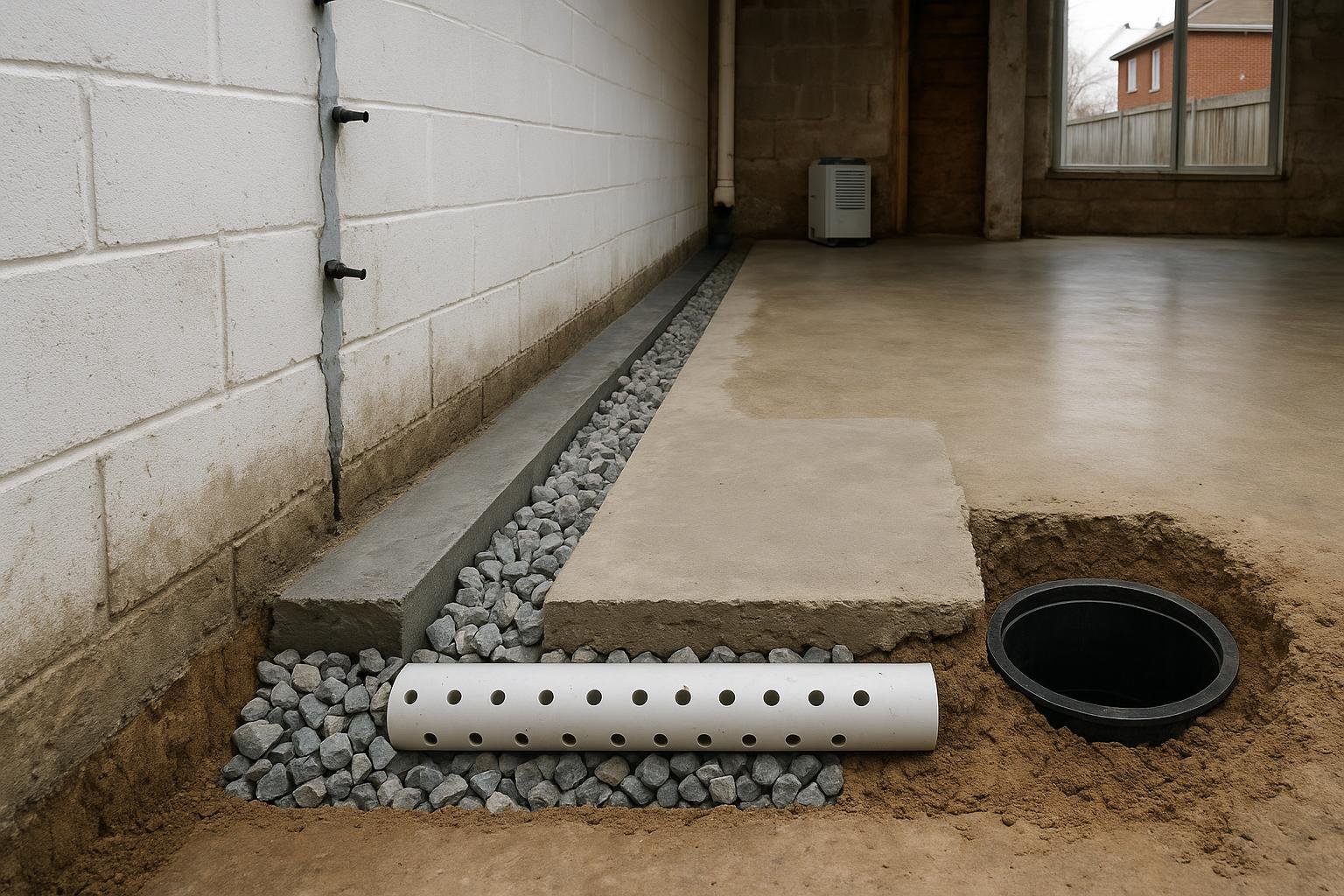
A channel is saw-cut into the concrete floor along the interior perimeter of the basement. A drainage membrane or pipe collects water that enters through the wall-floor joint or through the floor itself and directs it to a sump pit. A sump pump then discharges the water away from the foundation. This system manages water that enters rather than preventing entry at the wall face.
Best for: Homes where exterior excavation is not feasible, where the water table is persistently high, or where multiple walls are affected and full exterior work would be prohibitively disruptive. Also appropriate as a long-term management system after crack repairs are complete.
Limitations: Does not stop water from entering the wall; it intercepts it before it reaches the floor. The sump pump requires power and periodic maintenance. A battery backup is advisable, particularly for seasonal properties in Clearview that may lose power during storms.
Weeping tile repair or replacement
Original weeping tile (perforated pipe at the footing level) can collapse, root-intrude or silt up over decades. When it fails, groundwater that would normally drain away from the footing instead builds up and forces its way through the wall-floor joint or through the floor slab. Repair involves either spot-jetting and relining from the interior or full exterior excavation and replacement with modern perforated pipe and filter sock.
Best for: Homes where seepage is concentrated at the wall-floor joint across multiple walls, or where a camera inspection confirms blockage or collapse of the existing tile.
Limitations: Exterior replacement is a significant undertaking. Interior approaches can extend the life of a partially functional system but may not fully restore drainage capacity if the tile is severely damaged.
Hydraulic cement and surface sealants
Hydraulic cement expands as it sets and can plug an actively flowing crack or hole quickly. Surface sealants (crystalline or cementitious coatings) are applied to the interior wall face to reduce vapour transmission. Both are low-cost, accessible options.
Best for: Temporary emergency stops on actively flowing cracks while a permanent repair is arranged. Crystalline coatings can be appropriate on block or stone walls as a supplementary measure.
Limitations: Neither method addresses the cause of the leak. Hydraulic cement is brittle and will crack again if the foundation moves. Surface sealants applied to a wall under hydrostatic pressure will eventually fail or delaminate. These are not permanent solutions for recurring leaks. The guide on hydraulic cement vs crack injection explains the trade-offs in detail.
Epoxy crack injection
Epoxy is injected into a crack to bond the two faces together, restoring structural continuity. Unlike polyurethane, cured epoxy is rigid and bonds with high tensile strength.
Best for: Dormant (dry) structural cracks where restoring wall integrity is the primary goal, typically under guidance from a structural engineer.
Limitations: Rigid bond means the repair can re-crack if movement continues. Not appropriate for active (wet) cracks or for cracks that are still widening. Should not be used as a substitute for structural assessment when horizontal or stair-step cracking is present.
Options compared
| Method | Best for | Typical considerations | Durability / limitations |
|---|---|---|---|
| Polyurethane crack injection | Isolated vertical cracks, poured concrete | Interior access only; minimal disruption | Long-lasting if crack is stable; may re-open if movement continues |
| Exterior membrane & weeping tile | Multiple cracks, failed damp-proofing, new weeping tile needed | Excavation required; landscaping disruption | Most comprehensive; addresses root cause at the wall face |
| Interior drainage system | High water table, multiple walls, excavation not feasible | Sump pump maintenance; power dependency | Manages water indefinitely with maintenance; does not stop wall entry |
| Weeping tile replacement | Wall-floor joint seepage, confirmed tile failure | Camera inspection recommended first | Restores original drainage design; exterior work is disruptive |
| Hydraulic cement / surface sealant | Emergency stop, supplementary measure | Low cost, DIY-accessible | Temporary; will fail under sustained hydrostatic pressure |
| Epoxy crack injection | Dormant structural cracks, engineer-directed | Crack must be dry; engineer assessment advisable | High bond strength; rigid, can re-crack if movement persists |
No single method is universally superior. Polyurethane injection is the most efficient solution for a single, stable vertical crack in a poured-concrete wall and can be completed in a few hours with no excavation. Exterior membrane work is the most thorough option but involves the greatest disruption and cost. Interior drainage systems are the most practical long-term management tool when the water table is the primary driver. In Clearview, where soil conditions and foundation types vary considerably across the township, a proper site assessment is necessary before committing to any method. The interior crack injection vs exterior foundation crack repair guide provides a detailed side-by-side comparison.
How to choose
Use the following framework to narrow your options before speaking with a waterproofing contractor.
Choose polyurethane crack injection if you have one or two vertical cracks in a poured-concrete wall, the cracks are not horizontal, the wall shows no signs of bowing or displacement, and the leak is clearly associated with those specific cracks rather than with general seepage across the wall face or at the floor joint.
Choose exterior excavation and membrane if the wall has multiple cracks, the original damp-proofing has visibly failed (tar coating flaking off, no drainage board present), the weeping tile is confirmed failed or absent, or a previous interior injection repair has re-leaked. This is also the preferred approach when you are planning a major renovation that will already require excavation near the foundation.
Choose an interior drainage system if exterior excavation is not feasible due to a deck, driveway, neighbouring structure or very limited clearance; if seepage occurs across a wide area of the wall rather than at discrete cracks; or if the water table in your area of Clearview is persistently high and the goal is long-term management rather than a single repair event. A battery backup sump pump is strongly advisable for any Clearview property that is unoccupied for extended periods.
Choose weeping tile repair or replacement if seepage is concentrated at the wall-floor joint around most or all of the perimeter, a camera inspection confirms blockage or collapse, and the problem has worsened progressively over several years rather than appearing after a single event.
Consult a structural engineer first if you observe horizontal cracking, wall bowing, stair-step cracking in block or stone foundations, or any crack that has changed width or length since you first noticed it. Waterproofing a structurally compromised wall without addressing the structural issue first can mask a worsening problem. The guide on how to tell if a foundation crack is structural outlines the key warning signs.
Costs & timelines
No verified current price data specific to Clearview Township has been supplied to this guide. The following describes cost drivers only; actual quotes will vary by contractor, site conditions and scope.
| Cost driver | Why it affects price | Relative impact |
|---|---|---|
| Method selected | Interior injection requires no excavation; exterior work requires equipment, labour and backfill | High |
| Number of cracks or linear metres of wall | Each additional crack or wall section adds material and labour | High |
| Foundation type | Block and stone foundations are more complex to seal than poured concrete | Medium |
| Excavation depth and access | Deeper footings and restricted access (decks, driveways) increase excavation cost | High |
| Weeping tile condition | Replacing failed tile adds material, labour and disposal cost | Medium-high |
| Sump pump requirement | New pit, pump and electrical connection add to interior system cost | Medium |
| Landscaping restoration | Replacing sod, gardens or hardscaping after exterior work adds cost | Variable |
Timelines also vary: polyurethane injection on a single crack can typically be completed in a half-day. An interior drainage system installation generally takes one to three days depending on basement perimeter. Full exterior excavation on one wall typically takes one to three days for the waterproofing work itself, plus additional time for backfill settlement and landscaping restoration. Seasonal timing matters in Clearview: frozen ground limits exterior excavation in winter, and contractors are typically busiest in spring and early summer when post-thaw leaks are discovered. For general cost context applicable to the broader Ontario region, see the Basement Waterproofing Cost in Southern Ontario guide.
Risks & common mistakes
The most consequential mistake homeowners make is treating a symptom rather than a cause. Applying hydraulic cement or a paint-on sealant to a wall that is leaking because of failed weeping tile or a high water table will not produce a lasting result. The water will find another path, often through the floor or a different section of wall, and the secondary damage may be worse than the original leak.
A second common error is delaying repair on the assumption that a small leak is not urgent. In Clearview’s climate, a crack that admits water in spring will be subjected to freeze-thaw cycling the following winter. Water that enters a crack, freezes and expands exerts pressure that widens the crack further. What begins as a minor seep can become a significant structural concern over two or three seasons.
Misidentifying crack type is another risk. Horizontal cracks in poured-concrete or block walls indicate lateral soil pressure and are potentially structural. They should not be injected and sealed without a structural assessment, because sealing the crack does not relieve the pressure causing it. Homeowners and some contractors occasionally inject horizontal cracks as if they were shrinkage cracks, which can mask ongoing wall movement. The guide on types of foundation cracks explains what each pattern means.
For seasonal properties in Clearview, failing to install a battery backup sump pump is a recurring problem. A power outage during a spring storm, combined with an unoccupied property, can result in a flooded basement that goes undetected for days. Smart monitoring devices that send alerts when water is detected or when the pump fails are a worthwhile addition for any cottage or seasonal home. The guide on sump pumps for seasonal and unoccupied cottages covers backup and monitoring options in detail.
Finally, choosing a contractor based on price alone without verifying experience with the specific foundation type and soil conditions in the area is a risk. Methods that work well on Toronto poured-concrete walls may not translate directly to Clearview’s mix of block, stone and poured foundations on variable soils. See the guide on how to choose a reliable waterproofing contractor for a practical checklist.
How the process works
- Inspection and diagnosis: A technician examines the interior and, where accessible, the exterior of the foundation. The location, pattern and type of cracks are recorded. Moisture mapping, efflorescence patterns and any visible weeping tile access points inform the diagnosis. The Basement Leak Diagnostic Tool can help homeowners document symptoms before the visit.
- Method recommendation: Based on the inspection findings, the appropriate repair method or combination of methods is recommended. For complex situations, a structural engineer referral may be suggested before waterproofing proceeds.
- Site preparation: Interior work requires clearing the affected area of stored items and, for drainage system installation, protecting finished surfaces. Exterior work requires marking utilities, obtaining any required permits under the Ontario Building Code, and setting up excavation equipment.
- Repair execution: Crack injection ports are installed and foam or epoxy is injected. Exterior membrane is applied and drainage components are installed. Interior drainage channels are saw-cut, drainage pipe or membrane is placed, and the sump pit is formed and fitted.
- Backfill, restoration and cleanup: Exterior trenches are backfilled with clear stone and native soil in layers. Interior concrete is patched over drainage channels. The site is cleaned and any disturbed landscaping is noted for restoration.
- Testing and documentation: Where possible, the repair is tested with water or inspected under rain conditions. The scope of work, materials used and warranty terms are documented in writing.
- Homeowner briefing: The technician explains what was done, what maintenance is required (sump pump testing, keeping weeping tile outlets clear, maintaining positive grading) and what signs would indicate a need for follow-up.
Frequently asked questions
What causes most basement leaks in Clearview Township?
The most common causes in Clearview are shrinkage cracks in poured-concrete walls, failed or silted weeping tile, and wall-floor joint seepage driven by hydrostatic pressure from clay-till soils. The township’s elevation near the Niagara Escarpment means spring snowmelt volumes can be significant, and the freeze-thaw cycle is more pronounced than in lower-lying parts of Simcoe County. Limestone bedrock outcrops in the Creemore and Duntroon areas can also channel groundwater toward foundations in ways that are not obvious from surface inspection.
Can I repair a basement crack myself in Clearview?
DIY crack injection kits are available and can be effective on small, stable, vertical hairline cracks in poured concrete. However, correctly identifying the crack type, confirming it is not structural, and achieving full void fill with consistent pressure requires practice. For any crack wider than a few millimetres, any horizontal crack, or any crack that has changed size, professional assessment is advisable. The guide on DIY vs professional crack injection covers the trade-offs in detail.
How do I know if my weeping tile has failed?
Indicators include seepage concentrated at the wall-floor joint around most of the perimeter rather than at a specific crack, a basement that was dry for years and has progressively worsened, and visible efflorescence or mineral staining at the base of walls. A camera inspection of the weeping tile cleanout (if one exists) can confirm blockage or collapse. Not all older Clearview homes have accessible cleanouts, in which case the diagnosis relies on symptom patterns and, if necessary, a test excavation.
Is exterior waterproofing always better than interior?
Exterior waterproofing addresses the problem at the wall face and is the most thorough approach for a wall with multiple cracks or failed original damp-proofing. However, it is not always the right choice. When excavation is not feasible, when the water table is the primary driver, or when the goal is long-term management of a high-water-table site, interior drainage is the more practical solution. The interior vs exterior waterproofing comparison explains the decision factors in detail.
Does a basement leak affect my home insurance in Ontario?
Most standard Ontario home insurance policies do not cover damage from a gradual or ongoing leak, including seepage through foundation cracks or failed weeping tile. Sudden and accidental water damage may be covered depending on the policy. Some insurers offer overland water or sewer backup endorsements as add-ons. The guide on home insurance and basement waterproofing in Ontario provides a more detailed overview of what is and is not typically covered.
How long does a polyurethane crack injection repair last?
A properly executed polyurethane injection into a stable crack in a poured-concrete wall can last for many years. The foam remains flexible and accommodates minor movement. The repair is more likely to re-open if the crack was caused by ongoing settlement or if lateral soil pressure continues to act on the wall. If the same crack re-leaks after injection, the underlying cause should be investigated rather than simply re-injecting. The guide on whether crack injection works addresses longevity and failure modes.
Do I need a permit for basement waterproofing in Clearview?
The Ontario Building Code governs foundation work, and the Township of Clearview administers building permits locally. Exterior excavation that affects the structural foundation, underpinning, and certain drainage alterations typically require a permit. Interior crack injection and interior drainage system installation may not require a permit in all cases, but requirements should be confirmed with the Township before work begins. This guide does not verify current local permit requirements; always check directly with the municipality.
What should I do if my basement floods during spring snowmelt?
Remove standing water as quickly as possible using a wet-dry vacuum or submersible pump to limit damage to framing, insulation and stored items. Document the water entry points with photographs before cleaning up. Do not apply hydraulic cement or sealant to an actively flowing crack under pressure without understanding that this is a temporary measure. Once the immediate event has passed, arrange a professional inspection to identify the cause before the next rain or melt event. The Simcoe County basement waterproofing guide provides broader regional context.
Are older farmhouses and stone-foundation homes in Clearview repairable?
Yes, though the approach differs from modern poured-concrete foundations. Rubble stone and brick foundations cannot be crack-injected in the same way. Interior drainage systems are often the most practical long-term solution, combined with repointing deteriorated mortar joints and improving exterior grading and drainage. Crystalline waterproofing coatings applied to the interior face can reduce vapour transmission but will not hold against sustained hydrostatic pressure on their own. A site-specific assessment is essential for heritage or older rural foundations.
How does freeze-thaw cycling affect foundation cracks in Clearview?
Water that enters a crack and then freezes expands by approximately nine percent in volume, exerting pressure on the surrounding concrete. Repeated cycles progressively widen the crack. Clearview’s elevation near the Escarpment means more freeze-thaw events per season than lower-lying areas. A crack that is sealed before winter arrives is not subject to this mechanism, which is one reason early repair is more cost-effective than waiting. The guide on freeze-thaw foundation cracks in cottage country covers this process in detail.
If you are dealing with a wet basement in Clearview Township and are not sure which repair method applies to your situation, DryShield Services has served Simcoe County and the surrounding region for over 25 years. Contact us to arrange an inspection, or use the Basement Leak Diagnostic Tool to document your symptoms before we visit. Our work is backed by a lifetime transferable warranty on qualifying repairs.