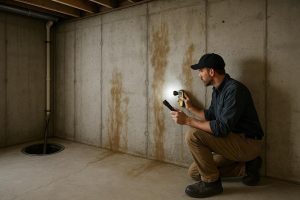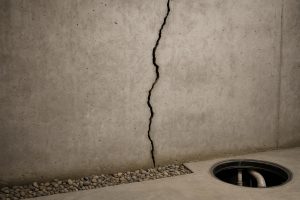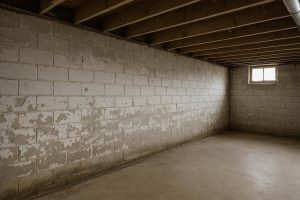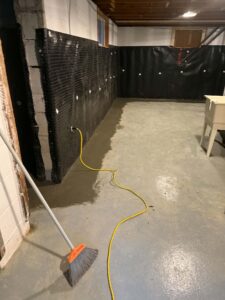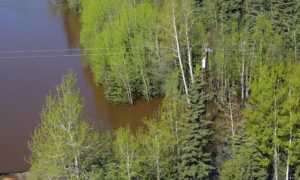
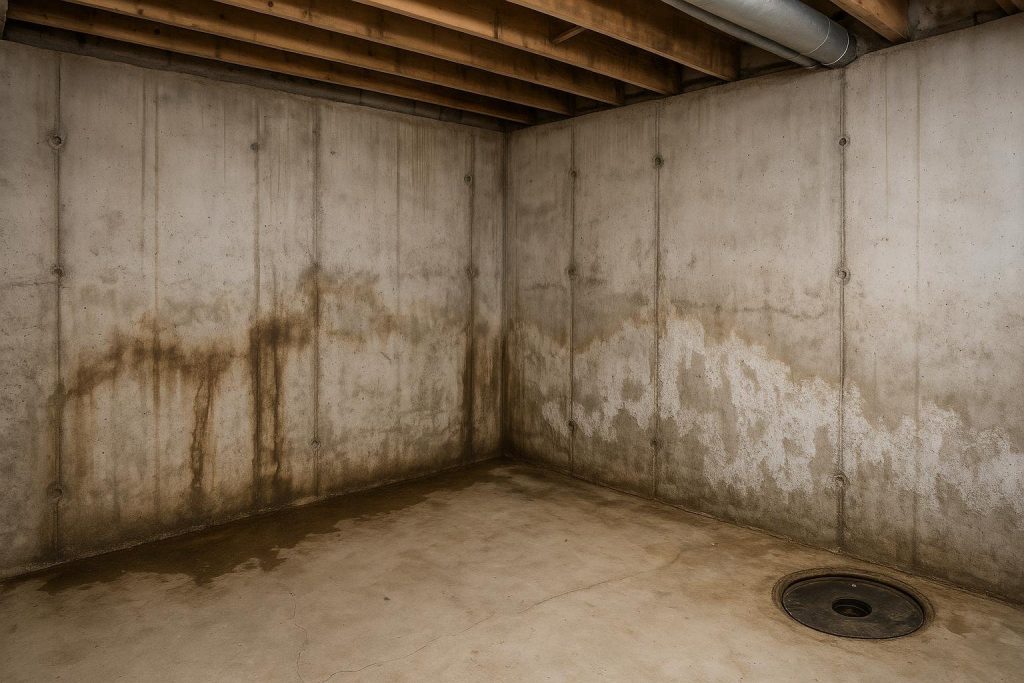
Basement leak repair in Oshawa typically involves identifying whether water is entering through foundation cracks, failing weeping tile, or hydrostatic pressure from the clay till and Lake Ontario shoreline water table that characterise much of the city’s soil profile. The right repair method depends on where water enters, how severe the intrusion is, and the age and construction type of your foundation. This guide walks through every major option so you can make an informed decision before calling a contractor.
- Oshawa’s clay-till soils and proximity to Lake Ontario keep the water table elevated, increasing hydrostatic pressure on basement walls year-round.
- Oshawa Creek and its tributaries can raise local groundwater quickly after rain or snowmelt, accelerating water ingress.
- Repair methods range from minimally invasive polyurethane crack injection to full exterior excavation and membrane application.
- Interior drainage systems manage water that cannot be stopped at the source; exterior systems address the root cause.
- Choosing the wrong method wastes money; a proper diagnosis before any repair is essential.
Definitions & scope
Basement leak repair covers any professional intervention that stops or manages water entering a below-grade living or storage space. In Oshawa, this spans a wide range of techniques because the city’s housing stock includes post-war poured-concrete bungalows in the south end, older block-foundation homes near downtown, and newer poured-wall construction in developing areas north of Taunton Road.
The term “waterproofing” is sometimes used interchangeably with “leak repair,” but there is a meaningful distinction. Leak repair addresses an active, identifiable entry point. Waterproofing is a broader system that prevents future water entry even when no active leak is present. Many Oshawa homeowners need both: an immediate repair to stop current damage and a longer-term system to prevent recurrence given the region’s soil and climate conditions.
Foundation crack repair, interior drainage, exterior membrane application, weeping tile replacement, and sump pump installation all fall under the umbrella of basement leak repair. This guide covers each in the context of Oshawa’s specific conditions. For a broader overview of how these methods relate to each other, see Waterproofing vs Foundation Repair: Which Does Your Basement Actually Need?
Why this matters
Oshawa sits on the north shore of Lake Ontario in Durham Region. Hydrostatic pressure from Lake Ontario’s shoreline water table and the clay till around Oshawa Creek are recognised factors affecting basement waterproofing in the city. Clay soils absorb water slowly and hold it against foundation walls for extended periods after rainfall, unlike sandy soils that drain quickly. This sustained pressure is one of the primary reasons Oshawa basements develop cracks and seepage even in homes that were dry for decades.
Freeze-thaw cycling compounds the problem. Ontario winters subject foundation walls to repeated expansion and contraction. Hairline shrinkage cracks that were once cosmetic can widen over several seasons until they become active water entry points. The spring freshet, when accumulated snowpack melts rapidly, is historically the highest-risk period for basement flooding across Durham Region.
Unaddressed water intrusion causes progressive damage: efflorescence and mineral staining on walls, deterioration of mortar joints in block foundations, mold growth on framing and insulation, and in severe cases, lateral cracking from soil pressure. Early repair is almost always less costly than remediation after structural damage has occurred. For context on the broader Durham Region picture, see Basement Waterproofing in Durham Region: Local Causes, Solutions & Service Areas.
Your options
Polyurethane crack injection
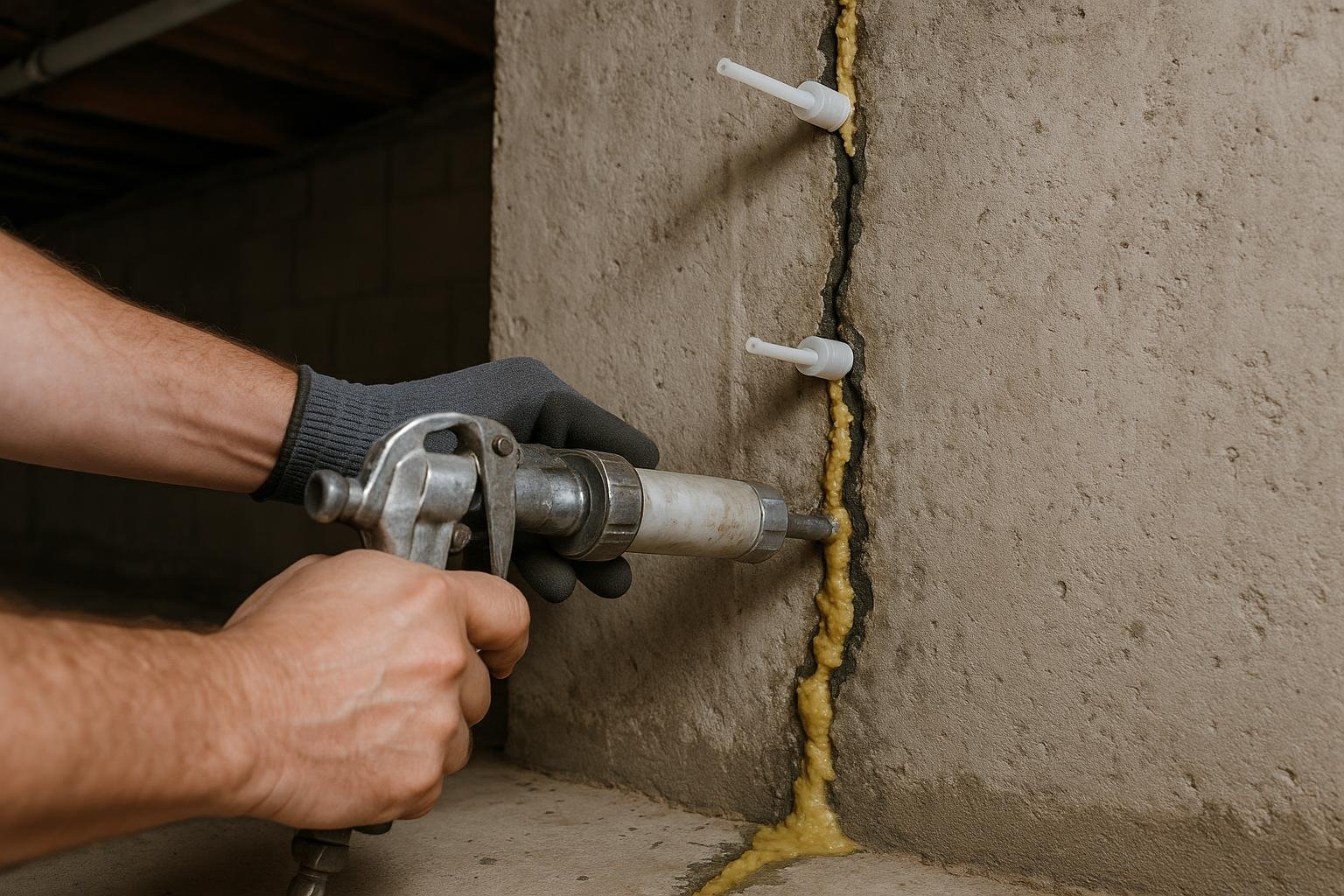
Polyurethane crack injection is a minimally invasive repair method applied from inside the basement. A technician drills ports along the crack at regular intervals, injects a low-viscosity polyurethane resin under pressure, and the foam expands to fill the crack from face to exterior. When cured, the flexible foam moves slightly with the concrete, maintaining the seal through seasonal temperature changes.
Best for: Active or dormant vertical and diagonal cracks in poured-concrete walls where the crack is isolated and the surrounding wall is otherwise sound. Particularly well-suited to hairline and moderate cracks caused by shrinkage or minor settlement.
Limitations: Does not address the source of hydrostatic pressure. If the surrounding soil remains saturated and the weeping tile is failed, a new crack may form nearby. Not suitable for horizontal cracks, which indicate lateral soil pressure and may require structural assessment. See Does Crack Injection Work? A Complete Homeowner’s Guide for a detailed breakdown.
Interior drainage system (interior weeping tile)
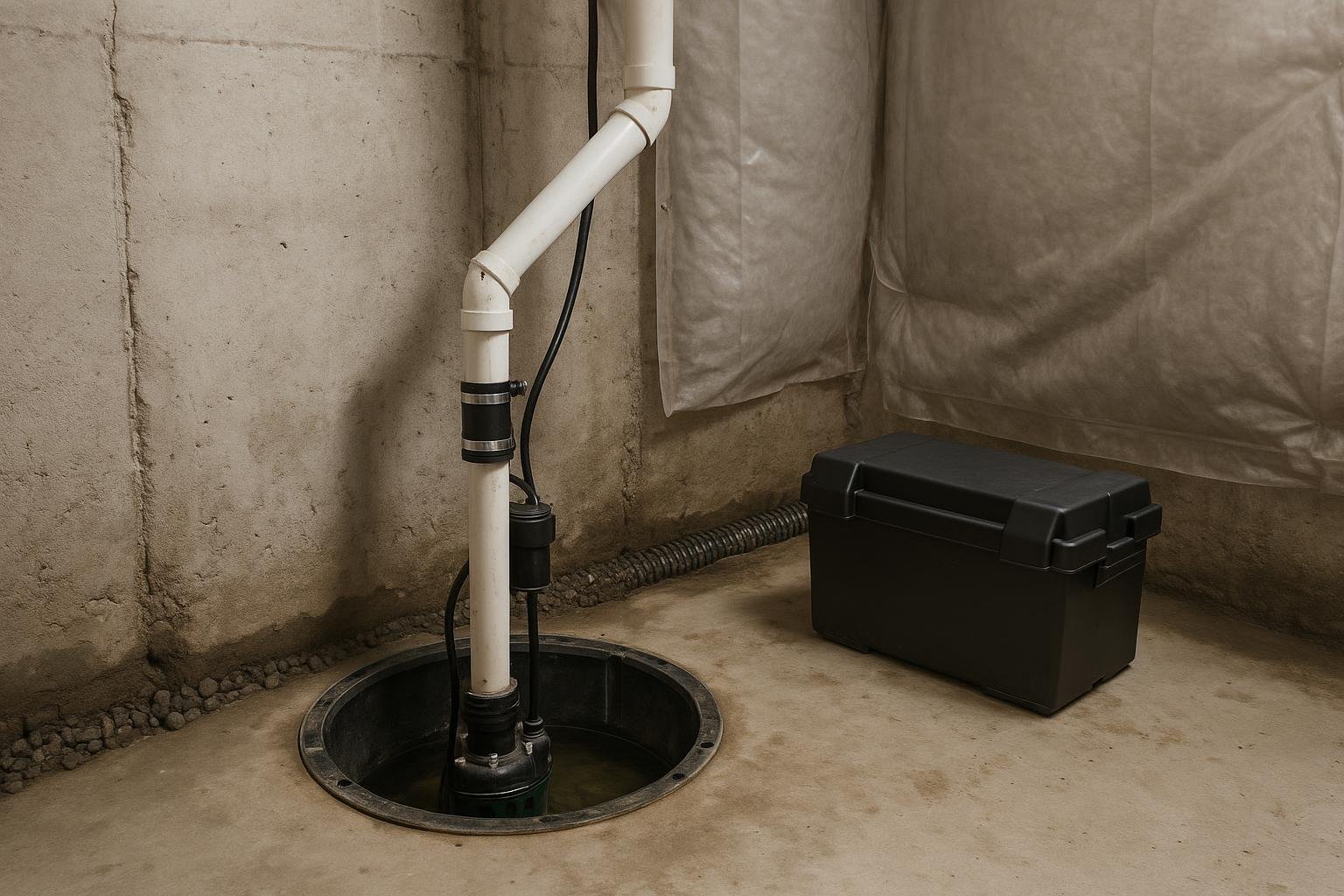
An interior drainage system involves cutting a channel around the perimeter of the basement floor, installing a perforated pipe at footing level, and routing collected water to a sump pit where a pump discharges it away from the foundation. A drainage board or membrane is often installed against the wall above the pipe to direct seeping water downward rather than allowing it to travel across the floor.
Best for: Homes where exterior excavation is not practical due to cost, landscaping, or proximity to neighbouring structures. Also appropriate when multiple entry points exist along the perimeter and individual crack repairs would be impractical.
Limitations: Manages water rather than stopping it at the source. The wall continues to be exposed to moisture on the exterior side. Requires a functioning sump pump; pump failure during a storm event can result in flooding. See Internal & Interior Basement Waterproofing Solutions for service details.
Exterior waterproofing and membrane application
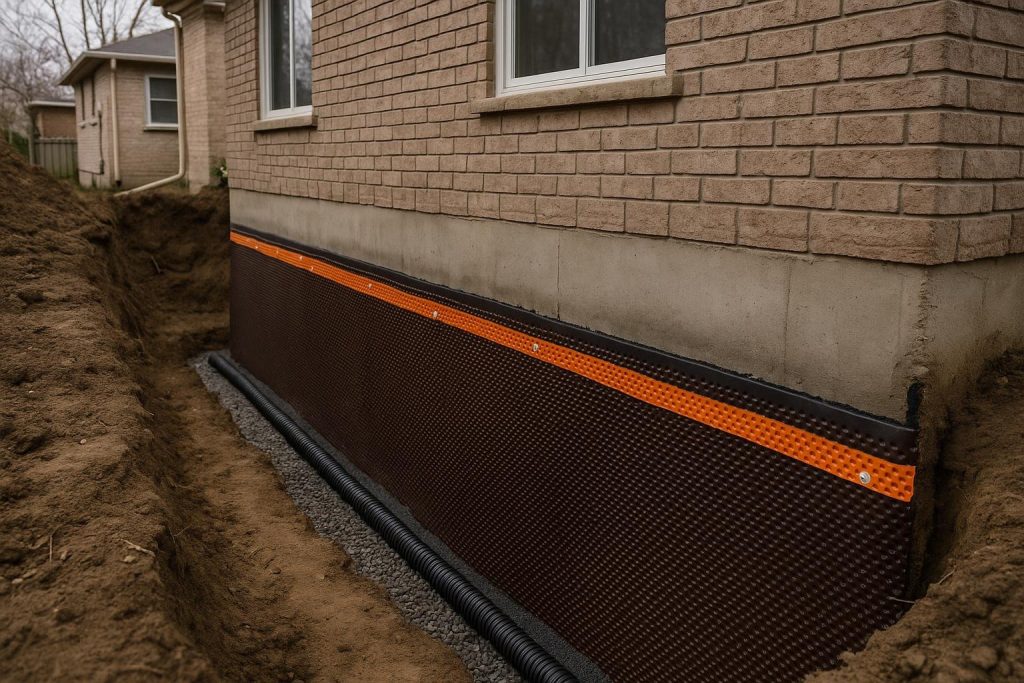
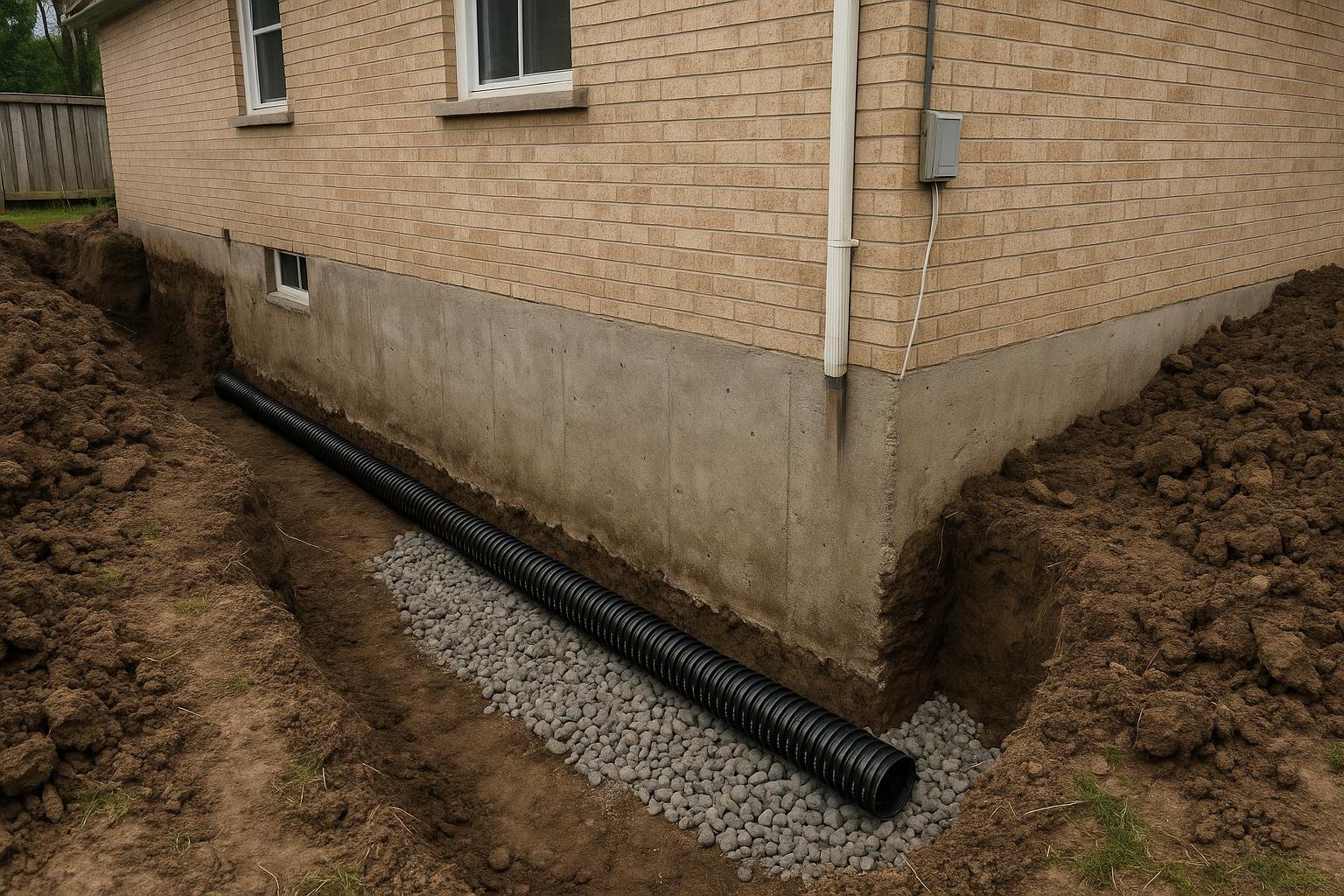
Exterior waterproofing requires excavating the soil around the foundation down to the footing, cleaning the wall surface, applying a waterproof membrane (typically a rubberized asphalt or polymer-modified coating), and installing a drainage board and new weeping tile before backfilling. This is the most comprehensive repair because it addresses water at the point of contact with the foundation exterior.
Best for: Homes with multiple or recurring cracks, failed original waterproofing membrane, or persistent seepage that interior methods have not resolved. Also the preferred approach when the original weeping tile is collapsed or blocked.
Limitations: The most disruptive and costly option. Excavation affects landscaping, decks, driveways, and utilities near the foundation. Not always feasible on properties with very limited side-yard clearance. See Exterior Basement Waterproofing Services for an overview.
Weeping tile repair or replacement
Original weeping tile in many Oshawa homes built before the 1980s consists of clay or concrete sections that can collapse, root-intrude, or silt up over decades. Replacement involves excavating to footing depth, removing the failed tile, and installing modern perforated PVC pipe surrounded by clear stone and filter fabric. This can be done as a standalone repair or as part of a full exterior waterproofing project.
Best for: Homes where a camera inspection confirms the existing weeping tile is blocked or collapsed, and where persistent perimeter seepage or floor-edge water entry is present.
Limitations: Requires excavation. If the foundation wall membrane is also deteriorated, addressing only the weeping tile may not fully resolve seepage. See Weeping Tile Installation & Replacement for method details.
Sump pump installation or upgrade
A sump pump collects groundwater that reaches the sump pit and discharges it away from the foundation through a discharge line. In Oshawa, where the water table can rise sharply after spring snowmelt or heavy rain, a properly sized and maintained sump pump is often the last line of defence against basement flooding. Battery backup systems maintain pump operation during power outages, which frequently accompany severe storms.
Best for: Homes that already have or are installing an interior drainage system, and as a standalone upgrade for homes with an existing pit but an aging or undersized pump.
Limitations: A sump pump does not stop water from entering the wall; it only removes water that has already reached the pit. Pump failure or power loss without a backup can result in rapid flooding. See Sump Pump Installation Services for details.
Window well drainage repair
Basement windows at or near grade can allow surface water to pool in the well and seep through the window frame or surrounding masonry. Repairs include installing or deepening the window well, improving the gravel drainage bed at the base, adding a clear polycarbonate cover, and in some cases connecting the well drain to the interior drainage system.
Best for: Homes where water entry is clearly concentrated at or around a basement window, particularly after heavy rainfall rather than during dry periods.
Limitations: Addresses only the window well entry point. If the broader foundation or weeping tile is also compromised, additional repairs will be needed. See Fixing Window Well Flooding in Your Basement for practical steps.
Options compared
| Method | Best for | Typical considerations | Durability / limitations |
|---|---|---|---|
| Polyurethane crack injection | Isolated vertical / diagonal cracks in poured concrete | Interior access only; minimal disruption | Long-lasting when crack is stable; new cracks can form elsewhere if pressure source is unresolved |
| Interior drainage system | Multiple entry points; excavation not feasible | Requires sump pump; some floor demolition | Ongoing management; wall exterior remains exposed to moisture |
| Exterior waterproofing + membrane | Recurring or severe seepage; failed original membrane | Excavation required; landscaping impact | Most comprehensive; addresses root cause at the wall exterior |
| Weeping tile replacement | Confirmed collapsed or blocked drain tile | Excavation required; often combined with exterior membrane | Restores perimeter drainage; modern PVC is durable |
| Sump pump installation / upgrade | High water table; existing drainage system | Requires pit; discharge line routing | Dependent on power and mechanical reliability; backup recommended |
| Window well drainage repair | Water entry concentrated at window | Minimal disruption; targeted fix | Effective for isolated window entry; does not address broader wall seepage |
The table above illustrates that no single method is universally superior. Crack injection is the least disruptive and most cost-effective when the problem is genuinely limited to one or two isolated cracks. Interior drainage is the practical choice when excavation is cost-prohibitive or physically constrained. Exterior waterproofing provides the most durable outcome but carries the highest upfront cost and disruption. In practice, many Oshawa homes benefit from a combination: for example, crack injection for an active crack plus a sump pump upgrade to manage seasonal groundwater rise.
 How to choose
The decision framework below is based on the nature and location of the water entry, not on budget alone. Choosing a cheaper method that does not match the actual problem typically leads to repeat repairs.
Choose polyurethane crack injection if: You have one or two clearly visible vertical or diagonal cracks in a poured-concrete wall, water entry is concentrated at those cracks, and a visual inspection shows no signs of lateral wall movement or widespread seepage along the floor-wall joint.
Choose an interior drainage system if: Water enters along the floor-wall joint at multiple points, exterior excavation is not feasible due to cost or site constraints, or previous crack repairs have not resolved the problem. Pair this with a sump pump and battery backup.
Choose exterior waterproofing if: You have recurring seepage despite prior interior repairs, the original waterproofing membrane is visibly failed or absent, or a camera inspection confirms collapsed weeping tile. This is also the appropriate choice before finishing a basement, since it addresses the root cause rather than managing symptoms.
Choose weeping tile replacement if: A drain camera inspection confirms the existing tile is blocked, crushed, or root-intruded, and perimeter seepage or floor-edge water entry is present. This is almost always combined with exterior membrane work.
Choose sump pump installation or upgrade if: Your existing pump is more than ten years old, has failed during a storm, or you are installing an interior drainage system that requires a discharge point. A battery backup is strongly advisable in Oshawa given the frequency of storm-related power outages.
Choose window well repair if: Water entry is clearly linked to rainfall events and is concentrated at or immediately below a basement window. Confirm by checking whether the well fills with water during rain before committing to broader repairs.
If you are uncertain which entry point is responsible, a professional leak diagnostic is the appropriate first step. See Basement Leak Diagnostic Tool or review The 2026 Wet Basement and Basement Leak Master Guide: Diagnosis, Causes & Fixes.
Costs & timelines
No verified current price quotes for Oshawa are available to this guide. The following describes cost drivers ranked by their typical influence on total project cost. For approximate Ontario-wide ranges, consult Basement Waterproofing Cost in Southern Ontario (2026).
| Cost driver | Why it matters | Typical direction of influence |
|---|---|---|
| Method selected | Exterior excavation is significantly more labour- and equipment-intensive than interior injection | Crack injection lowest; exterior waterproofing highest |
| Linear footage of wall affected | Interior drainage and exterior membrane costs scale with the length of wall treated | More footage = higher cost |
| Depth of foundation | Deeper foundations require more excavation volume and shoring | Deeper = higher cost |
| Site access constraints | Narrow side yards, decks, or buried utilities increase excavation complexity | Constrained access = higher cost |
| Foundation material | Block foundations may require additional preparation before membrane application | Block typically higher than poured concrete |
| Sump pump and backup system | Battery backup and alarm systems add to the base pump cost | Adds to interior system total |
Timeline varies by method. Crack injection on a single crack is typically completed in a few hours. Interior drainage installation on a full perimeter may take two to three days. Exterior excavation projects depend on wall length, depth, and site conditions and can range from one to several days of active work, plus time for backfill settlement. Permits may be required for excavation work under the Ontario Building Code; confirm requirements with the City of Oshawa before work begins.
Risks & common mistakes
The most common mistake Oshawa homeowners make is treating a symptom rather than the cause. Applying hydraulic cement or a surface sealant to a leaking crack can temporarily stop visible water but does not address the hydrostatic pressure driving water through the wall. When pressure builds again, water typically finds a new path. See Hydraulic Cement vs Crack Injection: Which Fix Actually Lasts? for a direct comparison.
A second common error is skipping a proper diagnosis. Homeowners who assume all basement water comes from wall cracks sometimes invest in crack injection only to discover the primary entry point is the floor-wall joint or a failed weeping tile. A thorough inspection before committing to a repair method prevents this outcome.
Delaying repair is also a significant risk. In Oshawa’s clay-soil environment, an active crack that allows water in during spring thaw will typically worsen each season as freeze-thaw cycling widens it. Mold can establish within 24 to 48 hours of sustained moisture on organic materials, according to Health Canada guidance, making prompt action important for indoor air quality as well as structural integrity.
DIY crack injection kits are available at hardware stores, but improper port spacing, insufficient injection pressure, or using the wrong resin type can result in an incomplete fill that fails within one or two seasons. Professional injection uses calibrated equipment and verified materials. See DIY Foundation Crack Repair Kit vs Professional Crack Injection: Which Should You Choose? for an honest comparison.
Finally, ignoring horizontal cracks is a serious risk. Horizontal cracking in a basement wall indicates lateral soil pressure and can signal structural compromise. This is not a candidate for injection alone and warrants assessment by a qualified professional before any repair is attempted. See Bowing Basement Foundation Wall: Causes, Urgency and Fixes.
How the process works
- Initial inspection and diagnosis: A technician examines the interior and, where accessible, the exterior of the foundation. They identify crack types, entry points, efflorescence patterns, and any signs of structural movement. The water table context and soil conditions around Oshawa Creek and the Lake Ontario shoreline are considered in the assessment.
- Method recommendation and scope definition: Based on findings, the contractor recommends one or more repair methods and defines the scope: which walls, which cracks, whether weeping tile or a sump pump is involved, and whether permits are required.
- Site preparation: For interior work, furniture and stored items are cleared from the affected area. For exterior work, landscaping, downspout extensions, and any structures near the excavation zone are addressed before digging begins.
- Repair execution: The selected method is applied. Crack injection ports are drilled and filled; drainage channels are cut and pipe installed; or excavation proceeds and membrane is applied. Each stage follows the contractor’s documented process.
- Drainage and pump verification: Where a sump pump is part of the system, it is tested under simulated load. Discharge routing is confirmed to direct water away from the foundation and comply with local drainage requirements.
- Restoration and cleanup: Interior concrete is patched over drainage channels. Exterior backfill is compacted and graded to slope away from the foundation. Disturbed landscaping is restored to the extent agreed in the scope.
- Warranty documentation: A written warranty is issued. DryShield offers a lifetime transferable warranty on qualifying work; confirm coverage details at Lifetime Transferable Warranty.
Frequently asked questions
What causes most basement leaks in Oshawa?
The most common causes in Oshawa are hydrostatic pressure from clay-till soils and the elevated Lake Ontario shoreline water table, shrinkage cracks in poured-concrete walls that have widened through freeze-thaw cycling, and failed or silted weeping tile in older homes. Oshawa Creek and its tributaries can raise local groundwater quickly after heavy rain, accelerating seepage through any existing vulnerability in the foundation.
Is crack injection a permanent fix?
Polyurethane crack injection provides a durable, flexible seal that is designed to last for the life of the foundation when the crack is stable and the surrounding wall is sound. However, if the underlying cause of cracking, such as ongoing settlement or unresolved hydrostatic pressure, is not addressed, new cracks can form in adjacent areas. Injection fixes the crack that is treated; it does not prevent new cracks from forming elsewhere.
How do I know if I need interior or exterior waterproofing?
Interior drainage manages water that has already entered the wall cavity and directs it to a sump. Exterior waterproofing stops water at the foundation surface before it contacts the wall. If seepage is limited to one or two cracks and the weeping tile is functional, interior crack repair may be sufficient. If seepage is widespread, the weeping tile is failed, or the original membrane is deteriorated, exterior work is the more appropriate solution. A professional inspection is the most reliable way to determine which applies to your home.
Will my home insurance cover basement leak repair in Oshawa?
Standard Ontario home insurance policies typically do not cover gradual water seepage or damage caused by a failure to maintain the foundation. Sudden and accidental water damage from a specific event may be covered under some policies, but coverage varies significantly by insurer and policy type. Review your policy and speak with your broker before assuming coverage. See Does Home Insurance Cover Basement Waterproofing & Foundation Cracks in Ontario? for a detailed overview.
How long does basement leak repair take in Oshawa?
Timeline depends on the method. A single crack injection is typically completed in a few hours. Interior drainage installation on a full basement perimeter generally takes two to three days. Exterior excavation and membrane application varies with wall length, foundation depth, and site access, and may take from one day for a short section to several days for a full perimeter. Your contractor should provide a specific timeline as part of the written scope.
Do I need a permit for basement waterproofing in Oshawa?
Permit requirements depend on the scope of work. The Ontario Building Code requires permits for structural foundation repair and excavation work. Interior crack injection and sump pump installation may not require a permit, but exterior excavation typically does. Confirm current requirements with the City of Oshawa’s building department before work begins, as requirements can change and the contractor’s obligation to obtain permits should be clearly stated in the contract.
What is the difference between a weeping tile and a French drain?
In Canadian residential construction, “weeping tile” refers to the perforated pipe installed at footing level around the foundation perimeter to collect and redirect groundwater. A French drain is a broader term for any trench filled with gravel and perforated pipe used to redirect surface or subsurface water. The two terms are sometimes used interchangeably, but weeping tile specifically refers to the foundation perimeter drainage system. See Drain Tile Drain: The Complete Homeowner’s Guide for more detail.
Can I finish my basement before repairing a leak?
Finishing a basement before resolving an active leak is strongly inadvisable. Moisture trapped behind drywall or insulation creates conditions for mold growth and wood rot that are far more costly to remediate than the original waterproofing repair. Framing, insulation, and drywall also obscure the foundation wall, making future diagnosis and repair more difficult and expensive. Resolve any active water entry before beginning any finishing work. See Basement Crack Repair Before Finishing Your Basement: The Complete Guide.
How do I find the source of a basement leak?
Start by observing where water appears after a rain event or during spring thaw, and note whether it comes from the wall, the floor-wall joint, or a specific crack. Efflorescence (white mineral deposits) marks historic water paths. A plastic sheet taped to the wall for 24 hours can help distinguish condensation from seepage: moisture on the room side indicates condensation; moisture behind the sheet indicates seepage through the wall. For a systematic approach, use DryShield’s Basement Leak Diagnostic Tool.
Does basement waterproofing increase home value in Oshawa?
A dry, documented basement is a positive factor in home resale, particularly in Durham Region’s active real estate market. Buyers and their inspectors routinely flag evidence of past or present water intrusion. A transferable warranty on waterproofing work provides documented assurance to future buyers. The extent to which waterproofing increases sale price depends on market conditions and the specific property; no verified local resale data is available to this guide. See Will Basement Waterproofing Increase My Home Value in the GTA? 2026 ROI Guide for broader context.
If your Oshawa basement is showing signs of water entry, the most productive next step is a professional inspection to identify the source before committing to a repair method. DryShield serves Oshawa and the broader Durham Region with interior and exterior waterproofing, crack injection, weeping tile replacement, and sump pump installation. Visit the Oshawa service page or contact DryShield to arrange an assessment.