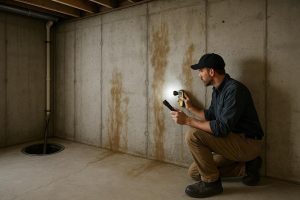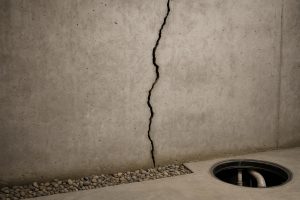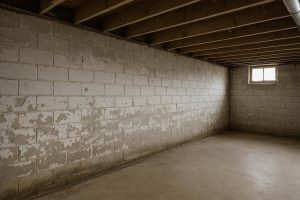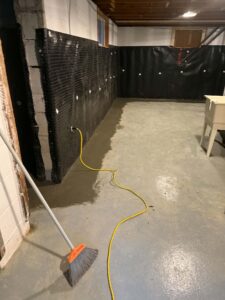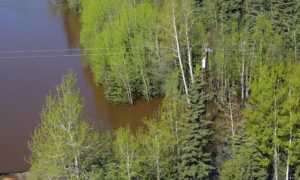
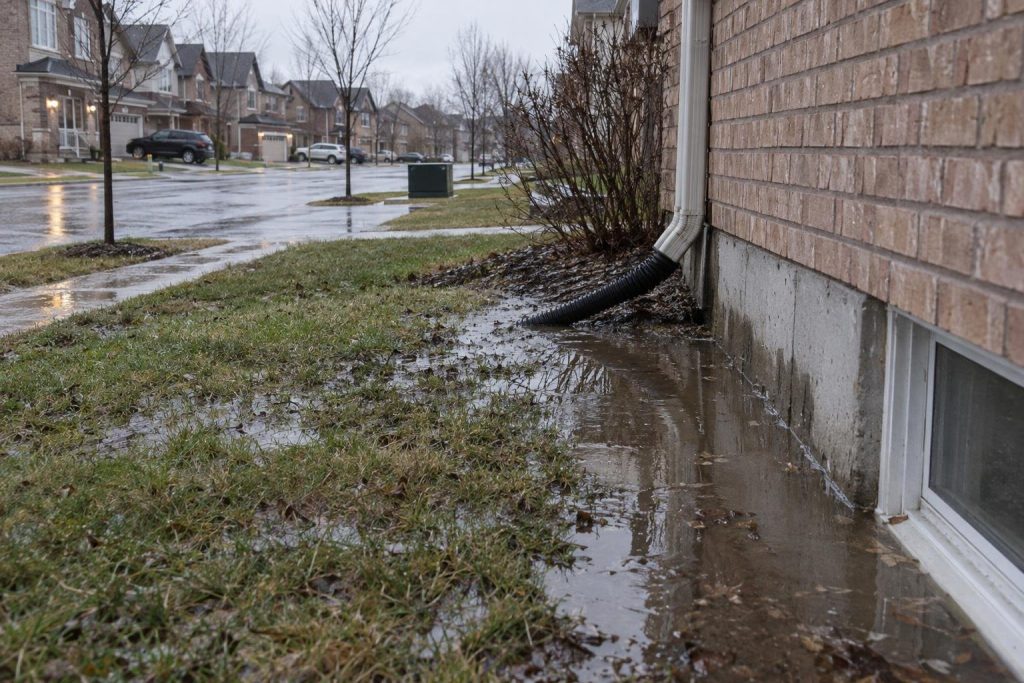
Basement flooding in Newmarket is most commonly caused by the clay-rich soils north of the Oak Ridges Moraine and the elevated seasonal water table associated with the East Holland River. These two factors combine to build hydrostatic pressure against foundation walls and floors whenever rain or snowmelt saturates the ground. Understanding which entry point is letting water in is the essential first step before choosing any repair or waterproofing method.
- Clay soils north of the Oak Ridges Moraine hold water for extended periods, sustaining hydrostatic pressure long after a storm ends.
- The East Holland River’s high water table means basements in low-lying Newmarket neighbourhoods face near-constant ground moisture.
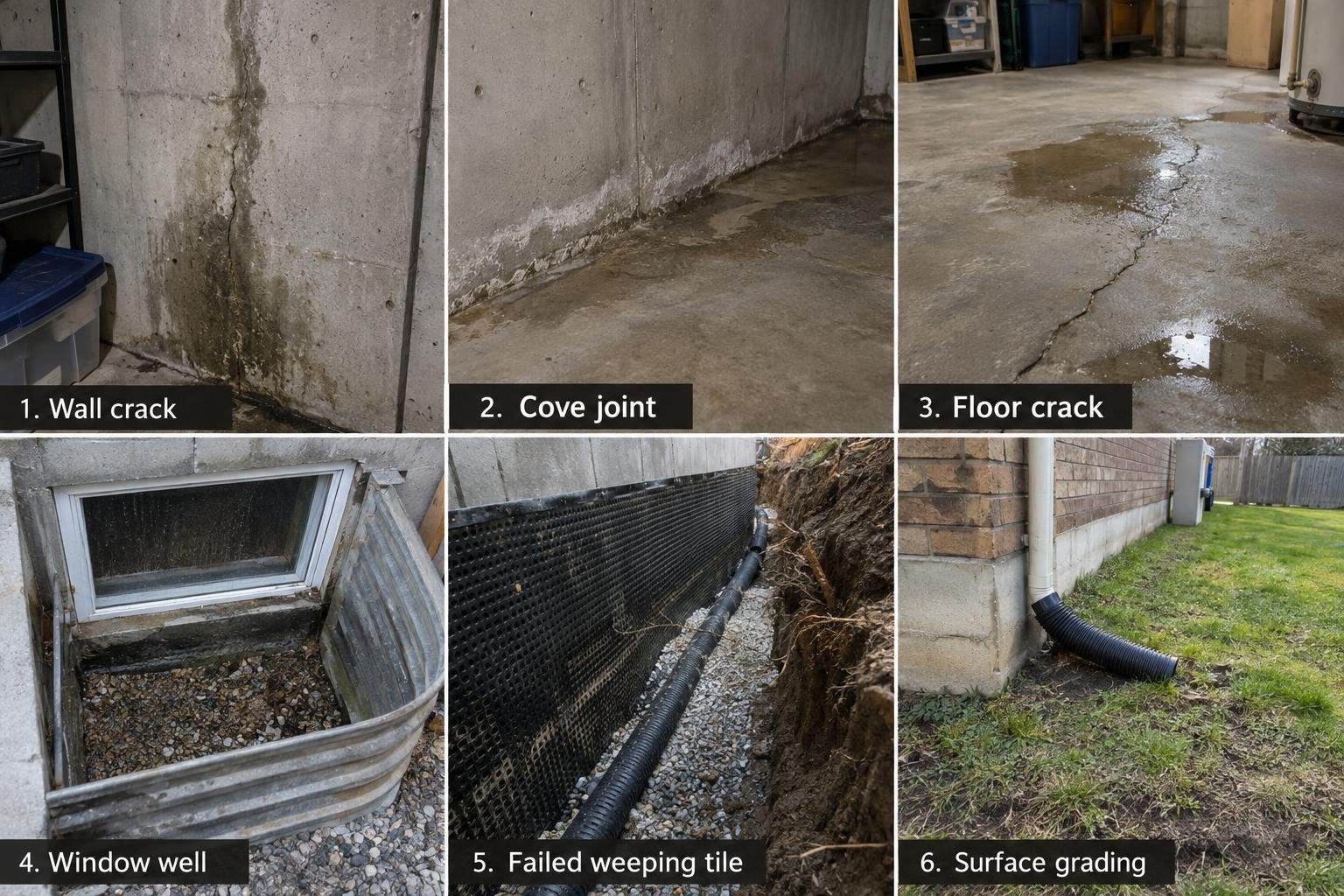
- Entry points vary: foundation wall cracks, the cove joint, floor cracks, window wells, and failed weeping tile are the most common culprits.
- The right fix depends on where water enters, not simply on how much water appears.
- Delaying repairs allows moisture to promote mould growth, deteriorate concrete, and reduce your home’s resale value.
Definitions and scope
Basement flooding refers to any situation where water enters a below-grade living or storage space in quantities that pool on the floor, saturate walls, or cause visible damage. It is distinct from minor condensation, which originates from humid interior air rather than ground or surface water. In Newmarket, the term covers a spectrum from a thin film of seepage along the cove joint after a heavy rain to a full-floor inundation following a sump pump failure during spring snowmelt.
The scope of this guide covers the structural and drainage causes specific to Newmarket’s soil and hydrology, the repair and waterproofing methods available to homeowners, a comparison of those methods, a decision framework, cost drivers, common mistakes, and a step-by-step overview of how a professional assessment and repair typically unfolds. It does not cover municipal sewer backup, which is a separate issue governed by the Town of Newmarket’s infrastructure and your home’s backwater valve status.
Why this matters
Newmarket sits on the northern edge of the Oak Ridges Moraine, a glacially deposited landform composed of interlayered sand, gravel, and clay. North of the moraine’s crest, the terrain flattens into clay flats that drain slowly. The East Holland River runs through the town and its tributaries maintain a water table that rises sharply after significant rainfall or during the spring freshet when accumulated snowpack melts rapidly.
Homes built on these clay flats experience a particular pattern: the ground absorbs rain slowly, the water table rises, and hydrostatic pressure builds against foundation walls and floors for days or even weeks after a storm. Older homes with original clay-pipe weeping tile are especially vulnerable because that tile collapses, silts up, or separates over time, leaving no functional drainage path around the footing. Newer subdivisions on re-graded clay can also experience settlement-related cracking that opens new water pathways.
Beyond structural damage, a wet basement creates conditions for mould within 24 to 48 hours of flooding. Mould affects indoor air quality throughout the home and can be costly to remediate. Water damage also affects finished basement spaces, mechanical equipment, and stored belongings. From a real estate perspective, evidence of past flooding or active moisture problems must be disclosed and typically reduces buyer confidence. Addressing the root cause rather than symptoms is the approach that protects both the structure and the investment.
For context on how mould develops after a flooding event, see Mold in Your Basement: Causes, Urgency and How to Fix It.
Your options
Polyurethane crack injection
Polyurethane crack injection is a minimally invasive repair method for active or dormant cracks in poured concrete foundation walls. A low-viscosity polyurethane resin is injected under pressure through ports installed along the crack. The resin expands as it cures, filling the crack from face to face and creating a flexible, waterproof seal that accommodates minor future movement.
Best for: Isolated vertical or diagonal shrinkage cracks in poured concrete walls where the crack is the sole or primary water entry point and the wall is structurally sound.
Limitations: Not suitable for horizontal cracks, which indicate lateral soil pressure and require structural assessment. Does not address drainage problems around the footing. Cannot be applied to block or stone foundations. Learn more at Polyurethane Crack Injection Toronto and GTA.
Interior weeping tile (interior drainage system)
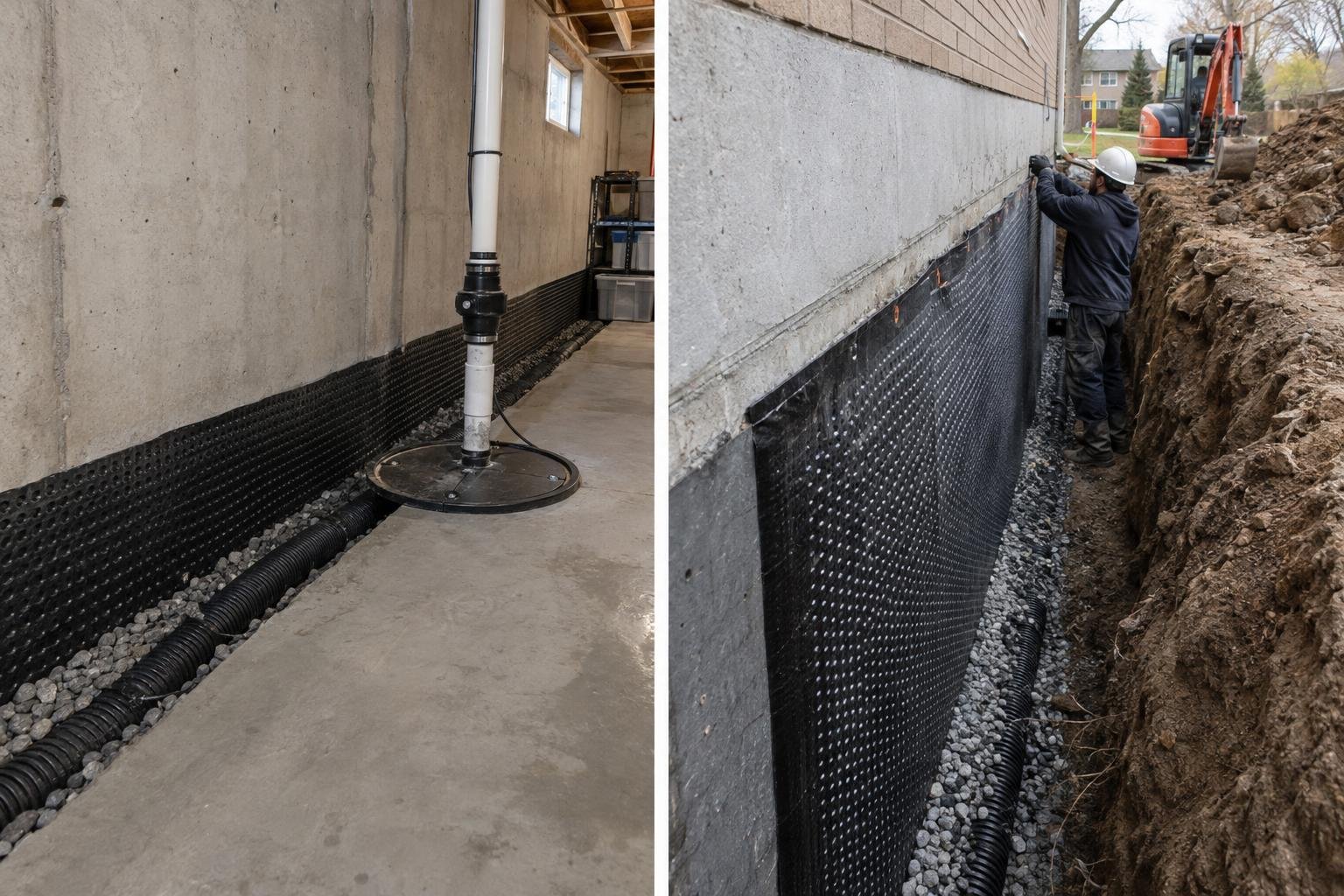
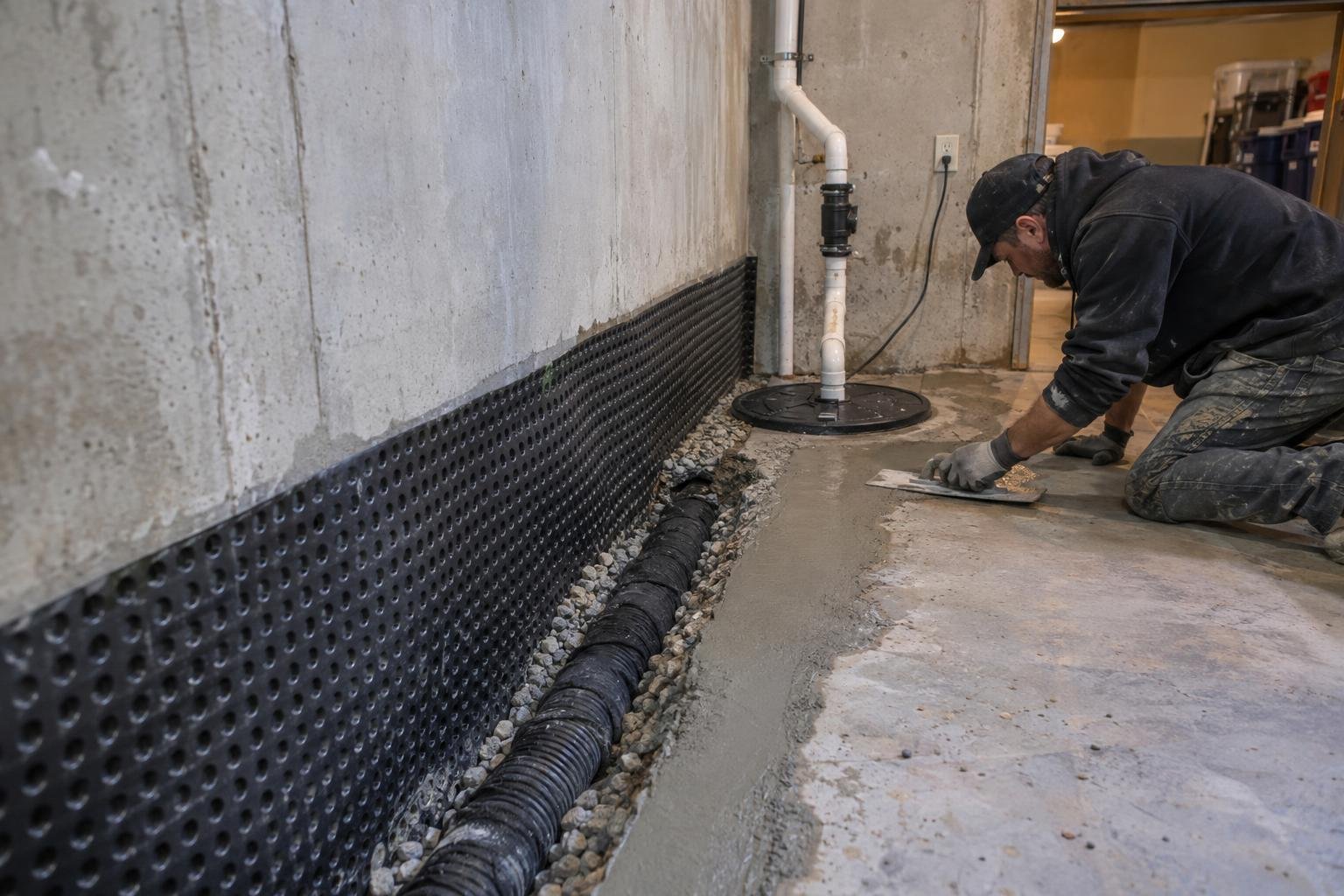
An interior weeping tile system involves cutting a channel around the perimeter of the basement floor at the footing, installing a perforated drainage pipe, and directing collected water to a sump pit. A sump pump then discharges the water away from the foundation. The system intercepts water that enters through the cove joint or through the footing and manages it rather than blocking it at the wall.
Best for: Homes where exterior excavation is impractical, where weeping tile around the footing has failed, or where water enters along the entire perimeter rather than through a single crack. Works well in Newmarket homes on clay flats where the water table rises seasonally.
Limitations: Does not stop water from entering the wall itself; it collects water after it enters. Requires a functioning sump pump and a reliable power source. See Interior vs Exterior Weeping Tile: Which System Does Your Basement Actually Need?
Exterior waterproofing with new weeping tile
Exterior waterproofing requires excavating the soil down to the footing around the affected wall or the full perimeter. The exposed foundation wall is cleaned, any cracks are repaired, and a waterproof membrane is applied directly to the concrete. New weeping tile is installed at the footing level and wrapped in filter fabric to prevent silting. The excavation is then backfilled with granular material to promote drainage.
Best for: Homes with failed original weeping tile, multiple cracks, or where a permanent, source-blocking solution is preferred. Considered the most comprehensive approach because it addresses both the wall and the drainage simultaneously.
Limitations: Significant excavation cost and disruption. Landscaping, decks, driveways, or additions adjacent to the wall can complicate or prevent access. See Stop Foundation Leaks Permanently with Exterior Waterproofing.
Sump pump installation or replacement
A sump pump sits in a pit at the lowest point of the basement and automatically pumps accumulated groundwater out of the home before it can flood the floor. A battery backup unit provides protection during power outages, which often coincide with the storms that cause flooding. A properly sized and maintained sump pump is a critical component of any interior drainage system.
Best for: Homes with a high seasonal water table, homes that already have an interior drainage system, and as a backup layer of protection in any waterproofed basement.
Limitations: A sump pump manages water that has already reached the pit; it does not stop water from entering through cracks or the cove joint. Pump failure during a storm event can result in rapid flooding. See Sump Pump Installation Services and Sump Pump Replacement: The Complete Homeowner’s Guide.
Window well drainage improvement
Basement windows that sit below or near grade are vulnerable to flooding when their wells fill with water faster than the soil can absorb it. Improving window well drainage involves installing or replacing the gravel bed at the base of the well, adding a cover, and in some cases connecting the well to a drain that ties into the interior drainage system.
Best for: Homes where flooding is localized to the area below a basement window, particularly after heavy rain events.
Limitations: Addresses only the window well entry point. If the foundation wall itself is also leaking, additional repair is needed. See Fixing Window Well Flooding in Your Basement.
Grading and surface drainage correction
Improper grading around the foundation allows surface water to flow toward the house rather than away from it. Correcting the grade so that soil slopes away from the foundation at a minimum fall over the first few feet, combined with extending downspout discharge well away from the foundation, can meaningfully reduce the volume of water reaching the wall.
Best for: Homes where surface water is a primary contributor and the foundation itself is otherwise sound. Often used as a complementary measure alongside other repairs.
Limitations: Does not address groundwater or a high water table. In Newmarket’s clay soils, even correct grading may not prevent hydrostatic pressure buildup during prolonged wet periods.
Options compared
| Method | Best for | Typical considerations | Durability and limitations |
|---|---|---|---|
| Polyurethane crack injection | Single vertical crack in poured concrete | Minimal disruption; interior access only needed | Long-lasting if crack is stable; does not address drainage |
| Interior weeping tile system | Perimeter seepage, failed footing drain, high water table | Requires floor cutting; ongoing sump pump dependency | Durable system; pump must be maintained and backed up |
| Exterior waterproofing and weeping tile | Multiple cracks, failed exterior drain, comprehensive repair | Significant excavation; landscaping disruption | Most comprehensive; addresses source directly |
| Sump pump installation | High water table; complement to drainage system | Requires pit; power and backup power needed | Effective while operational; failure risk during outages |
| Window well drainage | Localized window well flooding | Low disruption; targeted fix | Effective for that entry point only |
| Grading and surface drainage | Surface water contributor | Low cost; may require landscaping changes | Does not address groundwater or hydrostatic pressure |
No single method is universally correct. Crack injection is precise and cost-effective when a single crack is the confirmed entry point, but it does nothing for a failing perimeter drain. Interior weeping tile is the practical choice when excavation is blocked by a deck or driveway, but the homeowner accepts ongoing pump dependency. Exterior waterproofing is the most thorough solution but carries the highest cost and disruption. Many Newmarket homes ultimately benefit from a combination: crack injection for active cracks, an interior drainage system for perimeter seepage, and a sump pump with battery backup for high-water-table seasons.
How to choose
Use the following framework to narrow down the appropriate approach for your Newmarket home.
Choose polyurethane crack injection if: You have identified one or two discrete vertical or diagonal cracks in a poured concrete wall, the rest of the wall and floor are dry, and the crack is the confirmed entry point. This is the least invasive and most targeted fix available.
Choose interior weeping tile if: Water enters along the full perimeter at the cove joint or through the floor, exterior excavation is blocked by a structure or is cost-prohibitive, or your original weeping tile has failed and the water table is seasonally high. This is the most common solution for Newmarket homes on clay flats near the East Holland River corridor.
Choose exterior waterproofing if: You want to stop water at the source rather than manage it inside, you have multiple cracks or a severely deteriorated exterior membrane, and the perimeter is accessible. If you are planning major landscaping or a foundation-adjacent renovation, combining it with exterior waterproofing is efficient.
Choose sump pump installation or upgrade if: You already have or are installing an interior drainage system, your existing pump is aging or undersized, or you have experienced flooding during power outages. A battery backup is strongly advisable given Newmarket’s spring storm patterns.
Choose grading correction if: Downspouts discharge close to the foundation, the soil visibly slopes toward the house, and flooding is limited to events with heavy surface runoff. Treat this as a complementary measure, not a standalone fix for hydrostatic pressure.
If you are uncertain which entry point is responsible, a professional diagnostic inspection is the appropriate starting point before committing to any repair. See Basement Leak Diagnostic Tool and Waterproofing vs Foundation Repair: Which Does Your Basement Actually Need?
Costs and timelines
No verified current price quotes for Newmarket are available to this guide. The following describes cost drivers in ranked order; actual quotes will vary by contractor, site conditions, and scope. Use these drivers to understand why estimates differ, not as a budget figure.
| Cost driver | Why it matters | Relative impact |
|---|---|---|
| Scope of work (linear footage or number of cracks) | More wall length or more cracks means more material and labour | Highest |
| Method selected | Exterior excavation costs significantly more than interior drainage, which costs more than crack injection alone | Highest |
| Excavation complexity | Decks, driveways, utilities, and tree roots increase excavation time and cost | High |
| Sump pit and pump specification | Pump capacity, battery backup, and alarm systems add to base cost | Moderate |
| Concrete floor restoration | Interior drainage requires cutting and patching the floor; finish quality affects cost | Moderate |
| Access and site conditions | Finished basements, low ceilings, or difficult exterior access increase labour time | Moderate |
Timeline varies similarly. Crack injection on a single crack can be completed in a few hours. An interior drainage system on a full perimeter typically takes one to three days. Full exterior waterproofing with excavation can take several days to a week depending on perimeter length and site conditions. For a broader cost reference, see Basement Waterproofing Cost in Southern Ontario (2026).
Risks and common mistakes
Understanding what goes wrong helps Newmarket homeowners avoid costly repeat repairs.
Treating symptoms rather than the source. Applying hydraulic cement or a paint-on sealant over a leaking crack stops visible seepage temporarily but does not address the water pressure behind the wall. In Newmarket’s clay soils, that pressure will find or create a new pathway. A surface patch on an active crack is not a permanent repair.
Ignoring the cove joint. The joint where the basement floor meets the wall is a common and often overlooked entry point. Homeowners sometimes assume a crack in the wall is the only source when water is actually entering at the floor perimeter. A thorough inspection should include the cove joint. See Cove Joint Leak: Why Water Enters Where Your Basement Floor Meets the Wall.
Installing a sump pump without a drainage system. A sump pump in a pit that has no connected drainage tile can only remove water that reaches the pit by gravity. If the floor is flat or the water enters through the wall above the pit, the pump does not help.
Skipping battery backup. Power outages during severe storms are the exact conditions that cause basement flooding. A sump pump without battery backup is vulnerable at the worst possible moment. See Sump Pump Failed and Basement Flooded: What to Do Right Now.
Delaying after the first flood event. A single flooding event often signals that conditions have reached a threshold. Waiting for the next event before acting typically means the next event causes more damage. Mould can establish within 24 to 48 hours of saturation, according to Health Canada guidance on indoor mould.
Choosing a method based on cost alone. The least expensive repair that does not match the actual entry point and cause will need to be redone. A professional diagnosis before committing to a method is cost-effective over the long term.
Not checking downspouts and grading first. Before any structural repair, confirm that downspouts extend well away from the foundation and that the grade slopes away from the house. These corrections cost little and reduce the water load on any waterproofing system.
How the process works
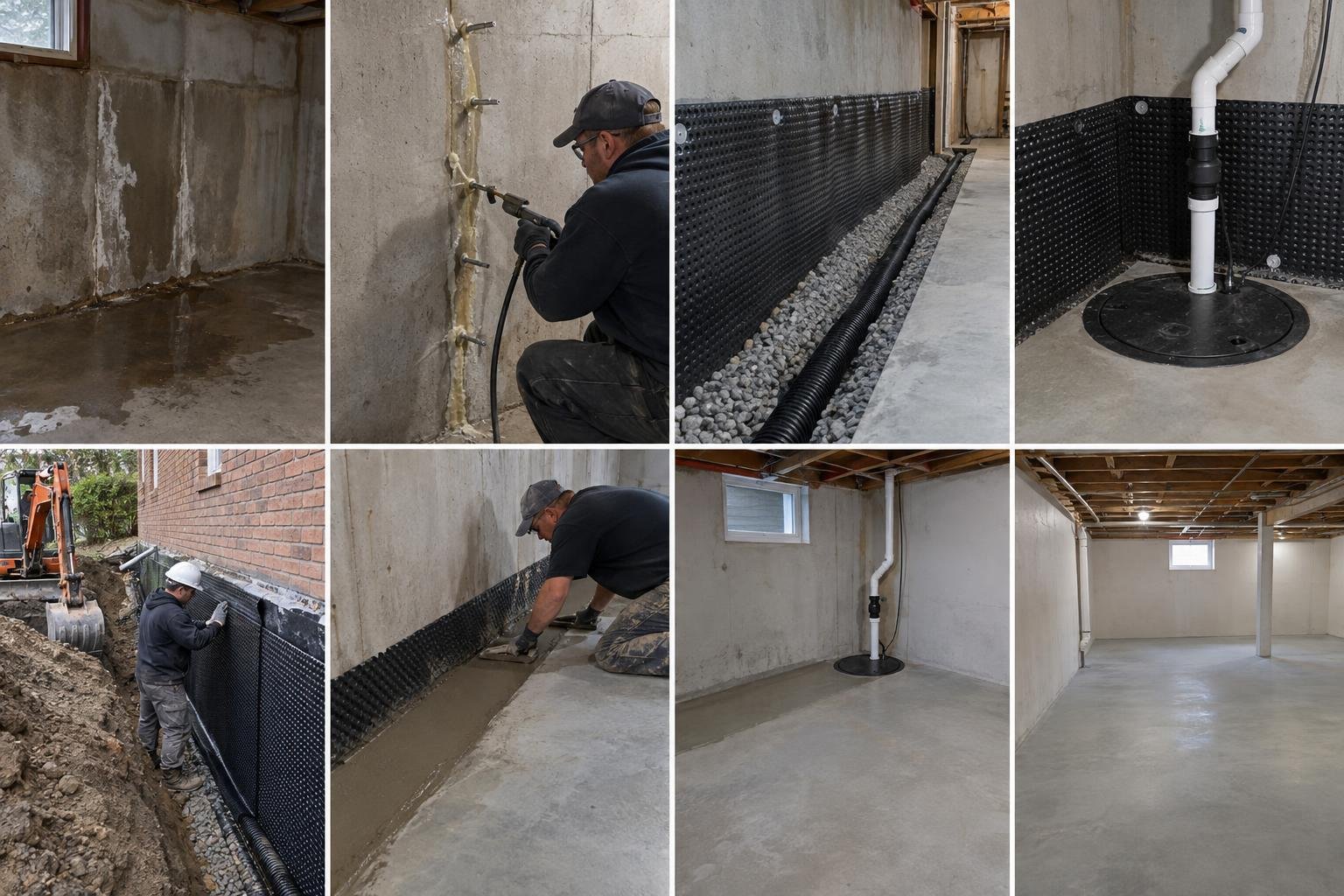
- Initial inspection and diagnosis. A waterproofing professional inspects the interior and exterior of the foundation, identifies entry points, assesses crack types, checks the existing sump and weeping tile condition, and reviews the grading and drainage around the home. This step determines which method or combination of methods is appropriate.
- Proposal and scope agreement. The contractor provides a written scope of work describing the method, materials, warranty terms, and timeline. For Newmarket homes, this often includes a recommendation on sump pump backup given the seasonal water table.
- Site preparation. Interior work requires clearing the basement perimeter. Exterior work requires marking utilities and, where applicable, obtaining any required permits under the Ontario Building Code for structural or excavation work.
- Repair and waterproofing installation. Depending on the method: crack ports are drilled and resin injected; floor channels are cut and drainage pipe installed; or the exterior wall is excavated, cleaned, membraned, and new weeping tile placed. The sump pit and pump are installed or upgraded as part of an interior system.
- Restoration and cleanup. Concrete is patched over interior drainage channels. Exterior excavations are backfilled with granular material and the surface is restored. The site is left clean.
- Final walkthrough and warranty documentation. The contractor walks through the completed work, explains maintenance requirements (particularly sump pump testing), and provides warranty documentation. DryShield offers a lifetime transferable warranty on qualifying work; see Lifetime Transferable Warranty.
- Ongoing maintenance. Homeowners should test the sump pump monthly, inspect the pump float and discharge line seasonally, and monitor repaired cracks annually. See Sump Pump Maintenance: The Complete Homeowner’s Guide.
Frequently asked questions
Why does my Newmarket basement flood specifically in spring?
Spring flooding in Newmarket is driven by snowmelt saturating the clay soils north of the Oak Ridges Moraine faster than the ground can absorb or drain it. The East Holland River’s water table rises sharply during the spring freshet, increasing hydrostatic pressure against foundation walls and floors. Homes with aging or failed weeping tile have no drainage relief, so water finds the path of least resistance into the basement.
Is basement flooding covered by home insurance in Ontario?
Standard home insurance policies in Ontario typically cover sudden and accidental water damage but often exclude gradual seepage, groundwater ingress, and overland flooding unless specific endorsements are purchased. Sewer backup coverage is a separate add-on. Review your policy wording carefully and speak with your insurer before assuming coverage. For a detailed overview, see Does Home Insurance Cover Basement Waterproofing and Foundation Cracks in Ontario?
Can I fix a basement crack myself?
DIY crack injection kits are available and can be appropriate for small, dormant, dry cracks. However, active wet cracks in Newmarket’s high-water-table environment require professional-grade equipment and resin to achieve adequate injection pressure and penetration. Misapplied DIY repairs can seal the surface while leaving the crack open behind it. See DIY Foundation Crack Repair Kit vs Professional Crack Injection: Which Should You Choose?
How do I know if my weeping tile has failed?
Signs of failed weeping tile include water entering consistently along the full perimeter at the cove joint rather than through a specific crack, a sump pump that runs continuously during wet weather, and efflorescence (white mineral deposits) along the base of the wall. A camera inspection of the existing drain tile can confirm collapse or silting. See Weeping Tile Problems in Toronto: Causes, Signs and How to Fix Them.
What is the difference between interior and exterior waterproofing?
Exterior waterproofing stops water at the foundation wall by applying a membrane and installing drainage at the footing from outside. Interior waterproofing intercepts water that has already entered or is entering through the wall and directs it to a sump. Exterior is considered the more comprehensive approach; interior is often the practical choice when excavation is not feasible. See Interior vs. Exterior Waterproofing: Which is Right for Your Toronto Home?
How long does a basement waterproofing repair last?
Properly installed polyurethane crack injection in a stable crack can last for many years. Interior drainage systems and exterior waterproofing membranes, when correctly installed with quality materials, are designed to be long-term solutions. The sump pump itself has a finite service life and should be inspected and replaced according to the manufacturer’s guidance, typically every seven to ten years depending on usage and model.
Does waterproofing increase my home’s value in Newmarket?
A dry, documented basement is a positive factor in real estate transactions. Buyers and their inspectors look for evidence of past water intrusion, and a transferable warranty on waterproofing work can be a selling point. For a broader discussion of return on investment, see Will Basement Waterproofing Increase My Home Value in the GTA?
What should I do immediately after my basement floods?
First, ensure the electrical panel serving the basement is safe before entering standing water. Remove standing water as quickly as possible using a wet-dry vacuum or pump. Move wet contents to a dry area and begin drying with fans and a dehumidifier within the first few hours. Document damage with photographs for insurance purposes. Contact a waterproofing professional to inspect the entry point before the next rain event.
DryShield serves Newmarket and the surrounding area with basement waterproofing, foundation crack repair, weeping tile installation, and sump pump services. If your basement has flooded or you have noticed signs of moisture, contact the DryShield Newmarket team to arrange an inspection, or visit the contact page to get started.