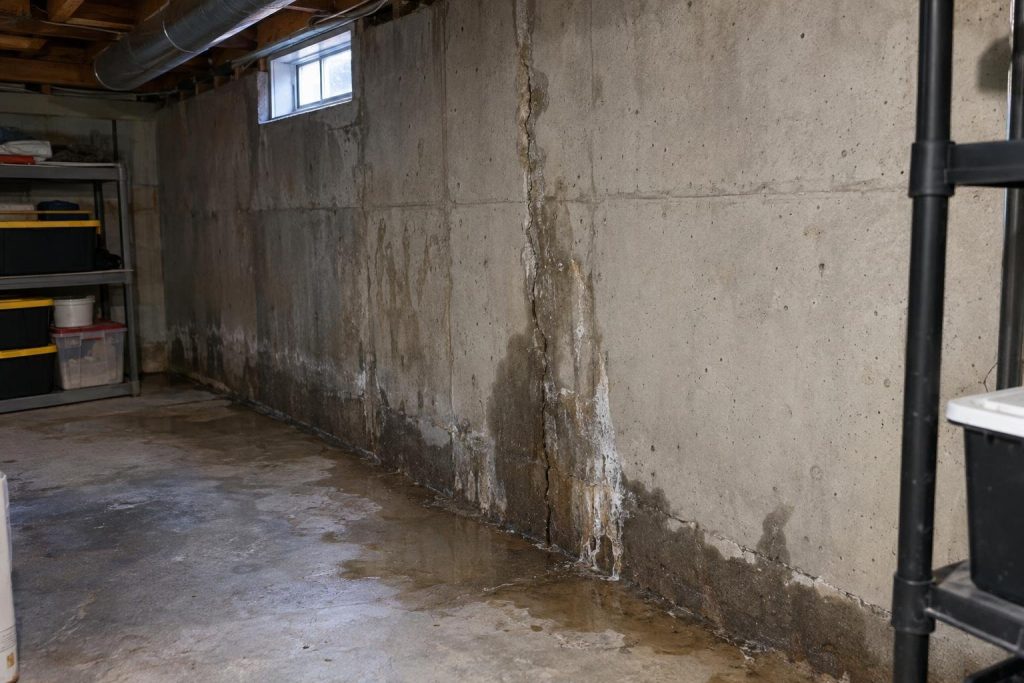
Basement leak repair in Uxbridge typically involves identifying whether water is entering through a foundation crack, a failing cove joint, a saturated weeping tile system, or a combination of all three. Uxbridge sits within Durham Region on the Oak Ridges Moraine, where sandy, gravelly and clay-rich glacial deposits create variable drainage conditions that can shift hydrostatic pressure against foundations quickly after rain or snowmelt. Choosing the right repair method depends on the leak source, the foundation type, and how much water is involved.
Key takeaways
- Uxbridge’s Oak Ridges Moraine soils combine permeable sand and gravel with clay lenses that trap and redirect groundwater toward foundations.
- Most basement leaks have one of four root causes: wall cracks, cove joint failure, failed weeping tile, or surface drainage problems.
- Polyurethane crack injection is the least invasive fix for isolated poured-concrete wall cracks; perimeter drainage systems address chronic seepage.
- Interior solutions manage water that has already entered; exterior solutions stop it before it reaches the wall.
- Repair costs vary widely based on method, linear footage, access conditions and soil type; no single price applies to all Uxbridge homes.
Definitions & scope
Basement leak repair covers any professional intervention that stops water from entering a below-grade living or storage space. The term spans a wide range of methods, from a single-port polyurethane injection that seals a hairline crack in under two hours, to a full exterior excavation that replaces the waterproofing membrane and weeping tile along an entire foundation wall.
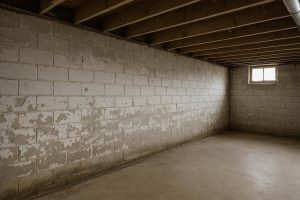
In Uxbridge, the relevant foundation types are almost exclusively poured concrete (common in homes built from the 1970s onward) and concrete block (more common in older village-core properties). Poured concrete tends to develop vertical shrinkage cracks and snap-tie holes. Block foundations are more susceptible to horizontal cracking and mortar-joint deterioration. Each failure mode calls for a different repair approach.
This guide covers the five most common repair methods used in the region, a comparison of their trade-offs, a decision framework, cost drivers, risks, and the typical process from first call to completed repair. It does not cover structural underpinning or basement lowering, which are separate scopes of work. For a broader overview of waterproofing options, see the Waterproofing a Basement: Your Complete Homeowner’s Guide.
Why this matters
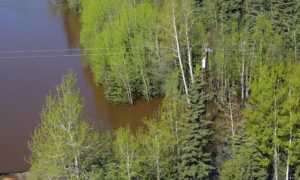
Uxbridge is a small town with a large rural footprint. Many properties sit on lots where grading, drainage swales and eavestroughs have shifted over decades, directing surface runoff toward foundations rather than away from them. The Oak Ridges Moraine, which forms the high ground north and west of the urban core, is a significant recharge zone for groundwater. Rain and snowmelt percolate rapidly through the moraine’s coarse upper layers, then slow when they hit finer clay lenses, creating a perched water table that can rise quickly and press against basement walls.
Seasonal freeze-thaw cycling in this part of Ontario is also a meaningful factor. Ground frost penetrates deeply in winter, and the expansion and contraction of soil against a concrete wall can widen existing cracks or open new ones. Spring thaw then delivers a surge of meltwater precisely when those cracks are at their widest.
Leaving a basement leak unaddressed carries compounding risks: efflorescence and mineral staining are cosmetic early signs, but ongoing moisture promotes mold growth, degrades wood framing, and can eventually compromise the structural integrity of the wall itself. Early repair is almost always less expensive than deferred repair. For context on what mold risk looks like, see Mold in Your Basement: Causes, Urgency and How to Fix It.
Uxbridge homeowners also face a practical access consideration: the town is served by contractors based in the broader Durham Region and GTA, so scheduling and mobilization costs can differ from urban centres. Understanding your options before calling for quotes helps you evaluate proposals accurately. For a regional overview, see Basement Waterproofing in Durham Region: Local Causes, Solutions & Service Areas.
Your options
1. Polyurethane crack injection
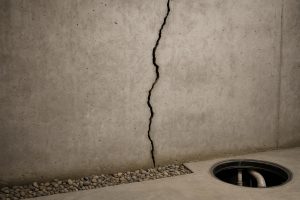
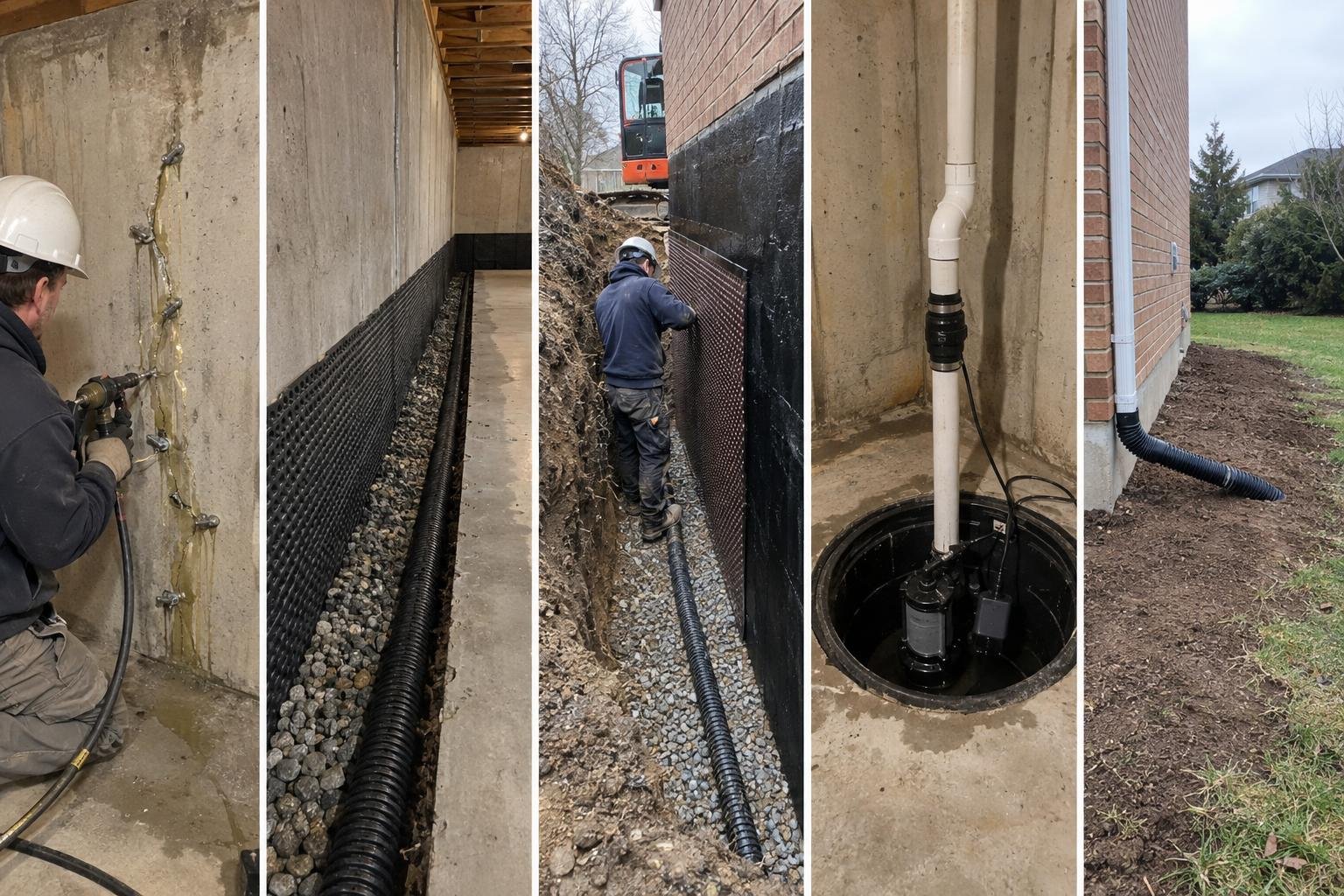
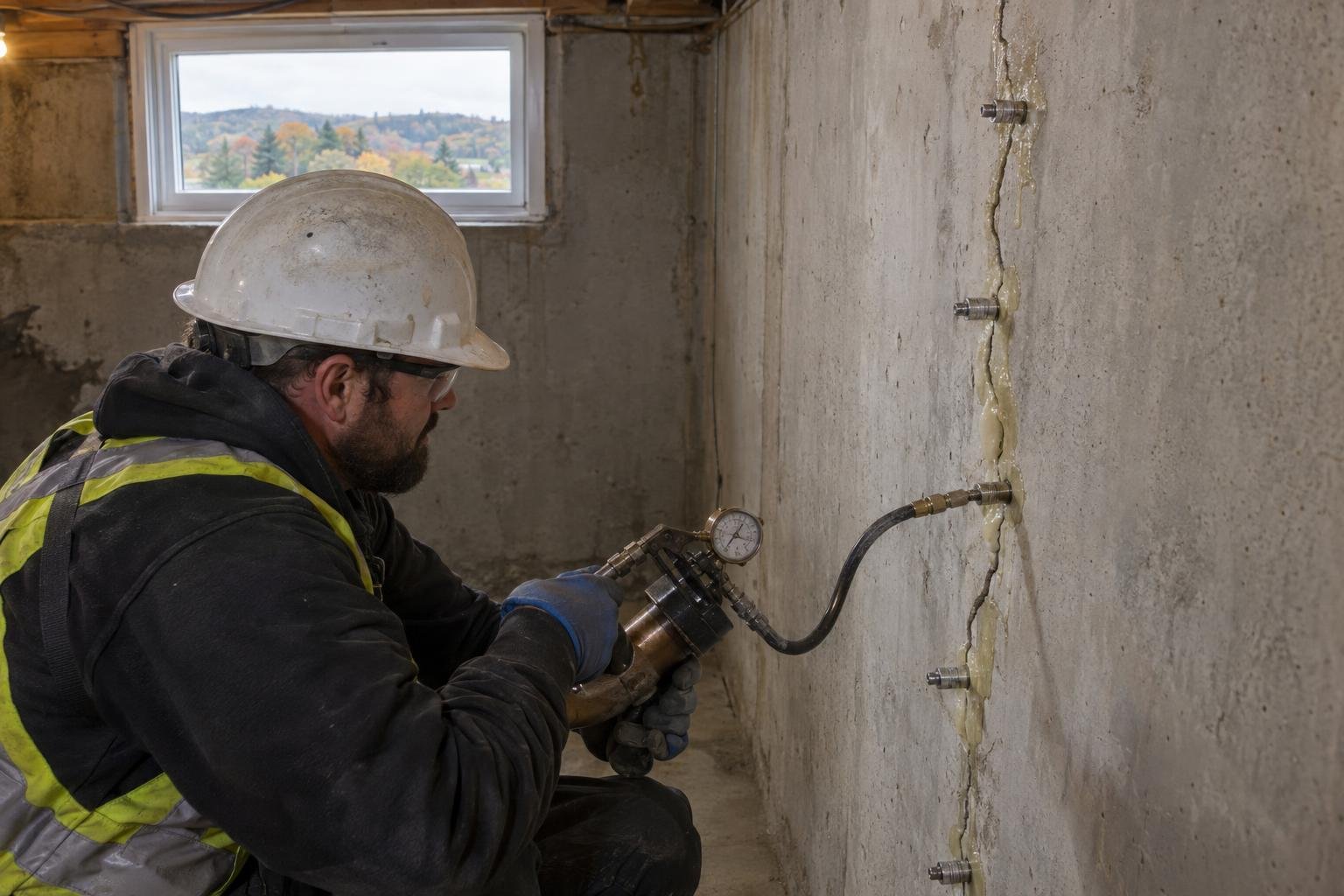
Polyurethane crack injection is a minimally invasive interior repair for active or dormant cracks in poured-concrete foundation walls. A technician drills or ports along the crack at intervals, then injects a two-component polyurethane resin under low pressure. The resin expands to fill the full depth of the crack and cures into a flexible, waterproof seal that can accommodate minor future movement.
Best for: Isolated vertical or diagonal shrinkage cracks in poured concrete walls, snap-tie holes, and minor cold-joint leaks where the wall is otherwise structurally sound.
Limitations: Does not address the source of hydrostatic pressure. If the crack is caused by ongoing lateral soil movement or if the foundation has multiple cracks, injection alone is not a complete solution. Not suitable for block foundations where water travels through mortar joints rather than discrete cracks. See Does Crack Injection Work? A Complete Homeowner’s Guide for a detailed assessment.
2. Interior perimeter drainage system (interior weeping tile)
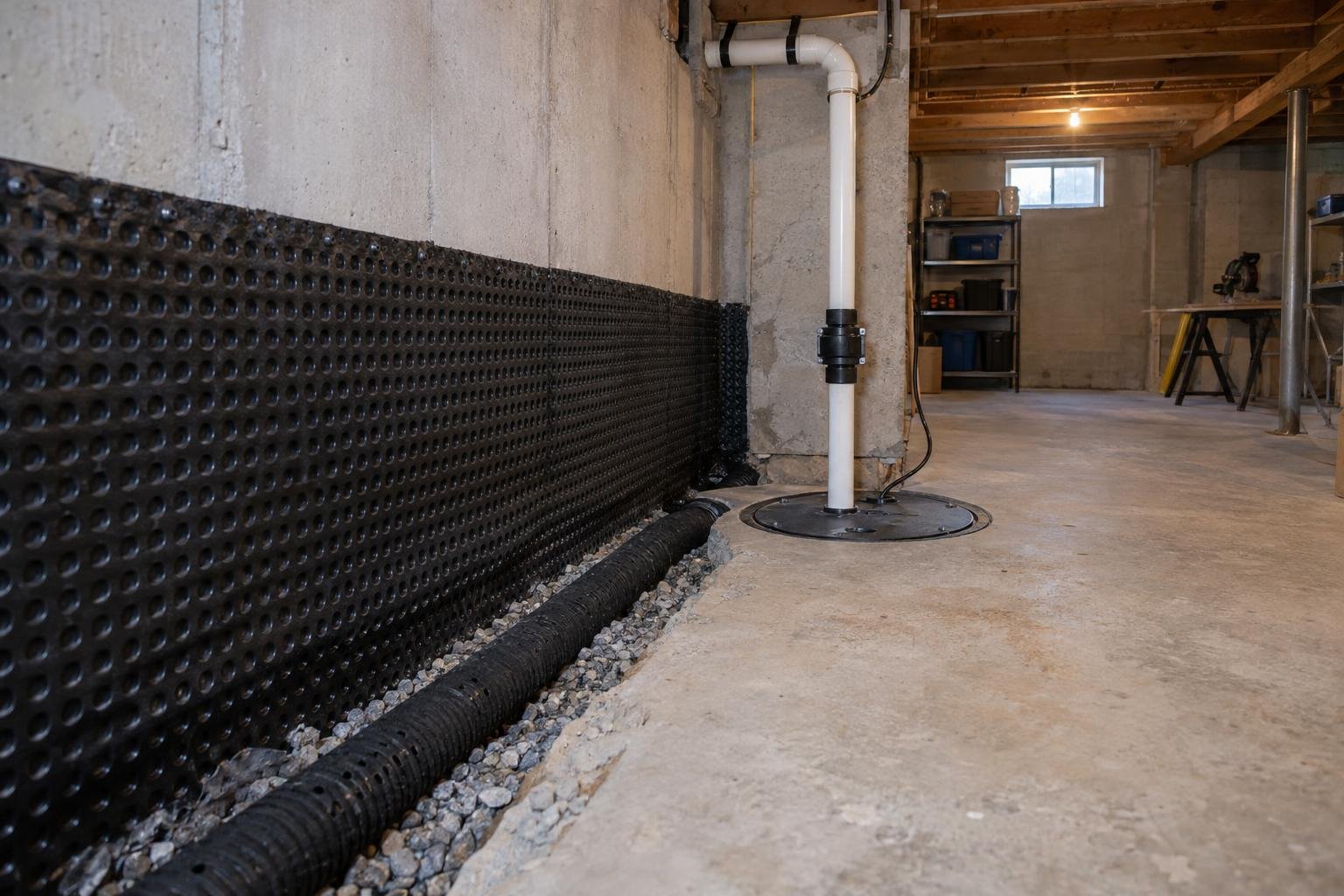
An interior perimeter drainage system involves breaking the concrete floor along the inside perimeter of the basement, installing a perforated drain pipe in a gravel bed at footing level, and directing collected water to a sump pit. A sump pump then discharges the water away from the foundation. The floor is patched with new concrete after installation.
Best for: Chronic seepage through the cove joint (where the floor meets the wall), through multiple wall cracks, or through a block foundation where sealing individual entry points is impractical. Also appropriate when exterior excavation is not feasible due to landscaping, structures, or cost.
Limitations: Manages water after it enters the wall cavity rather than stopping it at the exterior. Does not address hydrostatic pressure on the wall itself. Requires a functioning sump pump with a reliable power source and ideally a battery backup. See Interior vs Exterior Weeping Tile: Which System Does Your Basement Actually Need?
3. Exterior waterproofing with membrane and weeping tile
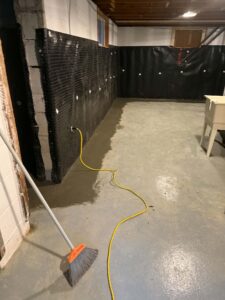
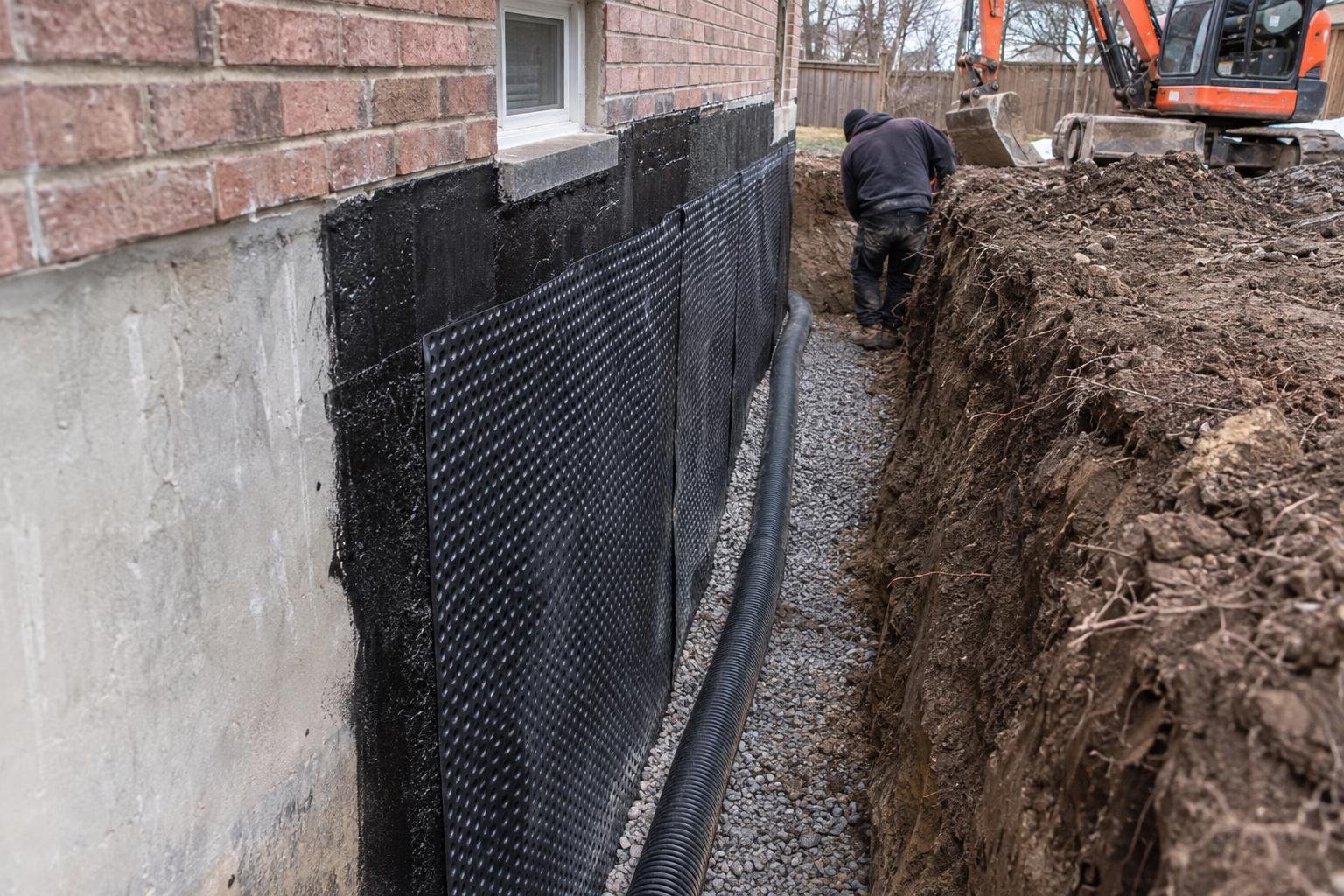
Exterior waterproofing is the most comprehensive approach. The contractor excavates the soil around the affected wall down to the footing, cleans and repairs the concrete surface, applies a waterproofing membrane (dimple mat, liquid-applied membrane, or both), installs new perforated weeping tile in a gravel bed at footing level, and backfills with free-draining material. This stops water before it contacts the wall.
Best for: Walls with significant deterioration, failed original damp-proofing, multiple cracks, or situations where long-term protection is the priority. Also the preferred method when the existing exterior weeping tile has collapsed or become blocked.
Limitations: Requires excavation, which is disruptive, time-consuming, and more expensive than interior methods. Access may be restricted by decks, driveways, fences, or utility lines. For membrane options, see Basement Waterproofing Membrane: The Complete Homeowner’s Guide.
4. Sump pump installation or replacement
A sump pump is not a repair in isolation, but it is a critical component of any drainage-based waterproofing system. Where a sump pit already exists but the pump is aging or undersized, replacement may be all that is needed to restore a dry basement. Where no pit exists, installation is part of a broader interior drainage scope.
Best for: Homes where water collects in the pit but the pump cannot keep up, or where the pump has failed. Also essential as a backup for any interior drainage system.
Limitations: A sump pump depends on electricity. Power outages during storms are common in rural Durham Region, making a battery backup or water-powered backup pump important. See Sump Pump Replacement: The Complete Homeowner’s Guide.
5. Surface drainage correction
Sometimes the root cause of a basement leak is not a failed membrane or a cracked wall but poor grading, blocked eavestroughs, or a downspout discharging against the foundation. Correcting these surface drainage issues can significantly reduce or eliminate water infiltration without any structural intervention.
Best for: Leaks that occur only during or immediately after heavy rain, particularly near windows or at the top of the wall. Often the first step recommended before more invasive work.
Limitations: Does not address pre-existing cracks, failed weeping tile, or high water tables. Surface corrections alone are rarely sufficient for chronic or multi-source leaks.
Options compared
| Method | Best for | Typical considerations | Durability / limitations |
|---|---|---|---|
| Polyurethane crack injection | Single vertical crack in poured concrete | Interior access only; minimal disruption; completed in hours | Long-lasting if crack is stable; may reopen if wall moves further |
| Interior perimeter drainage | Chronic multi-point seepage; cove joint; block walls | Floor demolition and patching; sump pump required | Manages water indefinitely; depends on pump reliability |
| Exterior waterproofing + weeping tile | Severely deteriorated walls; failed original system | Excavation required; landscaping disruption; higher cost | Most durable; stops water at source; 20+ year expectation |
| Sump pump installation / replacement | Existing drainage system with failed pump | Electrical connection; battery backup recommended | Pump lifespan typically 7-10 years; requires maintenance |
| Surface drainage correction | Rain-event leaks near grade; downspout issues | Grading, eavestrough and downspout work; low cost | Effective for surface-sourced water; insufficient alone for chronic leaks |
The table above shows that no single method is universally superior. Crack injection is the right tool for a discrete, stable crack but is not a substitute for drainage when multiple entry points exist. Exterior waterproofing provides the most complete protection but at the highest cost and disruption. Interior drainage is a practical middle ground for many Uxbridge homes where excavation is difficult. Surface drainage corrections should be evaluated first in every case because they are low-cost and sometimes sufficient on their own. A thorough diagnostic inspection is the only reliable way to determine which combination applies to a specific property.
How to choose
Use the following framework to narrow your options before speaking with a contractor.
Choose polyurethane crack injection if: you have one or two clearly visible vertical cracks in a poured-concrete wall, the wall is otherwise in good condition, and the leak is active or intermittent rather than a constant seep. This is also the right starting point if you are preparing to finish your basement and need cracks sealed before framing. See Basement Crack Repair Before Finishing Your Basement.
Choose interior perimeter drainage if: water enters at the cove joint, through multiple cracks, or through a block foundation wall where individual sealing is impractical. Also choose this method if exterior excavation is blocked by a deck, driveway, addition, or mature landscaping that you cannot or do not want to disturb.
Choose exterior waterproofing if: the original damp-proofing has failed across a large section of wall, the existing weeping tile is collapsed or blocked, or you want the most durable long-term solution and excavation is accessible. This is also the preferred approach when a wall shows signs of ongoing deterioration or when you are undertaking a major renovation that already involves exterior work.
Choose sump pump replacement if: your existing interior drainage system is functioning but the pump is old, noisy, running continuously, or has already failed once. Add a battery backup if your property loses power during storms.
Start with surface drainage correction if: leaks appear only during or immediately after rain, particularly near window wells or at the top of the wall. Correct grading and eavestrough issues first, then reassess after the next rain season before committing to more invasive work.
When in doubt, use a professional diagnostic inspection to identify the actual entry point before selecting a method. Treating the wrong source wastes money and leaves the real problem unaddressed. DryShield’s Basement Leak Diagnostic Tool can help you describe your symptoms before booking an inspection.
Costs & timelines
No verified price data specific to Uxbridge is available to this publication. The following describes cost drivers only, ranked from most to least influential. Always obtain itemized written quotes from licensed contractors before committing to any scope of work.
| Cost driver | Why it matters | Relative impact |
|---|---|---|
| Method selected | Crack injection is the least expensive; exterior excavation is the most expensive | Very high |
| Linear footage affected | Interior drainage and exterior work are priced per linear foot of wall | Very high |
| Excavation access | Obstacles (decks, driveways, utilities) increase labour and equipment costs | High |
| Soil conditions | Clay-heavy or rocky soil slows excavation and increases disposal costs | High |
| Foundation depth | Deeper footings require more excavation and shoring | Medium |
| Number of cracks or entry points | Each additional injection port or repair zone adds to the total | Medium |
| Sump pump specification | Horsepower, battery backup and alarm systems vary in price | Low to medium |
| Mobilization distance | Uxbridge is outside the urban GTA core; travel time may affect quotes | Low |
Timeline ranges are similarly method-dependent. A single crack injection can be completed in two to four hours. Interior perimeter drainage for a typical residential basement typically takes two to three days. Full exterior waterproofing of one wall may take one to three days depending on depth and access. Sump pump replacement is usually a half-day task. For a broader Ontario cost context, see Basement Leaking Repair Costs: What Ontario Homeowners Pay in 2026.
Risks & common mistakes
Understanding what can go wrong helps you avoid costly errors and evaluate contractor proposals more critically.
Treating symptoms instead of causes. Applying hydraulic cement or waterproof paint over a leaking crack addresses the visible symptom but does not stop water from migrating through the wall. These products can delay a proper repair while the underlying problem worsens. See Hydraulic Cement vs Crack Injection: Which Fix Actually Lasts?
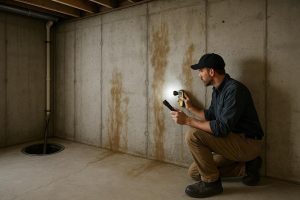
Skipping the diagnostic step. Assuming the entry point without a proper inspection often leads to the wrong repair. Water that appears at the cove joint may actually be travelling down the wall from a crack higher up. A thorough inspection before any work begins is not optional.
Ignoring surface drainage. Many Uxbridge properties have settled grading that directs water toward the foundation. Installing an interior drainage system without correcting grading means the system will handle more water than necessary for its entire service life.
Choosing interior drainage when the wall needs exterior attention. Interior drainage manages water but does not relieve hydrostatic pressure on the wall. A wall that is bowing or showing horizontal cracking needs structural assessment, not just water management. See Bowing Basement Foundation Wall in Toronto: Causes, Urgency and Fixes.
Installing a sump pump without a battery backup. Power outages in rural Durham Region can coincide with the heaviest rain events. A pump that loses power during a storm provides no protection. A battery backup or water-powered backup is a low-cost safeguard.
Delaying repair. Small cracks widen over freeze-thaw cycles. A repair that costs a modest amount today can become a much larger scope if water infiltration damages framing, insulation, or the footing over several seasons.
Not verifying warranty terms. Warranty coverage varies significantly between contractors and methods. Confirm what is covered, for how long, and whether the warranty transfers to a future buyer. DryShield offers a Lifetime Transferable Warranty on qualifying work.
How the process works
- Initial contact and symptom description. You describe the leak location, frequency, and any visible signs (staining, efflorescence, crack width). Use the Basement Leak Diagnostic Tool to organize your observations before calling.
- On-site inspection. A technician visits the property, examines the interior and exterior of the foundation, identifies entry points, and assesses soil and drainage conditions around the home.
- Written recommendation and quote. You receive a written scope of work with the recommended method, materials, warranty terms, and price. For exterior work, this may include a utility locate request before any digging begins.
- Scheduled repair. Work is scheduled based on method requirements. Crack injection can often be booked within days. Excavation work may require longer lead time for equipment and crew scheduling.
- Repair execution. The crew completes the work according to the agreed scope. Interior drainage work includes floor demolition, pipe installation, gravel bed, sump pit (if new), and concrete patching. Exterior work includes excavation, membrane application, weeping tile installation, and backfill.
- Final walkthrough and documentation. The technician walks you through the completed work, explains maintenance requirements (particularly for sump pumps), and provides warranty documentation.
- Post-repair monitoring. You monitor the repaired area through the next rain event and spring thaw. Most reputable contractors ask you to report any recurrence promptly so warranty claims can be assessed.
Frequently asked questions
How do I know if my Uxbridge basement leak is a crack or a drainage problem?
If water appears at a single, visible line on the wall and only during or after rain, a crack is the likely entry point. If water seeps along the base of the wall where the floor meets the foundation (the cove joint), or appears in multiple locations, a drainage system failure is more likely. A professional inspection is the only reliable way to confirm the source, especially when the entry point is hidden behind finished walls or insulation.
Can I repair a foundation crack myself?
DIY injection kits are available for hairline cracks in poured concrete, but they require correct port spacing, adequate injection pressure, and the right resin for the crack width and moisture level. Errors in technique can leave voids that allow water to bypass the repair. For cracks wider than about 0.3 mm or cracks that are actively wet, professional injection is more reliable. See DIY Foundation Crack Repair Kit vs Professional Crack Injection: Which Should You Choose?
Does the Oak Ridges Moraine affect basement leak risk in Uxbridge?
Yes. The moraine’s layered geology, with coarse sand and gravel over finer clay lenses, means groundwater can move quickly through upper layers and then accumulate where it meets less permeable material. This creates localized zones of elevated hydrostatic pressure that vary by lot position, slope, and proximity to drainage features. Homes on lower ground or at the base of slopes are generally at higher risk than those on well-drained ridges.
What is the difference between damp-proofing and waterproofing?
Damp-proofing is a thin bituminous coating applied to the exterior of a foundation wall during original construction. It resists moisture vapour but is not designed to withstand hydrostatic pressure or standing water. Waterproofing involves a more robust membrane system, drainage layer, and weeping tile that together manage liquid water under pressure. Most homes built before the 1990s have damp-proofing only, which degrades over time. See Foundation Waterproofing: Your Complete Homeowner’s Guide.
How long does basement leak repair last?
Durability depends on the method and the ongoing conditions. A properly executed polyurethane crack injection in a stable wall can last decades. An interior drainage system with a maintained sump pump manages water indefinitely as long as the pump is serviced and replaced when it ages. Exterior waterproofing membranes are designed for 20 or more years of service. No repair is permanent if the underlying soil or drainage conditions change significantly, which is why surface drainage maintenance matters throughout the life of any repair.
Will my home insurance cover basement leak repair in Uxbridge?
Standard Ontario home insurance policies generally do not cover gradual water infiltration or the cost of waterproofing repairs. Sudden and accidental water damage from a specific event may be covered under certain endorsements, but coverage varies by policy and insurer. Confirm your coverage with your broker before assuming any repair costs will be reimbursed. For a detailed overview, see Does Home Insurance Cover Basement Waterproofing and Foundation Cracks in Ontario?
Do I need a permit for basement leak repair in Uxbridge?
Simple crack injection and interior drainage work typically do not require a building permit in Ontario. Exterior excavation that involves structural repair or changes to the foundation may require a permit under the Ontario Building Code. The Township of Uxbridge administers local building permits; confirm requirements with the municipal building department before any exterior structural work begins. DryShield recommends verifying permit requirements as part of the pre-work planning process.
What should I do immediately when I discover a basement leak?
Move belongings away from the wet area to prevent further damage. If water is pooling, use a wet-dry vacuum to remove standing water. Do not run electrical equipment in a flooded area. Document the leak location with photos, note whether it is raining or recently rained, and check whether your sump pump is running. Then contact a waterproofing professional for an inspection. For a step-by-step response guide, see Sump Pump Failed and Basement Flooded: What to Do Right Now.
How does freeze-thaw cycling affect foundation cracks in Uxbridge?
Water that enters a crack freezes in winter and expands, widening the crack slightly. When it thaws, the crack does not fully close to its original width. Repeated cycles over multiple winters progressively widen cracks that might otherwise remain stable. This is why cracks that seem minor in summer can become active leaks by spring. Sealing cracks before winter is the most effective way to interrupt this cycle. For more detail, see Freeze-Thaw Foundation Cracks in Cottage Country: Why Seasonal Homes Crack and How to Fix Them.
If you are dealing with a basement leak in Uxbridge and are not sure where to start, DryShield Services has 25+ years of experience serving Durham Region and the broader GTA. Visit the Uxbridge service page or contact the team to arrange an on-site inspection and written assessment.