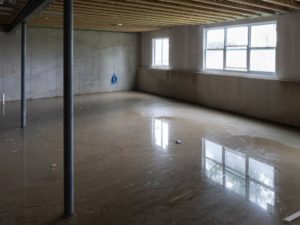
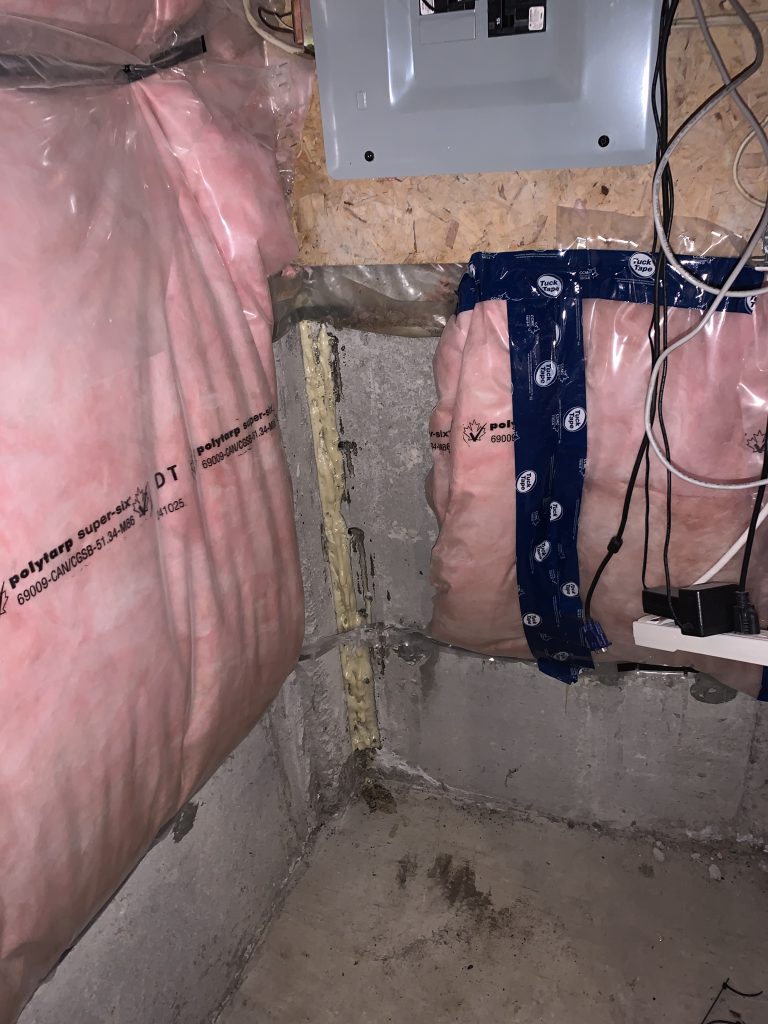
A leaky basement in Penetanguishene is most commonly caused by a combination of Georgian Bay’s high seasonal water table, clay-rich glacial till soils, and the severe freeze-thaw cycles that characterize Simcoe County winters. Water enters through poured-concrete wall cracks, deteriorated weeping tile, floor-wall joints, or window wells, and the right repair depends on where water is entering and how much hydrostatic pressure the foundation is facing. This guide explains every proven fix, the cost drivers behind each, and how to choose the approach that fits your home.
Key takeaways
- Penetanguishene’s proximity to Georgian Bay and its clay-over-till soil profile creates persistent hydrostatic pressure against basement walls, especially after spring snowmelt and heavy summer rain.
- Most leaks have a single identifiable entry point; diagnosing that point first prevents spending money on the wrong repair.
- Polyurethane crack injection is the least invasive and fastest fix for isolated poured-concrete wall cracks.
- Interior drainage systems and sump pumps manage water that cannot be stopped at the source; exterior waterproofing eliminates it before it reaches the wall.
- Seasonal and cottage properties in the Penetanguishene area face additional risk from unheated winters and spring opening floods; specific precautions apply.
Definitions & scope
A leaky basement is any condition in which water, moisture, or water vapour enters the below-grade living or storage space of a home. In Penetanguishene and the surrounding Simcoe County area, this includes year-round occupied homes, seasonal cottages, and mixed-use properties near Georgian Bay.
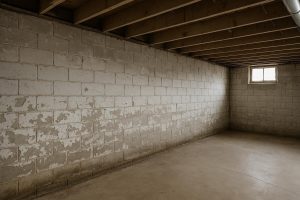
Water entry takes several distinct forms. Active seepage is liquid water visibly entering through a crack, joint, or porous wall. Efflorescence is the white mineral deposit left behind when water evaporates through masonry, signalling past or ongoing moisture movement. Condensation is moisture from warm humid air contacting a cold wall surface, a separate problem from true infiltration. Hydrostatic pressure is the force exerted by saturated soil against a foundation wall; it is the underlying driver of most active seepage in this region.
This guide covers repair and prevention methods for below-grade water infiltration in residential and cottage foundations. It does not cover surface flooding caused by overland flow, municipal sewer backup, or plumbing failures, though those issues can coexist with foundation leaks and may require separate remediation.
Penetanguishene sits at the southern end of Georgian Bay on the Penetang Peninsula. The local geology includes a layer of glaciolacustrine clay and silt over glacial till, with bedrock relatively close to the surface in some areas. This combination limits natural drainage and concentrates surface and groundwater against foundations.
Why this matters
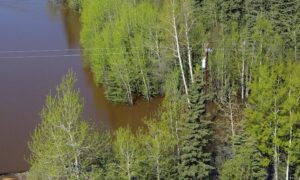
Georgian Bay’s water levels fluctuate seasonally and have been elevated in recent years, raising the regional water table in low-lying areas near the bay and its tributaries. Penetanguishene’s downtown core and older residential streets were built on relatively flat terrain close to the waterfront, where drainage gradients are shallow and soils remain saturated for extended periods after rain or snowmelt.
The town also sits within one of Ontario’s higher snowfall belts. Accumulated snowpack melts rapidly during spring thaws, and the clay soils that dominate the area absorb water slowly. When melt exceeds the soil’s infiltration rate, water ponds at grade and migrates laterally toward the lowest point of least resistance, which is often the exterior face of a basement wall.
Freeze-thaw cycling compounds the problem. Water that enters a hairline crack in a poured-concrete wall expands when it freezes, widening the crack incrementally each winter. Over several seasons, a crack that was once cosmetic becomes a reliable water entry point. Foundations built before the 1980s may also have original weeping tile made from clay or perforated concrete pipe, which collapses, roots-in, or silts up over time, eliminating the drainage relief the system was designed to provide.
Ignoring a leaky basement in this climate carries real consequences: mold growth can begin within 24 to 48 hours after a wetting event, progressive concrete deterioration, reduced indoor air quality, and potential structural compromise if horizontal cracking develops in block foundations under sustained lateral pressure. Early diagnosis and targeted repair are consistently less costly than deferred remediation. See the Basement Wet Repair guide for a broader overview of repair methods across Ontario.
Your options
Polyurethane crack injection
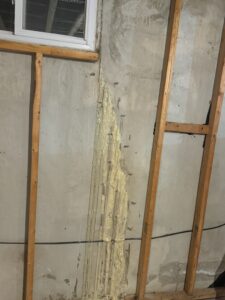
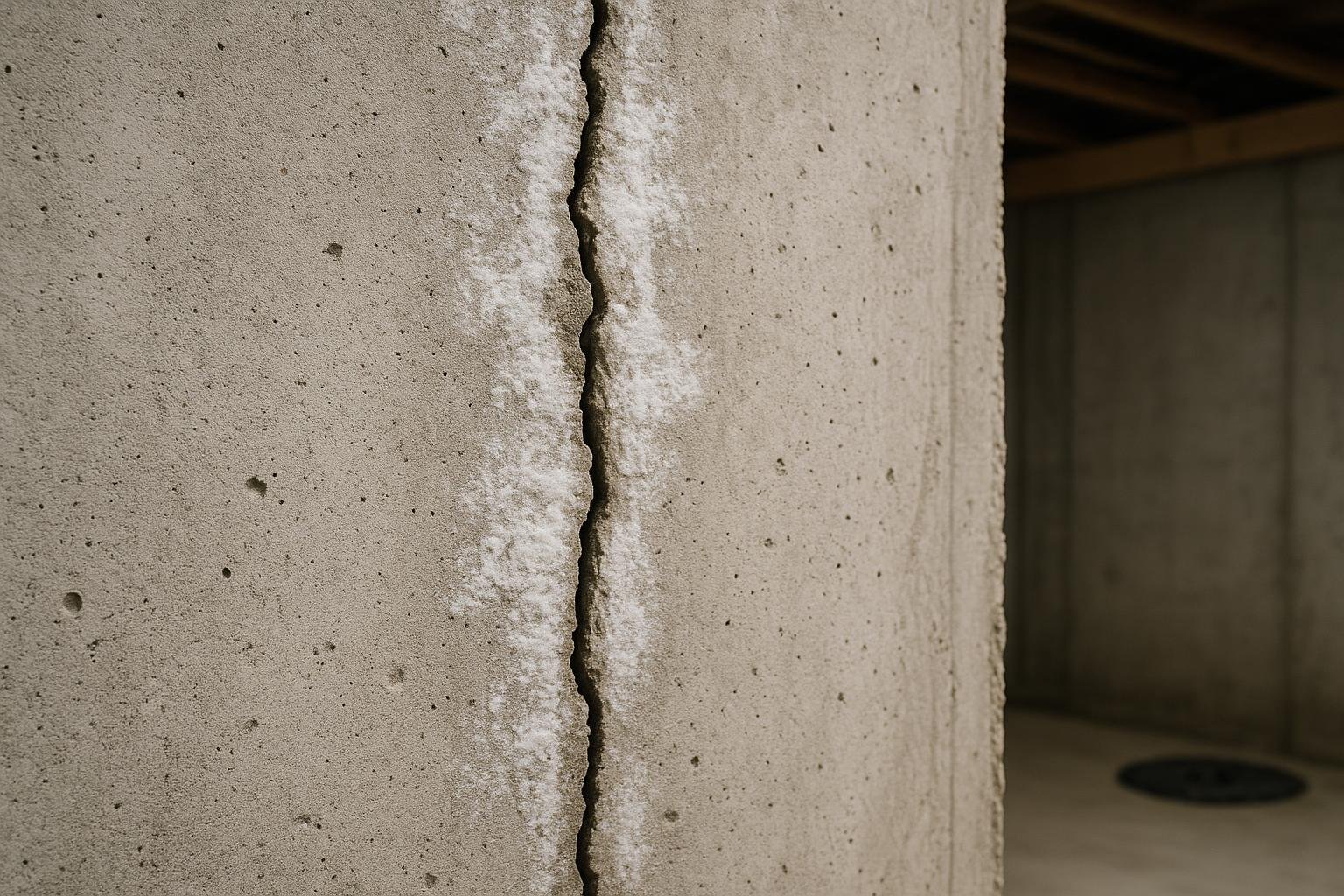
What it is: A two-component polyurethane resin is injected under low pressure into a poured-concrete wall crack through a series of surface ports. The resin expands to fill the full depth of the crack, cures flexible, and bonds to the concrete on both sides.
How it works: Ports are spaced along the crack, the crack face is sealed with surface paste, and resin is injected from the lowest port upward until it appears at the next port. The flexible cure accommodates minor future movement without re-cracking.
Best for: Isolated vertical or diagonal shrinkage cracks in poured-concrete walls where the crack is the sole entry point and the surrounding wall is otherwise sound. Ideal for Penetanguishene homes with a single identifiable crack.
Limitations: Not suitable for horizontal cracks (which may indicate structural movement requiring engineering review), block or stone foundations, or walls with widespread porosity. Does not address a failed drainage system. Learn more at the Polyurethane Crack Injection service page.
Interior drainage system with sump pump
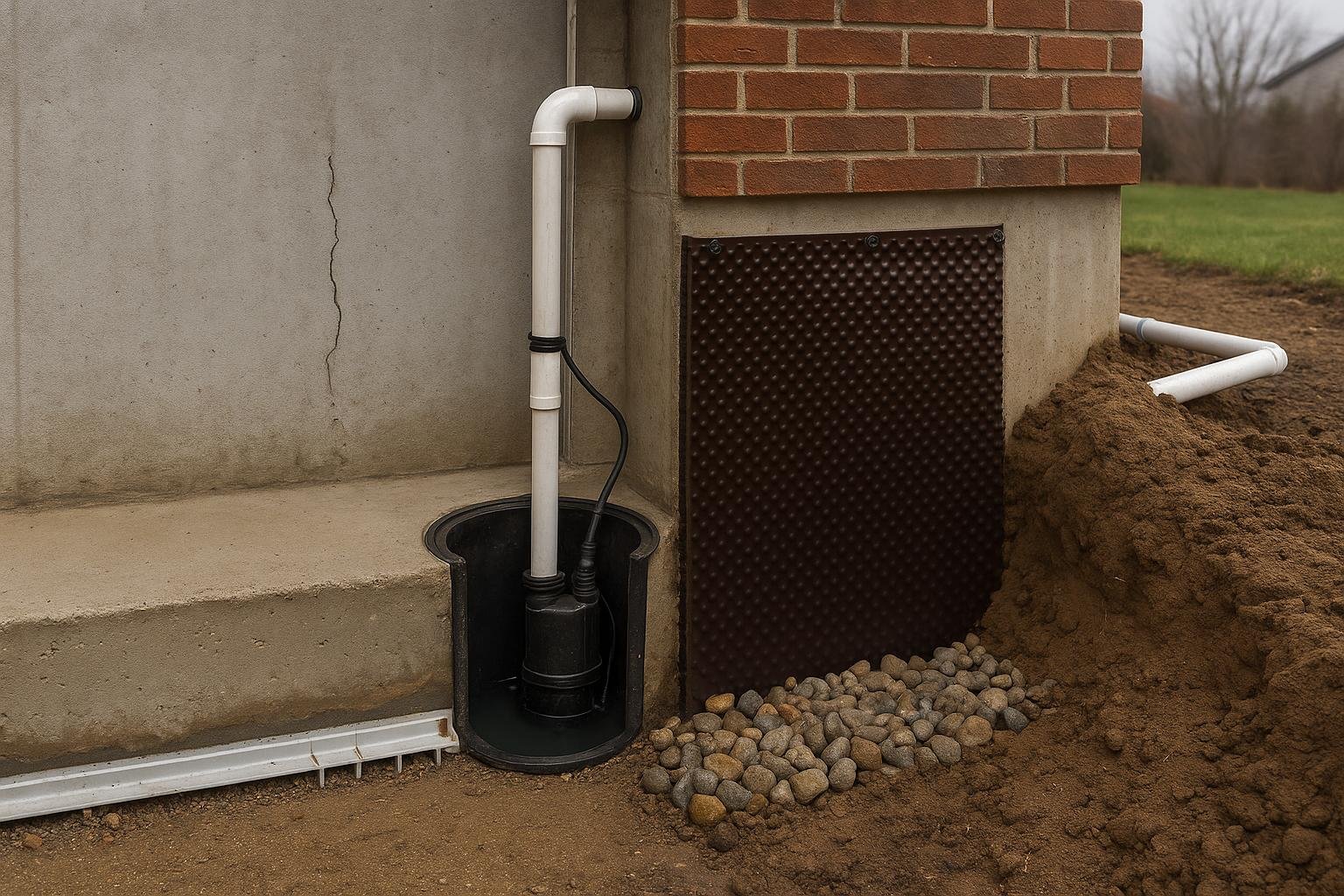
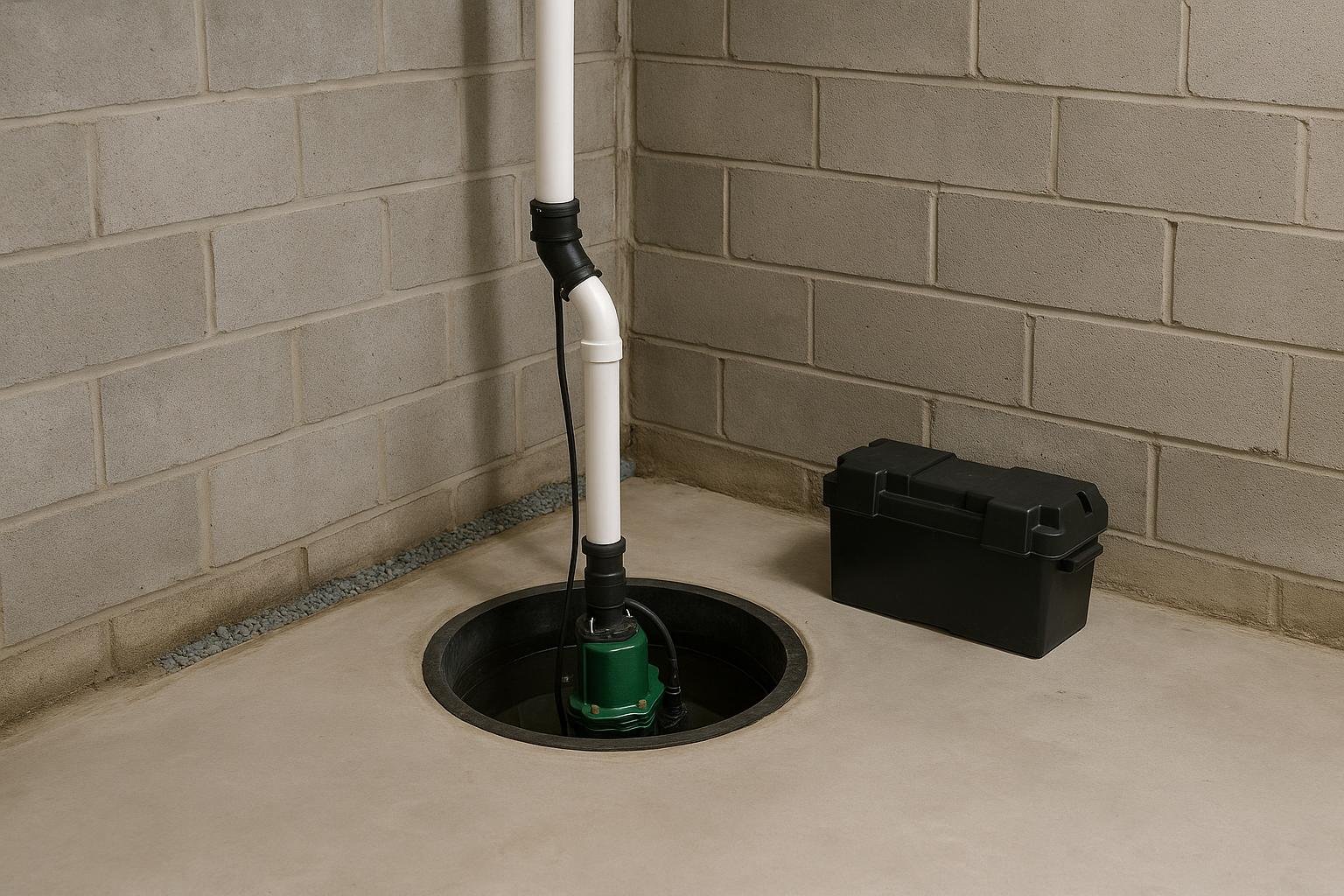
What it is: A perimeter channel is cut into the basement floor along the interior base of the foundation walls. A drainage membrane or pipe collects water that enters through the wall-floor joint or through the wall itself and directs it to a sump pit, where a pump discharges it away from the foundation.
How it works: The system does not stop water at the source; it intercepts water after it enters the wall assembly and before it reaches the floor, keeping the basement dry by managing rather than blocking infiltration.
Best for: Homes where exterior excavation is impractical or cost-prohibitive, where multiple entry points exist, or where the water table is persistently high and cannot be fully blocked from the exterior. Widely used in Penetanguishene’s older housing stock.
Limitations: Depends on a functioning sump pump and power supply; a battery backup is strongly recommended for seasonal properties. Does not address the root cause of wall deterioration. See the Sump Pump Installation service page and the cottage sump pump battery backup guide for seasonal considerations.
Exterior waterproofing
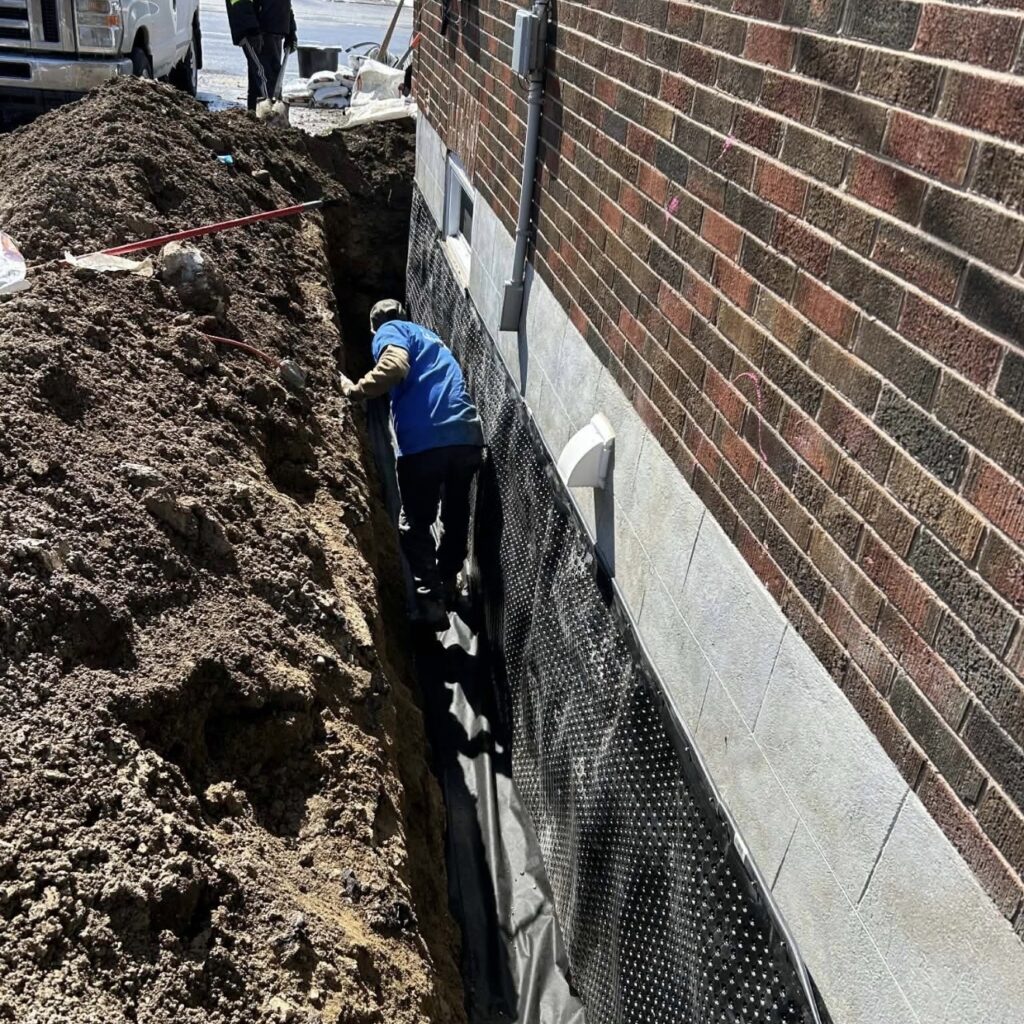
What it is: The foundation wall is fully excavated to the footing, cleaned, and coated with a waterproofing membrane (typically rubberized asphalt or polymer-modified bitumen). A drainage board and new weeping tile are installed before backfilling with clean granular material.
How it works: The membrane creates a continuous barrier on the positive (wet) side of the wall, preventing water from reaching the concrete. The drainage board and weeping tile relieve hydrostatic pressure by directing groundwater to a discharge point before it can build up against the wall.
Best for: Homes with widespread wall deterioration, failed original weeping tile, or persistent high hydrostatic pressure. The most comprehensive long-term solution for Penetanguishene properties with serious or recurring infiltration.
Limitations: Requires excavation around the full perimeter or affected sections, which is disruptive to landscaping, decks, driveways, and utilities. Higher cost and longer project timeline than interior methods. See the Exterior Basement Waterproofing service page and the exterior foundation protection guide.
Weeping tile repair or replacement
What it is: The original perimeter drainage pipe (weeping tile) around the foundation footing is inspected, flushed, or replaced. This may be done from the exterior during excavation or, in some cases, from the interior as part of an interior drainage system installation.
How it works: Functional weeping tile intercepts groundwater at the footing level and carries it away from the foundation before hydrostatic pressure can build. Failed tile allows pressure to accumulate and forces water through any available opening in the wall or floor.
Best for: Homes built before the 1990s with original clay or concrete tile that has silted up, collapsed, or been infiltrated by tree roots. Often combined with exterior waterproofing for a complete solution.
Limitations: Exterior replacement requires full excavation. Interior weeping tile addresses drainage at the interior footing but does not waterproof the wall itself. See the Weeping Tile Installation service page and the French Drain System guide.
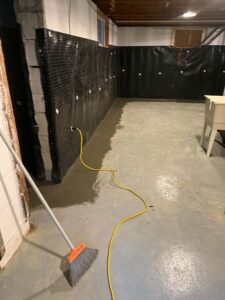
Interior wall membrane and drainage board
What it is: A dimple-mat drainage board is applied to the interior face of the foundation wall. Water that migrates through the wall runs down the face of the board and into a perimeter channel rather than onto the floor.
How it works: The board creates an air gap between the wet wall and the finished interior space, channelling water downward in a controlled path. It is typically combined with an interior drainage channel and sump pump.
Best for: Situations where the wall is porous or has minor widespread seepage rather than a single crack, and where exterior work is not feasible. Useful in Penetanguishene cottages being converted to year-round use.
Limitations: Does not stop water from entering the wall assembly; it only manages water after entry. The wall behind the board remains wet, which can contribute to long-term concrete degradation if not combined with other measures. See the Interior Basement Waterproofing service page.
Window well drainage and grading correction
What it is: Basement window wells that collect water are fitted with gravel drainage beds and covers. Soil grading around the foundation perimeter is corrected so that the ground slopes away from the house at a minimum of 5 to 10 cm over the first 1.5 to 2 metres.
How it works: Proper grading prevents surface water from pooling against the foundation. Window well drainage prevents the well from acting as a collection basin that forces water through the window frame or surrounding wall.
Best for: Homes where water entry is limited to window areas or where poor grading is the primary driver of infiltration. Often the first corrective step before more invasive repairs are considered.
Limitations: Grading and window well corrections address surface water only. They do not resolve groundwater infiltration driven by a high water table or failed weeping tile. See Water Pooling Around Your Foundation for related diagnostic information.
Options compared
| Option | Best for | Typical considerations | Durability / limitations |
|---|---|---|---|
| Polyurethane crack injection | Single poured-concrete wall crack | Minimal disruption; interior or exterior access; 1 day or less | Long-lasting when crack is stable; not suitable for structural or block-wall cracks |
| Interior drainage + sump pump | Multiple entry points; high water table; impractical exterior access | Requires floor cutting; sump pit installation; ongoing pump maintenance | Effective indefinitely with pump maintenance; does not stop wall deterioration |
| Exterior waterproofing | Widespread wall failure; failed weeping tile; persistent hydrostatic pressure | Full excavation required; landscaping disruption; longer timeline | Most comprehensive; addresses root cause; membrane life typically 20+ years |
| Weeping tile replacement | Pre-1990s homes with failed original drainage pipe | Usually combined with exterior waterproofing; excavation required | Restores perimeter drainage; modern pipe resists root intrusion |
| Interior wall membrane | Porous walls; minor widespread seepage; cottage conversion | Combined with interior drainage; no excavation | Manages water after entry; wall behind membrane remains wet |
| Grading and window well correction | Surface water entry; window well flooding | Low cost; minimal disruption; DIY-possible for grading | Addresses surface water only; does not resolve groundwater pressure |
For most Penetanguishene homeowners, the choice narrows to one of three scenarios: a single crack repaired by injection, a high-water-table situation managed by interior drainage and a sump pump, or a deteriorated exterior requiring full excavation and membrane application. Grading and window well corrections are worth completing regardless of which primary repair is chosen, because they reduce the volume of surface water the drainage system must handle. The Exterior vs Interior Perimeter Waterproofing comparison guide provides additional detail on the trade-offs between the two main approaches.
How to choose
Use the following decision framework to identify the most appropriate starting point for your Penetanguishene property.
Choose polyurethane crack injection if you have a single vertical or diagonal crack in a poured-concrete wall, the crack is the only visible entry point, the surrounding wall is otherwise dry, and the crack has not widened significantly over recent winters. This is the fastest and least disruptive repair and is appropriate for many Penetanguishene homes built between the 1960s and 1990s with isolated shrinkage cracks. Use the Basement Leak Diagnostic Tool to confirm the entry point before booking a repair.
Choose an interior drainage system with a sump pump if water enters at multiple points along the wall-floor joint, the water table is persistently high (water appears within hours of heavy rain or snowmelt regardless of surface conditions), exterior excavation is blocked by a deck, driveway, or adjacent structure, or you need a reliable solution for a seasonal property that will be unoccupied for months at a time.
Choose exterior waterproofing if the foundation wall shows widespread staining, spalling, or efflorescence across a large area, the original weeping tile is confirmed failed by camera inspection or persistent flooding, or previous interior repairs have not resolved the problem. This is the appropriate choice when you want to address the source of water pressure rather than manage its consequences.
Choose grading and window well correction first if water entry is clearly linked to specific rain events and is concentrated at or near window openings, and the rest of the basement remains dry. Correct grading before investing in more expensive repairs to determine whether surface water management alone resolves the issue.
For cottage and seasonal properties near Georgian Bay, also review the Seasonal Cottage Foundation Protection guide and the flooded cottage basement guide before choosing a repair strategy.
Costs & timelines
No verified current price quotes for Penetanguishene are available to this publication. The following describes the cost drivers that determine price, ranked from most to least influential. For Ontario-wide approximate ranges, see the Basement Leaking Repair Costs guide and the Basement Waterproofing Cost calculator.
| Cost driver | Why it matters | Relative impact |
|---|---|---|
| Repair method chosen | Crack injection is the least costly; full exterior excavation is the most costly | Highest |
| Linear footage of affected wall | Interior drainage and exterior membrane pricing scales with perimeter length | High |
| Excavation access and depth | Obstacles (decks, driveways, utilities, bedrock proximity) increase excavation cost | High |
| Foundation type and condition | Block or stone foundations require different techniques than poured concrete | Medium |
| Sump pump and backup system | Battery backup and alarm add cost but are strongly recommended for seasonal properties | Medium |
| Landscaping and site restoration | Replacing disturbed gardens, walkways, or driveways after exterior work adds to total cost | Medium |
| Travel and mobilization | Penetanguishene is outside the core GTA service zone; mobilization costs may apply | Low to medium |
Timelines range from a single day for crack injection to one to three days for interior drainage installation and three to five or more days for full exterior waterproofing on a typical residential foundation. Seasonal demand peaks in spring (April through June) and after major rain events; booking in late summer or fall often reduces wait times. See the Foundation Waterproofing Cost guide for additional context on Ontario pricing factors.
Risks & common mistakes
Misidentifying condensation as seepage. Moisture on a cool basement wall in summer is often condensation from warm humid air, not water coming through the wall. Applying a waterproofing membrane to a condensation problem will not resolve it. Run a dehumidifier and monitor whether moisture persists; if it disappears when indoor humidity drops, the issue is condensation. See the Basement Dehumidification guide for management strategies.
Patching cracks with hydraulic cement or epoxy paint without addressing the cause. Surface patching blocks the visible entry point temporarily but does not relieve hydrostatic pressure. Water will find the next available path, often the wall-floor joint or an adjacent crack. Hydraulic cement is appropriate as a temporary stop-gap before a permanent repair, not as a standalone solution.
Skipping a battery backup for the sump pump. Power outages in Simcoe County during severe storms are not uncommon, and those storms are precisely when the pump is working hardest. A battery backup or water-powered backup pump is especially important for seasonal properties that may be unoccupied when an outage occurs.
Ignoring horizontal cracks. Horizontal cracks in a poured-concrete or block wall indicate lateral soil pressure and may signal structural movement. These require engineering assessment before any waterproofing repair is planned. See How to Tell If a Foundation Crack Is Structural for guidance on distinguishing cosmetic from structural cracks.
Choosing interior drainage without addressing exterior grading. An interior system will manage water effectively, but if surface water is pooling against the foundation due to negative grading, the volume of water the system must handle increases unnecessarily. Correct grading first.
Delaying repair on a seasonal property. A small crack that is manageable in summer can allow significant water entry during spring melt when the property is unoccupied. Arriving at a cottage to a flooded basement is a common and preventable outcome in the Penetanguishene area. See Arrived at the Cottage to a Flooded Basement for immediate steps.
How the process works
- Diagnostic inspection. A technician inspects the basement interior and, where accessible, the exterior foundation. Entry points are identified, crack types are classified, and the drainage system condition is assessed. The Basement Leak Diagnostic Tool can help you document symptoms before the visit.
- Repair method selection. Based on the inspection findings, the appropriate repair method or combination of methods is recommended. For complex situations, this may include a camera inspection of existing weeping tile.
- Site preparation. Interior work requires clearing the affected area of stored items and floor coverings. Exterior work requires locating and marking underground utilities before excavation begins.
- Repair execution. The selected method is carried out: crack injection ports are installed and resin is injected; interior drainage channel is cut, installed, and connected to the sump pit; or exterior wall is excavated, cleaned, membrane-applied, drainage board installed, and backfilled with granular material.
- Sump pump installation or testing. Where a sump pump is part of the solution, the pump, discharge line, and backup system are installed and tested before the pit is covered.
- Site restoration. Interior concrete is patched over the drainage channel. Exterior excavations are backfilled and compacted. Grading is checked and corrected if needed.
- Final walkthrough and warranty documentation. The completed work is reviewed with the homeowner. DryShield provides a Lifetime Transferable Warranty on qualifying repairs, which is documented at this stage.
Frequently asked questions
Why does my Penetanguishene basement leak mainly in spring?
Spring snowmelt saturates the clay-rich soils around your foundation faster than they can drain. The resulting hydrostatic pressure forces water through any available opening, including wall cracks, the wall-floor joint, and deteriorated weeping tile. Georgian Bay’s elevated seasonal water table compounds the effect. The problem is most pronounced in years with heavy snowpack followed by a rapid warm-up. Addressing the drainage system and sealing active cracks before winter reduces spring infiltration significantly.
Can I inject a crack myself using a DIY kit?
DIY polyurethane injection kits are available, but achieving full-depth penetration through a crack in a 200 mm or thicker poured-concrete wall requires consistent low-pressure injection technique and proper port spacing. Incomplete injection leaves voids that allow water to bypass the repair. For a single, clearly defined crack, a professional injection is more reliable and typically carries a warranty. DIY patching with hydraulic cement is a reasonable temporary measure while you arrange a professional assessment.
How do I know if my weeping tile has failed?
Signs of failed weeping tile include persistent water entry at the wall-floor joint across multiple sections of the basement, water appearing even during dry periods (indicating groundwater rather than surface infiltration), and a history of water problems that worsen gradually over years. A camera inspection of the weeping tile pipe is the definitive diagnostic tool. Homes in Penetanguishene built before the 1980s with original clay or concrete tile are at elevated risk of failure due to age alone.
Is exterior waterproofing always better than interior?
Exterior waterproofing addresses water on the positive (wet) side of the wall and is the most comprehensive solution when the wall itself is the source of the problem. Interior drainage is equally effective at keeping the basement dry when exterior access is impractical or when the water table is the primary driver rather than wall deterioration. Neither approach is universally superior; the right choice depends on the specific entry point, foundation condition, site constraints, and budget. The Exterior vs Interior Perimeter Waterproofing guide covers this comparison in detail.
Do I need a permit for basement waterproofing in Penetanguishene?
The Town of Penetanguishene falls under the Ontario Building Code for structural foundation work. Interior drainage installation and crack injection are generally considered maintenance and do not typically require a building permit, but exterior excavation that affects the structural integrity of the foundation may require one. Homeowners should confirm permit requirements with the Town of Penetanguishene’s building department before exterior work begins. DryShield can advise on what is typically required based on the scope of work proposed. The Ontario Building Code Basement Waterproofing guide provides broader context.
How long does a polyurethane crack injection repair last?
A properly executed polyurethane injection into a stable crack in a poured-concrete wall is a long-lasting repair. The flexible cured resin accommodates minor thermal movement without re-cracking. The repair is less durable if the crack is actively widening due to ongoing structural movement, soil settlement, or freeze-thaw cycling that has not been addressed. A professional assessment will determine whether the crack is stable before injection is recommended. See the Polyurethane Injection guide for technical detail.
What should I do if I arrive at my Penetanguishene cottage to find a flooded basement?
First, confirm that the electrical panel is safe to approach before entering a flooded space. Remove standing water using a submersible pump or wet-dry vacuum. Open windows and run fans to begin drying. Document the damage with photographs before removing any materials. Contact a waterproofing professional to inspect the entry point before the next rain or melt event. Do not simply pump out the water and close the cottage without identifying and repairing the source. The flooded cottage basement guide provides a full step-by-step response plan.
Does basement waterproofing affect my home’s resale value?
A documented, warranted waterproofing repair is generally viewed positively by buyers and home inspectors because it demonstrates that a known issue has been professionally resolved. An active leak or visible water damage, by contrast, is a significant disclosure item that can reduce offers or cause deals to fall through. A transferable warranty adds further value because it protects the next owner. The Basement Waterproofing Home Value ROI guide discusses the resale evidence available for Ontario properties.
Will my home insurance cover a leaky basement repair in Penetanguishene?
Standard Ontario home insurance policies generally do not cover gradual water infiltration or foundation waterproofing repairs. Coverage may apply to sudden and accidental water damage from a specific event, such as a burst pipe, but seepage through a foundation crack or failed weeping tile is typically classified as a maintenance issue and excluded. Some policies offer optional water damage endorsements. Review your specific policy and speak with your broker before assuming coverage. The Home Insurance and Basement Waterproofing guide explains the coverage landscape in more detail.
If your Penetanguishene home or cottage is showing signs of a leaky basement, the most productive next step is a professional inspection to identify the exact entry point before committing to a repair method. DryShield serves Penetanguishene and the broader Simcoe County area with interior and exterior waterproofing, polyurethane crack injection, weeping tile replacement, and sump pump installation. Contact DryShield to arrange an assessment, or use the Basement Leak Diagnostic Tool to document your symptoms before the visit. Qualifying repairs are backed by a Lifetime Transferable Warranty.